We believe that researching global childhoods offers a comprehensive understanding of children’s lives, experiences, and challenges worldwide. We regard global childhoods as an interdisciplinary field which combines insights from humanities and social sciences (e.g. education, sociology, philosophy, cultural studies, anthropology, media studies, social work, law) and the sciences (e.g. health sciences, psychology, architecture, engineering, computer science) to explore the diverse ways that childhoods are understood and lived. By examining global childhoods in research investigations, we can uncover the varying impact of globalisation, conflict, trauma, mobilities and social inequalities on young lives. This knowledge is crucial for developing inclusive policies, educational practices, and curricula that support children’s rights and well-being globally. Moreover, it fosters cultural awareness and empathy, preparing students to navigate and contribute positively to our increasingly interconnected world. Researching global childhoods is not just about generating greater understandings about children’s lives; it’s about shaping a future that recognises and values the diversity and potential of every child.
This collaborative article explores child-centredness as a theoretical and methodological concept by asking what it means to centre children in research. The collaborative format offers a heterogeneity of voices on the concept as the contributing authors write, critically and creatively, from a range of different interdisciplinary research perspectives. Writing from the departure point of the key role of child-centred approaches within the field, including recent discussions concerning the need to decentre children/childhood, the goal is to spur and contribute to discussions on the possibilities and challenges of the concept, as well as new ways of approaching it.
Commitment and efficiency of teachers are supposed to closely link with the perception of their own identity, which determine their working motivation and job satisfaction. The past few years have seen many teachers, particularly those in less developing regions, leaving their profession due to low pay regardless of affluent nations, such as the United States and the United Kingdom, or developing countries like Vietnam. In fact, the problem could only be addressed when the root cause is revealed. Using the narrative inquiry approach with semi-structured interviews and researchers’ voice on eight English teachers, this study positions and examines the identity of rural language teachers in various intertwined interactions at personal and societal discourses. Research results unveiled the dominance of external factors in shaping and shifting teacher identity, including students, policies, school leadership and socio-cultural systems. Also, personal identity was more likely to be suppressed while professional identity was vaguely expressed. A comprehensive understanding of teacher identity would give policymakers and teacher educators some justification to revisit current policies and teacher training programs by taking into account individual identities, experiences, and concerns of rural teachers.
In this explorative and collectively written paper, researchers and archivists from the research project Children's cultural heritage — the visual voices of the archive ponder, wrestle with, confront, and dig deeper into what it means to preserve and include children's own voices in archives. The authors acknowledge that child-produced cultural objects are historical landmarks and significant parts of national heritage. The article raises questions about where and how the 'doing' of what is here called children's cultural heritage takes place, what it means to archive from children's perspectives, and what aspects of children are saved during these preservation and archival management processes. To collect, preserve and provide access to heritage might empower and affirm individuals and subordinated groups of people who have not been seen or heard in the historical past, in the present, or in future pasts. Children, as a category, is one such subordinated group in heritage contexts. Adults therefore have a responsibility to empower children by strengthening their position towards other social groups, towards society and the heritage domain. This article provides insights into the challenges that heritage establishments face in taking children's cultural heritage seriously.
Click to increase image sizeClick to decrease image size Notes15 https://www.tandfonline.com/doi/full/10.1080/00131857.2022.208555416 https://www.project-syndicate.org/commentary/ai-chatbots-naive-idiots-no-sense-of-irony-by-slavoj-zizek-2023-0317 https://www.nytimes.com/2023/03/08/opinion/noam-chomsky-chatgpt-ai.html
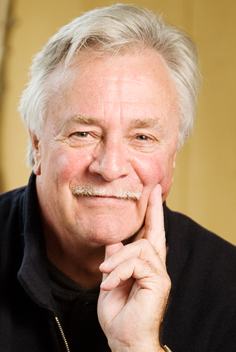 Michael A. Peters合作论文数Beijing Normal University;Faculty of Education, University of Illinois, Urbana-Champaign;University of Auckland61
 Sonja Arndt合作论文数University of Melbourne Australia57
 Liz Jackson合作论文数University of Illinois at Urbana-Champaign30
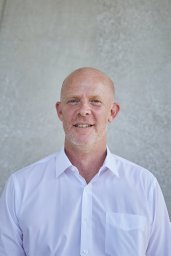 Andrew Gibbons合作论文数AUT Univ28
 Petar Jandric合作论文数Department of Informatics & Computing, Zagreb University of Applied Sciences21
 Sean Sturm合作论文数School of Critical Studies in Education, Faculty of Education and Social Work, The University of Auckland21
 Nina Hood合作论文数School of Curriculum and Pedagogy, Faculty of Education and Social Work, The University of Auckland15
 Karen Malone合作论文数13
 Georgina Tuari Stewart合作论文数School of Education, Auckland University of Technology13
 Nesta Devine合作论文数Auckland University of Technology12
 Tina (A.C.) Besley合作论文数Institute of Education, Tsinghua University12
 Elizabeth Jayne White合作论文数Sch Educ, Univ Hertfordshire12
 Rene Novak合作论文数8
 Daniella Forster合作论文数Sch Educ, Univ Newcastle8
 Kirsten Anna Locke合作论文数School of Critical Studies in Education, Faculty of Education and Social Work, The University of Auckland8bridgette redder合作论文数7Rachel Buchanan合作论文数7
 Sarah Hayes合作论文数Centre for Learning Innovation and Professional Practice, Aston University Birmingham7
 Carl Mika合作论文数7
 Mirka Koro-Ljungberg合作论文数University of Florida7
 Casey Y. Myers合作论文数Watershed Early Years Partnership6
 Jimmy Jaldemark合作论文数Department of Education, Mid-Sweden University6
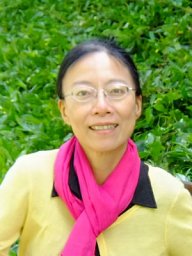 Ruyu Hung合作论文数Department of Educational Goals, National Chiayi University6
 George Lăzăroiu合作论文数Spiru Haret University6
 Jake Wright合作论文数University of Minnesota Rochester5
 Julia Manero合作论文数Community Practice Crit Pedag & Arts Educ, Univ Seville5Olli Pyyhtinen合作论文数5Jones Irwin合作论文数5
 Elizabeth Grierson合作论文数5
 Andrew Madjar合作论文数School of Learning, Development and Professional Practice, Faculty of Education and Social Work, The University of Auckland5
 Sandy Farquhar合作论文数Faculty of Education;University of Auckland;Faculty of Education, University of Auckland5
 Michael Jopling合作论文数5Susanne Brighouse合作论文数4Alex Orrmalm合作论文数4
 Kiri Gould合作论文数4
 Stephanie Hollings合作论文数4
 Sandra Abegglen合作论文数University of Calgary4
 Richard Heraud合作论文数Univ Waikato4David W. Kupferman合作论文数4
 Mousumi Mukherjee合作论文数Jindal Global University4
 Vina Adriany合作论文数Dept Early Childhood Educ, Univ Pendidikan Indonesia4
 Iris Duhn合作论文数Monash Univ4Wang Chengbing合作论文数4
 Tom Burns合作论文数4
 Alison Mackenzie合作论文数4
 Anna Sparrman合作论文数4Ramona Mihăilă合作论文数Spiru Haret University4
 Leon Benade合作论文数4
 Stefania Amici合作论文数4




