AbstractSemiarid South African ecosystems are managed for livestock production with different practices and intensities. Many studies have found grazing to be an important driver of vegetation change; however, its impacts on carbon fluxes remain poorly studied. Unsustainable management over the past 200 years has led to an increase of degraded areas and a reduction in species diversity, but destocking trends in the past three decades may be facilitating a recovery of net primary productivity and vegetation cover in some areas. This chapter provides a brief historical overview on livestock management practices and their likely impact on carbon exchange in the Nama-Karoo Biome. We present a case study based on five years of eddy covariance measurements, in which effects of past and current livestock grazing on CO2 exchange were studied. Two sites with different livestock management but similar climatic conditions formed the basis for this preliminary effort to improve the understanding of carbon exchange and its drivers under contrasting management regimes. The case study revealed that net CO2 exchange is near-neutral over an annual scale, with precipitation distribution emerging as the main controlling factor of subannual variance. Although CO2 release at the lenient grazing site was slightly higher than at the experimental grazing site, longer time series are likely needed in such variable ecosystems to make a pronouncement regarding long-term net fluxes. Given their vast extent, livestock rangelands may have an important effect on regional carbon balance.
AbstractSDG goal 17 seeks to strengthen global partnerships, especially between Global North and South. However, in research and development, experiences indicate a mismatch in expectations with perceived power, funding and workload imbalances, a situation derogated as ‘parachute science’ or ‘helicopter research’. The research programme SPACES seeks to enhance North-South collaborations. As an inter- and transdisciplinary research programme focusing on the interactions between land, sea, atmosphere, biosphere and society, it aims to be a forum for fruitful partnerships. In this chapter, we carve out lessons learned from the nine projects involved in the programme’s second phase. Based on a survey amongst 66 SPACES II scientists, we explored their motivations for collaboration, their involvement in decision-making, the assigned resources and workloads as well as conflicts between Northern and Southern teams. Furthermore, we conducted bibliometric analyses and observed an intensification of the North-South co-authorship network over time. We conclude that SPACES can be considered a success as researchers acted largely as peers on an equal footing. Nevertheless, our insights show that (1) the asynchrony in funding is a threat for effective collaborations, (2) continuous project evaluation should incorporate a North-South component and (3) collaborative publications should be formalised as a tool for integration.
AbstractEcosystems in southern Africa are threatened by numerous global change forces, with climate change being a major threat to the region. Many climate change impacts and environmental-based mitigation and adaptation options remain poorly researched in this globally important biodiversity hotspot. This book is a collection of chapters covering research undertaken in southern Africa by the German Federal Ministry of Education and Research’s (BMBF) SPACES and SPACES II programs. SPACES II covered a wide range of global change-linked environmental issues ranging in scope from the impacts of ocean currents on global climate systems through to understanding how small-scale farmers may best adapt to the impacts of climate change. All the research has identified policy implications, and the book strives for a balance between presenting the detailed science underpinning the conclusions as well as providing clear and simple policy messages. To achieve this, many chapters in the book contextualize the issues through the provision of a mini-review and combine this with the latest science emulating out of the SPACES II program of research. The book therefore consolidated both past and the most current research findings in a way that will be of benefit to both academia and policy makers.
Livestock use in semi-arid South African ecosystems has not been extensively studied in relation to the Net Ecosystem Exchange (NEE) of carbon dioxide (CO2). We present four years of measurements from twinned eddy-covariance towers in Nama-Karoo, South Africa, to investigate the carbon fluxes and the impact of grazing intensity on NEE. The design contrasted NEE at a long-term site grazed at recommended levels (LG) with a long-term heavily grazed (EG) site that had been rested for 10 years, and was monitored for two years after which intensive grazing was reintroduced for this experiment. This allowed for the quantification of long-term NEE trends on "recovering" vegetations (years I, II) and short-term responses to an intensified land use (years III, IV). The results showed that the net release of CO2 was slightly higher at LG than on "recovering" vegetation at the EG site, where near-neutral exchange was observed during years I and II. However, after grazing was reintroduced to the EG site, differences between sites was reduced but not eliminated. These findings suggest that there is a somewhat higher carbon sequestration potential at the resting EG site than at the LG site, apparently associated with the dominance of unpalatable drought-tolerant grass species and local elimination of many palatable shrubs. Reduction of this sink potential by reintroduction of high-intensity grazing indicates the sensitivity of C-sequestration in this "recovering" system to heavy grazing, but underlines continued resilience of NEE under far heavier grazing than in the LG system. These data suggest notable trade-offs in these ecosystems between carbon storage, biodiversity, and livestock production with rainfall variability being a critical inter-annual driver. PLAIN LANGUAGE SUMMARY: This study suggests that long-term resting of previously over-utilized southern African semi-arid vegetation supports enhanced carbon sequestration potential, even if over-utilization has transformed vegetation composition (i.e. has caused degradation through reduced plant species richness). However, this enhanced carbon sequestration potential can be quickly negated by the reintroduction of grazing, even after 10 years of resting. Achievement of carbon sequestration is dependent on average to above-average precipitation and its distribution throughout the year, with sink activity evident mainly after seasonal rains during the warm season.
There is a lack of long-term greenhouse gas (GHG) measurement infrastructures in Africa. This limits our understanding of the temporal dynamics of the biosphere-atmosphere exchange of carbon in response to climate change. Where relevant infrastructures have been established in externally funded research projects, they have often not been successfully transferred to local institutions at project termination, nor maintained in the long term. This leads to loss of capacity and continuity in primary data. We describe a collaborative approach where eddy-covariance (EC) towers for continuous long-term observation of carbon dioxide and energy fluxes were constructed under two consecutive German-funded research projects and designed to complement existing South African infrastructures. They will be transferred to partner institutions at project termination, supported by deliberate capacity building actions for long term sustainability. Joint activities were implemented to i) strengthen technical expertise for infrastructure maintenance, ii) introduce new generation of academic scientists to the topic, iii) co-develop a training concept to enhance local capacity to continue teaching the topic, iv) improve the uptake and use of data by the research community, v) improve data use and access by stakeholders, and vi) facilitate knowledge exchange between institutions. Co-designed activities included training, apprenticeships and knowledge exchange, student exchange, co-supervision, and public outreach. Following a similar model in international research projects could significantly benefit 1) national capacity for emission inventories, 2) development of long-term GHG observation networks, and 3) the global scientific community via improved availability of data. While we specifically focus on a network of GHG observations, the principles are applicable for the infrastructure to observe other surface/atmosphere exchange processes or other long term observational infrastructure.
South African ecosystems are highly vulnerable to the effects of climate change, such as increasing temperatures, modifications in rainfall patterns, increasing frequency of extreme weather events and fire, and increased concentration of atmospheric carbon dioxide (CO2). At the same time, ecosystems are impacted by livestock grazing, cultivation, fuelwood collection, urbanization and other types of human land use. Climatic and land management factors, such as water availability and grazing intensity, play a dominant role in influencing primary production and carbon fluxes. However, the relative role of those parameters still remains less known in many South African ecosystems. Investigation of the carbon inter-annual variability at dwarf shrub Karoo sites will assist in understanding savanna dynamics and in constraining climate change scenarios as basis for climate adaptation strategies. This research is part of the EMSAfrica (Ecosystem Management Support for Climate Change in Southern Africa) project, which aims at producing data and information relevant to land users and land managers such as South African National Parks (SANParks). A particular focus is given on the importance of carbon cycling in degraded vs. intact systems. We investigate the impacts of climate parameters and diverse land management on ecosystem-atmosphere variability of carbon fluxes, latent and sensible energy. Long-term measurements were collected and analyzed from two eddy-covariance towers in the Karoo, Eastern Cape, South Africa. Study areas had almost identical climatic conditions but differ in the intensity of livestock grazing. The first site represents controlled grazing and comprises a diverse balance of dwarf shrubs and grasses, while the second site is degraded through overgrazing in the past (rested for approximately 8 years) and mainly consists of unpalatable grasses and short-lived species. These ecosystems are generally characterized by alternating wet (December to May) and dry seasons (June to November) with the amount and distribution of rain (average 373 mm per year) and soil moisture as the main drivers of carbon fluxes. We observed peak CO2 uptake occurring during the wet season (January to April) and a progressive decrease from wet to dry periods being highly controlled by the amount of precipitation. At the end of the observation period (November 2015 – November 2019), we found that both study sites were considerable carbon sources, but during wet periods 'overgrazed in the past' site had stronger carbon sequestration compared to 'controlled grazing' site. The higher carbon uptake could be an indication that resting of the highly degraded site for a long period may improve carbon uptake in the Karoo ecosystems. Our study shows that CO2 dynamics in the Karoo are largely driven by water availability and the effects of grazing intensity on above-ground biomass.
Abstract. Climatic and land management factors, such as water availability and grazing intensity, play an important role in seasonal and annual variability of the ecosystem–atmosphere exchange of CO2 in semi-arid ecosystems. However, the semi-arid South African ecosystems have been poorly studied. Four years of measurements (November 2015–October 2019) were collected and analysed from two eddy covariance towers near Middelburg in the Karoo, Eastern Cape, South Africa. We studied the impact of grazing intensity on the CO2 exchange by comparing seasonal and interannual CO2 fluxes for two sites with almost identical climatic conditions but different intensity of current and historical livestock grazing. The first site represents lenient grazing (LG) and the vegetation comprises a diverse balance of dwarf shrubs and grasses, while the second site has been degraded through heavy grazing (HG) in the past but then rested for the past 10 years and mainly consists of unpalatable grasses and ephemeral species. Over the observation period, we found that the LG site was a considerable carbon source (82.11 g C m−2), while the HG site was a slight carbon sink (−36.43 g C m−2). The annual carbon budgets ranged from −90 ± 51 g C m−2 yr−1 to 84 ± 43 g C m−2 yr−1 for the LG site and from −92 ± 66 g C m−2 yr−1 to 59 ± 46 g C m−2 yr−1 for the heavily grazed site over the four years of eddy covariance measurements. The significant variation in carbon sequestration rates between the last two years of measurement was explained by water availability (25 % of the precipitation deficit in 2019 compared to the long-term mean precipitation). This indicates that studied ecosystems can quickly switch from a considerable carbon sink to a considerable carbon source ecosystem. Our study shows that the CO2 dynamics in the Karoo are largely driven by water availability and the current and historical effects of livestock grazing intensity on aboveground biomass (AGB). The higher carbon uptake at the HG site indicates that resting period after overgrazing, together with the transition to unpalatable drought-tolerant grass species, creates conditions that are favourable for carbon sequestration in the Karoo ecosystems, but unproductive as Dorper sheep pasture. Furthermore, we observed a slight decrease in carbon uptake peaks at the HG site in response to resuming continuous grazing (July 2017).
Abstract. Climatic and land management factors, such as water availability and grazing intensity, play an important role in seasonal and annual variability of the ecosystem–atmosphere exchange of CO2 in semi-arid ecosystems. However, the semi-arid South African ecosystems have been poorly studied. Four years of measurements (November 2015–October 2019) were collected and analysed from two eddy covariance towers near Middelburg in the Karoo, Eastern Cape, South Africa. We studied the impact of grazing intensity on the CO2 exchange by comparing seasonal and interannual CO2 fluxes for two sites with almost identical climatic conditions but different intensity of current and historical livestock grazing. The first site represents lenient grazing (LG) and the vegetation comprises a diverse balance of dwarf shrubs and grasses, while the second site has been degraded through heavy grazing (HG) in the past but then rested for the past 10 years and mainly consists of unpalatable grasses and ephemeral species. Over the observation period, we found that the LG site was a considerable carbon source (82.11 g C m−2), while the HG site was a slight carbon sink (−36.43 g C m−2). The annual carbon budgets ranged from −90 ± 51 g C m−2 yr−1 to 84 ± 43 g C m−2 yr−1 for the LG site and from −92 ± 66 g C m−2 yr−1 to 59 ± 46 g C m−2 yr−1 for the heavily grazed site over the four years of eddy covariance measurements. The significant variation in carbon sequestration rates between the last two years of measurement was explained by water availability (25 % of the precipitation deficit in 2019 compared to the long-term mean precipitation). This indicates that studied ecosystems can quickly switch from a considerable carbon sink to a considerable carbon source ecosystem. Our study shows that the CO2 dynamics in the Karoo are largely driven by water availability and the current and historical effects of livestock grazing intensity on aboveground biomass (AGB). The higher carbon uptake at the HG site indicates that resting period after overgrazing, together with the transition to unpalatable drought-tolerant grass species, creates conditions that are favourable for carbon sequestration in the Karoo ecosystems, but unproductive as Dorper sheep pasture. Furthermore, we observed a slight decrease in carbon uptake peaks at the HG site in response to resuming continuous grazing (July 2017).
Southern Africa is particularly sensitive to climate change, due to both ecological and socio-economic factors, with rural land users among the most vulnerable groups. The provision of information to support climate-relevant decision-making requires an understanding of the projected impacts of change and complex feedbacks within the local ecosystems, as well as local demands on ecosystem services. In this paper, we address the limitation of current approaches for developing management relevant socio-ecological information on the projected impacts of climate change and human activities. We emphasise the need for linking disciplines and approaches by expounding the methodology followed in our two consecutive projects. These projects combine disciplines and levels of measurements from the leaf level (ecophysiology) to the local landscape level (flux measurements) and from the local household level (socio-economic surveys) to the regional level (remote sensing), feeding into a variety of models at multiple scales. Interdisciplinary, multi-scaled, and integrated socio-ecological approaches, as proposed here, are needed to compliment reductionist and linear, scale-specific approaches. Decision support systems are used to integrate and communicate the data and models to the local decision-makers.
This article examines the challenges involved in certifying tropical community forestry operations, by drawing on a case study of Forest Stewardship Council (FSC)-certified community forest management in Honduras. We identify social, economic, and environmental factors that require increased attention to improve certification as an instrument for sustainable community forest management, and discuss the linkages between these factors. The complexity of resource rights, the heterogeneity of forest users, and the difficulty of small Southern producers in competing in certified markets would need specific attention concerning certified community forestry. Concerning environmental sustainability, the focus in fragmented community forests under low-intensive logging should be directed toward landscape connectivity and forest restoration instead of reducing mechanical logging damage. Finally, without changes to the position of small Southern producers in the global trade networks, the ability of certifications to create sustainable livelihoods is limited.
 Christian Bruemmer合作论文数Biometeorology and Soil Physics Group, University of BC8
 Justin CO Du Toit合作论文数7
 Guy Midgley合作论文数Department of Botany and Zoology, Stellenbosch University;The Open University;University of Western Australia6
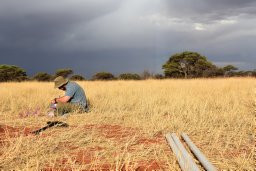 G. Feig合作论文数Department of Biogeochemistry, Max Planck Institute for Chemistry, Mainz, Germany6
 Kanisios Mukwashi合作论文数5
 Oksana Rybchak合作论文数5
 Jean-Pierre Delorme合作论文数3Christian Thau合作论文数3Jens-Kristian Jüdt合作论文数2
 Graham Von Maltitz合作论文数2Antje Lucas-Moffat合作论文数1
 Amukelani Maluleke合作论文数1Brian Mantlana合作论文数1
 Robert Luetkemeier合作论文数1
 Ronja Kraus合作论文数1Carola Martens合作论文数1Reimund P. Rötter合作论文数1
 Eric Maluta合作论文数Dept Phys, Univ Venda1
 Meed Mbidzo合作论文数1
 Shingirirai Savious Mutanga合作论文数Corresponding author. Private Bag X41, Pretoria, 0001, South Africa.1mohau jacob mateyisi合作论文数Council Sci & Ind Res CSIR1
 Victor Onyango Odipo合作论文数Department for Earth Observation, Friedrich Schiller University Jena1
 Christian Berger 0001合作论文数University of Gothenburg1
 Nicola Stevens合作论文数Environmental Change Institute, School of Geography and the Environment, University of Oxford1
 Jussi Baade合作论文数Institut für Geographie, Friedrich-Schiller-Universität Jena1
 Maik Veste合作论文数Research Centre for Landscape Development and Mining Landscapes, Brandenburg University of Technology1
 Simon Scheiter合作论文数Lehrstuhl fur Vegetationsokologie;Technische Universitat Munchen;Lehrstuhl fur Vegetationsokologie, Technische Universitat Munchen1
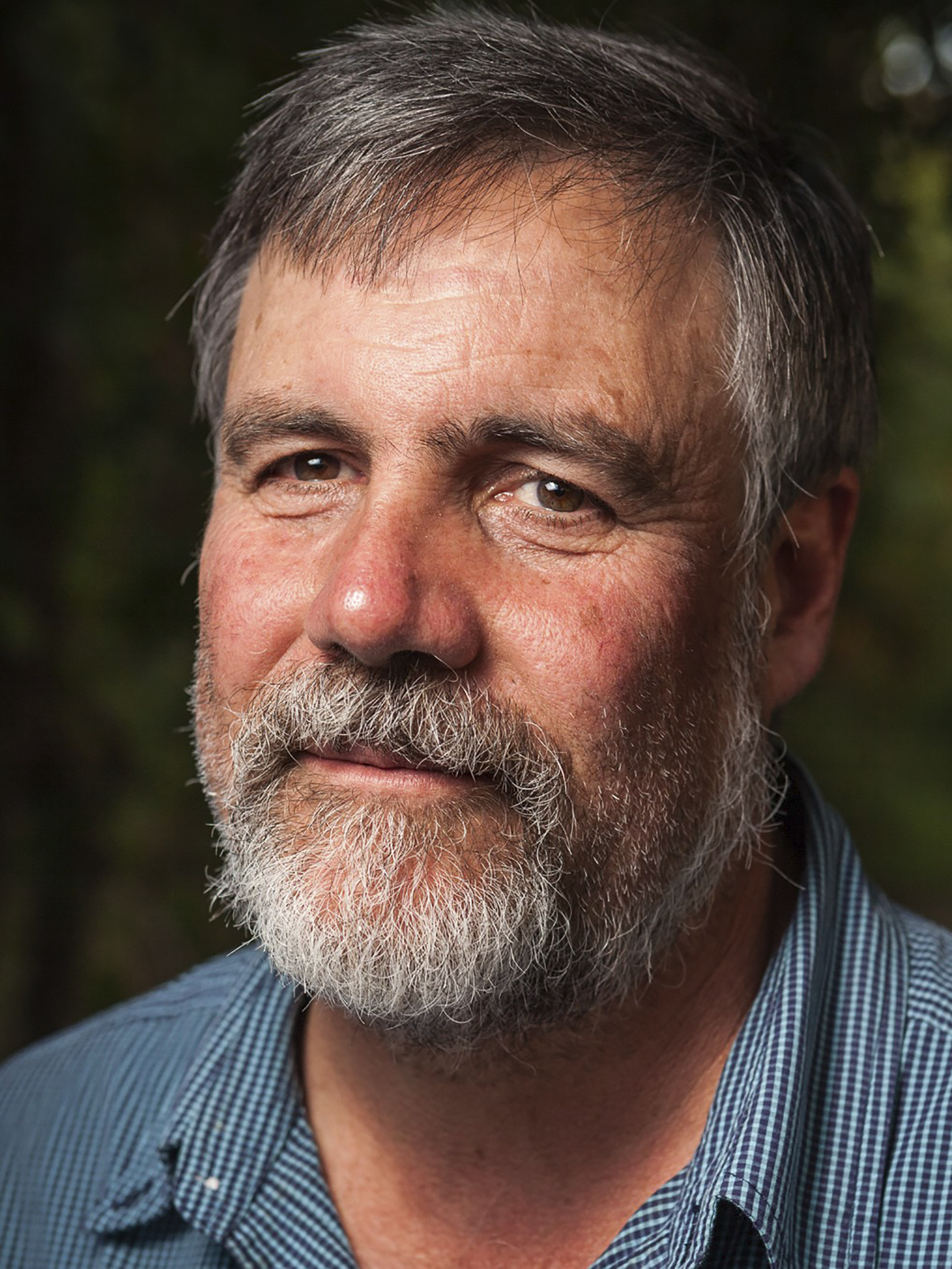 Robert J. Scholes合作论文数Global Change and Sustainability Research Institute, Witwatersrand University1
 Christiane Schmullius合作论文数Department for Earth Observation, Institute of Geography, Friedrich-Schiller-University Jena;Faculty of Chemistry and Earth Sciences, Friedrich-Schiller-University Jena1
 Karen Bradshaw合作论文数1
 Wayne Twine合作论文数University of Colorado at Boulder1
 Izak Smit合作论文数Sci Serv, South African Natl Pk1
 Ulfia A. Lenfers合作论文数Projektzentrum Ökosystemforschung, Christian-Albrechts-Universität zu Kiel1
 Werner Leo Kutsch合作论文数Max-Planck-Institut für Biogeochemie 07701 Jena Germany1
 Thomas Clemen合作论文数1
 Anja Nygren合作论文数University of Helsinki, University of Helsinki1
 Thomas Hickler合作论文数Department of Physical Geography and Ecosystems Analysis;Geobiosphere Science Centre;Lund University;Geobiosphere Science Centre, Lund University1
 Jennifer Veitch合作论文数1




