This article reports an exploratory survey of the structure of interdisciplinary research in Agent-Based Social Simulation. One hundred and ninety six researchers participated in the survey completing an on-line questionnaire. The questionnaire had three distinct sections, a classification of research domains, a classification of models, and an inquiry into software requirements for designing simulation platforms. The survey results allowed us to disambiguate the variety of scientific goals and modus operandi of researchers with a reasonable level of detail, and to identify a classification of agent-based models used in simulation. In particular, in the interdisciplinary context of social-scientific modelling, agent-based computational modelling and computer engineering, we analyse the extent to which these paradigmatic models seem to be mutually instrumental in the field. We expect that our proposal may improve the viability of submitting, explaining and comparing agent-based simulations in articles, which is an important methodological requirement to consolidate the field. We also expect that it will motivate other proposals that could further validate, extend or change ours, in order to refine the classification with more types of models.
Given the strong interdisciplinary character of Agent-Based Social Simulation (ABSS), and the difficulties related to ambiguous terminological and methodological assumptions, there is an increasing need to make more explicit the modelling paradigm underlying each research paper or project. In this paper we propose a classification of paradigmatic models in ABSS, which characterise different ontological assumptions and pragmatic criteria with respect to their targets. The classification is composed by different classes of models at different levels of abstraction, in a layered architecture that enables switching among levels. Each class is based on different kinds of assumptions, which possibly call for different logics of scientific research. The present proposal is interesting, since the taxonomy was well validated with researchers in the field. It is a good analytical tool to characterise or compare models according to various criteria, such as methodological, philosophical, or simply pragmatic and usability criteria.
In this paper we propose a preliminary reference model for the requirements specification of agent-based simulation platforms. We give the following contributions: (i) aid the identification of general principles to develop platforms; (ii) advance the analysis and prospection of technical-operational and high-level requirements; (iii) promote the identification of shared requirements, addressing them to the development of an integrated work. We present our reference model and make a comparative analysis between three well-known platforms, resulting in an unambiguous and schematic characterisation of computational systems for agent-based simulation.
A weld-on leaf spring bracket assembly comprising a leaf spring, bracket means for holding the leaf spring, and an axle to which the bracket means is welded, with the leaf spring being compressively secured within the bracket means by suitable means such as welding or the like; and, the method technique of constructing the assembly.
In this paper we present a proposal for a new classification of sub- fields in the broad area of Distributed Artificial Intelligence (DAI). The classi- fication gives a more realistic vision of present research and development ac- tivities in DAI. Namely, it emphasises the growing of the Multiagent Simula- tion sub-field, an interdisciplinary discipline working in the intersection of so- cial and natural sciences, computer simulation and agent-based computing. Ad- ditionally, we present a classification of computational systems in DAI, and discuss which computational systems should be used for each sub-field. Keywords. Distributed Artificial Intelligence, classification, simulation.
 Jaime Simão Sichman合作论文数Laboratório de Técnicas Inteligentes, Depto. Eng. Computação e Sistemas Digitais, Escola Politécnica, Universidade de São Paulo5
 Nuno David合作论文数Instituto de Ciências do Trabalho e da Empresa - Lisbon University Institute5
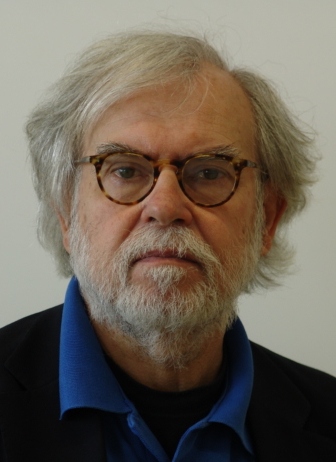 Hélder Coelho合作论文数Faculty of Sciences, University of Lisbon5




