A bstract A search for the exclusive decays of the Higgs and Z bosons to a ϕ or ρ meson and a photon is performed with a pp collision data sample corresponding to an integrated luminosity of up to 35 . 6 fb −1 collected at $$ \sqrt{s}=13 $$ s = 13 TeV with the ATLAS detector at the CERN Large Hadron Collider. These decays have been suggested as a probe of the Higgs boson couplings to light quarks. No significant excess of events is observed above the background, as expected from the Standard Model. Upper limits at 95% confidence level were obtained on the branching fractions of the Higgs boson decays to ϕ γ and ρ γ of 4 . 8 × 10 −4 and 8 . 8 × 10 −4 , respectively. The corresponding 95% confidence level upper limits for the Z boson decays are 0 . 9 × 10 −6 and 25 × 10 −6 for ϕ γ and ρ γ, respectively.
A search for leptoquarks decaying into the bτ final state is performed using Run 2 proton-proton collision data from the Large Hadron Collider, corresponding to an integrated luminosity of 139 fb−1 at √(s) = 13 TeV recorded by the ATLAS detector. The benchmark models considered in this search are vector leptoquarks with electric charge of 2/3e and scalar leptoquarks with an electric charge of 4/3e. No significant excess above the Standard Model prediction is observed, and 95
The total and differential Higgs boson production cross-sections are measured through a combined statistical analysis of the H → ZZ* → 4ℓ and H → γγ decay channels. The results are based on a dataset of 139 fb−1 of proton–proton collisions at a centre-of-mass energy of 13 TeV, recorded by the ATLAS detector at the Large Hadron Collider. The measured total Higgs boson production cross-section is 55.5_-3.8^+4.0 pb, consistent with the Standard Model prediction of 55.6 ± 2.5 pb. All results from the two decay channels are compatible with each other, and their combination agrees with the Standard Model predictions. A combined statistical interpretation of the measured fiducial cross-sections as a function of the Higgs boson transverse momentum is performed in order to probe the Yukawa couplings to the bottom and charm quarks. A similar interpretation is performed by including also the constraints from the measurements of Higgs boson production in association with a W or Z boson in the H → bb and cc decay channels.
AbstractThis article presents the results of two studies of Higgs boson properties using the $$WW^*(\rightarrow e\nu \mu \nu )jj$$ W W ∗ ( → e ν μ ν ) j j final state, based on a dataset corresponding to $${36.1}{{\mathrm{fb}}^{-1}}$$ 36.1 fb - 1 of $$\sqrt{s}=13$$ s = 13 TeV proton–proton collisions recorded by the ATLAS experiment at the Large Hadron Collider. The first study targets Higgs boson production via gluon–gluon fusion and constrains the CP properties of the effective Higgs–gluon interaction. Using angular distributions and the overall rate, a value of $$\tan (\alpha ) = 0.0 \pm 0.4 (\mathrm {stat.}) \pm 0.3 (\mathrm {syst.})$$ tan ( α ) = 0.0 ± 0.4 ( stat . ) ± 0.3 ( syst . ) is obtained for the tangent of the mixing angle for CP-even and CP-odd contributions. The second study exploits the vector-boson fusion production mechanism to probe the Higgs boson couplings to longitudinally and transversely polarised W and Z bosons in both the production and the decay of the Higgs boson; these couplings have not been directly constrained previously. The polarisation-dependent coupling-strength scale factors are defined as the ratios of the measured polarisation-dependent coupling strengths to those predicted by the Standard Model, and are determined using rate and kinematic information to be $$a_\mathrm {L}=0.91^{+0.10}_{-0.18}$$ a L = 0 . 91 - 0.18 + 0.10 (stat.)$$^{+0.09}_{-0.17}$$ - 0.17 + 0.09 (syst.) and $$a_{\mathrm {T}}=1.2 \pm 0.4 $$ a T = 1.2 ± 0.4 (stat.)$$ ^{+0.2}_{-0.3} $$ - 0.3 + 0.2 (syst.). These coupling strengths are translated into pseudo-observables, resulting in $$\kappa _{VV}= 0.91^{+0.10}_{-0.18}$$ κ VV = 0 . 91 - 0.18 + 0.10 (stat.)$$^{+0.09}_{-0.17}$$ - 0.17 + 0.09 (syst.) and $$\epsilon _{VV} =0.13^{+0.28}_{-0.20}$$ ϵ VV = 0 . 13 - 0.20 + 0.28 (stat.)$$^{+0.08}_{-0.10}$$ - 0.10 + 0.08 (syst.). All results are consistent with the Standard Model predictions.
Large-size Resistive Micromegas have been chosen for the upgrade of the forward muon spectrometer of the ATLAS experiment, the New Small Wheel project. These chambers, together with small-strip Thin Gap Chambers (sTGC), allow reconstruction of high-momentum muon tracks in a high-radiation environment and provide a robust low-threshold single-muon trigger. A collaboration of seven INFN units built 32 SM1 type chambers, corresponding to one fourth of the total number needed for this upgrade. Each SM1 chamber has a surface of approximately 2 m2 and four sensitive layers. The production was shared among five INFN construction sites and it was completed in fall 2020. The construction methods, as well as the results of the quality tests done on components of the detector and on the assembled chambers, are reported in the present paper.
A technique is presented to measure the efficiency with which c -jets are mistagged as b -jets (mistagging efficiency) using $$t\bar{t}$$ t t ¯ events, where one of the W bosons decays into an electron or muon and a neutrino and the other decays into a quark–antiquark pair. The measurement utilises the relatively large and known $$W\rightarrow cs$$ W → c s branching ratio, which allows a measurement to be made in an inclusive c -jet sample. The data sample used was collected by the ATLAS detector at $$\sqrt{s} = 13$$ s = 13 $$\text {TeV}$$ TeV and corresponds to an integrated luminosity of 139 fb $$^{-1}$$ - 1 . Events are reconstructed using a kinematic likelihood technique which selects the mapping between jets and $$t\bar{t}$$ t t ¯ decay products that yields the highest likelihood value. The distribution of the b -tagging discriminant for jets from the hadronic W decays in data is compared with that in simulation to extract the mistagging efficiency as a function of jet transverse momentum. The total uncertainties are in the range 3–17%. The measurements generally agree with those in simulation but there are some differences in the region corresponding to the most stringent b -jet tagging requirement.
In this work, a novel technique to estimate the deflection of a bi-dimensional structure by means of fiber Bragg gratings (FBGs) is proposed. FBGs are embedded in monitored structure, avoiding the complex wiring typical of strain gauges, and provide local strain measurements. Then, by classical beam theory, from the strain maps measured by the FBGs, the two-dimensional deflection map of the monitored structure is numerically provided. The proposed method allows to overcome the difficulties existing in the direct measurement of the deflection: many types of structures (small and large) can be monitored in real-time thanks to this technique by using appropriate design parameters. In particular, this method can be useful in the structural monitoring of civil infrastructures and composite materials for aeronautics.
An error in the normalization of the Aplanarity and D-parameter has been found. Insufficient precision on the eigenvalue calculation can cause lambda(3) to be negative, exclusively in two-jet events, yielding an underestimation of the inclusive two-jet cross section.
Micromegas are among the most promising micro pattern gaseous detector (MPGD) technologies for applications in high energy physics (HEP). Micromegas are very versatile. They can be used for precision tracking and trigger, in particle flow sampling calorimetry, as anode planes for RICH detectors or for time projection chambers. Driven mainly by future upgrades of existing experiments at high-luminosity LHC (HL-LHC) and for applications at future accelerators, we started an R&D project to push further this technology for operations under very high particle flow up to rates of tens MHz/cm$^{2}$, three orders of magnitude higher than current applications. The miniaturization of the readout elements and the optimization of the spark protection system, as well as the stability and robustness under operation, are the primary challenges of the project.
A search for heavy resonances decaying into a pair of Z bosons leading to l+l-l ' +l '- and l+l-nu nu final states, where l stands for either an electron or a muon, is presented. The search uses proton-proton collision data at a centre-of-mass energy of 13 TeV collected from 2015 to 2018 that corresponds to the integrated luminosity of 139 fb-1 recorded by the ATLAS detector during Run 2 of the Large Hadron Collider. Different mass ranges spanning 200 GeV to 2000 GeV for the hypothetical resonances are considered, depending on the final state and model. In the absence of a significant observed excess, the results are interpreted as upper limits on the production cross section of a spin-0 or spin-2 resonance. The upper limits for the spin-0 resonance are translated to exclusion contours in the context of Type-I and Type-II two-Higgs-doublet models, and the limits for the spin-2 resonance are used to constrain the Randall-Sundrum model with an extra dimension giving rise to spin-2 graviton excitations.
measurement of the B_s^0→ J/ψϕ decay parameters using 80.5 fb^-1 of integrated luminosity collected with the ATLAS detector from 13 TeV proton–proton collisions at the LHC is presented. The measured parameters include the CP -violating phase ϕ _s , the width difference ΔΓ _s between the B_s^0 meson mass eigenstates and the average decay width Γ _s . The values measured for the physical parameters are combined with those from 19.2 fb^-1 of 7 and 8 TeV data, leading to the following: ϕ _s= -0.087 ± 0.036 (stat.)± 0.021 (syst.) rad ΔΓ _s= 0.0657 ± 0.0043 (stat.)± 0.0037 (syst.) ps^-1 Γ _s= 0.6703 ± 0.0014 (stat.)± 0.0018 (syst.) ps^-1 Results for ϕ _s and ΔΓ _s are also presented as 68
AbstractA measurement of the $$ B_{s}^{0} \rightarrow J/\psi \phi $$ B s 0 → J / ψ ϕ decay parameters using $$ 80.5\, \mathrm {fb^{-1}} $$ 80.5 fb - 1 of integrated luminosity collected with the ATLAS detector from 13 $$\text {Te}\text {V}$$ Te proton–proton collisions at the LHC is presented. The measured parameters include the CP-violating phase $$\phi _{s} $$ ϕ s , the width difference $$ \Delta \Gamma _{s}$$ Δ Γ s between the $$B_{s}^{0}$$ B s 0 meson mass eigenstates and the average decay width $$ \Gamma _{s}$$ Γ s . The values measured for the physical parameters are combined with those from $$ 19.2\, \mathrm {fb^{-1}} $$ 19.2 fb - 1 of 7 and 8 $$\text {Te}\text {V}$$ Te data, leading to the following: $$\begin{aligned} \phi _{s}= & {} -0.087 \pm 0.036 ~\mathrm {(stat.)} \pm 0.021 ~\mathrm {(syst.)~rad} \\ \Delta \Gamma _{s}= & {} 0.0657 \pm 0.0043 ~\mathrm {(stat.)}\pm 0.0037 ~\mathrm {(syst.)~ps}^{-1} \\ \Gamma _{s}= & {} 0.6703 \pm 0.0014 ~\mathrm {(stat.)}\pm 0.0018 ~\mathrm {(syst.)~ps}^{-1} \end{aligned}$$ ϕ s = - 0.087 ± 0.036 ( stat . ) ± 0.021 ( syst . ) rad Δ Γ s = 0.0657 ± 0.0043 ( stat . ) ± 0.0037 ( syst . ) ps - 1 Γ s = 0.6703 ± 0.0014 ( stat . ) ± 0.0018 ( syst . ) ps - 1 Results for $$\phi _{s} $$ ϕ s and $$ \Delta \Gamma _{s}$$ Δ Γ s are also presented as 68% confidence level contours in the $$\phi _{s} $$ ϕ s –$$ \Delta \Gamma _{s}$$ Δ Γ s plane. Furthermore the transversity amplitudes and corresponding strong phases are measured. $$\phi _{s} $$ ϕ s and $$ \Delta \Gamma _{s}$$ Δ Γ s measurements are in agreement with the Standard Model predictions.
One correction is noted for the paper. A wrong cross-section was used for the theory prediction in figure 6 due to not taking into account the VHH contamination properly in the rescaling formula for the signal samples.
The first measurement of longitudinal decorrelations of harmonic flow amplitudes v_{n} for n=2-4 in Xe+Xe collisions at sqrt[s_{NN}]=5.44 TeV is obtained using 3 μb^{-1} of data with the ATLAS detector at the LHC. The decorrelation signal for v_{3} and v_{4} is found to be nearly independent of collision centrality and transverse momentum (p_{T}) requirements on final-state particles, but for v_{2} a strong centrality and p_{T} dependence is seen. When compared with the results from Pb+Pb collisions at sqrt[s_{NN}]=5.02 TeV, the longitudinal decorrelation signal in midcentral Xe+Xe collisions is found to be larger for v_{2}, but smaller for v_{3}. Current hydrodynamic models reproduce the ratios of the v_{n} measured in Xe+Xe collisions to those in Pb+Pb collisions but fail to describe the magnitudes and trends of the ratios of longitudinal flow decorrelations between Xe+Xe and Pb+Pb. The results on the system-size dependence provide new insights and an important lever arm to separate effects of the longitudinal structure of the initial state from other early and late time effects in heavy-ion collisions.
A full-size prototype of a Micromegas precision tracking chamber for the upgrade of the ATLAS detector at the LHC Collider has been built between October 2015 and April 2016. This paper describes in detail the procedures followed in the construction of the components of the chamber in various INFN laboratories and the final assembly in the Laboratori Nazionali di Frascati (LNF). In addition, the results of the chamber exposure to a particle beam at SPS/H8 at CERN in June 2016 are presented. The performances obtained in the construction and the results of the test beam are compared with the requirements set in order to sustain the high radiation levels expected during the data-taking of the LHC in the next years.
A study of the charge conjugation and parity (CP) properties of the interaction between the Higgs boson and top quarks is presented. Higgs bosons are identified via the diphoton decay channel (H→γγ), and their production in association with a top quark pair (tt[over ¯]H) or single top quark (tH) is studied. The analysis uses 139 fb^{-1} of proton-proton collision data recorded at a center-of-mass energy of sqrt[s]=13 TeV with the ATLAS detector at the Large Hadron Collider. Assuming a CP-even coupling, the tt[over ¯]H process is observed with a significance of 5.2 standard deviations. The measured cross section times H→γγ branching ratio is 1.64_{-0.36}^{+0.38}(stat)_{-0.14}^{+0.17}(sys) fb, and the measured rate for tt[over ¯]H is 1.43_{-0.31}^{+0.33}(stat)_{-0.15}^{+0.21}(sys) times the Standard Model expectation. The tH production process is not observed and an upper limit on its rate of 12 times the Standard Model expectation is set. A CP-mixing angle greater (less) than 43 (-43)° is excluded at 95% confidence level.
This paper presents a search for direct top squark pair production in events with missing transverse momentum plus either a pair of jets consistent with Standard Model Higgs boson decay into b-quarks or a same-flavour opposite-sign dilepton pair with an invariant mass consistent with a Z boson. The analysis is performed using the proton–proton collision data at \n$$\\sqrt{s}=13$$\n\n TeV collected with the ATLAS detector during the LHC Run-2, corresponding to an integrated luminosity of 139 fb\n$$^{-1}$$\n\n. No excess is observed in the data above the Standard Model predictions. The results are interpreted in simplified models featuring direct production of pairs of either the lighter top squark (\n$$\\tilde{t}_1$$\n\n) or the heavier top squark (\n$$\\tilde{t}_2$$\n\n), excluding at 95% confidence level \n$$\\tilde{t}_1$$\n\n and \n$$\\tilde{t}_2$$\n\n masses up to about 1220 and 875 GeV, respectively.
 A. Aloisio合作论文数532Paolo Bagnaia合作论文数512Gianpaolo Carlino合作论文数Istituto Nazionale di Fisica Nucleare389G. J. Bobbink合作论文数380
 Steve Ahlen合作论文数Physics Department, College of Arts and Sciences, Boston University377
 F. Filthaut (Frank)合作论文数Department of Experimental High Energy Physics, Radboud University367
 Lamberto Luminari合作论文数Istituto Nazionale di Fisica Nucleare342
 Alessandro De Salvo合作论文数Istituto Nazionale di Fisica Nucleare Sezione di Roma;CERN339S. Falciano合作论文数336C. Luci合作论文数333
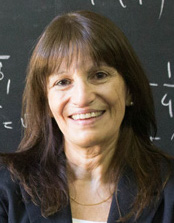 María Teresa Dova合作论文数Physics Department, Faculty of Exact Sciences, National University of La Plata332g chiefari合作论文数331
 Paul de Jong合作论文数Institute of Physics, Faculty of Science, Universiteit van Amsterdam;Nikhef325J. Toth合作论文数CPPM, Aix-Marseille Université, CNRS/IN2P3, Marseille, France325
 Swagato Banerjee合作论文数Department of Physics & Astronomy, University of Louisville320
 Adriaan König合作论文数Institute for Mathematics, Astrophysics and Particle Physics, Radboud University312
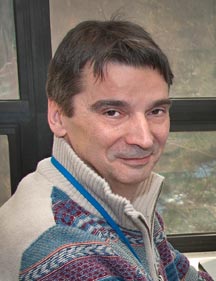 Alexei Klimentov合作论文数Physics Department, Brookhaven National Laboratory312
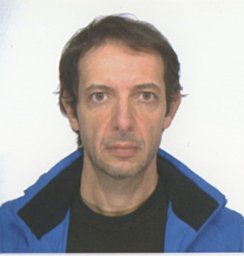 S. Giagu合作论文数INFN Sezione di Roma, Sapienza University311
 Simonetta Gentile合作论文数Scuola Di Psicoterapia Consorzio Fortune;Dipartimentale di Psicologia Clinica, Ospedale Pediatrico Bambino302A. Doria合作论文数299C. Dionisi合作论文数296s patricelli合作论文数295
 Giulio Aielli合作论文数Dipartimento di Fisica, Università degli studi di Tor Vergata;CERN291
 Arno Straessner合作论文数Institute of Nuclear and Particle Physics, Faculty of Physics, Technische Universität Dresden285Aleandro Nisati合作论文数Istituto Nazionale di Fisica Nucleare284L. Merola合作论文数284
 Domenico Della Volpe合作论文数Département de Physique Nucléaire et Corpusculaire, Université de Genève;Department of Particle Physics, Université de Genève284M. Rescigno合作论文数282Fl Linde合作论文数279
 Christos Anastopoulos合作论文数School of Mathematical and Physical Sciences, University of Sheffield277
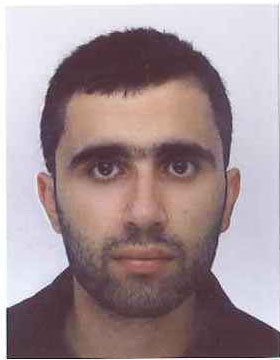 Georges Aad合作论文数Aix-Marseille University277
 Mario Antonelli合作论文数Laboratori Nazionali di Frascati LNF, Istituto Nazionale di Fisica Nucleare276
 Calin Alexa合作论文数Horia Hulubei National Institute of Physics and Nuclear Engineering276
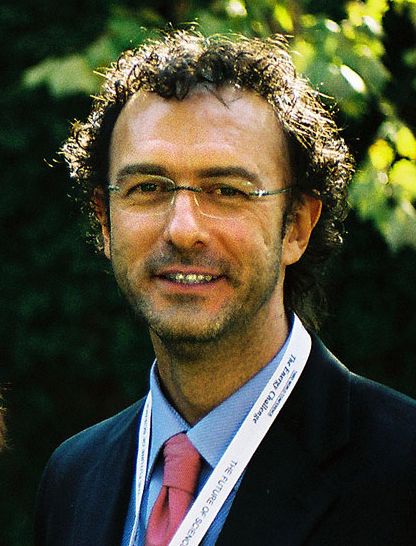 Gianluca Alimonti合作论文数Istituto Nazionale di Fisica Nucleare;University of Milan275
 Tim Adye合作论文数Particle Physics Department, Rutherford Appleton Laboratory275Giovanni Mirabelli合作论文数274M. Aleksa合作论文数European Laboratory for Particle Physics (CERN), CH-1211 Geneva 23, Switzerland274C Amelung合作论文数273
 Attilio Andreazza合作论文数Dipartimento di Fisica, Università degli studi di Milano;Laboratorio di Trattamento Numerico dei Dati Sperimentali, Università degli studi di Milano;Istituto Nazionale di Fisica Nucleare273
 Muhammad Alhroob合作论文数Department of Physics, University of Warwick273
 Aaron Richard Angerami合作论文数Lawrence Livermore National Laboratory273I. N. Aleksandrov合作论文数272
 Timothy R Andeen合作论文数Department of Physics, College of Natural Sciences, The University of Texas at Austin272
 Brad Abbott合作论文数Homer L. Dodge Department of Physics and Astronomy, Dodge Family College of Arts and Sciences, The University of Oklahoma272
 Fabio Anulli合作论文数Istituto Nazionale di Fisica Nucleare271
 Theo Alexopoulos合作论文数Department of Physics, School of Applied Mathematical & Physical Sciences, National Technical University of Athens;Hellenic Open University270
 Jean-François Arguin合作论文数Département De Physique, Faculté Des Arts Et Des Sciences, Université de Montréal267
 Georges Azuelos合作论文数Department of Physics, Faculty of Arts and Science, Université de Montréal;TRIUMF265M. Aguilar-Benitez合作论文数Centro de Investigaciones Energeticas, Medioambientales y Tecnologicas, CIEMAT265




