The Earth's outer radiation belt is highly dynamic, containing relativistic electron fluxes that can increase by several orders of magnitude during magnetospheric disturbances. This greatly increases the likelihood of spacecraft malfunction or failure and significantly influences the solar-terrestrial system's energy and mass coupling, highlighting the importance of fully understanding the mechanisms governing these dynamics from both theoretical and practical perspectives. Although many theories have been proposed, further research is essential to quantify the specific contributions of different dynamic mechanisms for improving space weather forecasting. To address this, observations of the outer radiation belt with high spatial-temporal resolution to distinguish the spatial and temporal variations are essential. We introduce a 10-CubeSat constellation survey scheme in the geosynchronous transfer orbit (GTO) to achieve this required observation. Three baseline instruments are proposed to be employed: the high energy electron detector (HEED), the search coil wave detector (SCWD), and the magnetometer (MAG). Two groups of physical processes will be investigated: wave-particle interactions involving charged particles interacting with whistler-mode waves, electromagnetic ion cyclotron (EMIC) waves, and ultra-low frequency (ULF) waves; and radial transport encompassing shock-induced injections, substorm injections, storm convection and magnetopause shadowing. The performance parameters of instruments and platform of the constellation are presented. Additionally, aligned with the concept of constellation survey, we outline the COSPAR-coordinated space program, COnstellation of Radiation BElt Survey (CORBES), which will provide a crucial scientific contribution in the absence of the Van Allen Probes. The program's excellent obser-vational capability enables a comprehensive understanding of the underlying physical mechanisms governing the outer radiation belt dynamics and improved space weather forecasting. (c) 2024 COSPAR. Published by Elsevier B.V. This is an open access article under the CC BY-NC-ND license (http://creativecommons.org/licenses/ by-nc-nd/4.0/).
The COnstellation of Radiation BElt Survey program (CORBES) is designed to deploy small satellites into a highly elliptic orbit for multi-point exploration of the Earth’s radiation belts. Its scientific objective is to achieve unprecedented high-time-resolution dynamics measurements within the regions of Earth’s outer radiation belts. The CORBES program initiative comprises satellites equipped with three types of payloads: the Magnetometer (MAG), the Search Coil Wave Detector (SCWD), and the High Energy Electron Detector (HEED). The energy interval of HEED is suggested as 0.1-4MeV, logarithmically divided into 12 channels. To ensure extensive coverage of the outer radiation belts, a highly eccentric and inclined orbit is suggested, featuring a perigee of 280 km, an apogee of 7 Earth-Radius (Re), and an inclination of approximately 11 degrees, resulting in an orbital period of approximately 13.5 hours. Within a single orbital period, it takes roughly 10 hours to traverse the outer radiation belts (3 Re to 7Re). All satellites are expected to operate within the same orbit, maintaining a spin-stabilized with sun-pointing spinning axis, and a spinning speed of approximately 8 RPM. Each satellite’s mass should not exceed 30kg. For telecommand, either S-band or X-band will be utilized, while X-band is designated for data downlink. The satellites are scheduled for launch by one or two rockets, with the equipped upper stage placing them into the target orbit, and the attached dispenser releasing them individually according to the required separation sequence. Key aspects of the program include cross-calibration, radiation shielding, assembly integration and testing (AIT). Prior to launch, the cross-calibration is optional for the payloads. The payloads will be tested in the same environment to calibrate the technical specifications. Post-launch, in orbit cross-calibration becomes necessary to maintain data consistency and comparability. Specifically for HEED, this involves selecting electrons with the same energy range during the magnetospheric quiet period(Kp<3), and comparing the observation results of different HEEDs under the same L,B conditions. A similar method applies to MAG and SCWD comparing observations during selected quiet period. Given that the satellites will operate within radiation belts characterized by high-energy protons at low altitudes and electrons at high altitudes, all on-board electronic components must meet fundamental requirements, including shielding geometry structure design, and thickness calculation to mitigate the Total Ionizing Dose Effect (TID) to a level of 200 krad[Si] over a one-year mission cycle. Lastly, system-level AIT before launch could be performed.
The Large Interferometer For Exoplanets (LIFE) is a proposed space mission that enables the spectral characterization of the thermal emission of exoplanets in the solar neighborhood. The mission is designed to search for global atmospheric biosignatures on dozens of temperate terrestrial exoplanets and it will naturally investigate the diversity of other worlds. Here, we review the status of the mission concept, discuss the key mission parameters, and outline the trade-offs related to the mission's architecture. In preparation for an upcoming concept study, we define a mission baseline based on a free-formation flying constellation of a double Bracewell nulling interferometer that consists of 4 collectors and a central beam-combiner spacecraft. The interferometric baselines are between 10-600 m, and the estimated diameters of the collectors are at least 2 m (but will depend on the total achievable instrument throughput). The spectral required wavelength range is 6-16 mu m (with a goal of 4-18.5 mu m), hence cryogenic temperatures are needed both for the collectors and the beam combiners. One of the key challenges is the required deep, stable, and broad-band nulling performance while maintaining a high system throughput for the planet signal. Among many ongoing or needed technology development activities, the demonstration of the measurement principle under cryogenic conditions is fundamentally important for LIFE.
The electric solar wind sail, or E-sail, is a propellantless interplanetary propulsion system concept. By deflecting solar wind particles off their original course, it can generate a propulsive effect with nothing more than an electric charge. The high-voltage charge is applied to one or multiple centrifugally deployed hair-thin tethers, around which an electrostatic sheath is created. Electron emitters are required to compensate for the electron current gathered by the tether. The electric sail can also be utilised in low Earth orbit, or LEO, when passing through the ionosphere, where it serves as a plasma brake for deorbiting—several missions have been dedicated to LEO demonstration. In this article, we propose the ESTCube-LuNa mission concept and the preliminary cubesat design to be launched into the Moon’s orbit, where the solar wind is uninterrupted, except for the lunar wake and when the Moon is in the Earth’s magnetosphere. This article introduces E-sail demonstration experiments and the preliminary payload design, along with E-sail thrust validation and environment characterisation methods, a cis-lunar cubesat platform solution and an early concept of operations. The proposed lunar nanospacecraft concept is designed without a deep space network, typically used for lunar and deep space operations. Instead, radio telescopes are being repurposed for communications and radio frequency ranging, and celestial optical navigation is developed for on-board orbit determination.
Context. The increased brightness temperature of young rocky protoplanets during their magma ocean epoch makes them potentially amenable to atmospheric characterization at distances from the Solar System far greater than thermally equilibrated terrestrial exoplanets, offering observational opportunities for unique insights into the origin of secondary atmospheres and the near surface conditions of prebiotic environments. Aims. The Large Interferometer For Exoplanets (LIFE) mission will employ a space-based midinfrared nulling interferometer to directly measure the thermal emission of terrestrial exoplanets. In this work, we seek to assess the capabilities of various instrumental design choices of the LIFE mission concept for the detection of cooling protoplanets with transient high-temperature magma ocean atmospheres at the tail end of planetary accretion. In particular, we investigate the minimum integration times necessary to detect transient magma ocean exoplanets in young stellar associations in the Solar neighborhood. Methods. Using the LIFE mission instrument simulator (LIFEsim), we assessed how specific instrumental parameters and design choices, such as wavelength coverage, aperture diameter, and photon throughput, facilitate or disadvantage the detection of protoplan-ets. We focused on the observational sensitivities of distance to the observed planetary system, protoplanet brightness temperature (using a blackbody assumption), and orbital distance of the potential protoplanets around both G- and M-dwarf stars. Results. Our simulations suggest that LIFE will be able to detect (S/N >= 7) hot protoplanets in young stellar associations up to distances of 100 pc from the Solar System for reasonable integration times (up to a few hours). Detection of an Earth-sized protoplanet orbiting a Solar-sized host star at 1 AU requires less than 30 minutes of integration time. M-dwarfs generally need shorter integration times. The contribution from wavelength regions smaller than 6 mu m is important for decreasing the detection threshold and discriminating emission temperatures. Conclusions. The LIFE mission is capable of detecting cooling terrestrial protoplanets within minutes to hours in several local young stellar associations hosting potential targets. The anticipated compositional range of magma ocean atmospheres motivates further architectural design studies to characterize the crucial transition from primary to secondary atmospheres.
The rising number of proposed nanosatellite missions with Commercial Off-The-Shelf electronics to higher orbits necessitates innovative, compact, and lightweight radiation shielding. In this study, several thousand multilayer radiation shielding configurations were simulated against trapped particle spectra predicted for a geostationary transfer orbit to demonstrate how material combinations and layer structures can be selected to minimise the total ionising dose inside nanosatellites with constrained mass budgets. The Geant4 Radiation Analysis for Space (GRAS) application was used to calculate ionising dose deposition behind multilayer shielding. Thousands of planar shielding stacks were procedurally generated and simulated on top of silicon plates representing sensitive semiconductor devices. To allow for comparison between configurations, all shielding stacks had a total mass of 1.5 g/cm2, and shielding performance was evaluated based on the total ionising dose absorbed by the silicon plates. The simulations consistently show that configurations with lowatomic-number (low-Z) materials on top of high-Z materials yield the lowest doses. The two- and three-layer mass allocation optimisations demonstrate the non-linear dependence of ionising dose on mass allocation between materials. Optimised polyethylene-lead shields achieved up to 30% lower ionising doses compared to an equal mass of either of the two materials or up to 50% lower than the same mass of aluminium. Contrary to previous claims about Z-graded shielding, no significant improvements were observed for using more than two different materials, and optimisation of multilayer shields tends to reduce them to two-layer structures. Optimal multilayer radiation shielding depends on various factors and must be tailored to specific radiation environments and mission requirements. The primary contributions of this article are the methods presented for achieving this tailoring using open-source software and parallel computing. The multilayer simulations performed for this work resulted in an extensive dataset for multilayer shielding performance that enabled novel visualisations of the ionising dose dependence on shielding composition based on quantitative results. (c) 2023 COSPAR. Published by Elsevier B.V. This is an open access article under the CC BY license (http://creativecommons.org/licenses/by/4.0/).
Earth’s radiation belts are extremely important for space weather because they can store and accelerate particles to relativistic energies, which can have a potential impact on satellite functionality, communications, and navigation systems. The FORESAIL consortium wants to measure these high-energy particle fluxes to understand the dynamics of the radiation belts with its satellite mission Foresail-2. The mission aims to measure magnetic ultra low frequency waves and the plasma environment in the magnetosphere around Earth. The captured data will help to improve our understanding of space weather, and in particular the dynamics of Earth’s radiation belts during periods of large disturbances inside the magnetosphere. A mission design analysis and several trade-off studies are conducted to find the requirements for the science payloads and spacecraft avionics design. Deducted from these requirements, four different payloads are proposed to gather science data in a highly elliptical orbit such as a geostationary transfer orbit. The precision magnetometer uses flux-gate technology to measure magnetic waves from 1 mHz to 10 Hz. The spin scanning particle telescope is built around a detector stack to measure electron spectra in the range of 30 keV to 10 MeV. Additionally, this mission serves as a technology demonstrator for the Coulomb drag experiment which proposes a new kind of electric solar wind sail utilising the Coulomb drag force imposed onto a 300 m long tether. The fourth payload investigates multilayer radiation shielding and single event effects. All payloads will be supported by a newly developed 6U platform using mostly commercial off-the-shelf components. Its proposed avionics face several unique design requirements rising from the payloads and the preferred highly elliptical orbit for this mission.
Small affordable satellites have opened the opportunity for innovative small class science missions to Low Earth Orbit and beyond. Finnish Centre of Excellence in Research of Sustainable Space (FORESAIL) started a CubeSat program which aims to improve CubeSat technology radiation tolerance to explore the higher orbits and radiation belt. Currently, the Foresail satellite program consists of two development generations of CubeSat platforms, prepared for to different science missions. Two satellites, the Foresail-1 (FS1) and Foresail-1’ (FS1’) utilize the 3U CubeSat form factor and have been developed for Low Earth Orbit (LEO), whereas the Foresail-2 satellite aim towards a highly elliptical Geostationary Transfer Orbit (GTO) to study magnetic Ultra Low Frequency waves in the radiation belt region.
 Jaan Praks合作论文数Dept Radio Sci & Engn, Aalto Univ5
 Anton Fetzer合作论文数3
 Pekka Janhunen合作论文数Finnish Meteorological Institute3
 Philipp Oleynik合作论文数Ioffe Physico-Technical Institute;Laboratory for Experimental Astrophysics;Laboratory for Experimental Astrophysics, Ioffe Physico-Technical Institute3Romain Laugier合作论文数2Petri Toivanen合作论文数2Felix Dannert合作论文数2Ramon Navarro合作论文数2O. Balsalobre-Ruza合作论文数2Bruce Clayhills合作论文数2Ville Lundén合作论文数2Amadeo Castro-González合作论文数2
 Emilia Kilpua合作论文数Department of Physics, Faculty of Science, University of Helsinki2
 Haiyang Wang合作论文数2Michael J Ireland合作论文数2A. Romagnolo合作论文数2Tereza Constantinou合作论文数2
 Michael Meyer合作论文数Department of Astronomy, College of Literature, Science and the Arts, University of Michigan2Surendra Bhattarai合作论文数2
 Evan L. Sneed合作论文数Penn State Extraterr Intelligence Ctr, Penn State Univ2M. Schlecker合作论文数Max-Planck-Institut für Astronomie , Königstuhl 17, D-69117 Heidelberg, Germany;trifonov@mpia.de;Department of Astronomy/Steward Observatory, The University of Arizona;Max-Planck-Institut für Astronomie, The University of Arizona2
 Jonah Hansen合作论文数Res Sch Astron & Astrophys, Australian Natl Univ2Óscar Carrión-González合作论文数2P. Niemelä合作论文数2
 Jens Kammerer合作论文数Space Telescope Sci Inst2
 Andrea Fortier合作论文数Ctr Space & Habitabil2Yulun Li合作论文数2Satoshi Itoh合作论文数2Jeanne Davoult合作论文数2Sasha Hinkley合作论文数2Vito Squicciarini合作论文数2
 E. Alei合作论文数Natl Ctr Competence Res PlanetS2
 Tim Lichtenberg合作论文数Kapteyn Astron Inst, Univ Groningen2
 Andris Slavinskis合作论文数University of Tartu2
 L. Noack合作论文数Dept Earth Sci, Free Univ Berlin2
 J. Lillo-Box合作论文数European Space Astronomy Centre Campus, University of Maria de Maeztu2Joice Mathew合作论文数Research School of Astronomy & Astrophysics, College of Science, The Australian National University2
 Marrick Braam合作论文数Center for Space and Habitability, Faculty of Science, University of Bern2
 Ramses Mario Ramirez合作论文数Department of Geosciences, Pennsylvania State University2
 Floris Van Der Tak合作论文数SRON Netherlands Institute for Space Research;Institute of Kapteyn Astronomical, University of Groningen2
 Li Deng合作论文数2
 Hugh R.A. Jones合作论文数Science Technology Research Institute, University of Hertfordshire;Centre for Astrophysics Research, Department of Physics, Astronomy and Mathematics, School of Physics, Engineering and Computer Science, University of Hertfordshire2
 Sarah Rugheimer合作论文数Department of Physics, University of Oxford2
 Anders Johansen合作论文数Lund Observatory, Department of Astronomy and Theoretical Physics, Lund University;GLOBE Institute, University of Copenhagen2
 Motohide Tamura (田村元秀)合作论文数National Astronomical Observatory of Japan;Department of Astronomy, Graduate School of Science, The University of Tokyo2
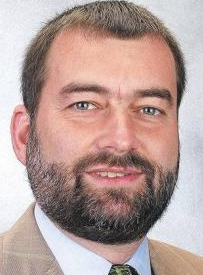 Andreas Quirrenbach合作论文数Zentrum für Astronomie, Universität Heidelberg;Fakultät für Physik und Astronomie, Universität Heidelberg2
 Rami Vainio合作论文数Department of Physics and Astronomy, University of Turku;Space Research Laboratory, University of Turku;Centre of Excellence in Research of Sustainable Space, University of Turku2
 Shenyi Zhang (张珅毅)合作论文数National Space Science Center, Chinese Academy of Sciences2
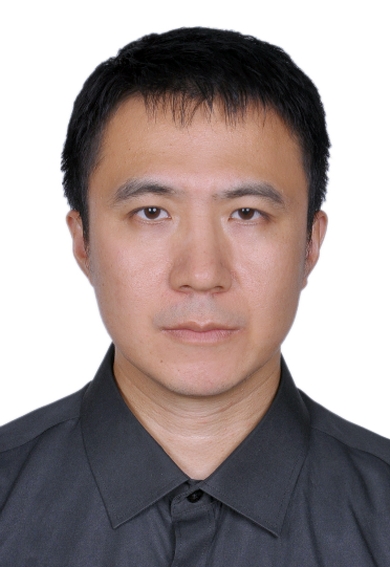 Bin Zhou (周斌)合作论文数National Space Science Center, Chinese Academy of Sciences;University of Chinese Academy of Sciences2




