Extension professionals are expected to help disseminate agricultural technologies, information, knowledge and skills to farmers. In order to develop valuable and long-lasting extension services, it is essential to understand the methods of extension that farmers find most beneficial. This understanding helps adopt improved practices, overcome barriers, provide targeted interventions and continuously improve agricultural extension programs. Thus, assessing factors affecting farmers' choice of agricultural extension methods is essential for developing extension methods that comply with farmers' needs and socio-economic conditions. Therefore, we analyzed the factors affecting farmers' preferences in extension methods, using cross-sectional data collected from 300 households in two sample districts and 16 Kebelles in Ethiopia between September 2019 and March 2020. Four extension methods, including training, demonstration, office visits and phone calls were considered as outcome variables. We fitted a multivariate probit model to estimate the factors that influence farmers' choice of extension methods. The results of the study showed that the number of dependents in the household head, formal education and membership of Idir (an informal insurance program a community or group runs to meet emergencies) were negatively associated with farmers' choices to participate in different extension methods compared to no extension. On the other hand, the sex of the household head, farm experience, participation in non-farm activities, monetary loan access, owning a mobile phone, radio access and membership of cooperatives were found to have a statistically significant positive impact on farmers' choices of extension methods. Based on these findings, the government and the concerned stakeholders should take farmers' socio-economic and institutional traits into account when selecting and commissioning agricultural extension methods. This could help to develop contextually relevant extension strategies that are more likely to be chosen and appreciated by farmers. Furthermore, such strategies can aid policymakers in designing extension programs that cater to farmers' needs and concerns. In conclusion, farmers' socio-economic and institutional affiliation should be taken into consideration when selecting agricultural extension methods.
Appropriate use of agricultural technologies and diversifying the farming activities is critical to addressing food security problems in Africa, including Ethiopia. The country is experimenting with the new Agricultural Innovation System (AIS) approach alongside the well-established Transfer of Technology (ToT) approach. This paper analyzes the gaps between policy discourses (as reflected in policy documents and strategic orientation documents) and extension practices (as reflected in the daily exchanges between farmers and the frontline staff of the Ethiopian extension system). It provides insights into the challenges faced and emphasizes the need for better coordination between policy formulation and implementation to enhance extension services. Policymakers, practitioners, and researchers can benefit from the valuable perspectives the findings offer. The study contributes to understanding the relationship between policy discourses and extension practices, and its implications can inform policy design and implementation in similar contexts. A qualitative research approach was deployed to analyze policy discourse and practice. Data were collected in Fogera, a district in Northwest Ethiopia, between August 2018 and February 2019. The data for the paper were obtained from 23 Focus Group Discussions conducted with men and women. 13 Informant Interviews (KIIs) were also carried out with personnel at different levels of government agricultural services and departments. Transcripts of recordings of the Focus Group Discussions (FGDs) and Key Informant Interviews (KIIs) were analyzed using a deductive approach. The study focuses on rice crops in the Fogera district, which are crucial for food security and reducing poverty. Although the geographic area is limited, the results can be used to improve the extension system in other areas facing similar challenges. Specifically, the study suggests switching from the traditional transfer of technology approach to the agricultural innovation system approach. Furthermore, the study's techniques, such as qualitative interviews, may have limitations and not fully capture the intricacies of policy and extension practices. The findings demonstrate that, although the policy documents strongly adhere to agricultural innovation system principles, top-down transfer of technology approaches continues to dominate in practice. Moreover, we have found potential discrepancies between the training content delivered and the specific needs of smallholder farmers. Practically, prescriptive systems are still used because agricultural innovation system approaches are not well understood by the Extension Agents. To realize a genuine agricultural innovation system, Ethiopia’s extension apparatus should move forward with building committed and robust relationships between farmers, extension agents, researchers, private sectors, and non-governmental organizations. To this end, more research, enhanced training, and improved institutions are needed on what genuine agricultural innovation system could look like at the grass-roots level. This also includes understanding the roles that different actors within Ethiopia’s development army should assume how a multi-actor policy dialogue can be organized.
This research identifies critical determinants for interactions between farmers and extension agencies. Cross-sectional farm household-level data from three hundred household heads were collected between September 2019 and March 2020 and triangulated with data from workshops with farmers and extension agents. The data were analyzed using Spearman’s correlation coefficient, Kruskal–Wallis analysis of variance and the ordered probit model. Farmers’ socio-economic characteristics significantly affect their degree of interaction with extension agencies. Recognition of the determinants of the level of farmers’ interactions can inform policymakers about how to formulate and improve the effectiveness of extension programs, enhance information and knowledge dissemination and facilitate development in collaboration with local communities by focusing on a better interaction between farmers and extension agencies. The level of a farmer’s interactions is based on a systematic decision-making process. Although personal and demographic characteristics are important, farmers’ interaction levels require conducive institutional and household assets, groups/social capital and access to extension agents’ contexts. These contexts will differ by household, country and region. Therefore, extension agencies should create and design contextually appropriate strategies for substantial interactions with farmers for the dissemination of farm information. This research is original and valuable in identifying the factors associated with the level of farmers’ interactions with extension agencies in the Amhara region, Ethiopia. It also provides a new pathway for operationalizing farmer-oriented agricultural extension policies and strategies and to help agricultural policymakers formulate extension service programs.
The purpose of this study is to analyse the manifold struggles over land in southern Ethiopia's Nechisar National Park (NNP). The formal creation of NNP in 1974 fundamentally altered the scene, and congregated pastoralists, farmers, hunters, and conservationists in the struggles over resource access and use. While 'ancestral rights' continued to be invoked by those who had used the land previously, the NNP management and other actors could now call upon the imperatives of conservation to either curtail access to the Park and its resources or evict people from the Park. Following the downfall of the Derg regime in 1991, when Ethiopia adopted an ethnic federalism, attempts were made to assign a designated territory to each ethnic group. Thus, the struggles over NNP were further complicated by the renewal of the significance of ethnicity and the meanings of actors' strategies, given that the Park straddles the border between two regional states established under the new system of governance. This article is based on ethnographic fieldwork conducted in and around NNP. It demonstrates how attempts to introduce territoriality to hitherto unterritorialised spaces and ethnic groups resulted in the multiplication of the number of actors struggling for access to, and/or governance authority over, NNP and in the intensification of these struggles. The article argues for a shift in understanding people-park conflicts from a merely ecological and economistic approach to one that also situates these conflicts in the national politics of ethnic territorialisation.
In spite of growing international attention for natural resource management, relations of property regarding natural resources have hardly been studied in Ethiopia, a country known for its oxen-plow-based agriculture and revolutionary land reforms. This article goes beyond the agricultural focus and provides an actor-oriented analysis of water management in an Ethiopian microlevel context within a theoretical framework that builds on development discourses, social interfaces, and relations of property. The disconnectedness between government policies and local reality and the repercussions thereof for policy implementation are unraveled and so bring to light hybrids of development discourses. Relations of property still appear to be based on former private landholding systems in spite of socialist land reform, and hybrids of development discourses are deployed at three levels of institutionalization, policymaking, and implementation that are disconnected from each other, which leads to discrepancies between policy discourse and practice.
ABSTRACTGiven the observed agro-pastoralization of livelihoods of both Moose ‘farmers’ and Fulbe ‘herdsmen’, interactions between both groups living in Burkina Faso's north-central region are usually interpreted in terms of vanishing symbiosis and increasing tension along ethnic lines. There is, however, a remainder to this equation, namely the cattle Moose entrust to Fulbe. This article looks into Fulbe involvement in solving Moose fecundity problems to elucidate the nature of the relationships in which cattle entrustment is embedded. It is argued that Moose ideas about the other world and its intervention in procreation and constituting personhood allow imagining an extension of Moose societal relations beyond conventional community boundaries, that is, including Fulbe. This extension can be subsequently – but not necessarily – effectuated through the establishment and performance of spiritual kinship in which cattle owned by Moose can be embedded. The divergent extent to which sustained Moose–Fulbe relations result is explained in terms of social controversy regarding agro-pastoralization of livelihoods accompanied by differential cattle accumulation.
conundrum about whether the initial failures of states to secure growth are best met with accelerating success or are monuments of lost opportunities in the 1980s in need of salvage; merely avoiding syndromes, we learn, is not enough, and state provision of infrastructure and education are needed; greater growth opportunities, it is suggested, lie in exploiting a class of service exports and untapped natural resource wealth; autonomous governance will always be a wild card; and ‘achieving growth in Africa is thus unlikely to be an easy matter for its societies’ (p. 128). Surprisingly, the issue of ethnicities, power and state control is included in the general analysis in Volume 1 only so far as to highlight it as a crucial factor in African political economic growth, and to propose governance solutions through institutions such as NEPAD and the African Peer Review Mechanism (however problematic these both are). Volume 1 goes on to provide evidence from the case studies (Volume 2) of how the four anti-growth syndromes and geography have affected economic growth, both positively and negatively, dependent on political choice and (in)experienced political leadership. Benno Ndulu’s chapter on the ‘evolution of global development paradigms and their influence on African economic growth’ is a particularly noteworthy chapter that links the ideological experience of the leaders of independent Africa with the first phases of economic growth policy, as is Paul Collier and Jan Willem Gunning’s chapter on ‘inter-temporal strategies and their implications for growth’ that looks at public and private sector looting in autocratic and democratic regimes. A notso-revolutionary finding, but new in terms of statistical modelling, is the direct link between policy and economic growth or decline. As such, the solutions, from a social science or political economy perspective, are not particularly groundbreaking, but nonetheless remain a timely re-intervention into current and topical African economic debates. The ultimate strength of the book, however, lies in the perceived authority of the developmental economist’s approach in shaping economic growth policy in a neo-liberal context. Volume 1 is the econometric veneer on a richer, incredibly useful political economy literature in Volume 2 that, despite the unfortunate geographic classification of countries, contains a wealth of information for policy makers and advisers, government consultants, institutions concerned with economic growth in Africa, social scientists and Africanists.
Sita Zougouri, Derrière la vitrine du développement: aménagement forestier et pouvoir local au Burkina Faso. Uppsala Studies in Cultural Anthropology 44. Uppsala: Universitetsbiblioteket (pb – 978 9 15547 261 0). 2008, xx + 274 pp. - Volume 79 Issue 4
An abstract is not available for this content so a preview has been provided. Please use the Get access link above for information on how to access this content.
An abstract is not available for this content so a preview has been provided. Please use the Get access link above for information on how to access this content.
Henri Bocquené, Memoirs of a Mbororo: the life of Ndudi Umaru, Fulani Nomad of Cameroon. Transl. by Philip Burnham and Gordeen Gorder. New York and Oxford: Berghahn Books (paperback US39.95, £25.00, ISBN 1 57181 844 8). 2002, 320 pp. - Volume 74 Issue 3
An abstract is not available for this content so a preview has been provided. Please use the Get access link above for information on how to access this content.
SPATIAL AND SOCIAL INTERACTIONS Bonds and Boundaries in Northern Ghana and Southern Burkina Faso. Edited by STEN HAGBERG and ALEXIS B. TENGAN. Uppsala: Acta Universitatis Upsaliensis, 2000. Pp. 197. No price given, (ISBN 91-554-4770-8). - Volume 43 Issue 1
SOCIAL DIVERSITY AND IDENTITIES Regard sur le Borgou: Pouvoir et altérité dans une région ouest-africaine. Sous la direction de ELISABETH BOESEN, CHRISTINE HARDUNG et RICHARD KUBA. Paris: L'Harmattan, 1998. Pp. 366. FF. 210, paperback (ISBN 2-7384-7138-2). - Volume 41 Issue 2
REGIONAL HISTORY Histoire du Pays Gouin et de Ses Environs (Burkina Faso). Par Michèle Dacher. (Découvertes du Burkina). Paris and Ouagadougou: SÉPIA-A.D.D.B., 1997. Pp. 188. FFr 113.74. (ISBN 2-84280-013-3). - Volume 40 Issue 3
 Lutgart Lenaerts合作论文数4
 Yemane Asmelash Gebremariam合作论文数3
 Amare Sewnet Minale合作论文数3
 Beneberu Assefa Wondimagegnhu合作论文数Coll Agr & Environm Sci, Bahir Dar Univ3Enyew Adgo Tsegaye合作论文数3
 Joost Dessein合作论文数Social Sciences Unit, Institute for Agricultural and Fisheries Research3
 Jan Nyssen合作论文数Department of Geography, Ghent University2
 Steven Van Passel合作论文数Policy Research Centre for Sustainable Agriculture2rheenen van t合作论文数1Ann Cassiman合作论文数1Zemen Ayalew合作论文数1
 Mitiku Haile合作论文数1
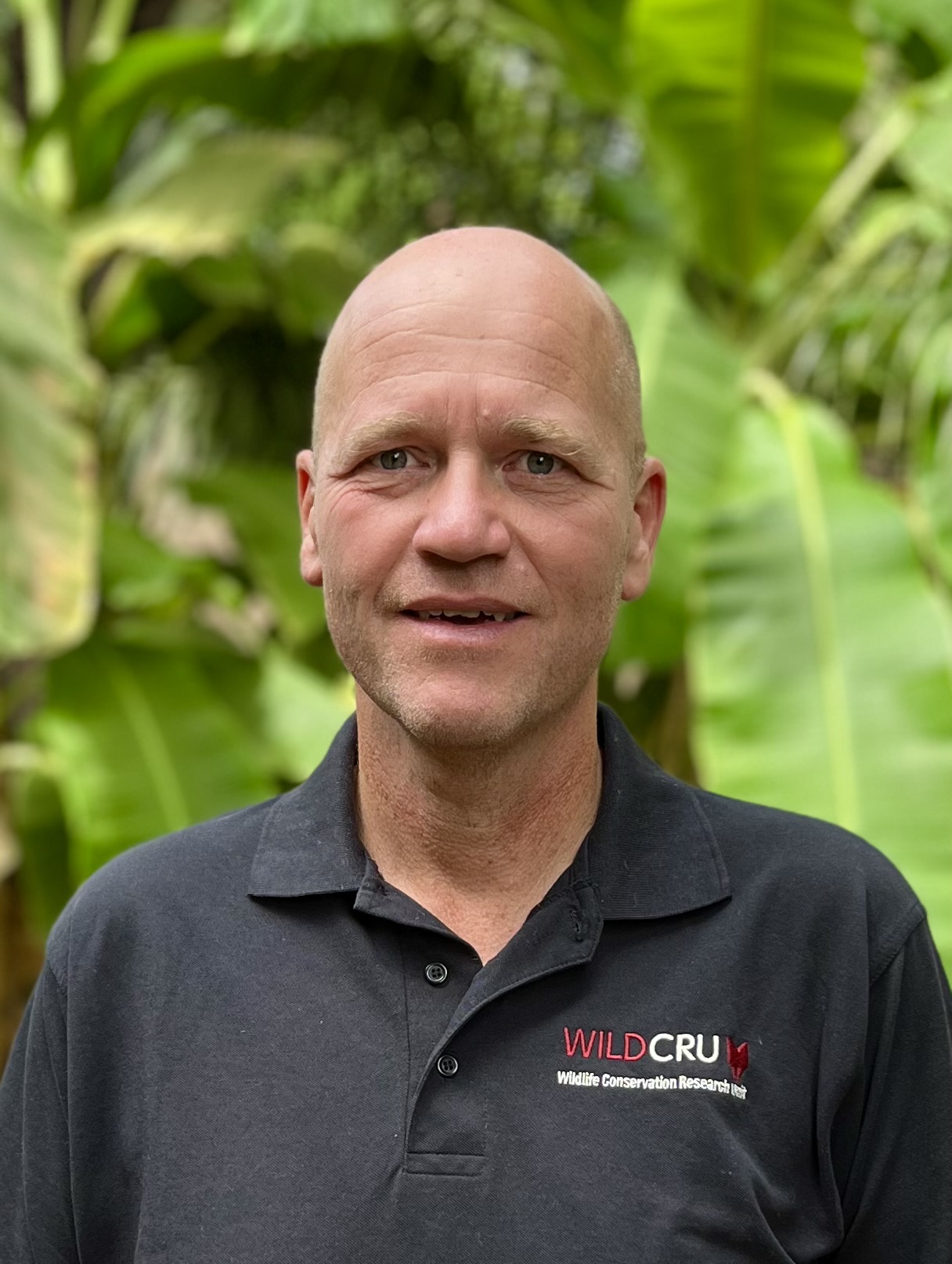 Hans Bauer合作论文数Department of Biology, University of Oxford;Wildlife Conservation Research Unit, Department of Zoology, University of Oxford1Jozef Deckers合作论文数1
 Amaury Frankl合作论文数Department of Geography, Ghent University1
 Stefaan Dondeyne合作论文数1




