We study batch verification in QMA query and communication complexity, where the goal is to understand how the resources needed to verify m copies of a Boolean function f depend on m. We give a general technique for proving lower bounds on the witness-query tradeoff needed to batch verify a function f in terms of its approximate degree. Applying this technique to an explicit family of DNF formulas f, we show that attempting to save even a constant factor on the witness length of the baseline approach to batch verifying f necessitates a large polynomial increase in the query cost. We also obtain new lower bounds on the QMA query complexity of read-once CNF formulas and on the surjectivity and k-element distinctness functions. Our lower bounds also lift to give communication analogs of these results.
We give new differentially private algorithms for the classic problems of learning decision lists and large-margin halfspaces in the PAC and online models. In the PAC model, we give a computationally efficient algorithm for learning decision lists with minimal sample overhead over the best non-private algorithms. In the online model, we give a private analog of the influential Winnow algorithm for learning halfspaces with mistake bound polylogarithmic in the dimension and inverse polynomial in the margin. As an application, we describe how to privately learn decision lists in the online model, qualitatively matching state-of-the art non-private guarantees.
We resolve an open question of Jain, Raskhodnikova, Sivakumar, and Smith (ICML 2023) by exhibiting a problem separating differential privacy under continual observation in the oblivious and adaptive settings. The continual observation (a.k.a. continual release) model formalizes privacy for streaming algorithms, where data is received over time and output is released at each time step. In the oblivious setting, privacy need only hold for data streams fixed in advance; in the adaptive setting, privacy is required even for streams that can be chosen adaptively based on the streaming algorithm's output. We describe the first explicit separation between the oblivious and adaptive settings. The problem showing this separation is based on the correlated vector queries problem of Bun, Steinke, and Ullman (SODA 2017). Specifically, we present an (ε,0)-DP algorithm for the oblivious setting that remains accurate for exponentially many time steps in the dimension of the input. On the other hand, we show that every (ε,δ)-DP adaptive algorithm fails to be accurate after releasing output for only a constant number of time steps.
We revisit the framework of interactive proofs for distribution testing, first introduced by Chiesa and Gur (ITCS 2018), which has recently experienced a surge in interest, accompanied by notable progress (e.g., Herman and Rothblum, STOC 2022, FOCS 2023; Herman, RANDOM 2024).In this model, a data-poor verifier determines whether a probability distribution has a property of interest by interacting with an all-powerful, data-rich but untrusted prover bent on convincing them that it has the property. While prior work gave sample-, time-, and communication-efficient protocols for testing and estimating a range of distribution properties, they all suffer from an inherent issue: for most interesting properties of distributions over a domain of size N, the verifier must draw at least Omega(root N) samples of its own. While sublinear in N, this is still prohibitive for large domains encountered in practice. In this work, we circumvent this limitation by augmenting the verifier with the ability to perform an exponentially smaller number of more powerful (but reasonable) pairwise conditional queries, effectively enabling them to perform "local comparison checks" of the prover's claims. We systematically investigate the landscape of interactive proofs in this new setting, giving poly-logarithmic query and sample protocols for (tolerantly) testing all label-invariant properties, thus demonstrating exponential savings without compromising on communication, for this large and fundamental class of testing tasks. 2012 ACM Subject Classification Theory of computation -> Interactive computation
Motivated by the challenge of testing distributions over high-dimensional or continuous domains, we study distribution testing with respect to bounded classes of distinguishers. A representative task is to use samples from an unknown distribution P over a very large domain to decide between two cases: P = P_𝗋𝖾𝖿 for a fixed reference distribution P_𝗋𝖾𝖿, or there exists a distinguisher f in a bounded class ℱ which witnesses the separation |𝐄_P[f] - 𝐄_P_𝗋𝖾𝖿[f]| > ε. This is the task of identity testing with respect to fooling distance, a name inspired by the conceptual connection with pseudorandomness. (Formally, our model instantiates integral probability metrics from Boolean classes of bounded expressivity.) We show that testing with respect to fooling distance is not only a natural computational problem that admits sample-efficient algorithms even in high-dimensional settings, but also one that reveals and underlies connections between three seemingly unrelated areas of study: testable learning, verification of learning algorithms, and testing of structured distributions (whose "𝒜_k-testing" model our framework extends). These connections yield new results for all of these models, including: 1. Testable proper learners using membership queries for halfspaces and decision trees. 2. A lower bound for testable PAC verification in terms of Rademacher complexity, and a distribution-free verification protocol for disjoint unions of k multidimensional rectangles. 3. Identity testers (with respect to total variation distance) for decision tree distributions and distributions with low-degree polynomial densities, over Boolean and continuous hypercube domains.
The Wasserstein barycenter is defined as the mean of a set of probability measures under the optimal transport metric, and has numerous applications spanning machine learning, statistics, and computer graphics. In practice these input measures are empirical distributions built from sensitive datasets, motivating a differentially private (DP) treatment. We present, to our knowledge, the first algorithms for computing Wasserstein barycenters under differential privacy. Empirically, on synthetic data, MNIST, and large-scale U.S. population datasets, our methods produce high-quality private barycenters with strong accuracy-privacy tradeoffs.
The technical literature about data privacy largely consists of two complementary approaches: formal definitions of conditions sufficient for privacy preservation and attacks that demonstrate privacy breaches. Differential privacy is an accepted standard in the former sphere. However, differential privacy's powerful adversarial model and worst-case guarantees may make it too stringent in some situations, especially when achieving it comes at a significant cost to data utility. Meanwhile, privacy attacks aim to expose real and worrying privacy risks associated with existing data release processes but often face criticism for being unrealistic. Moreover, the literature on attacks generally does not identify what properties are necessary to defend against them. We address the gap between these approaches by introducing demographic coherence, a condition inspired by privacy attacks that we argue is necessary for data privacy. This condition captures privacy violations arising from inferences about individuals that are incoherent with respect to the demographic patterns in the data. Our framework focuses on confidence rated predictors, which can in turn be distilled from almost any data-informed process. Thus, we capture privacy threats that exist even when no attack is explicitly being carried out. Our framework not only provides a condition with respect to which data release algorithms can be analysed but suggests natural experimental evaluation methodologies that could be used to build practical intuition and make tangible assessment of risks. Finally, we argue that demographic coherence is weaker than differential privacy: we prove that every differentially private data release is also demographically coherent, and that there are demographically coherent algorithms which are not differentially private.
Hypothesis selection, also known as density estimation, is a fundamental problem in statistics and learning theory. Suppose we are given a sample set from an unknown distribution $P$ and a finite class of candidate distributions (called hypotheses) $\mathcal{H} \coloneqq \{H_1, H_2, \ldots, H_n\}$. The aim is to design an algorithm that selects a distribution $\hat H$ in $\mathcal{H}$ that best fits the data. The algorithm's accuracy is measured based on the distance between $\hat{H}$ and $P$ compared to the distance of the closest distribution in $\mathcal{H}$ to $P$ (denoted by $OPT$). Concretely, we aim for $\|\hat{H} - P\|_{TV}$ to be at most $ \alpha \cdot OPT + \epsilon$ for some small $\epsilon$ and $\alpha$. While it is possible to decrease the value of $\epsilon$ as the number of samples increases, $\alpha$ is an inherent characteristic of the algorithm. In fact, one cannot hope to achieve $\alpha < 3$ even when there are only two candidate hypotheses, unless the number of samples is proportional to the domain size of $P$ [Bousquet, Kane, Moran '19]. Finding the best $\alpha$ has been one of the main focuses of studies of the problem since early work of [Devroye, Lugosi '01]. Prior to our work, no algorithm was known that achieves $\alpha = 3$ in near-linear time. We provide the first algorithm that operates in almost linear time ($\tilde{O}(n/\epsilon^3)$ time) and achieves $\alpha = 3$. This result improves upon a long list of results in hypothesis selection. Previously known algorithms either had worse time complexity, a larger factor $\alpha$, or extra assumptions about the problem setting. In addition to this algorithm, we provide another (almost) linear-time algorithm with better dependency on the additive accuracy parameter $\epsilon$, albeit with a slightly worse accuracy parameter, $\alpha = 4$.
Due to statistical lower bounds on the learnability of many function classes under privacy constraints, there has been recent interest in leveraging public data to improve the performance of private learning algorithms. In this model, algorithms must always guarantee differential privacy with respect to the private samples while also ensuring learning guarantees when the private data distribution is sufficiently close to that of the public data. Previous work has demonstrated that when sufficient public, unlabelled data is available, private learning can be made statistically tractable, but the resulting algorithms have all been computationally inefficient. In this work, we present the first computationally efficient, algorithms to provably leverage public data to learn privately whenever a function class is learnable non-privately, where our notion of computational efficiency is with respect to the number of calls to an optimization oracle for the function class. In addition to this general result, we provide specialized algorithms with improved sample complexities in the special cases when the function class is convex or when the task is binary classification.
We give an example of a class of distributions that is learnable in total variation distance with a finite number of samples, but not learnable under $(\varepsilon, \delta)$-differential privacy. This refutes a conjecture of Ashtiani.
Motivated by privacy concerns in long-term longitudinal studies in medical and social science research, we study the problem of continually releasing differentially private synthetic data from longitudinal data collections. We introduce a model where, in every time step, each individual reports a new data element, and the goal of the synthesizer is to incrementally update a synthetic dataset in a consistent way to capture a rich class of statistical properties. We give continual synthetic data generation algorithms that preserve two basic types of queries: fixed time window queries and cumulative time queries. We show nearly tight upper bounds on the error rates of these algorithms and demonstrate their empirical performance on realistically sized datasets from the U.S. Census Bureau's Survey of Income and Program Participation.
Confidence intervals are a fundamental tool for quantifying the uncertainty of parameters of interest. With the increase of data privacy awareness, developing a private version of confidence intervals has gained growing attention from both statisticians and computer scientists. Differential privacy is a state-of-the-art framework for analyzing privacy loss when releasing statistics computed from sensitive data. Recent work has been done around differentially private confidence intervals, yet to the best of our knowledge, rigorous methodologies on differentially private confidence intervals in the context of survey sampling have not been studied. In this paper, we propose three differentially private algorithms for constructing confidence intervals for proportions under stratified random sampling. We articulate two variants of differential privacy that make sense for data from stratified sampling designs, analyzing each of our algorithms within one of these two variants. We establish analytical privacy guarantees and asymptotic properties of the estimators. In addition, we conduct simulation studies to evaluate the proposed private confidence intervals, and two applications to the 1940 Census data are provided.
We continue the study of the computational complexity of differentially private PAC learning and how it is situated within the foundations of machine learning. A recent line of work uncovered a qualitative equivalence between the private PAC model and Littlestone's mistake-bounded model of online learning, in particular, showing that any concept class of Littlestone dimension d can be privately PAC learned using poly(d) samples. This raises the natural question of whether there might be a generic conversion from online learners to private PAC learners that also preserves computational efficiency. We give a negative answer to this question under reasonable cryptographic assumptions (roughly, those from which it is possible to build indistinguishability obfuscation for all circuits). We exhibit a concept class that admits an online learner running in polynomial time with a polynomial mistake bound, but for which there is no computationally-efficient differentially private PAC learner. Our construction and analysis strengthens and generalizes that of Bun and Zhandry (TCC 2016-A), who established such a separation between private and non-private PAC learner.
The approximate degree of a Boolean function is the minimum degree of real polynomial that approximates it pointwise. For any Boolean function, its approximate degree serves as a lower bound on its quantum query complexity, and generically lifts to a quantum communication lower bound for a related function. We introduce a framework for proving approximate degree lower bounds for certain oracle identification problems, where the goal is to recover a hidden binary string $x \in \{0, 1\}^n$ given possibly non-standard oracle access to it. Our lower bounds apply to decision versions of these problems, where the goal is to compute the parity of $x$. We apply our framework to the ordered search and hidden string problems, proving nearly tight approximate degree lower bounds of $\Omega(n/\log^2 n)$ for each. These lower bounds generalize to the weakly unbounded error setting, giving a new quantum query lower bound for the hidden string problem in this regime. Our lower bounds are driven by randomized communication upper bounds for the greater-than and equality functions.
The notion of replicable algorithms was introduced by Impagliazzo, Lei, Pitassi, and Sorrell (STOC’22) to describe randomized algorithms that are stable under the resampling of their inputs. More precisely, a replicable algorithm gives the same output with high probability when its randomness is fixed and it is run on a new i.i.d. sample drawn from the same distribution. Using replicable algorithms for data analysis can facilitate the verification of published results by ensuring that the results of an analysis will be the same with high probability, even when that analysis is performed on a new data set. In this work, we establish new connections and separations between replicability and standard notions of algorithmic stability. In particular, we give sample-efficient algorithmic reductions between perfect generalization, approximate differential privacy, and replicability for a broad class of statistical problems. Conversely, we show any such equivalence must break down computationally: there exist statistical problems that are easy under differential privacy, but that cannot be solved replicably without breaking public-key cryptography. Furthermore, these results are tight: our reductions are statistically optimal, and we show that any computational separation between DP and replicability must imply the existence of one-way functions. Our statistical reductions give a new algorithmic framework for translating between notions of stability, which we instantiate to answer several open questions in replicability and privacy. This includes giving sample-efficient replicable algorithms for various PAC learning, distribution estimation, and distribution testing problems, algorithmic amplification of δ in approximate DP, conversions from item-level to user-level privacy, and the existence of private agnostic-to-realizable learning reductions under structured distributions.
Sampling schemes are fundamental tools in statistics, survey design, and algorithm design. A fundamental result in differential privacy is that a differentially private mechanism run on a simple random sample of a population provides stronger privacy guarantees than the same algorithm run on the entire population. However, in practice, sampling designs are often more complex than the simple, data-independent sampling schemes that are addressed in prior work. In this work, we extend the study of privacy amplification results to more complex, data-dependent sampling schemes. We find that not only do these sampling schemes often fail to amplify privacy, they can actually result in privacy degradation. We analyze the privacy implications of the pervasive cluster sampling and stratified sampling paradigms, as well as provide some insight into the study of more general sampling designs.
Hypothesis selection is a fundamental problem in learning theory and statistics. Given a dataset and a finite set of candidate distributions, the goal is to select a distribution that matches the data as well as possible. More specifically, suppose we have sample access to an unknown distribution $P$ over a domain $\mathcal{X}$ that we know is well-approximated by one of a a class of $n$ distributions (a.k.a. hypotheses), $\mathcal{H} \coloneqq \{H_1, H_2, \ldots, H_n\}$. The goal is to design an algorithm that outputs a distribution $\hat{H} \in \mathcal{H}$ whose total variation distance from $P$ is nearly minimal. In this work, we study the hypothesis selection problem under memory constraints. We consider a model where samples from $P$ are presented in a stream and we access each sample $x$ via ``PDF-comparison'' queries that allow us to compare the probability densities of any pair of hypotheses at the domain point $x$ (i.e., is $H_i(x) < H_j(x)$?). This model allows us to study how much memory is needed at any point in time to store information about the portion of the stream seen so far. Our main result is an algorithm that achieves a nearly optimal tradeoff between memory usage and the number of samples required. In particular, given $b$ bits of memory (for $b$ roughly between $\log n$ and $n$), our algorithm solves the hypothesis selection problem with $s$ samples, where $b \cdot s = O(n \log n)$. This result is optimal up to an $O(\log n)$ factor, for all $b$.
Motivated by privacy concerns in long-term longitudinal studies in medical and social science research, we study the problem of continually releasing differentially private synthetic data from longitudinal data collections. We introduce a model where, in every time step, each individual reports a new data element, and the goal of the synthesizer is to incrementally update a synthetic dataset in a consistent way to capture a rich class of statistical properties. We give continual synthetic data generation algorithms that preserve two basic types of queries: fixed time window queries and cumulative time queries. We show nearly tight upper bounds on the error rates of these algorithms and demonstrate their empirical performance on realistically sized datasets from the U.S. Census Bureau's Survey of Income and Program Participation.
The approximate degree of a Boolean function f captures how well f can be approximated pointwise by low-degree polynomials. This article surveys what we know about approximate degree and illustrates some of its applications in theoretical computer science.
Let H be a binary-labeled concept class. We prove that H can be PAC learned by an (approximate) differentially private algorithm if and only if it has a finite Littlestone dimension. This implies a qualitative equivalence between online learnability and private PAC learnability.
 Thomas Steinke合作论文数Google DeepMind14
 Justin Thaler合作论文数Department of Computer Science, Georgetown University12
 Marco Gaboardi合作论文数Università degli Studi di Bologna10
 Adam D. Smith合作论文数Department of Computer Science, Boston University;Faculty of Computing and Data Sciences, Boston University6
 Salil Vadhan合作论文数John A. Paulson School of Engineering and Applied Sciences, Harvard University6
 Kobbi Nissim合作论文数Department of Computer Science, Georgetown University;Google6
 Satchit Sivakumar合作论文数Boston University5
 Steven Wu合作论文数Software and Societal Systems Department, School of Computer Science, Carnegie Mellon University;Machine Learning Department, School of Computer Science, Carnegie Mellon University;Human-Computer Interaction Institute, Carnegie Mellon University4
 Gautam Kamath合作论文数David R. Cheriton School of Computer Science, University of Waterloo;Department of Computer Science, Courant Institute of Mathematical Sciences, New York University;Vector Institute4
 David O'Brien合作论文数3
 Jessica Sorrell合作论文数3Alexandra Wood合作论文数Berkman Klein Center for Internet & Society, Harvard University3
 Robin Kothari合作论文数Google Quantum AI3
 Uri Stemmer合作论文数School of Computer Science, Tel Aviv University3
 Max Hopkins合作论文数School of Mathematics, Institute for Advanced Study2
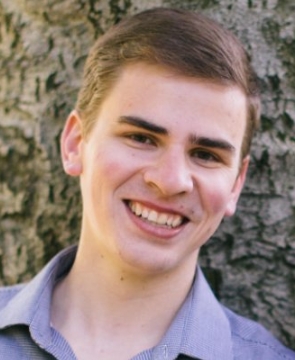 Gavin Brown合作论文数Paul G Allen School of Computer Science and Engineering, University of Washington;Computer Science Department, Boston University2Dan Muise合作论文数2Desai Rathin合作论文数2
 Aaron Bembenek合作论文数Harvard University2Rex Lei合作论文数2Yi-Hsiu Chen合作论文数Sch Engn & Appl Sci, Harvard Univ2
 Marcel Neunhoeffer合作论文数Ludwig Maximilians Univ Munchen2
 Aloni Cohen合作论文数Department of Computer Science, The University of Chicago2
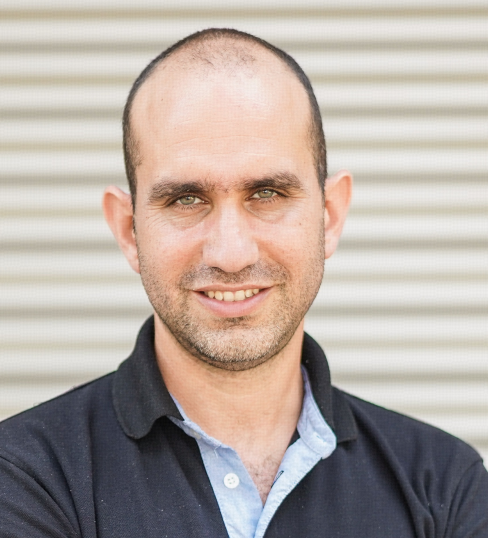 Shay Moran合作论文数Faculty of Mathematics, Technion – Israel Institute of Technology;Faculty of Data and Decision Sciences, Technion – Israel Institute of Technology2
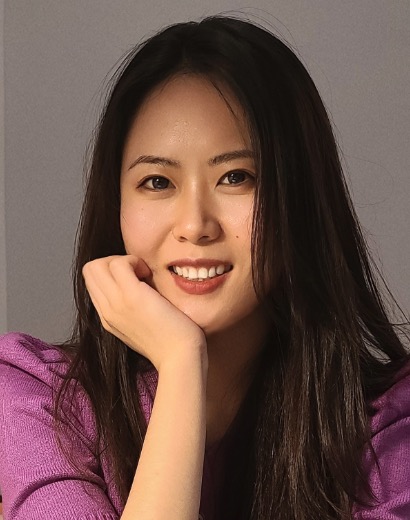 Wanrong Zhang合作论文数John A. Paulson School Of Engineering And Applied Sciences, Harvard University2
 Maryam Aliakbarpour合作论文数Department of Computer Science, Rice University;Ken Kennedy Institute, Rice University2
 Russell Impagliazzo合作论文数Department of Computer Science and Engineering Temp link, University of California, San Diego2
 Toniann Pitassi合作论文数The Fu Foundation School of Engineering and Applied Science, Columbia University2
 Roi Livni合作论文数Department of Electrical Engineering, School of Electrical Engineering, Tel Aviv University2
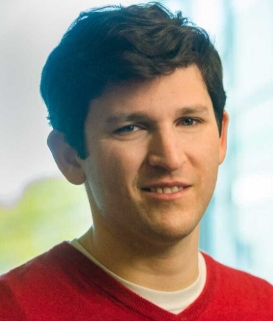 Jonathan Ullman合作论文数Khoury College of Computer Sciences, Northeastern University2
 Aleksandar Nikolov合作论文数Department of Computer Science, University of Toronto2Janardhan Kulkarni合作论文数1Varun Suriyanarayana合作论文数1
 Manolis Zampetakis合作论文数Department of Computer Science, Yale University1Hyun woo Lim合作论文数1Nadezhda Voronova合作论文数1
 Aaron Bernstein合作论文数Department of Computer Science and Engineering, NYU Tandon School of Engineering, New York University1
 Ronen Eldan合作论文数Department of Mathematics, Weizmann Institute of Science1Ryan Rogers合作论文数1Joy Zheng合作论文数1Caper Gooden合作论文数1Andreea Antuca合作论文数1Balcer Victor合作论文数1Sudatta Bhattacharya合作论文数1George Kellaris合作论文数1
 Dor Minzer合作论文数Department of Mathematics, Massachusetts Institute of Technology1
 Argyrios Deligkas合作论文数Centre for Reliable Machine Learning, Department of Computer Science, Royal Holloway University of London;Centre for Intelligent Systems, Department of Computer Science, Royal Holloway University of London1Ethan Mook合作论文数1
 Palak Jain合作论文数Department of Computer Science, Boston University1