Abstract Debates about the legality of the death penalty in the United States span decades. Of importance, the Supreme Court has been asked repeatedly to define the Eighth Amendment’s phrase “cruel and unusual punishment” as it pertains to capital punishment. The chapter explores the history of executions, the means of state-sponsored killings, and the relative “humaneness” of the various methods used. From hanging, to firing squads, electric chairs, gas chambers, and lethal injection, the process of execution has been repeatedly refined and sanitized. Although the US public finds the idea of physical torture reprehensible, the psychological torture of death row receives little notice.
Abstract This chapter describes the process by which jurors decide who is sentenced to death. The question of the death penalty in US jurisprudence has been debated by the Supreme Court for decades. Justices and legislators have worked over both trial procedures and jury instructions in an effort to correct problems with capital sentencing. These efforts aim at fashioning a process that minimizes arbitrary sentencing decisions based on legally irrelevant criteria such as race, wealth, and gender while simultaneously allowing jurors to consider the unique circumstances of each case. The issue confronting the Court has been whether this delicate balance can be achieved in practice, whether death sentencing can be both fair and rational.
Abstract Dismantling the Death Penalty is a succinct, accessible, and lively overview of research on the costs and consequences of capital punishment. Professor Costanzo uses diverse sources of information, including closing arguments from murder trials; interviews with jurors; statistical analyses of murder rates; survey data; and quotes from defendants, politicians, and the families of victims, to understand the effects and effectiveness of the death penalty. Each chapter answers an essential question: How do juries decide who is sentenced to death? Do executions deter potential murderers? Does the public support the death penalty? Is it “cruel and unusual”? Is it cheaper than life imprisonment? How serious are errors and biases in the system? Is the death penalty morally justified? Although the emphasis is on social scientific research, this comprehensive analysis also places the practice of killing murderers in historical, political, and moral context. The opening chapter chronicles the long, bloody history of executions and changes in how, when, and why we kill criminals. The closing chapter evaluates the politics and future of capital punishment as well as alternatives to executing murderers.
Abstract In the United States, death sentences and executions are both in decline. Over the past ten years, about forty new inmates are sent to death row per year, and, during the same period, about twenty-two prisoners are executed each year. The incoming residents of death row are added to the roughly 2,300 people who are already living there. Most death row inmates will not die at the hands of the executioner. Some will have their convictions overturned, many will have their sentences changed to life imprisonment without parole, many more will die of natural causes. The author argues that these numbers expose the current system of capital punishment as little more than an elaborate, cruel, and costly charade.
The use of expert psychological testimony by the courts involves a series of decisions. The initial decision involves an attorney or judge seeking out an expert to provide testimony. The second set of decisions – usually made by the expert in consultation with the attorney – concerns whether the potential testimony will be helpful or harmful to the case. A third set of decisions – made by the judge in a specific case – concerns the admissibility and scope of expert testimony at trial. If the testimony is admitted at trial, a final decision involves how much or how little weight jurors give the expert testimony while arriving at a verdict. These decisions are strongly shaped by the adversarial system. Drawing on empirical research and their experiences as expert witnesses, the authors explore how these decisions are made. Relevant research is reviewed, particularly on the content and impact of expert psychological testimony. New directions for research are discussed.
The lead article in this issue of Law and Human Behavior is "Policy and Procedure Recommendations for the Collection and Preservation of Eyewitness Identification Evidence" by Gary Wells and colleagues (2020). This special article is an official Scientific Review Paper (SRP) of the American Psychology-Law Society (AP-LS), Division 41 of the American Psychological Association (APA). This SRP is the product of an extensive, multistep vetting process designed to ensure that it represents the best research, analysis, and recommendations the AP-LS can provide. (PsycINFO Database Record (c) 2020 APA, all rights reserved).
Personality variables have frequently been ignored by scientists studying legal-forensic psychology. This neglect is likely due to legal psychology's focus on variables that are under the control of the legal system (e.g. eyewitness identification procedures, interrogation techniques, jury instructions). However, there are a few areas where legal-forensic psychologists have found it useful to explore the impact of personality and individual differences. This entry summarizes several of these areas including the personality characteristics of criminal suspects that raise the risk of false confessions, how the personalities of jurors might be expected to influence how evidence is evaluated and how verdicts are decided, individual differences in the tendency to engage in illegal workplace harassment, and the personality traits associated with criminality. Although we have some understanding of how personality influences the legal system, much work remains to be done.
During the past decades, the frequency and range of expert testimony by psychologists have increased dramatically. The increasing prominence of expert psychological testimony appears to be the result of two factors: the rapidly expanding research base in areas of interest to the courts, and changes in the legal standards governing the admissibility of scientific evidence. This book brings together leading scholars who have contributed to the scientific foundation of expert testimony and who have also served as expert witnesses. It illuminates most of the areas in which psychologists serve as expert witnesses, highlight areas where there are gaps in our knowledge base, and suggests ways of enhancing the application of psychological research to important legal issues. The increased prominence of expert psychological testimony in the courts and the reduction of barriers between the disciplines of psychology and law are welcome opportunities that can benefit both fields and the vast number of people they serve.
Contents: M. Costanzo, D. Krauss, K. Pezdek, Varieties and Vagaries of Expert Psychological Testimony: An Introduction. B.D. Sales, D.W. Shuman, Science, Experts, and Law: Reflections on the Past and the Future. W.C. Thompson, S.A. Cole, Psychological Aspects of Forensic Identification Evidence. M. Costanzo, R.A. Leo, Research and Expert Testimony on Interrogations and Confessions. K. Pezdek, Expert Testimony on Eyewitness Memory and Identification. M. O'Connor, Expert Testimony in Sexual Harassment Cases: Its Scope, Limits, and Effectiveness. K.L. Salekin, Capital Mitigation From a Developmental Perspective: The Importance of Risk Factors, Protective Factors, and the Construct of Resilience. N.J. Finkel, Insanity's Disconnect, the Law's Madness, and the Irresistible Impulses of Experts. R.A. Schuller, G. Jenkins, Expert Evidence Pertaining to Battered Women: Limitations and Reconceptualizations. D. Krauss, J. Lieberman, Expert Testimony on Risk and Future Dangerousness. R.K. Otto, D.A. Martindale, The Law, Process, and Science of Child Custody Evaluation. M.J. Saks, R.I. Lanyon, Pitfalls and Ethics of Expert Testimony.
The purpose of expert testimony is to provide an overview of the research literature in a way that helps jurors evaluate the credibility of a particular defendant’s disputed confession. We begin by discussing the admissibility of expert testimony and how judges decide whether to allow expert testimony at trial. We then review the substantial research literature on interrogations and confessions emphasizing its usefulness for helping jurors understand why a suspect might falsely admit to committing a crime. Areas covered include bases of police power, interrogation tactics and dynamics of the interrogation process, reshaping of the suspect’s decision process, vulnerability and resistance to false confession, interrogation-related regulatory decline, and suspect characteristics that raise the risk of a false confession (youth, mental impairment, mental illness, limited English proficiency, cultural differences, and being a member of a stereotyped minority group). We then examine research on juror beliefs and discuss how expert testimony educates jurors about what factors to consider when evaluating the credibility of a confession. Finally, we identify issues in need of further exploration. Although much is known about interrogation techniques and the conditions that elevate the risk of false confessions, researchers should explore issues of concern to the jurors who must evaluate a defendant’s confession.
AbstractPolice interrogators persuade a suspect to confess by manipulating his perception of the nature and gravity of his situation, the limited choices available to him, and the consequences that follow from each of these choices. Interrogators typically express unwavering confidence in the suspect's guilt and may confront suspects with fabricated evidence such as nonexistent eyewitnesses, false fingerprints, phony videos, or false polygraph results. These tactics are likely to have the effect of causing the disoriented suspect to believe that he bears the burden of proving his innocence. Detectives seek to create the impression that confessing will actually improve the suspect's otherwise hopeless situation, and they offer honorable or sympathetic reasons why the suspect might have committed the crime. Throughout the interrogation, police misrepresent their role as allies instead of adversaries, and suggest that they will help the suspect minimize the consequences of his crime. Most interrogation training offers little consideration of false confessions. However, researchers have documented the existence of false confessions and have suggested several reforms to reduce the probability of false confessions leading to wrongful convictions. Video recording of interrogations may be the single most important reform. A second important reform is the use of expert testimony in cases involving a disputed confession. The inherently manipulative process of interrogation requires careful monitoring to ensure the reliability of confessions.
The prediction of dangerousness and the insanity defense are two areas where psychologists provide research-based expertise to the courts. Teachers of psychology can use these topics to capture the attention of students and to show how psychological research and theory can inform and influence the legal system. Specifically, teachers can use the issue of violence risk assessment to teach basic statistical concepts, the low base rate problem, the limits of long-term behavior prediction, and the superiority of scientific approaches over intuitive approaches. Teachers can use the issue of the insanity defense to show students how clinical psychologists and the legal system differ in their conceptions of mental disorder, how attributions about intentionality drive sentencing decisions, and how modern conceptions of “free will” informed by cognitive neuroscience challenge fundamental assumptions of the criminal justice system. The topics of risk assessment and the insanity defense can stimulate student discussion by linking basic psychological concepts to an area with which students are already familiar: the legal system.
Teachers can incorporate topics in forensic psychology into lower level courses to increase student interest and to show how psychological processes influence outcomes in high-stakes applied contexts. One such topic is eyewitness identification, which teachers can use to show how stress affects memory and how memories can become distorted during encoding, storage, retrieval, and even postretrieval. A second topic is lie detection, which teachers can use to illustrate the limits of our ability to interpret the nonverbal behavior of others. Lie detection also illustrates the use and misuse of physiological measures (polygraph, functional magnetic resonance imaging, electroencephalogram) as indicators of psychological states. Like memory errors by eyewitnesses, the limitations of lie detection can lead to innocent people being accused and convicted of crimes they did not commit.
Teachers can incorporate topics in forensic psychology into lower level courses to increase student interest and to show how psychological processes influence outcomes in high-stakes applied contexts. One such topic is eyewitness identification, which teachers can use to show how stress affects memory and how memories can become distorted during encoding, storage, retrieval, and even postretrieval. A second topic is lie detection, which teachers can use to illustrate the limits of our ability to interpret the nonverbal behavior of others. Lie detection also illustrates the use and misuse of physiological measures (polygraph, functional magnetic resonance imaging, electroencephalogram) as indicators of psychological states. Like memory errors by eyewitnesses, the limitations of lie detection can lead to innocent people being accused and convicted of crimes they did not commit.
The prediction of dangerousness and the insanity defense are two areas where psychologists provide research-based expertise to the courts. Teachers of psychology can use these topics to capture the attention of students and to show how psychological research and theory can inform and influence the legal system. Specifically, teachers can use the issue of violence risk assessment to teach basic statistical concepts, the low base rate problem, the limits of long-term behavior prediction, and the superiority of scientific approaches over intuitive approaches. Teachers can use the issue of the insanity defense to show students how clinical psychologists and the legal system differ in their conceptions of mental disorder, how attributions about intentionality drive sentencing decisions, and how modern conceptions of "free will" informed by cognitive neuroscience challenge fundamental assumptions of the criminal justice system. The topics of risk assessment and the insanity defense can stimulate student discussion by linking basic psychological concepts to an area with which students are already familiar: the legal system.
PurposeThe present study investigated whether mock jurors judged the coerciveness of an interrogation differently based on whether or not a confession led to the discovery of corroborating evidence. Specifically, we examined whether jurors were likely to overlook tactics they would otherwise find objectionable if they were confident that the defendant was guilty.MethodA 2 × 2 between‐subjects design was used to examine the influence of interrogation techniques (low pressure or high pressure) and level of guilt corroboration (uncorroborated or corroborated) on mock jurors' verdicts and ratings of an interrogation. Two hundred and two jury‐eligible participants read a case summary, watched a realistic video recording of an interrogation that included a confession, and read prosecution and defence closing arguments. Participants then decided on a verdict and answered a series of questions about the interrogation and confession.ResultsThe interrogation was rated as significantly less coercive when the confession led to the discovery of corroborating evidence than when corroborating evidence was not found. Furthermore, participants who viewed a high‐pressure interrogation rated it as less coercive when the confession was corroborated by additional evidence than when it was not. There was no difference between the corroborated and uncorroborated conditions for the low‐pressure interrogation.ConclusionsThe present findings support the idea that more extreme tactics may be considered less coercive when they produce a greater certainty that the defendant is guilty. The results can be explained in terms of self‐presentation theories.
In response to a protein that is linked to inflammation, cells either die or survive. Some molecular sleuthing has shed light on how the balance is tipped towards survival.
 Dane Archer合作论文数7Netta Shaked-Schroer合作论文数6
 Daniel A Krauss合作论文数Department of Psychology, Claremont McKenna College4
 Ellen Terese Gerrity合作论文数Department of Psychiatry & Behavioral Sciences, Duke University School of Medicine3
 Kathy Pezdek合作论文数School of Social Science, Policy & Evaluation, Claremont Graduate University3
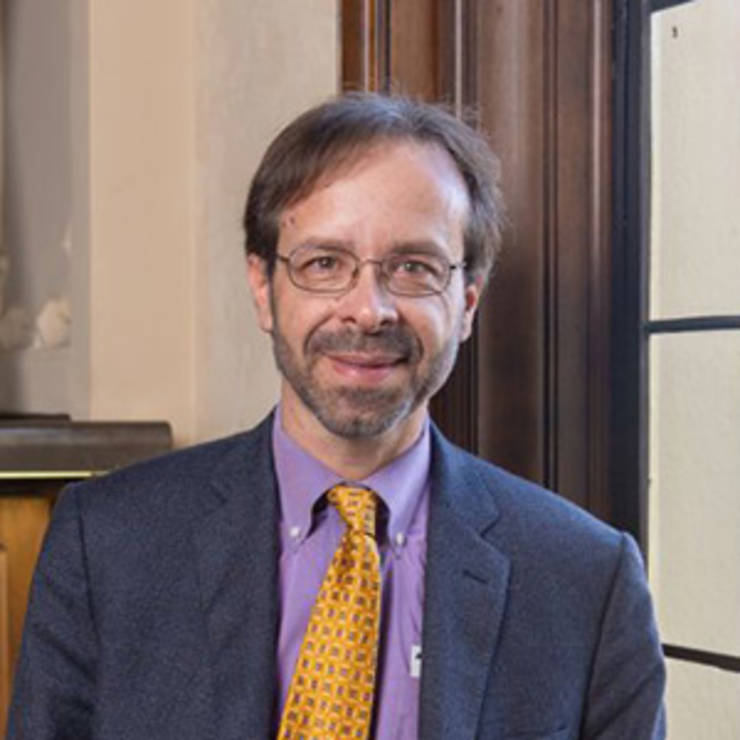 Richard A. Leo合作论文数School of Law, University of San Francisco/Institute for Legal Research Criminal, School of Law, University of California, Berkeley3
 Dale E. Berger合作论文数Department of Psychology, Claremont McKenna College Claremont3
 M. Brinton Lykes合作论文数Boston College3Sally Costanzo合作论文数2
 Deborah Davis合作论文数University of Technology, Sydney1Katherine Vinson合作论文数1Robin M. Akert合作论文数1
 Lora Levett合作论文数Department of Sociology, Criminology & Law, University of Florida1Harvey Wichman合作论文数1
 Lawrence Todd White合作论文数Harvard Medical School, Massachusetts General Hospital1
 Heather Jane Smith合作论文数Department of Medical Microbiology;Faculty of Medicine;University of Manitoba;Departments of 2 Clinical Microbiology and 3 Medicine;Faculty of Medicine, University of Manitoba1
 Iris Blandon-Gitlin合作论文数California State University1Jane Philpott合作论文数1Amy Marcus-Newhall合作论文数1Mitchell M. Handelsman合作论文数1Julie Peterson合作论文数1




