Mobil Computing: Implementing Pervasive Information and Communication Technologies is designed to address some of the business and technical challenges of pervasive computing that encompass current and emerging technology standards, infrastructures and architectures, and innovative and high impact applications of mobile technologies in virtual enterprises. The various articles examine a host of issues including: the challenges and current solutions in mobile connectivity and coordination; management infrastructures; innovative architectures for fourth generation wireless and Ad-hoc networks; error-free frequency assignments for wireless communication; cost-effective wavelength assignments in optical communication networks; data and transaction modeling in a mobile environment, and bandwidth issues and data routing in mobile Ad-hoc networks.
While distance learning via video conferencing has gained wide acceptance in many universities around the world, interactive laboratory classes at a distance remain a weak area in this arena, especially those that require live interaction among students and the instructor to achieve cognitive or psychomotor outcomes. This paper discusses changes made to a same-time-same-place (STSP) telecommunications laboratory that have allowed experiments to be offered in a same-time-different-place (STDP) manner. Some of the key lessons learned to date are also presented.
The dramatic increase in distance learning (DL) enrollments in higher education is likely to continue. However, research on DL, which includes psychomotor, cognitive, and affective skills, is virtually nonexistent. Indeed, DL for psychomotor skills has been viewed as impossible. Laboratory coursework, which we define as including the acquisition of psychomotor, cognitive, and affective skills, has become a limiting factor in the growth of DL. What is needed is a synergistic integration of technologies and human-computer interface (HCI) principles from computer-supported collaborative learning (CSCL), collaborative learning systems, and immersive presence technologies to enable achievement of psychomotor learning objectives. This paper defines the computer-supported collaborative learning requiring immersive presence (CSCLIP) research area, provides a theoretical foundation for CSCLIP, and develops an agenda for research in CSCLIP to establish a foundation for the study of this emerging area. It also briefly describes a CSCLIP-based telecommunications lab currently under development. CSCLIP is presented as a major research opportunity for information systems researchers interested in empirical research as well as technical development.
The Virtual Laboratory (VLab) is focused on providing same-time different-place group-interactions, allowing full real-time virtual-interaction of voice/video/data information of the Internet, communication systems, and multimedia equipment and facilities for vision disabled persons. The VLab interactive-monitor uses piezoelectric technology for graphical display and includes a novel braille markup language (BML) interface with the wireless application protocol (WAP) and the hyper-text mark-up language (HTML). The BML interface enables conversion of all types of existing web sites and facility/equipment control information to be displayed on the VLab interactive Braille monitor.
The ParcTab system integrates a palm-sized mobile computer into an office network. This project serves as a preliminary testbed for Ubiquitous Computing, a philosophy originating at Xerox PARC that aims to enrich our computing environment by emphasizing context sensitivity, casual interaction and the spatial arrangement of computers. This paper describes the Ubiquitous Computing philosophy, the ParcTab system, user-interface issues for small devices, and our experience developing and testing a variety of mobile applications.
In the twenty-first century the technology revolution will move into the everyday, the small and the invisible. The impact of technology will increase ten-fold as it is imbedded in the fabric of everyday life. As technology becomes more imbedded and invisible, it calms our lives by removing annoyances while keeping us connected with what is truly important. This imbedding, this invisibility, this radical ease-of-use requires radical innovations in our connectivity infrastructure. This article describes the interplay and dependencies between invisibly calming technology and the new pervasive connectivity infrastructure.
In order for organizations to succeed, they must be able to respond with flexibility in a geographically dispersed environment. Virtual organizations, which can form, disband, and re-form to meet ill defined and emerging situations, are playing an important role in organizational strategies. For virtual organizations to be successful, the system level elements of hardware, software and knowledge management tools must be identified and connected using the appropriate network technology. This paper provides a model for integrating these technologies.
m U biquitous computing enhances computer use by making many computers available throughout the physical environment, while making them effectively invisible to the user. This article explains what is new and different about the computer science involved in ubiquitous computing. First, it provides a brief overview of ubiquitous computing, then elaborates through a series of examples drawn from various subdisciplines of computer science: hardware components (e.g., chips), network protocols, interaction substrates (e.g., software for screens and pens), applications, privacy, and computational methods. Ubiquitous computing offers a framework for new and exciting research across the spectrum of computer science. Since we started this work at Xerox Palo Alto Research Center (PARC) in 1988 a few places have begun work on this possible next-generation computing environment in which each person is continually interacting with hundreds of nearby wirelessly interconnected computers. The goal is to achieve the most effective kind of technology, that which is essentially invisible to the user. To bring computers to this point while retaining their power will require radically new kinds of computers of all sizes and shapes to be available to each person. I call this future world "Ubiquitous Comput ing" (Ubicomp) [27]. The research method for ubiquitous computing is standard experimental computer science: the construction of working prototypes of the necessai-y infrastructure in sufficient quantity to debug the viability of the systems in everyday use; ourselves and a few colleagues serving as guinea pigs. This is
article Free Access Share on NSF workshop on a software research program for the 21st century Authors: Victor R. Basili University of Maryland University of MarylandView Profile , Laszlo Belady Belady Enterprises Belady EnterprisesView Profile , Barry Boehm University of Southern California University of Southern CaliforniaView Profile , Frederick Brooks University of North Carolina University of North CarolinaView Profile , James Browne University of Texas University of TexasView Profile , Richard DeMillo Bellcore BellcoreView Profile , Stuart I. Feldman IBM IBMView Profile , Cordell Green Kestrel Institute Kestrel InstituteView Profile , Butler Lampson Microsoft Corporation Microsoft CorporationView Profile , Duncan Lawrie University of Illinois University of IllinoisView Profile , Nancy Leveson Massachusetts Institute of Technology Massachusetts Institute of TechnologyView Profile , Nancy Lynch Massachusetts Institute of Technology Massachusetts Institute of TechnologyView Profile , Mark Weiser Xerox Corporation Xerox CorporationView Profile , Jeannette Wing Carnegie Mellon Institute Carnegie Mellon InstituteView Profile Authors Info & Claims ACM SIGSOFT Software Engineering NotesVolume 24Issue 3May 1999 pp 37–44https://doi.org/10.1145/311963.311993Published:01 May 1999Publication History 2citation365DownloadsMetricsTotal Citations2Total Downloads365Last 12 Months10Last 6 weeks0 Get Citation AlertsNew Citation Alert added!This alert has been successfully added and will be sent to:You will be notified whenever a record that you have chosen has been cited.To manage your alert preferences, click on the button below.Manage my AlertsNew Citation Alert!Please log in to your account Save to BinderSave to BinderCreate a New BinderNameCancelCreateExport CitationPublisher SiteeReaderPDF
This paper reports on the use of video streaming to provide course content for a graduate level Telecommunications Management course. Video streaming is a technique that allows a user to view large video files while it continues to download over low-bandwidth network connections, such as a common modem. Most of the students in this graduate program are working professionals, so alternative forms of providing course content may be desired due to their hectic work schedules. The results of the initial use of this technique indicated that video streaming course content is a promising delivery mode as long as alternative ways of encouraging student interaction are formally part of the course. Lessons learned from this experience are provided.
cated that staffing was critical, and that the combination of a place for them to work and a full-time staff member on hand to help them with both the planning and the small vexations was what it took to complete their projects. Enough has been written about the support crisis in academic technology that it is easier for administrators to understand the need for staffing. In this case, the cost of dedicating a full-time staff member to supporting faculty development should be looked at in the context of the whole faculty and the whole curriculum. In that context, an incremental cost of less than 1% provides far more than that amount in benefits. The final chapter in our faculty development effort is not yet written, but the ability to reach a greater proportion of the faculty this year, together with the earlier programs for access and academic facilities appears to be finally working to produce the desired result.
Modern organizations are successfully using project teams to address complex tasks. Yet these teams often use approaches for project data management that may not capture project processes, contexts, rationales, or artifacts in a way that enables new project members to familiarize themselves quickly with the project history. Project information is rarely captured, retained, or indexed so that people external to the project can retrieve and apply it to future tasks. To address the issue of capturing a comprehensive project history that can subsequently be retrieved and applied to current problems, a generalizable object-oriented data model is developed. It decomposes project information into five discrete classes: projects, users, events, meetings, and documents. Through inheritance and domain references, the model describes the people, temporal events (such as meetings or single agenda items within a meeting), and archival documents that are created within a project or support some aspect of the project. These project items can be retrieved based on either contextual information (such as the dates they were created or last revised, who created them, or the projects they pertain to) or user-supplied descriptive keywords. Hypertext-like links can also be created to associate related items. Based on this model, a prototype system, Project Memory, has been developed to validate the model structure and system requirements.
Building real/virtual information environments relies on a kind of ubiquity. And ubiquitous computing means placing computers everywhere in the user environment, providing ways for them to interconnect, talk and work together. In designing integrated real & virtual worlds, building ubiquity into information services and devices will be a prerequisite goal. Much work has gone into the particulars of display devices and input-output devices, while relatively little has focused on the invisible problem of actually getting all these devices and resources to work together. Three important directions for future work in real L?K virtual ubiquitous computing seem clear: (1) devices work will continue (creating novel kinds of output and input devices in places where people can use them), (2) transparent communication (between devices, information and people must become more functional and standard), and (3) the user experience design (so people can use the constellation of devices and information resources available to them)
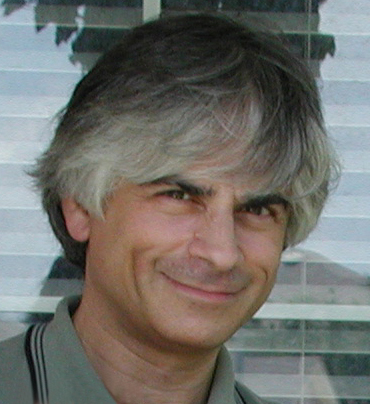
Dr. Mark Weiser is the Chief Technologist at the Xerox Palo Alto Research Center (PARC). Weiser has no bachelor’s degree; his PhD is in Computer and Communications Sciences from the University of Michigan (1979). Weiser was assistant and associate professor and associate chair in the Computer Science Department at the University of Maryland from 1979 to 1987, when he joined Xerox PARC as member of the technical staff, then heading the Computer Science Laboratory for seven years. He has started three companies. His over 75 technical publications are on such areas as the psychology of programming, program slicing, operating systems, programming environments, garbage collection, and technological ethics. Weiser’s work since 1988 has been focused on Ubiquitous Computing, a program he initiated that envisions PC’s being replaced with invisible computers embedded in everyday objects. He believes that this will lead to an era of “calm technology”, in which technology, rather than panicking us, helps us focus on what is really important to us. Weiser is also the drummer of the rock band Severe Tire Damage, the first live band on the Internet.
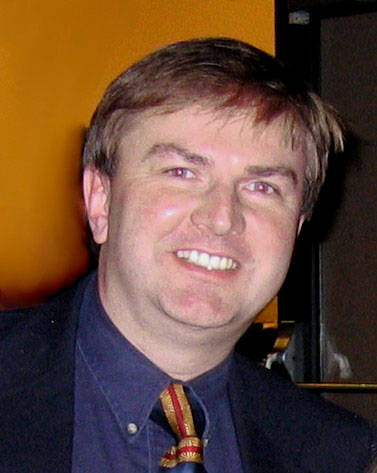 Roy Want合作论文数Google Inc18
 richard j goldstein合作论文数9William Noah Schilit合作论文数9
 Marvin Theimer合作论文数Stripe8
 Mike Spreitzer合作论文数IBM6daniel c swinehart合作论文数5
 David Goldberg合作论文数Department of Chemistry, Krieger School of Arts & Sciences, Johns Hopkins University5Scott Elrod合作论文数PARC, a Xerox Company5
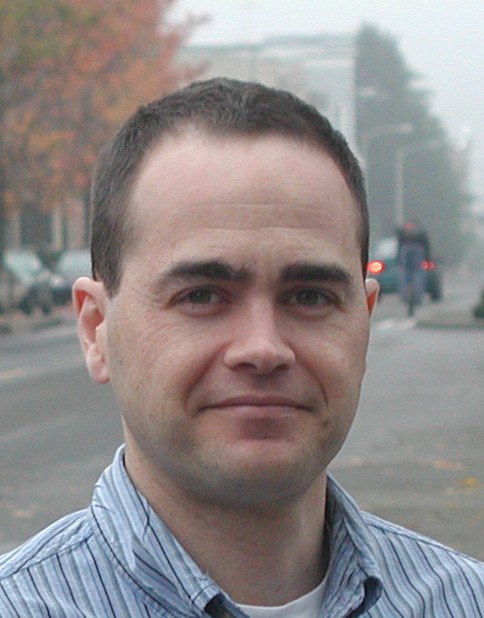 Anthony Lamarca合作论文数Paul G. Allen School of Computer Science & Engineering, University of Washington;Intel Labs4Ramesh Sharda合作论文数Management Science and Information Systems;Management of Technology ;Institute for Research in Information Systems;College Of Business Administration;Oklahoma State University4Robert T. Krivacic合作论文数4Scheets, G.合作论文数3
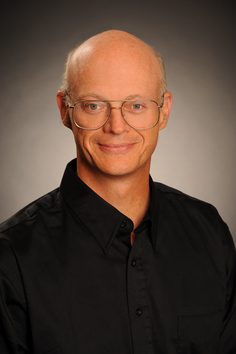 Brent Welch合作论文数Panasas, Inc., Fremont CA3
 Daniel G. Bobrow合作论文数System Sciences Laboratory, Palo Alto Research Center3
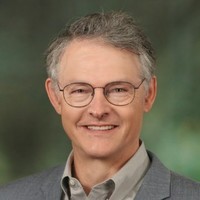 Jock D. Mackinlay合作论文数Tableau Software3Bill N. Schilit合作论文数2CASEY MICHALENE M合作论文数2John R. Ellis合作论文数2
 George G. Robertson合作论文数Microsoft Research2
 Hans Juergen Boehm合作论文数Google2
 Gene Golovchinsky合作论文数Usable Smart Environments group,FX Palo Alto Laboratory2
 Alan J. Demers合作论文数Department of Computer Science, Cornell University2Joan Shertz合作论文数2Joline Morrison合作论文数Univ. of Arizona, Tucson
Olivia R. Liu Sheng Univ. of Arizona, Tucson2
Alan J. Demers合作论文数Department of Computer Science, Cornell University2Joan Shertz合作论文数2Joline Morrison合作论文数Univ. of Arizona, Tucson
Olivia R. Liu Sheng Univ. of Arizona, Tucson2 Morgan N. Price合作论文数FX Palo Alto Laboratory, 3400 Hillview Avenue, Bldg. 4, Palo Alto, CA2Michael G. Lamming合作论文数available - click to provide one
No description available of Michael G. Lamming2Norman I Adams合作论文数2
Morgan N. Price合作论文数FX Palo Alto Laboratory, 3400 Hillview Avenue, Bldg. 4, Palo Alto, CA2Michael G. Lamming合作论文数available - click to provide one
No description available of Michael G. Lamming2Norman I Adams合作论文数2 Stuart K. Card合作论文数Department of Computer Science, Stanford University2
 Mark Stefik合作论文数Intelligent Systems Laboratory, Palo Alto Research Center2Paul R. McMullin合作论文数1Nc Romano合作论文数1Rt Krivacic合作论文数1R Frederick合作论文数1A Demers合作论文数1Barry Hayes合作论文数1Christian Jacobi合作论文数1Bill Buxton合作论文数1
 Dan Russell合作论文数Stanford University1
 K. Ramasamy合作论文数Department of Electronics and Communication Engineering, P.S.R. Rengasamy College of Engineering for Women, Sivakasi, India1Kotikalapudi, V.合作论文数1
 Hiroshi Ishii合作论文数Media Laboratory, Massachusetts Institute of Technology1John Seely Brown合作论文数1
 Kevin A. Kwiat合作论文数1
 Steve Shafer合作论文数Swisslog Healthcare1roger pierson合作论文数1
 Butler W. Lampson合作论文数Microsoft Corporation1
 Victor R. Basili合作论文数Department of Computer Science, University of Maryland;Brendan Iribe Center for Computer Science and Engineering, University of Maryland;Center for Experimental Software Engineering Maryland, Fraunhofer USA, Inc.1
 Steven K. Feiner合作论文数Department of Computer Science, Columbia University;Computer Graphics and User Interfaces Laboratory, Columbia University1
 Kanianthra M. (Mani) Chandy合作论文数Computing and Mathematical Sciences, Department, Division of Engineering and Applied Science, California Institute of Technology1




