The IEEE Aerospace & Electronics Systems Society (AESS) is turning 50 years old in January 2023. The Society emerged in 1973 from several Institute of Radar Engineers groups during a period of significant research in space systems, avionics, and integrated electronics. The history of these technology innovations is significant in AESS's early influences on system designs and its continued importance on the evolution of system and digital signal processing. Because of continued industry development of space and airborne architectures and highly integrated electronics, the applications are available for worldwide commercial systems development.
Merrill I. Skolnik was one of the early pioneers in radar systems development and engineering leadership. This article is a tribute to his 50 years’ contribution to IEEE radar systems development.
The IEEE AESS Virtual Distinguished Lecturer Webinar Series initiative allows us to continue providing AESS SS A members with our respected and reputable
All AESS Chapters and IEEE Sections are encouraged to take advantage of the AESS
This chapter investigates ground moving target radar modes for surveillance from air-to-ground radar systems. This mode has been important, starting with both Multiple Aperture Surveillance Radar (MASR) and Standoff Target Acquisition System (SOTAS) to detect slow-moving targets in a battlefield environment. Its technical challenges are the detection of slow-moving targets that are masked by the clutter Doppler within the main beam of the radar antenna. A wide range of algorithms have been developed over the past 50 years, as the radio frequency (RF) components and high-speed signal processing techniques have been improved [1]. But as the technology advances, several new algorithms and system architectures were invented, based on the advances in component technologies. These techniques include obtaining high resolution of the targets for discrimination, and moving to longer wavelength radar systems to counter the masking and techniques that the adversary uses to avoid detection [2]. In addition to military ground moving target indication (GMTI) techniques, there are several civilian and geoscience applications for characterizing terrain, forests and ecological measurements using radar images.
A political and technical challenge for developing an operational ultrawideband (UWB) surveillance radar is the ability to comply with the many international regulations on the radio frequency (RF) spectrum. It is clear that the worldwide regulations on the RF spectrum have made it more difficult to get licenses for radar operation. More importantly, the recent auction of RF spectrum for civilian personal communications in several countries has reduced the traditional bands for radar spectrum access. This chapter will go over the beneficial uses of UWB surveillance radars, along with the attendant frequency allocation process. It is very difficult to get an RF allocation license for operating in any populated area. And the process is always changing, with the advent of personal communications, a widespread reliance on wideband communications, digital television and radio broadcast. A short history of the RF frequency allocation in recent time will show a summary of the process, and the story will present several lessons learned from obtaining licenses for UWB radars.
As a summary for this introduction to UWB surveillance radars, there has been significant advances in the past 40 years to enable this important capability for both military and geophysical applications. However, the short-range and low altitude of piloted airborne systems made practical battlefield radar systems unattractive. RPVs (or UAVs in today's vocabulary) were starting to be developed. More importantly, the availability of data links would enable significant processing and image interpretation on the ground. Data links provided line-of-sight connection to command and control centers at a safer distance to the airborne platform.
News media can be an important source of information about emerging health threats. They are also significant sites for the production of narrative on threats to life that help to condition and reflect the responses of governments and publics. Antimicrobial resistance (AMR) is one such health threat with particular significance because it represents the failure to manage the risks to antibiotics and other antimicrobials, health technologies that have provided the basis for modern medicine. Knowledge of how news media address this situation is an important element for an effective public health response to AMR and helps to extend the social analysis of health and media. Based on an analysis of television, printed and digital news for 2017 in Australia, this paper examines the patterns and meanings of AMR news. It shows that AMR is a fragmented story mainly framed by scientific discovery. These stories reassure audiences that science is seeking out the means of arresting AMR and, therefore, also constructs lay publics as passive witnesses to the AMR story. This pattern of AMR story-telling furthers the social standing of science and scientists, but it also neglects deliberation on collective action, important lacunae in the social response to AMR.
A common theme in the stories of the people we interviewed was the action and reputation of news media, including printed, digital, and television news. These media were often the first source of knowledge about the emerging pandemic and for some the basis for adoption of a new at risk identity. This chapter examines a key finding that individuals regarded the news media to have hyped the pandemic alongside textual analyses from other scholars that shows news media in 2009 to have been mainly fact driven and not inflammatory. The chapter takes up this apparent paradox in light of audience expectations shaped by previous experiences of pandemic narratives and the large volume of news reporting during the period. The chapter explains how individuals were skeptical of media and therefore cautiously took on their new pandemic risk identities through what we have framed as “persuasion” narrative.
As antibiotics have become increasingly ineffective against bacteria, antibiotic stewardship has been introduced across a variety of settings world-wide. Members of the public have been entreated to use antibiotics strictly as prescribed. We interviewed ninety-nine participants who shared their understandings of antibiotics and reflections on antibiotic resistant bacteria. Some participants were eager consumers of antibiotics whilst others sought to avoid them. Overall, the participants expressed their desire to act in a responsible manner in relation to antibiotic usage. However, we also found considerable confusion regarding responsible action linked with risk management and trust in expert advice. Despite the encouragement of personal responsibility for health decisions, sick individuals are urged to enact a Parsonian-like sick role that abdicates personal decision-making powers and invests trust in the expertise of prescribers. We find this assumption of a responsible, knowledgeable patient and expert clinician is disrupted by 1) patients' contingencies when circumstances force them to seek and use antibiotics despite their misgivings, 2) patients' own embodied knowledge and assessment of their vulnerability and progression of infections and 3) doubts in the expert knowledge of clinicians, as considered in light of scientific debate. Accordingly, lay publics are left entangled in contrary expectations of responsibility and trust regarding the use of antibiotics with significant implications for antimicrobial stewardship.
Ultra-Wideband Surveillance Radar is an emerging technology for detecting and characterizing targets and cultural features for military and geosciences applications. To characterize objects near and under severe clutter, it is necessary to have fine range and cross range resolution. The resultant wide bandwidth classifies the systems as ultra-wideband, requiring special treatment in system technology and frequency allocation. This book explores several UWB surveillance radar prototypes, including Hostile Weapons Locator System (HOWLS), Multibeam Modular Surveillance Radar (MMSR), and geoscience synthetic aperture radar (GeoSAR). These prototype radars illustrated the early development of multi-mode capabilities leading to modern radar systems. Based on the results of these prototypes and recent radar technology publications a novel multi-mode, multi-channel radar is presented and analysed. The book begins with a history of airborne surveillance radar, then goes on to provide systematic and detailed coverage of the following topics and technologies: surveillance radar detection; surveillance radar modes; UWB antennas; ultra-Wideband SAR processing; interferometric radar modes; UWB ground moving target detection; UWB spectrum compliance; and UWB multimode operation. The first book to cover these new capabilities, this is an important reference for radar engineers, especially those working in geosciences and military applications. It is also relevant to academic and advanced engineering researchers developing new radar technologies and algorithms for image processing, as well as the advanced electromagnetics research community.
All AESS Chapters and IEEE Sections are encouraged to take advantage of the AESS Distinguished Lecturer and Tutorial Program for their regular or special meetings, allowing them to select from an outstanding list of truly distinguished speakers who are experts in the technical fields of the society.The AES Society will pay reasonable speaker's expenses for economy-class travel, lodging and meals, with the inviting IEEE organization expected to cover 50% of the speaker's expenses.Speaker's expenses involving travel wholly within North America or within the European Union can generally be approved to be covered up to $1,000 USD.Expenses involving extensive international travel can be approved to be covered up to $2,000 USD.The Society encourages arrangements whereby more than one lecture is presented in a single trip, and costs in such situations will be considered on a case by case basis.
All AESS Chapters and IEEE Sections are encouraged to take advantage of the AESS Distinguished Lecturer and Tutorial Program for their regular or special meetings, allowing them to select from an outstanding list of truly distinguished speakers who are experts in the technical fields of the society.The AES Society will pay reasonable speaker's expenses for economy-class travel, lodging, and meals, with the inviting IEEE AES chapter expected to cover 50% of the speaker's expenses.Speaker's expenses involving travel wholly within North America or within the European Union can generally be approved to be covered up to $1000 USD.Expenses involving extensive international travel can be approved to be covered up to $2000 USD.
Presents a collection of slides covering a following topics: microwave battlefield surveillance radar history; tactical battlefield radar;stand off target acquisition system; hostile weapons locator systems; joint surveillance target acquisition radar;GeoSAR interferometric mapping system; phased array architectures; microwave monolithic integrated circuits;tactical target detection; radar clutter; forest attenuation measurements; MASR antenna; displaced phase center antenna; HOWLS fixed target detection; and frequency agile waveform.
OBJECTIVES:Changing public awareness of antimicrobial resistance (AMR) represents a global public health priority. A systematic review of interventions that targeted public AMR awareness and associated behaviour was previously conducted. Here, we focus on identifying the active content of these interventions and explore potential mechanisms of action.METHODS:The project took a novel approach to intervention mapping utilizing the following steps: (1) an exploration of explicit and tacit theory and theoretical constructs within the interventions using the Theoretical Domains Framework (TDFv2), (2) retrospective coding of behaviour change techniques (BCTs) using the BCT Taxonomy v1, and (3) an investigation of coherent links between the TDF domains and BCTs across the interventions.RESULTS:Of 20 studies included, only four reported an explicit theoretical basis to their intervention. However, TDF analysis revealed that nine of the 14 TDF domains were utilized, most commonly 'Knowledge' and 'Environmental context and resources'. The BCT analysis showed that all interventions contained at least one BCT, and 14 of 93 (15%) BCTs were coded, most commonly 'Information about health consequences', 'Credible source', and 'Instruction on how to perform the behaviour'.CONCLUSIONS:We identified nine relevant TDF domains and 14 BCTs used in these interventions. Only 15% of BCTs have been applied in AMR interventions thus providing a clear opportunity for the development of novel interventions in this context. This methodological approach provides a useful way of retrospectively mapping theoretical constructs and BCTs when reviewing studies that provide limited information on theory and intervention content. Statement of contribution What is already known on this subject? Evidence of the effectiveness of interventions that target the public to engage them with AMR is mixed; the public continue to show poor knowledge and misperceptions of AMR. Little is known about the common, active ingredients of AMR interventions targeting the public and information on explicit theoretical content is sparse. Information on the components of AMR public health interventions is urgently needed to enable the design of effective interventions to engage the public with AMR stewardship behaviour. What does this study add? The analysis shows very few studies reported any explicit theoretical basis to the interventions they described. Many interventions share common components, including core mechanisms of action and behaviour change techniques. The analysis suggests components of future interventions to engage the public with AMR.
 Paul Flowers合作论文数Department of Psychology, Glasgow Caledonian University8
 Kapfer, R.M.合作论文数6
 Hugh Griffiths合作论文数Department of Electronic & Electrical Eng, Faculty of Engineering Science, University College London6
 Michael Braasch合作论文数Avionics Engineering Center, Russ College of Engineering and Technology, Ohio University;School of Electrical Engineering and Computer Science, Russ College of Engineering and Technology, Ohio University6
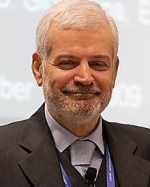 Alfonso Farina合作论文数Department of Electronic and Electrical Engineering, University College London5
 Marina Ruggieri合作论文数Department of Electronics Engineering, University of Roma “Tor Vergata”5Lorenzo Lo合作论文数4
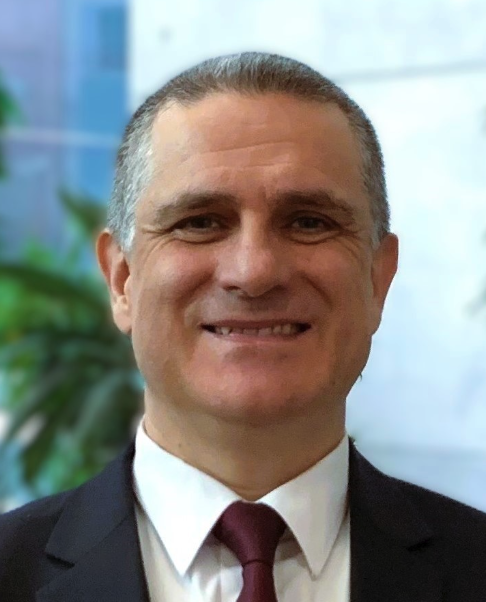 Roberto Sabatini合作论文数Aerospace Engineering Department, College of Engineering and Physical Sciences, Khalifa University of Science and Technology;RMIT University4
 Wolfgang Koch合作论文数4Michael Noble合作论文数4
 Francesca Filippini合作论文数Sapienza University of Rome4
 Michael Cardinale合作论文数4
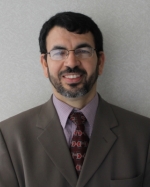 B Himed合作论文数Air Force Research Laboratory4
 Gunther Schmidt合作论文数Fakultät für Informatik, Universität der Bundeswehr München4
 Peter Willett合作论文数Department of Electrical and Computer Engineering, School of Engineering, University of Connecticut4
 Maria Sabrina Greco合作论文数Department of Information Engineering, University of Pisa4
 Kathleen Ann Kramer合作论文数University of San Diego4Sabrina Greco合作论文数3Joe Dauncey合作论文数3Fred Nathanson合作论文数3Joe Fabrizio合作论文数3
 Puneet Mishra合作论文数Food & Biobased Res, Wageningen Univ & Res3
 Lorraine Sherr合作论文数University College London3
 Aloke Roy合作论文数3
 Graham Hart合作论文数Institute for Global Health, Faculty of Population Health Sciences, University College London3
 Andrea Whittaker合作论文数School of Social Sciences, Faculty of Arts, Monash University3Lohm Davina合作论文数3
 Stefano Coraluppi合作论文数Systems and Technology Research3
 Lance Kaplan合作论文数Networked Sensing and Fusion Branch, U.S Army Research Laboratory3Graham Bolding合作论文数3
 Claudio Sacchi合作论文数University of Trento, Dept. of Information Engineering and Computer Science (DISI)3Jonathan Elford合作论文数City, University of London3
 Unnikrishna Pillai合作论文数Department of Electrical and Computer Engineering, Tandon School of Engineering, New York University3
 Robert C. Rassa合作论文数Raytheon Systems Company3
 Luke Rosenberg合作论文数Lockheed Martin Australia Pty Ltd3
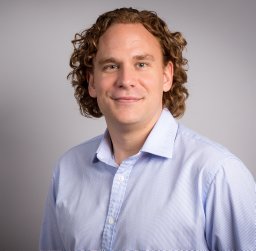 Alexander Charlish合作论文数3Fusion -W Dale Blair合作论文数2larry chasteen合作论文数2cary r spitzer合作论文数2barry c breen合作论文数2John R. Weyrauch合作论文数2
 Mia Lindgren合作论文数Arts Social Sci & Humanities, Swinburne Univ Technol2
 Daniel O'Hagan合作论文数Department of Electrical Engineering, University of Cape Town2Gangl, Erwin合作论文数2
 Eli Brookner合作论文数IEEE Inter. Symp. on Phased Array Systems & Technology2
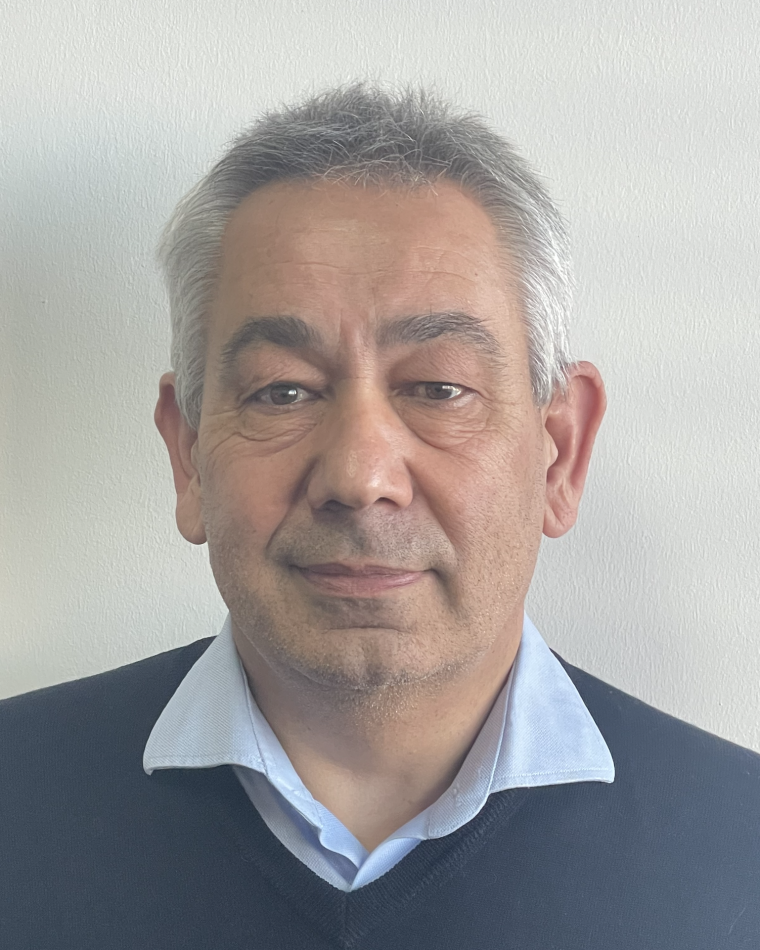 Fulvio Gini合作论文数Department of Ingegneria dell’Informazione, University of Pisa2
 William Dale Blair合作论文数Georgia Tech Research Institute2
 Pasquale Daponte合作论文数Dipartimento di Ingegneria, Università degli Studi del Sannio di Benevento2
 Monika Djerf-Pierre合作论文数University of G2




