The oxidation of elemental phosphorus (P4) by elemental sulfur (S4) has been studied by a combination of 31P nmr and Raman spectroscopic techniques. At temperatures below the auto-ignition temperature, a molten mixture of the elements gives rise to a complex mixture of products which are dominated by phosphorus sulfides which have a high S/P4 ratio. Both the rate at which the products are formed and their distribution support the formation of a reactive P4S8 intermediate which then cascades through a series of reactions, incorporating the sulfur atoms into the phosphorus cage. Two new phosphorus sulfides (of composition P4S6 and P4S8) have been identified in these product mixtures.
The preparation of bicyclo [2.2.0]hex- 1(4)-ene ( 1 ) via ring expansion of a cyclopropylcarbene or the dehalogenation of 1-bromo-4-chlorobicyclo[2.2.0]hexane is described. It is one of the most reactive of the alkenes which may be observed at room temperature. Its reactions, including dimerization and cycloaddition reactions, are described. The latter lead to convenient preparations of [m.2.2]propellanes. The vibrational spectrum was examined via matrix isolation and ab initia MO calculations.
AbstractDie (durch Elektrolyse von 1‐Brom‐4‐chlor‐bicyclo[2.2.0]hexan in DMF bei ‐15°C erhältliche) Titelverbindung (I) dirnerisiert beim Stehen in Pentan unter Ringöffnung zu dem Tricyclodecan (II) und addiert Keten unter Bildung des Cyclohexenons (III).
AbstractAus dem Tosylhydrazon (I) entsteht bei der Thermolyse ein Gemisch der beiden Kohlenwasserstoffe (II) und (III), die eine Diels‐Alder‐Reaktion zu (IV) eingehen können.
Chemischer InformationsdienstVolume 5, Issue 16 Article ChemInform Abstract: ELECTROCHEMICAL REDUCTION OF 1,4-DIBROM-BICYCLO(2,2,2)OCTAN, FORMATION OF (2,2,2)PROPELLANE KENNETH B. WIBERG, KENNETH B. WIBERGSearch for more papers by this authorGARY A. EPLING, GARY A. EPLINGSearch for more papers by this authorMARK JASON, MARK JASONSearch for more papers by this author KENNETH B. WIBERG, KENNETH B. WIBERGSearch for more papers by this authorGARY A. EPLING, GARY A. EPLINGSearch for more papers by this authorMARK JASON, MARK JASONSearch for more papers by this author First published: April 23, 1974 https://doi.org/10.1002/chin.197416146Read the full textAboutPDF ToolsRequest permissionExport citationAdd to favoritesTrack citation ShareShare Give accessShare full text accessShare full-text accessPlease review our Terms and Conditions of Use and check box below to share full-text version of article.I have read and accept the Wiley Online Library Terms and Conditions of UseShareable LinkUse the link below to share a full-text version of this article with your friends and colleagues. Learn more.Copy URL Share a linkShare onEmailFacebookTwitterLinkedInRedditWechat No abstract is available for this article. References KENNETH B. WIBERG, GARY A. EPLING, MARK JASON, ELECTROCHEMICAL REDUCTION OF 1,4-DIBROM-BICYCLO(2,2,2)OCTAN, FORMATION OF (2,2,2)PROPELLANE, J. Am. Chem. Soc., 1974, 96, 912. DOI: 10.1021/ja00810a044; 10.1021/ja00810a044 CASWeb of Science®Google Scholar Volume5, Issue16April 23, 1974 ReferencesRelatedInformation
ADVERTISEMENT RETURN TO ISSUEPREVArticleNEXTElectrochemical reduction of 1,4-dibromobicyclo[2.2.2.]octane. Formation of the [2.2.2.] propellaneKenneth B. Wiberg, Gary A. Epling, and Mark JasonCite this: J. Am. Chem. Soc. 1974, 96, 3, 912–913Publication Date (Print):February 1, 1974Publication History Published online1 May 2002Published inissue 1 February 1974https://doi.org/10.1021/ja00810a044RIGHTS & PERMISSIONSArticle Views119Altmetric-Citations22LEARN ABOUT THESE METRICSArticle Views are the COUNTER-compliant sum of full text article downloads since November 2008 (both PDF and HTML) across all institutions and individuals. These metrics are regularly updated to reflect usage leading up to the last few days.Citations are the number of other articles citing this article, calculated by Crossref and updated daily. Find more information about Crossref citation counts.The Altmetric Attention Score is a quantitative measure of the attention that a research article has received online. Clicking on the donut icon will load a page at altmetric.com with additional details about the score and the social media presence for the given article. Find more information on the Altmetric Attention Score and how the score is calculated. Share Add toView InAdd Full Text with ReferenceAdd Description ExportRISCitationCitation and abstractCitation and referencesMore Options Share onFacebookTwitterWechatLinked InReddit PDF (268 KB) Get e-Alerts Get e-Alerts
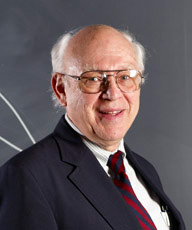 Kenneth Wiberg合作论文数Department of Chemistry, Yale University5
 William F. Bailey合作论文数Department of Chemistry, University of Connecticut2
 Shahidur Rahman合作论文数2Gary A. Epling合作论文数1
 William P. Dailey合作论文数Department of Chemistry, School of Arts & Sciences, University of Pennsylvania1Paul J. Okarma合作论文数1George J. Burgmaier合作论文数1Michael Matturro合作论文数ExxonMobil Research and Engineering1Philip Warner合作论文数1




