We present high spectral resolution observations from 12.96 to 13.33 microns toward Orion IRc2 using the midinfrared spectrograph, Echelon-Cross-Echelle Spectrograph (EXES), at Stratospheric Observatory for Infrared Astronomy (SOFIA). These observations probe the physical and chemical conditions of the Orion hot core, which is sampled by a bright, compact, mid-infrared background continuum source in the region, IRc2. All 10 of the rovibrational C2H2 transitions expected in our spectral coverage are detected with high signal-to-noise ratios (S/Ns), yielding continuous coverage of the R-branch lines from J. =. 9-8 to J. =. 18-17, including both ortho and para species. Eight of these rovibrational transitions are newly reported detections. The isotopologue, (CCH2)-C-13, is clearly detected with a high S/N. This enabled a direct measurement of the C-12/C-13 isotopic ratio for the Orion hot core of 14. +/-. 1 and an estimated maximum value of 21. We also detected several HCN rovibrational lines. The ortho and para C2H2 ladders are clearly separate, and tracing two different temperatures, 226. K and 164. K, respectively, with a non-equilibrium ortho to para ratio (OPR) of 1.7. +/-. 0.1. Additionally, the ortho and para VLSR values differ by about 1.8. +/-. 0.2 km s(-1), while the mean line widths differ by 0.7 +/- 0.2 km s(-1), suggesting that these species are not uniformly mixed along the line of sight to IRc2. We propose that the abnormally low C2H2 OPR could be a remnant from an earlier, colder phase, before the density enhancement (now the hot core) was impacted by shocks generated from an explosive event 500 years ago.
Abstract. HgCdTe detector arrays with a cutoff wavelength of ∼10 μm intended for the Near-Earth Object Camera (NEOCam) space mission were subjected to proton-beam irradiation at the University of California Davis Crocker Nuclear Laboratory. Three arrays were tested—one with 800-μm substrate intact, one with 30-μm substrate, and one completely substrate-removed. The CdZnTe substrate, on which the HgCdTe detector is grown, has been shown to produce luminescence in shorter wave HgCdTe arrays that causes an elevated signal in nonhit pixels when subjected to proton irradiation. This testing was conducted to ascertain whether or not full substrate removal is necessary. At the dark level of the dewar, we detect no luminescence in nonhit pixels during proton testing for both the substrate-removed detector array and the array with 30-μm substrate. The detector array with full 800-μm substrate exhibited substantial photocurrent for a flux of 103 protons/cm2 s at a beam energy of 18.1 MeV (∼750 e−/s) and 34.4 MeV (∼65 e−/s). For the integrated space-like ambient proton flux level measured by the Spitzer Space Telescope, the luminescence would be well below the NEOCam dark current requirement of <200 e−/s, but the pattern of luminescence could be problematic, possibly complicating calibration.
We present high spectral resolution (similar to 3 km s(-1)) observations of the nu(2) ro-vibrational band of H2O in the 6.086-6.135 mu m range toward the massive protostar AFGL 2591 using the Echelon-Cross-Echelle Spectrograph (EXES) on the Stratospheric Observatory for Infrared Astronomy (SOFIA). Ten absorption features are detected in total, with seven caused by transitions in the nu(2) band of H2O, two by transitions in the first vibrationally excited nu(2) band of H2O, and one by a transition in the nu(2) band of (H2O)-O-18. Among the detected transitions is the nu(2) 1(1,1)-0(0,0) line that probes the lowest-lying rotational level of para-H2O. The stronger transitions appear to be optically thick, but reach maximum absorption at a depth of about 25%, suggesting that the background source is only partially covered by the absorbing gas or that the absorption arises within the 6 mu m emitting photosphere. Assuming a covering fraction of 25%, the H2O column density and rotational temperature that best fit the observed absorption lines are N(H2O) = (1.3 +/- 0.3) x 10(19) cm(-2) and T = 640 +/- 80 K.
The Echelon-Cross-Echelle Spectrograph (EXES) is one of the first generation instruments for the Stratospheric Observatory for Infrared Astronomy (SOFIA). The primary goal of EXES is to provide high-resolution, cross-dispersed spectroscopy, with resolutions of 50,000-100,000 and wavelength coverage of 0.5-1.5% between 4.5 μm and 28.3 μm. EXES will also have medium (R=5000-25000) and low (R=1500-4000) modes available, as well as a target acquisition imaging mode and a pupil-imaging mode for alignment testing. EXES is scheduled for commissioning flights in February 2014. It will be available to the public for shared-risk observations in SOFIA’s Cycle 2. Here we give an overview of the design and capabilities of EXES as well as its laboratory performance to date.
The Echelon-cross-Echelle Spectrograph (EXES) is one of the first generation instruments for the Stratospheric Observatory for Infrared Astronomy (SOFIA). It operates at high, medium, and low spectral resolution in the wavelength region 4.5 to 28.3 microns using a 1024x1024 Si:As detector array. From SOFIA, the high spectral resolution mode (R ≈ 100,000) will provide truly unique data given the improved atmospheric transmission. We are currently involved with system testing in preparation for our first ground-based telescope run to occur in Jan 2011 at the NASA IRTF 3m. We present the current status of EXES including lab results in our high and medium resolution modes, our plans for ground-based observing, and our expectations for operations on SOFIA.
Direct imaging of extrasolar planets, and Earth-like planets in particular, is an exciting but difficult problem requiring a telescope imaging system with 1010 contrast at separations of 100mas and less. Furthermore, the current NASA science budget may only allow for a small 1-2m space telescope for this task, which puts strong demands on the performance of the imaging instrument. Fortunately, an efficient coronagraph called the Phase Induced Amplitude Apodization (PIAA) coronagraph has been maturing and may enable Earth-like planet imaging for such small telescopes. In this paper, we report on the latest results from a new testbed at NASA Ames focused on testing the PIAA coronagraph. This laboratory facility was built in 2008 and is designed to be flexible, operated in a highly stabilized air environment, and to complement existing efforts at NASA JPL. For our wavefront control we are focusing on using small Micro-Electro- Mechanical-System deformable mirrors (MEMS DMs), which promises to reduce the size of the beam and overall instrument, a consideration that becomes very important for small telescopes. At time of this writing, we are operating a refractive PIAA system and have achieved contrasts of about 1.2x10⁻⁷ in a dark zone from 2.0 to 4.8 λ/D (with 6.6x10⁻⁸ in selected regions). In this paper, we present these results, describe our methods, present an analysis of current limiting factors, and solutions to overcome them.
The Mid-Infrared Instrument (MIRI) is a 5 to 28 micron imager and spectrometer that is slated to fly aboard the JWST in 2013. Each of the flight arrays is a 1024×1024 pixel Si:As impurity band conductor detector array, developed by Raytheon Vision Systems. JPL, in conjunction with the MIRI science team, has selected the three flight arrays along with their spares. We briefly summarize the development of these devices, then describe the measured performance of the flight arrays along with supplemental data from sister flight-like parts.
 Craig R. Mccreight合作论文数16Matthew J. Richter合作论文数10Robert Mcmurray合作论文数9John H. Goebel合作论文数8dana h lynch合作论文数7Curtis DeWitt合作论文数7Fred C. Witteborn合作论文数6Ennico Kimberly合作论文数5nicolas n moss合作论文数4
 Judith L. Pipher合作论文数Near-Infrared Lab, Department of Physics and Astronomy, School of Arts & Sciences, University of Rochester4
 Thomas Greene合作论文数Space Science and Astrobiology Division, Ames Research Center, National Aeronautics and Space Administration4
 Ruslan Belikov合作论文数Ames Research Center, National Aeronautics and Space Administration4
 William D. Vacca合作论文数Science Center, Stratospheric Observatory for Infrared Astronomy4Sean W. J. Colgan合作论文数4
 Olivier Guyon合作论文数Wyant College of Optical Sciences, The University of Arizona;Department of Astronomy and Steward Observatory, The University of Arizona4maureen l savage合作论文数3
 Kristin R. Kulas合作论文数3
 David A. Neufeld合作论文数Department of Physics & Astronomy, Johns Hopkins University3
 A. C. A. Boogert合作论文数Kapteyn Astronomical Institute3
 Kerri Cahoy合作论文数Department of Aeronautics and Astronautics, School of Engineering, Massachusetts Institute of Technology3
 Graham M Harper合作论文数Center for Astrophysics and Space Astronomy, College of Arts and Sciences, University of Colorado Boulder3Eugene A. Pluzhnik合作论文数3
 Andreas Seifahrt合作论文数3
 William J. Forrest合作论文数Department of Physics and Astronomy, School of Arts & Sciences, University of Rochester3J. H. Goebel合作论文数3
 Timothy Lee合作论文数Space Sciences & Astrobiology Division, NASA Ames Research Center;NASA Astrobiology Institute3p s stafford合作论文数2james a baltz合作论文数2g m anderson合作论文数2jerry r cripe合作论文数2
 Peter T Zell合作论文数2
 Eric Herbst合作论文数Department of Chemistry, The College and Graduate School of Arts & Sciences, University of Virginia2
 Romane Le Gal合作论文数2
 John Stauffer合作论文数Infrared Processing and Analysis Center, California Institute of Technology2
 William Reach合作论文数Space Science Institute2
 William F. Hoffmann合作论文数Department of Astronomy, University of Arizona;Steward Observatory, University of Arizona2Zhong Wang合作论文数2
 Joseph L. Hora合作论文数Division of Optical and Infrared Astronomy, Harvard-Smithsonian Center for Astrophysics2
 Michael Shao合作论文数Jet Propulsion Laboratory, California Institute of Technology2Peter R. Eisenhardt合作论文数2
 S. Thomas Megeath合作论文数University of Toledo2
 Jason Surace合作论文数California Institute of Technology2Richard G. Arendt合作论文数2Michael R. Haas合作论文数2Edwin F. Erickson合作论文数2
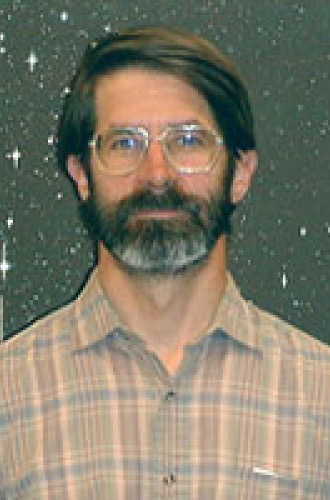 John H Lacy合作论文数Department of Astronomy, College of Natural Sciences, The University of Texas at Austin2Naseem Rangwala合作论文数Ctr Astrophys & Space Astron, Univ Colorado2Donald L. Devincenzi合作论文数2
 Matthew L. N. Ashby合作论文数Harvard- Smithsonian Center for Astrophysics2




