We introduce a single-shot phase-resolved imaging technique based on a nearly common-path reference geometry. A programmable hologram encoded on a spatial light modulator (SLM) generates a composite field containing both a structured signal mode and a slightly angled reference beam. The signal and reference propagate through a shared imaging system and interfere in the image plane, where a single interferogram is recorded. The signal amplitude and absolute phase are recovered from this interferogram using a Fourier-transform-based method, eliminating the need for multiple phase-shifted measurements. The setup enhances robustness by using common optics, which reduces sensitivity to alignment errors and environmental noise. We experimentally validate the method through accurate wavefront reconstruction and phase retrieval of structured optical fields.
We demonstrate two-step phase-shifting interferometry (holography) of complex laser modes generated by a spatial light modulator (SLM), in which the amplitude and phase of the signal are determined directly from measurements of phase-shifted interferograms. The reference and signal beams are generated and phase-controlled with a single composite hologram on the SLM and propagated collinearly. This requires no additional optics and leads to measurements that are more accurate and less prone to noise, which we demonstrate with collinearly-referenced measurements of various Laguerre-Gaussian modes and structured images.
We present the first demonstration of resolution enhancement at depth in a tissue phantom using a fiber-based depletion beam with two-photon excitation. © 2024 The Author(s)
We demonstrate an optical fiber sensor that uses the orbital angular momentum of light in a polarization maintaining fiber to act as a temperature and force sensor. The polarization of the input light is shown to greatly affect the sensitivity of the sensor. In addition, we show how our sensor can be used to resolve the direction and magnitude of a force applied to a fiber.
We propose and demonstrate SpiralVortex superresolution localization, in which fluorescence is measured while a dark spot spirals out from the center of a stationary excitation beam. The stable beam offers potential for superresolution at depth.
Significance: Stimulated emission depletion (STED) is a powerful super-resolution microscopy technique that can be used for imaging live cells. However, the high STED laser powers can cause significant photobleaching and sample damage in sensitive biological samples. The dynamic intensity minimum (DyMIN) technique turns on the STED laser only in regions of the sample where there is fluorescence signal, thus saving significant sample photobleaching. The reduction in photobleaching allows higher resolution images to be obtained and longer time-lapse imaging of live samples. A stand-alone module to perform DyMIN is not available commercially. Aim: In this work, we developed an open-source design to implement three-step DyMIN on a STED microscope and demonstrated reduced photobleaching for timelapse imaging of beads, cells, and tissue. Approach: The DyMIN system uses a fast multiplexer circuit and inexpensive field-programmable gate array controlled by Labview software that operates as a stand-alone module for a STED microscope. All software and circuit diagrams are freely available. Results: We compared time-lapse images of bead samples using our custom DyMIN system to conventional STED and recorded a similar to 46% higher signal when using DyMIN after a 50-image sequence. We further demonstrated the DyMIN system for time-lapse STED imaging of live cells and brain tissue slices. Conclusions: Our open-source DyMIN system is an inexpensive add-on to a conventional STED microscope that can reduce photobleaching. The system can significantly improve signal to noise for dynamic time-lapse STED imaging of live samples.
We propose and experimentally demonstrate a method to directly measure the phase of biphoton states using an entangled mode as a collinear reference. The technique is demonstrated with entangled photonic spatial modes in the Laguerre–Gaussian basis, and it is applicable to any pure quantum system containing an exploitable reference state in its entanglement spectrum. As one particularly useful application, we use the new methodology to directly measure the geometric phase accumulation of entangled photons.
We show analytically that the intrinsic material (impulsive) response can be obtained from a nonlinear spectrum by dividing the detected signal by the laser spectrum, and demonstrate on experimentally-measured 4th-order multidimensional coherent spectra.
Optical scattering poses a significant challenge to high- resolution microscopy within deep tissue. To accurately predict the performance of various microscopy techniques in thick samples, we present a computational model that efficiently solves Maxwell's equation in highly scattering media. This toolkit simulates the deterioration of the laser beam point spread function (PSF) without making a paraxial approximation, enabling accurate modeling of high-numerical-aperture (NA) objective lenses commonly employed in experiments. Moreover, this framework is applicable to a broad range of scanning microscopy techniques including confocal microscopy, stimulated emission depletion (STED) microscopy, and ground-state depletion microscopy. Notably, the proposed method requires only readily obtainable macroscopic tissue parameters. As a practical demonstration, we investigate the performance of Laguerre-Gaussian (LG) versus Hermite-Gaussian (HG) depletion beams in STED microscopy. (c) 2024 Optica Publishing Group
We measure dynamics of optical vorticies with propagation through a nonlinear medium. Experiments are performed with a variable-length nonlinear fluid medium in order to observe the nonequlibrium dynamics of soliton formation.
The divergence-free nature of Bessel beams can be harnessed to effectively trap optical vortices in free space laser propagation. We show how to generate arbitrary vortex configurations in Bessel traps to investigate few-body vortex interactions within a dynamically evolving fluid of light, which is a formal analog to a non-interacting Bose gas. We implement-theoretically and experimentally-initial conditions of vortex configurations first predicted in harmonically trapped quantum fluids, in the limit of weak atomic interactions, and model and measure the resultant dynamics. These hard trap dynamics are distinct from the harmonic trap predictions due to the non-local interactions that occur among the hard-wall boundary and steep phase gradients that nucleate other vortices. By simultaneously presenting experimental demonstrations with the theoretical proposal, we validate the potential application of using Bessel hard-wall traps as testing grounds for engineering few-body vortex interactions within trapped, two-dimensional compressible fluids.
We observe and measure the nonequilibrium dynamics of optical vortices as a function of propagation distance through a nonlinear medium. The precession of a tilted-core vortex is quantified as is vortex-core sharpening, where the infinite width of a linear core subsequently shrinks and approaches the healing length of this nonlinear optical fluid. Experiments are performed with a variable-length nonlinear medium: a nonlinear fluid in a tank with an output window on a translating tube. This provides control over the distance the light propagates in the fluid and allows for the measurement of the dynamics throughout the entire propagation range. Results are compared to the predictions of a computational simulator to find the equivalent dimensionless nonlinear coefficient.
In nonlinear spectroscopies, the detected spectrum is determined by the response of the system to the particular excitation pulses, which can vary as excitation energy and pulse duration are tuned. Here, we analytically show that, under reasonable assumptions, the nested integrals that describe the light-matter interaction of the system can be simplified by application of the Fourier convolution and shift theorems, resulting in an expression for the nonlinear spectrum that is a product of the impulsive system response and the interaction laser spectra. The impulsive response can then be obtained by linearly dividing the laser spectrum from the detected signal. We demonstrate our normalization scheme by recovering the impulsive response from two different material systems, highlighting removal of distinct spectral artifacts.
We demonstrate entangled-state swapping, within the Hermite-Gaussian basis of first-order modes, directly from the process of spontaneous parametric down-conversion within a nonlinear crystal. The method works by explicitly tailoring the spatial structure of the pump photon such that it resembles the product of the desired entangled spatial modes exiting the crystal. Importantly, the result is an entangled state of balanced HG modes, which may be beneficial in applications that depend on symmetric accumulations of geometric phase through optics or in applications of quantum sensing and imaging with azimuthal sensitivity. Furthermore, the methods are readily adaptable to other spatial mode bases.
Linear combinations of Bessel beams can be used to effectively trap light within cylindrical domains. Such hard traps can be used to produce states that exhibit stationary arrays of optical vortices from the perspective of a steadily rotating frame. These patterned singularities can be engineered to have singularities of the same or mixed charges and the requisite rotation rates are quantized even though the setting is purely linear. A hydrodynamic interpretation is that the vortices are at rest within a compressible, two-dimensional fluid of light.
We present and implement a method for the experimental measurement of geometric phase of non-geodesic (small) circles on any SU(2) parameter space. This phase is measured by subtracting the dynamic phase contribution from the total phase accumulated. Our design does not require theoretical anticipation of this dynamic phase value and the methods are generally applicable to any system accessible to interferometric and projection measurements. Experimental implementations are presented for two settings: (1) the sphere of modes of orbital angular momentum, and (2) the Poincaré sphere of polarizations of Gaussian beams.
We numerically compare the null quality for STED microscopy generated by Laguerre-Gaussian beams with orbital angular momentum and donut beams generated by incoherent addition of orthogonal Hermite Gaussian beams when imaging deep biological tissue.
We propose a method to controllably create free-space, “hard-trapped” two-dimensional fluids with Bessel-Gaussian beam superpositions. We use these systems to experimentally demonstrate several vortex dynamics that resemble dynamics numerically predicted in weakly-interacting quantum fluids. Theoretically, we perform a Bessel-mode decomposition on an initial state containing an arrangement of optical vortices. The experiment is performed using a laser beam that is structured holographically with a spatial light modulator that contains the initial condition of the reconstructed field from the theoretical decomposition. This works allows for the experimental verification of many numerically predicted dynamics or the discovery of new dynamics from experiment.
Entangled two-photon dynamics offer a rich manifestation of the interplay between geometry and information. Such states accumulate a geometric phase that is not equal to the sum of those of the associated single-photon states, the difference amounting to a Geometric Phase of Entanglement (GPE). A functional relationship is derived between the GPE and reduced state entropies, showing that geometric phase measured for one photon will exhibit a quantum correlation with that of the other photon. This is explored within the setting of Type-I, collinear spontaneous parametric down-conversion, where two-photon states can be represented as a sum of spatially-entangled Laguerre-Gaussian modes.
 Steven Cundiff合作论文数Department of Physics, University of Michigan38
 Juliet Gopinath合作论文数Department of Electrical, Computer & Energy Engineering, College of Engineering & Applied Science, University of Colorado Boulder;Department of Physics, College of Engineering and Applied Science, University of Colorado Boulder;Engineering Center, University of Colorado Boulder32
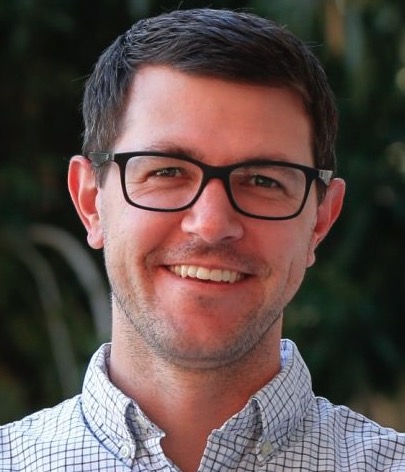 Galan Moody合作论文数Department of Electrical and Computer Engineering, College of Engineering, University of California Santa Barbara30
 Mark T. Lusk合作论文数28
 Andrew A. Voitiv合作论文数27
 Alan D Bristow合作论文数Dept Phys & Astron, W Virginia Univ23
 Margaret Murnane合作论文数Department of Physics, College of Arts and Sciences, University of Colorado Boulder21
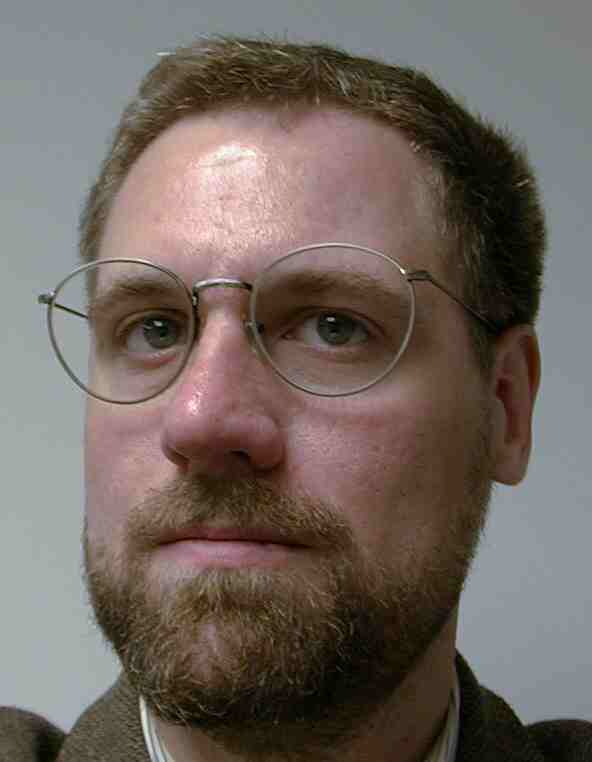 Henry C. Kapteyn合作论文数Department of Physics, College of Arts and Sciences, University of Colorado;Kapteyn-Murnane Laboratories Inc.18
 Hebin Li合作论文数17Brendan M. Heffernan合作论文数Dept Phys, Univ Colorado15
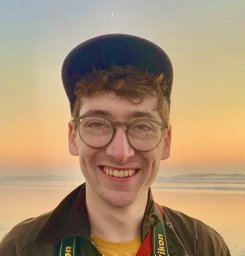 Samuel Alperin合作论文数Dept Appl Math & Theoret Phys, Univ Cambridge13
 Geoffrey Diederich合作论文数Department of Physics, Bowling Green State University13
 Jasmine M Andersen合作论文数Dept Phys & Astron, Univ Denver12
 Keith Adam Nelson合作论文数Department of Chemistry, Massachusetts Institute of Technology12Xingcan Dai (戴星灿)合作论文数清华大学物理系12Niederriter Robert D合作论文数Department of Physics, University of Colorado—Boulder11Daniel Gammon合作论文数Naval Research Laboratory11
 Allan S. Bracker合作论文数Naval Research Laboratory11Patrick C. Ford合作论文数9
 Travis Autry合作论文数HRL Laboratories, LLC;National Institute of Standards and Technology9
 Denis Karaiskaj合作论文数University of Colorado;National Institute of Standards and Technology;National Institute of Standards and Technology, University of Colorado9
 Chuanzhou Zhu合作论文数Dept Phys, Colorado Sch Mines8Emily A. Gibson合作论文数8
 Rohan Singh合作论文数Nat. Inst. of Stand. & Technol., Univ. of Colorado;c;Nat. Inst. of Stand. & Technol., Univ. of Colorado8
 Qing Li合作论文数8
 Ronggui Yang (杨荣贵)合作论文数College of Engineering, Peking University7
 Diego Restrepo合作论文数School of Medicine, University of Pennsylvania Philadelphia7
 Erik H. Anderson合作论文数6Adam, Roman合作论文数Res Ctr Julich, Peter Grunberg Inst PGI 6, D-52425 Julich, Germany6
 Tobey, R.合作论文数6
 Claus Michael Schneider合作论文数Forschungszentrum Jülich6
 Justin Shaw合作论文数National Institute of Standards and Technology6
 Martin Aeschlimann合作论文数Department of Computer Science, Rheinland-Pfälzische Technische Universität Kaiserslautern-Landau;Physcis Department, Rheinland-Pfälzische Technische Universität Kaiserslautern-Landau;Landesforschungszentrum Optik und Materialwissenschaften6
 Hans Nembach合作论文数National Institute of Standards and Technology6Chan La-O-Vorakiat合作论文数6William G. Holtzmann合作论文数Department of Physics, University of Washington5Matthew W. Day合作论文数Dept Phys, Univ Michigan5Ulbricht Ronald合作论文数5
 Patrik Grychtol合作论文数Department of Physics and JILA, University of Colorado;Research Center Jülich, Peter Grünberg Institute;Peter Grünberg Institute, University of Colorado5
 Stefan Mathias合作论文数Department of Physics and JILA, University of Colorado;University of Kaiserslautern and Research Center OPTIMAS;University of Colorado, University of Kaiserslautern and Research Center OPTIMAS5Stephanie A. Meyer合作论文数5
 Tim Schröder合作论文数Department of Physics, Faculty of Mathematics and Natural Sciences, Humboldt-Universität Zu Berlin5
 Christopher Smallwood合作论文数Department of Physics & Astronomy, San José State University5
 Edward Bielejec合作论文数Ion Beam Laboratory, Sandia National Laboratories5S. Vilcins合作论文数5Elizabeth F. Strong合作论文数4Bo Xu合作论文数4Alexander Q. Anderson合作论文数4Kelsey M. Bates合作论文数4




