An instrument's sensitivity to detect individual-level change is an important consideration for both psychometric and clinical researchers. In this article, we develop a cognitive problems measure and evaluate its sensitivity to detect change from an item response theory (IRT) perspective. After illustrating assumption checking and model fit assessment, we detail 4 features of IRT modeling: (a) the scale information curve and its relation to the bandwidth of measurement precision, (b) the scale response curve and how it is used to link the latent trait metric with the raw score metric, (c) content-based versus norm-based score referencing, and (d) the level of measurement of the latent trait scale. We conclude that IRT offers an informative, alternative framework for understanding an instrument's psychometric properties and recommend that IRT analyses be considered prior to investigations of change, growth, or the effectiveness of clinical interventions.
Item response theory (IRT) is an increasingly popular approach to the development, evaluation, and administration of psychological measures. We introduce, first, three IRT fundamentals: (a) item response functions, (b) information functions, and (c) invariance. We next illustrate how IRT modeling can improve the quality of psychological measurement. Available evidence suggests that the differences between IRT and traditional psychometric methods are not trivial; IRT applications can improve the precision and validity of psychological research across a wide range of subjects.
In the present study, we evaluated the psychometric properties of the Observer Alexithymia Scale-French translation (OAS-F), a 33-item, observer-rated alexithymia measure. The scale, accessible to lay and professional raters, taps everyday expressions of alexithymia. French university students (N = 159) were asked to rate a person they knew well or ask an acquaintance to rate them. Those being rated (N = 159) were parents, siblings, children, and friends. OAS-F total and subscale scores were comparable to those in the English normative samples. Moreover, OAS scores were reliable, and the scale's five-factor structure (distant, uninsightful, somatizing, humorless, and rigid) was confirmed. Importantly, too, OAS total scores correlated 0.31 with (self-report) 20-item Toronto Alexithymia Scale (TAS) scores. The OAS-F appears to be a psychometrically sound observer-rated alexithymia measure.
The purpose of the present study was to develop a Chinese translation of the Observer Alexithymia Scale (OAS-C) and evaluate its reliability and factorial validity. The original English-version of the Observer Alexithymia Scale (OAS) was translated into Chinese and given to 468 Chinese undergraduate students. Students were asked to rate a person (other than themselves) whom they knew well (e.g., a parent, sibling, another relative, or friend). We evaluated internal consistency, test-retest and inter-rater reliability, and factorial validity. Average OAS-C scores were slightly higher than, but comparable to, OAS scores in the normative samples (English-speaking/nonclinical). The OAS-C showed adequate internal consistency (Cronbach's alpha coefficient was 0.84, and the mean inter-item correlation coefficient was 0.14), good stability (test-retest reliability with a 2-week interval was 0.90), and inter-rater reliability (intra-class correlation coefficient was 0.78). Moreover, the OAS five-factor model (Distant, Uninsightful, Somatizing, Humorless, and Rigid) was confirmed: incremental fit index=0.905, comparative fit index=0.904, and root mean square error of approximation=0.086; each represented an adequate model fit. The OAS-C appears to be a reliable and valid observer-rated alexithymia measure. We recommend that researchers collect both self- and observer-rated alexithymia data and, when possible, obtain observer reports from more than one person.
Although alexithymia and psychopathy have long been linked, the relationship between the two constructs remains unclear. In this study, we used the California Q-set Alexithymia Prototype (CAQ-AP; Haviland & Reise, 1996) and Psychopathy Prototype (CAQ-PP; Reise & Oliver, 1994) to clarify the relationship between the two constructs and evaluate both in a sample of contemporary and historical political leaders (N = 42). Our data show that both individuals with prototypic alexithymia and psychopathy lack empathy and insight and are not introspective. The prototypic person with alexithymia, however, is anxious, overcontrolled, submissive, boring, ethically consistent, and socially conforming, whereas the prototypic individual with psychopathy is anxiety-free, undercontrolled, dominant, charming, deceitful, and nonconforming. Characteristics of both were relatively common among the 13 controversial and notorious leaders and relatively uncommon among the 29 generally respected leaders in the sample. The CAQ-AP and the CAQ-PP appear to be useful for evaluating alexithymic and psychopathic features in public figures.
PURPOSE:To develop a non-condition-specific scale to capture biases, emotions, and expectations generated by medical condition descriptors.METHOD:An 18-item pilot scale was developed from the literature on physicians' responses to patients they like and dislike, stigma definitions, and discussions with primary care faculty. Exploratory factor analysis was conducted after 440 medical students rated one of 12 diverse conditions. Confirmatory factor analysis was performed after 163 medical students rated two psychiatric conditions. Validity was evaluated by the scale's ability to meaningfully stratify the 12 conditions and identify changes in attitudes toward psychiatric conditions after a psychiatry clerkship.RESULTS:Exploratory factor analysis supported an 11-item unidimensional solution (all factor loadings >.40, coefficient alpha =.87). The final scale, the Medical Condition Regard Scale (MCRS), taps the degree to which medical students find patients with a given medical condition to be enjoyable, treatable, and worthy of medical resources. The unidimensional model also was supported by the confirmatory factor analyses for the two psychiatric conditions (both comparative fit indices =.98). The scale stratified the 12 conditions as expected: straightforward medical conditions rated highest, somatoform conditions rated lowest. Students showed greater regard for patients with major depression after the psychiatry clerkship, and students who rotated through an addiction treatment program showed a greater increase in regard for patients with alcoholism than did students not exposed to addiction treatment.CONCLUSION:MCRS scores are reliable, and the scale appears to be a valid instrument for assessing regard for any medical condition.
The purposes of the present study were to evaluate 1) the correspondence between two observer-rated alexithymia measures, the Observer Alexithymia Scale and the modified Beth Israel Hospital Psychosomatic Questionnaire (BIQ) and 2) the psychometric properties of both instruments. Clinical and counseling psychologists (N=131) used the two instruments to rate outpatients with various psychiatric diagnoses. Correspondence was excellent; the correlation between the two scales was 0.69. Moreover, Observer Alexithymia Scale and modified BIQ scores are reliable (total and subscale alphas were within acceptable ranges), and both theoretical structures were confirmed. Both instruments can be recommended for alexithymia studies requiring observer ratings.
The purpose of this study was to evaluate the psychometric properties of the Observer Alexithymia Scale (OAS; Haviland, Warren, & Riggs, 2000) in a clinical setting. Clinical and counseling psychologists used the OAS to rate outpatients (n = 192) with various Diagnostic and Statistical Manual of Mental Disorders (American Psychiatric Association, 1994) diagnoses. Reliability and validity data are similar to the initial nonclinical data (n = 819): OAS scores are reliable (coefficient α = .90), and the five-factor structure-Distant, Uninsightful, Somatizing, Humorless, and Rigid-was confirmed. Moreover, the OAS does a relatively good job of differentiating clinical from nonclinical cases. The OAS is psychometrically sound, and it appears to be a useful tool for collecting and evaluating observer data on the clinically relevant, everyday expressions of alexithymia.
The authors developed a relatively brief observer alexithymia measure that can be used by patients' acquaintances and relatives. Items corresponding to the defining features of alexithymia (California Q-Set Alexithymia Prototype) were written, and the new instrument's psychometric properties were evaluated in 3 lay-rater samples. The 33-item Observer Alexithymia Scale (OAS) is internally consistent (coefficient alphas = 0.88 and 0.89) and stable (2-week test-retest reliability = 0.87). Moreover, it has an interpretable five-factor structure (based on exploratory and confirmatory factor analyses): distant, uninsightful, somatizing, humorless, and rigid. The OAS is a reliable instrument with a stable factor structure and good conceptual coverage and thus, it appears to be a useful tool for collecting observer data on the clinically relevant expressions of alexithymia that receive minimal attention.
Our analysis of Medical College Admission Test subtest scores by writing hand preference and sex suggests that (a) right hemispheric dominance is associated with intellectual giftedness in verbal reasoning (left-handers obtained higher scores on the verbal reasoning test and were overrepresented in the upper tail of the distribution), (b) different patterns of brain lateralization are associated with different subcomponents of cognition (right-handers scored higher, on average, on the writing test and were overrepresented in the upper tail of the distribution), and (c) men generally score higher than women on tests of scientific knowledge (the most striking differences between men and women were on the biological and physical science tests).
OBJECTIVE This study attempts to determine the ratio of full-time-equivalent psychiatrists to members and that of nonphysician mental health professionals to psychiatrists in staff and group model health maintenance organizations (HMOs), and to compare the psychiatrist-to-member ratio with previous estimates of the required psychiatrist-to-population ratios in fee-for-service and managed care environments. METHODS The Group Health Association of America (now the American Association of Health Plans) collected data on mental health staffing, enrollments, and other characteristics for 30 staff and group model HMOs. The authors evaluated the number of full-time-equivalent psychiatrists and nonphysician mental health professionals per 100,000 HMO members, and the ratio of full-time-equivalent nonphysician mental health professionals to psychiatrists. RESULTS The overall mean number of full-time-equivalent psychiatrists and nonphysician mental health professionals per 100,000 members in the responding HMOs was 6.8 and 22.9, respectively. The overall mean ratio of nonphysician professionals to psychiatrists was 4.5. The overall number of psychiatrists per 100,000 members is less than half the requirement estimated by the Graduate Medical Education National Advisory Committee in 1980, which assumed a fee-for-service environment, but it is about 40% to 80% greater than that estimated by other studies under the assumption of a managed care environment. CONCLUSIONS Although a practice environment dominated by managed care may not require as high a psychiatrist-to-population ratio as a predominantly fee-for-service environment, it may well support a greater number of psychiatrists than previous studies have suggested.
The author examined the validity of the California Q-set Alexithymia Prototype (CAQ-AP), an observer- and self-report measure of the alexithymia construct. Alexithymia similarity scores (based on observer reports) were correlated with scores on several relevant self-report scales in a sample of 155 undergraduate college students. Alexithymia was positively correlated with neuroticism, depression, and anxiety; and negatively with extraversion, openness, and emotional expression. These correlations were statistically significant (P<0.05) and in the expected direction. The CAQ-AP has passed its second validity check and, again, can be recommended as an observer measure of the alexithymia construct.
The primary purposes of the present study were to use the Q-sort method to develop a measure of alexithymia and to locate the construct within a two-dimensional (ego-control and ego-resiliency) model of personality. Thirteen professional judges described the characteristics of the alexithymic personality with the 100-item California Q-set. Scores from the sorts were aggregated to form the Alexithymia Prototype, which had a Spearman-Brown reliability of 0.99. Alexithymic people were described as having difficulties experiencing and expressing emotion, lacking imagination, and being literal, socially conforming, and utilitarian; they lack insight, are humorless, and experience meaninglessness; and anxiety and tension find outlet in bodily symptoms. This description is consistent, for the most part, with modern formulations of the alexithymia construct. In the language of the two-dimensional personality model, alexithymic individuals appear to be overcontrolling and lacking ego-resiliency (i.e., constricted, anxious, rigid, and withdrawn). We, therefore, compared the Alexithymia Prototype with two independently developed prototypes, Overcontrol and Ego-Resiliency. The Q-correlations between alexithymia and overcontrol and between alexithymia and ego-resiliency were 0.45 and −0.70, respectively. Although item analyses confirmed moderate overlap between alexithymia and overcontrol and considerable overlap between alexithymia and lacking ego-resiliency (ego-brittle), item differences suggest that alexithymia, indeed, is a unique personality construct.
The 20-item Toronto Alexithymia Scale (TAS-20) purportedly measures 3 intercorrelated dimensions of the alexithymia construct: (a) difficulties identifying feelings (DIF), (b) difficulties describing feelings (DDF), and (c) externally oriented thinking (EOT). The primary purpose of this study was to evaluate the factor structure of the TAS-20 with full-information item factor analysis in 2 diverse samples: medical students (n = 219) and psychiatric (psychoactive substance dependent-abusing) inpatients (n = 204). In each group, we estimated the parameters of 1-, 2-, 3-, and 4-factor models. None of the various factor solutions resulted in clean, simple structures in either sample. In the student sample, the data were best represented (although not well) by a 3-dimensional model: DIF, DDF, and EOT. In the psychiatric sample, however, the 3-dimensional solution was quite different; DIF and DDF formed 1 "emotional awareness deficits" factor, and EOT split into 2 unrelated factors. We concluded that alexithymia, as measured by the TAS-20, is multidimensional and not well-represented by a global severity score. Our recommendations include checking the factor structure of the TAS-20 when practicable, computing subscale scores, and exercising caution in interpreting TAS-20 EOT scores, particularly in psychoactive substance dependent-abusing inpatient samples.
PURPOSE:The purpose of the present study was to evaluate primary care outcomes for the Loma Linda University School of Medicine (LLUSM), using Association of American Medical Colleges (AAMC) data files. The two principal objectives were to estimate the percentages of LLUSM graduates who are practicing or will practice primary care medicine and to determine what information available on application to LLUSM is useful in predicting graduates' specialty choices (i.e., primary versus non-primary care).METHOD:In 1993-94 data were taken from several AAMC data files (available to all medical schools), including the Graduate Medical Education (GME) Tracking Census and the American Medical College Application Service (AMCAS) Applicant Master File. The second and fourth years after graduation were used as points of evaluation. Primary care (generalist) was defined as taking or having completed a residency in family practice, internal medicine, or pediatrics, and not having taken any fellowship training.RESULTS:Fourth year after graduation: 42.4% of the 1,064 LLUSM graduates (1983 to 1990) were training in or had completed residencies in family practice (19.8%), internal medicine (16.2%), or pediatrics (6.4%). Second year of GME: of the 1,365 LLUSM graduates (1983 to 1992), 49.3% were in the primary care pipeline (19.8% in family practice, 21.9% in internal medicine, and 7.6% in pediatrics). Two variables available on admission to medical school were associated with being in the primary care pipeline (second-year GME generalist): being a woman and being a member of a non-underrepresented minority. One variable was associated with being in the non-primary care pipeline: having a rural county code. Undergraduate grades and Medical College Admission Test scores were not good predictors.CONCLUSION:The AAMC data files, available to all medical schools, are useful for estimating and evaluating primary care outcomes.
Objective: This report describes the postdoctoral research training of faculty in departments of psychiatry and relates research training characteristics to current involvement in research. Method: Data were taken from a survey of 3,107 doctoral-level faculty in departments of psychiatry at 116 U.S. medical schools. The survey instrument gathered information about faculty members' postdoctoral research training and current research activities and elicited recommendations for research; training programs. Results: Of the survey respondents, 34.8% had had some form of postdoctoral research training. Most of those had trained in medical schools or intramural programs of the National Institutes of Health and federal institutes on alcoholism, drug abuse, and mental health. Most funding came from the federal government. Postdoctoral research training was significantly related to greater current research involvement across all degree types-M.D., Ph.D., and M.D.-Ph.D. Length of training was related to level of research involvement for M.D.s and Ph.D.s hut not M.D.-Ph.D.s. Although most researchers believed their training programs prepared them for independent research, a smaller proportion of M.D.s than M.D.-Ph.D.s or Ph.D.s responded affirmatively to that question. Researchers were more likely than nonresearchers to consider their training adequate. Respondents rated time with mentor, course work in statistics, and length of training as the most important training program features. Both research training and research activities were concentrated in a relatively few institutions. Conclusions: These data show the critical importance of both federal support of research training and postdoctoral research training for subsequent research involvement of psychiatric faculty.
Self-report alexithymia, depression, and anxiety inventories were completed by 204 (84 women and 120 men) psychoactive substance-dependent patients during their first week of hospitalization. Eighty-five of the 204 patients (41.7%) scored in the alexithymic range on the revised Toronto Alexithymia Scale (TAS-20). Women's average alexithymia, depression (Beck Depression Inventory [BDI]), and anxiety (State-Trait Anxiety Inventory-State [STAI-S]) scores were higher than men's average scores. Ethnic (Hispanic whites v non-Hispanic whites) and diagnostic (alcohol v drug v mixed-substance dependence) group differences were not significant. To examine the interrelationships among alexithymia, depression, and anxiety, a causal model confirmed in medical students was tested. The model was reconfirmed; state anxiety predicted depression and alexithymia, and depression predicted alexithymia. These findings are consistent with previous research and compatible with the view that a state of alexithymia can result from severe anxiety and depression.
 Dial T H合作论文数9Harold Alan Pincus合作论文数Department of Health Policy and Management, Mailman School of Public Health, Columbia University6Dale G. Shaw合作论文数5James P. MacMurray合作论文数5
 Michael Hendryx合作论文数School of Public Health, Indiana University Bloomington5Michael A. Cummings合作论文数4
 Matt Riggs合作论文数3Ma Cummings合作论文数3
 Steven Paul Reise合作论文数Department of Psychology, College of Life Sciences, University of California3JC NELSON合作论文数2
 Diane F. Halpern合作论文数Minerva Schools, Keck Graduate Institute;Department of Psychology, Claremont McKenna College2MacMurray J P合作论文数2
 William McGhee合作论文数2
 Robert Gibbons合作论文数Center for Health Statistics, The University of Chicago;Department of Public Health Sciences, The University of Chicago;Departments of Medicine, The University of Chicago2Richard W. Hubbard合作论文数2
 Janet Sonne合作论文数1C D Killian合作论文数1George W. Christison合作论文数1Donald L. Anderson合作论文数1Jic Hansen合作论文数1Sq Yao合作论文数1Molly Gallacher合作论文数1Nessman D G合作论文数1Berga S L合作论文数1
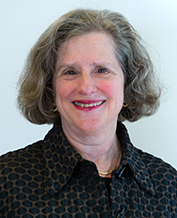 Ellen Leibenluft合作论文数National Institute of Mental Health1Nitch Stephen R合作论文数1Warren W Louise合作论文数1J.Christian Gillin合作论文数1
 Shahrokh Golshan合作论文数1
 Daniel Kripke合作论文数University of California, San Diego1Jinyao Yi合作论文数1Kathryn L. Cummings合作论文数1
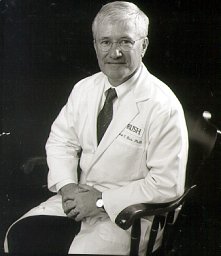 David C. Clark合作论文数School of Molecular and Microbial Sciences, The University of Queensland1
 Sylvie Berthoz合作论文数1James P. Henry合作论文数1Christopher Bergsten合作论文数1F. Perdereau合作论文数1
 Catherine Bungener合作论文数1Charles D. Killian合作论文数1
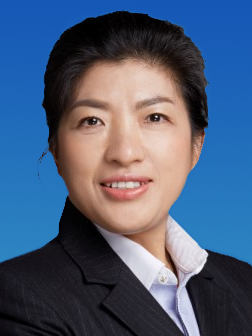 Xiongzhao Zhu (朱熊兆)合作论文数The Second Xiangya Hospital of Central South University;National Clinincal Research Center For Mental Disorders1




