Superconductivity is an essential technology for reducing carbon emissions and electrifying the transportation sector. Its unique ability to provide higher power density and greater efficiency sets it apart from other technologies. This document outlines a plan for integrating superconducting technology into the transportation sector, identifying major challenges and interim steps to be taken to overcome them. Implementing this plan and securing public and private funds will help transition the transportation sector towards zero-emission aircraft, high-capacity efficient shipping, and widespread use of a superconductivity-liquid hydrogen energy platform for transportation.
Abstract Litz wires operating in a cryogenic environment can potentially improve both the efficiency and power density of electrical machines and passive components. However, due to the low resistivity and high magnetic fields, eddy‐current losses may become significant in cryogenically cooled windings, especially in airgap winding arrangements or in the case of significant slot leakage fields, unless the litz wire parameters are carefully chosen. A framework for litz wire loss performance optimization and experimental characterisation at cryogenic temperatures is provided. An optimum operating temperature for minimum loss is derived based on analytical expressions, which highlights the role of litz wire parameters, current density and external field. The proximity loss model, used to calculate the optimum operating temperature, is validated experimentally. Two test rigs with different magnetic cores were designed and built. Copper and aluminium litz wires with a strand diameter down to 0.1 mm were tested in a liquid nitrogen bath with a uniform harmonic external magnetic field up to 0.5 T peak and a frequency up to 1 kHz. Measurements show good agreement with the theoretical results and confirm that the proposed model can be confidently used during the preliminary design of cryogenic windings.
Superconductors have a potential application in future turboelectric distributed propulsion (TeDP) aircraft and present significant new challenges for protection system design. Electrical faults and cooling system failures can lead to temperature rises within a superconducting distribution network, which necessitates a reduction or temporary curtailment of current to loads to prevent thermal runaway occurring within the cables. This scenario is undesirable in TeDP aircraft applications where the loads may be flight-critical propulsion motors. This article proposes a power management and control method that exploits the fast-acting measurement and response capabilities of the power electronic interfaces within the distribution network to maximize current supply to critical loads, reducing the impact of a temperature rise event in the superconducting distribution network. This new algorithm uses the detection of a resistive voltage in combination with a model-based controller that estimates the operating temperature of the affected superconducting cable to adapt the output current limit of the associated power electronic converter. To demonstrate the effectiveness of this method and its impact on wider system stability, the algorithm is applied to a simulated voltage-source converter supplied aircraft dc superconducting distribution network with representative propulsion motor loads.
Hybrid electric propulsion could be the solution to the ambitious environmental targets of the aerospace industry. Fully-superconducting machines have the potential to deliver the step-change in specific torque, power, and efficiency capabilities required for large civil transport aircraft applications. However, fully-superconducting machines are still in their infancy. This article investigates the electromagnetic design of two different stator design concepts for an ac fully-superconducting machine for an aerospace distributed fan motor application. A benchmark aerospace specification of 1 MW was chosen and the design of a conventional permanent-magnet machine was used to assess the performance of the two equivalent fully-superconducting ac motor designs. Following the guidelines from an experimental study of the losses in a small ac stator prototype with MgB2 coils, a fully-superconducting air-cored stator design and a new yokeless stator design are proposed. Both ac superconducting machine designs use superconducting bulk magnets mounted on a rotor core and an MgB2 superconducting stator winding. This article discusses the key design issues of the two stator layouts in relation to the current aerospace targets for efficiency and power density.
Electrical propulsion has been identified as a key enabler of greener, quieter, and more efficient aircraft. However, electrical propulsion aircraft (EPA) will need to demonstrate a level of safety and fault management (FM) at least equal to current aircraft. This will rely heavily on the capability and design of the electrical FM system. Given the functional limitations and current lack of FM technologies suitable for a future EPA application, strategic development of FM devices is required. While there are a variety of roadmaps for EPA concepts and key electrical components, the necessary development of FM solutions targeted toward EPA has yet to be established. This article proposes FM strategy maps that go beyond projections of expected development in FM technologies to scope the feasibility of key FM solutions. This method can then be used to present FM technology projections, electrical oversizing, and wider system redundancy alongside the EPA concepts in development. These strategy maps capture the impact of any FM technology barrier on the viability of a given EPA concept, enabling critical FM solutions to be integrated into the wider electrical system development. This marks a significant contribution to the development of robust, strategic electrical FM for future EPA concepts.
This paper provides the concept of design, implementation, and system integration of energy efficient power management solution for a fault-tolerant more electric engine/aircraft (MEE/MEA). The power management solution consists of three components, i.e., the power management system (PMS), the stability analysis module, and the condition-based control (CBC) module. The PMS is to optimize the electrical power system (EPS) level efficiency based on constraints with consideration of power limits of the dc system in the MEE/MEA architecture, which are calculated by the stability analysis module, and system reconfiguration, which is provided by the CBC module. This paper focuses on the design and implementation of PMS algorithm for EPS of a fault-tolerant MEE/MEA architecture. A PMS solution to optimize EPS level efficiency optimization is proposed, which is based on multiple objective optimization problem (MOOP). The proposed MOOP is solved with a modified nondominated genetic algorithm with local search mechanisms. The proposed power management solution are implemented in the MEE/MEA simulation model as well as hardware-in-loop virtual testbed and results show the effectiveness of the proposed algorithm.
This paper addresses the concept of designing and implementing the power management system (PMS) for electrical power system (EPS) of more electric engine/aircraft (MEE/MEA). An optimization model for the PMS in MEE/MEA is formulated. Various PMS solutions are required to meet different performance expectations. In order to have least possible electrical network losses, two types of PMS solutions are proposed, i.e., to optimize the generator efficiency and to optimize the EPS level efficiency, as single objective optimization problem (SOOP) and multiple objective optimization problem (MOOP), respectively. The SOOP is solved as a mixed integer programming problem while the MOOP is solved with a modified non-dominated genetic algorithm. The proposed PMS algorithm is implemented in the MEE/MEA simulation model and results show the effectiveness of the proposed algorithm.
The demand of More Electric Engine/Aircraft (MEE/MEA) increases with the need of on-board electrification system for future aircraft. Also, moving towards More Electric Engine/Aircraft (MEE/MEA) concept can achieve better fuel benefit in the engine by controlling the split ratio of the power off-take from each of Low Pressure (LP) and High Pressure (HP) spools. Due to the trend of MEA and MEE integration with the power electronic driven technology, a higher reliability level of electrical power system is required to meet the minimum safety requirement during fault condition. A concept of intelligent system for mitigating the faults by identifying the best fault tolerant system configuration with the minimum load shedding is proposed in this paper. The proposed method not only mitigates the fault elimination from the electrical system but also maintains continuous mechanical power output from LP and HP spools in order to maintain optimum fuel benefit of the engine.
Hybrid electric propulsion has been identified as a potential solution to the ambitious environmental emissions and noise targets of the aerospace industry. Superconducting machines may be the key component of that topology enabling the high power densities and efficiencies needed in aerospace. Fully superconducting machines, however, are not a mature technology. This paper looks at the different machine design configurations focusing on the stator magnetic circuit of a fully superconducting motor. The motor has been designed for an aerospace distributed fan propulsion motor with an aerospace benchmark specification of 1 MW. The AC fully superconducting machine includes superconducting bulk magnets mounted on a conventional rotor core and an MgB2 superconducting wire wound stator. The AC losses in the stator winding are particularly sensitive to exposure to the main rotor field so different screening solutions were used to shield the superconducting windings from the rotor field. The effectiveness of the screening techniques for the stator coils and the impact on the machine performance and weight were evaluated for different stator designs, such as full stator core and air core with and without flux diverters. Various combinations of pole numbers, diverter geometries, and magnetic materials have been checked. Results show that there is a tradeoff between stator iron losses and superconducting losses.
The aerospace industry has ambitious environmental emissions and noise reduction targets that have led to some radical proposals for future aerospace transportation technologies. One of the disruptive technologies identified is hybrid electric propulsion. The use of electrical machines for aerospace propulsion is not a new concept. Fully superconducting machines have the potential to deliver the step-change in specific torque, power and efficiency capabilities required for large civil transport aircraft applications. However fully superconducting machines are still in their infancy. This paper looks at the electromagnetic design of two different stator design concepts for an AC fully superconducting machine for an aerospace distributed fan motor using a benchmark aerospace specification. A benchmark aerospace specification of 1 MW was chosen and the design of a conventional permanent-magnet machine was used to assess the performance of the two equivalent fully superconducting AC motor designs. The AC fully superconducting machine includes superconducting bulk magnets mounted on a conventional rotor core and an MgB2 superconducting wire wound stator in a non-magnetic core. The paper looks at a fully superconducting air-cored stator design to reduce weight and a new yokeless stator design is proposed to reduce the armature losses. The paper will look at the key design issues of the different motor designs in relation to the current aerospace targets for efficiency and power densities.
Modern day advancements in electrical engineering especially power generation and management has enabled the path for More Electrical Aircrafts (MEAs) and hybrid propulsion systems. The electrical power generation in aerospace system is in itself an isolated micro grid with ac and dc components operating in either series or parallel or in hybrid mode. Uninterrupted and stable operation of these systems is of utmost importance. Known stability methods based on Lyapunov are difficult to implement as generalized on-line stability assessment procedure for such complex power network. In this paper a detailed and systematic small signal stability analysis of a More Electric Aircraft electrical power generation system is presented based on the eigen value analysis. The effect of different control algorithms on the MEE/MEA power network stability is studied using the proposed method. Also, it is shown that the stability is improved by using optimal gain feed-forward information of dc-bus currents. The stability matrix for the whole operating regime is developed and the stability margin variation for different operating conditions and control variations is presented. The efficacy of the estimated stability margin for MEE/MEA power network is verified using an Opal-RT Virtual test bed for all the control configurations.
Distributed Electrical Aerospace Propulsion Mark Husband, Lorenzo Raffaelli (1), James Alderman, Frederick Berg (2), Peter Malkin (3) 1 : Rolls-Royce plc, PO Box 31, Derby, England. mark.husband@rolls-royce.com, lorenzo.raffaelli.rolls-royce.com 2 : Airbus Group, james.alderman@eads.com, Frederick.berg@eads.com 3 : Cranfield University, p.malkin@cranfield.ac.uk Abstract This paper investigates the development of hybrid-electric distributed propulsion system. This offers a number of potential performance benefits including improved aerodynamics, propulsion, thermal and operational efficiency (based on energy management) and increased aircraft design freedom. Airbus Group Innovations, Rolls-Royce plc and Cranfield University are working together on a UK government funded Distributed Electrical Aerospace Propulsion project. Through this project a number of models for key enabling sub-systems including Boundary Layer re-energising fan systems, higher off-take engine solutions and superconducting electrical networks have been brought together as part of an overall distributed propulsion aircraft concept model. Through an iterative design process an understanding of the design space is b
As the commercial aircraft industry aims to meet the challenge of 2050 emissions targets, it becomes apparent that unconventional aircraft configurations may be necessary to achieve them. Distributed electrical propulsion offers opportunities for improving aircraft efficiency. However, the conversion and transfer of power could prove prohibitive when using conventional machines and conductors due to weight and inefficiency. An aircraft with distributed propulsion and boundary layer ingestion is considered in this paper, and the current view of the future of high-temperature superconductor technology as applied to aircraft is explained.
Cost-effective highly efficient nanostructured n -type Mg 2 Si 1− x Sn x and p -type higher manganese silicide (HMS) compositions were prepared for the development of practical waste heat generators for automotive and marine thermoelectric applications, in the frame of the European Commission (EC)-funded PowerDriver project. The physical, mechanical, and structural properties were fully characterized as part of a database-generation exercise required for the thermoelectric converter design. A combination of high maximal ZT values of ∼0.6 and ∼1.1 for the HMS and Mg 2 Si 1− x Sn x compositions, respectively, and adequate mechanical properties was obtained.
In order to minimise the environmental impact of increased air traffic substantial developments in civil aircraft electrical power systems must occur. NASA have set a target to reduce noise by 71dB, NOx emissions by 80% and fuel consumption by 60% for the N+3 generation of aircraft entering into service sometime between 2030 and 2035. Turboelectric Distributed Propulsion (TeDP) is expected to enable these goals to be met. NASA's N3-X concept aircraft comprises gas turbine engines which drive electrical generators and a DC network distributes power to an array of fans, which provide thrust. Interconnection and protection technologies will also be included to achieve desired levels of reliability of supply to the propulsion motors. This paper outlines the architecture of a generic TeDP system, explores its benefits, describes technical challenges that will need to be overcome and discusses the technical implications of implementing TeDP with regards to electrical system power density and safety.
Superconducting machines offer the significant advantage of smaller volume, lighter weight, and increased operating efficiencies compared with traditional electrical machines. To date, superconducting machines have utilized a superconducting dc field winding on the rotor of a synchronous machine. This increases the system complexity because it requires cryogenic cooling on the rotating part of the machine. The stator in these machines is generally composed of a set of conventional ac copper wire coils. Round magnesium diboride (MgB2) wire however has the potential to form low-cost ac stator coils for a superconducting machine. This could enable a stationary superconducting ac stator winding to be fabricated, reducing the complexity associated with the cryogenic cooling. This paper presents initial test results on a prototype ac solenoidal coil to represent a typical ac stator coil for a superconducting machine using MgB2 wire. The diameter of the wire with insulation was 1 mm and the coil was wound in a double-layer solenoidal arrangement. The magnetic flux density distribution, quench current level, long duration operating current level, and the ac losses of the coil were measured and discussed. This paper demonstrates the potential of MgB2 wire to develop a superconducting ac stator winding for a superconducting machine.
This study presents the development, analysis, manufacture and testing of a demonstrator multiple-can line-start rim-drive induction motor for use as a bi-directional electric thruster on-board a tidal stream turbine. A simple canned' rotor construction was used to eliminate the requirement for a conventional squirrel-cage rotor, to minimise the rotor size and weight and improve reliability, all the while providing compatibility with the sub-sea operating environment. The experimental test results on a demonstrator 30 kW rim-drive motor show good agreement with finite-element analysis predicted results.
A prototype resistive superconducting fault current limiter (SFCL) was developed using single-strand round magnesium diboride (MgB2) wire. The MgB2 wire was wound with an interleaved arrangement to minimize coil inductance and provide adequate inter-turn voltage withstand capability. The temperature profile from 30 to 40 K and frequency profile from 10 to 100 Hz at 25 K were tested and reported. The quench properties of the prototype coil were tested using a high current test circuit. The fault current was limited by the prototype coil within the first quarter-cycle. The prototype coil demonstrated reliable and repeatable current limiting properties and was able to withstand a potential peak current of 372 A for one second without any degradation of performance. A three-strand SFCL coil was investigated and demonstrated scaled-up current capacity. An analytical model to predict the behaviour of the prototype single-strand SFCL coil was developed using an adiabatic boundary condition on the outer surface of the wire. The predicted fault current using the analytical model showed very good correlation with the experimental test results. The analytical model and a finite element thermal model were used to predict the temperature rise of the wire during a fault.
 Alexander Smith合作论文数University of Manchester;Aerospace Technology Institute;Independent Design Review Group, BAE Systems Marine Ltd;Newcastle University14
 Paul Miller合作论文数8
 Xiaoze Pei合作论文数Sch. of Electr. & Electron. Eng., Univ. of Manchester;c;Sch. of Electr. & Electron. Eng., Univ. of Manchester7
 Tim Coombs合作论文数Electrical Engineering Division, Department of Engineering, University of Cambridge;Magdalene College, University of Cambridge;Magnifye Ltd6Milan Majoros合作论文数6M. Haslett合作论文数5Stephen M. Harrison合作论文数5
 Archie Campbell合作论文数Department of Engineering, University of Cambridge5
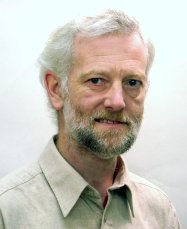 Philip Sargent合作论文数Engineering Department, Cambridge University5
 Matt Rindfleisch合作论文数Hyper Tech Research, Inc.5
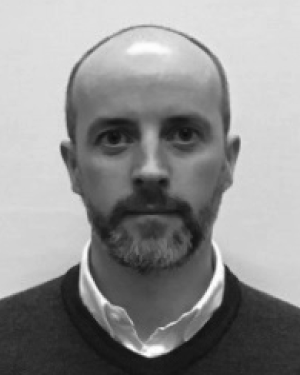 Paul Michael Tuohy合作论文数4
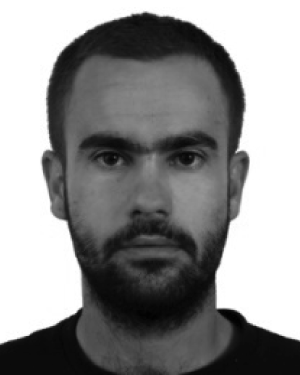 Charalampos Manolopoulos合作论文数4
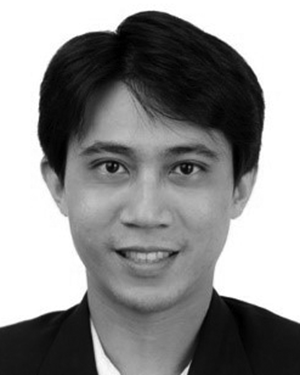 Gabriel Ooi Heo Peng合作论文数4
 Graeme Burt合作论文数4
 Matteo Iacchetti合作论文数Department of Electrical and Electronic Engineering, School of Engineering, Faculty of Science and Engineering, The University of Manchester4
 Changyun Wen (温长云)合作论文数School of Electrical and Electronic Engineering, Nanyang Technological University4
 Souvik Dasgupta合作论文数4d m astill合作论文数3
 Yicheng Zhang合作论文数3
 Catherine Jones合作论文数3
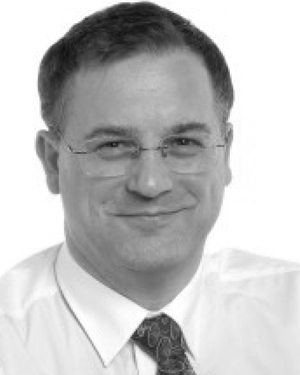 Chris G. Bright合作论文数3
 Patrick J. Norman合作论文数3timothy m s myers合作论文数2
 Joseph Kiran Banda合作论文数Norwegian University Of Science And Technology2Ian Cotton合作论文数Department of Electrical and Electronic Engineering, School of Engineering, Faculty of Science and Engineering, The University of Manchester2
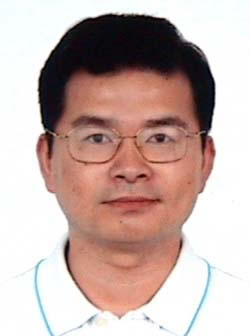 Rong Su合作论文数School of Electrical and Electronic Engineering, College of Engineering, Nanyang Technological University2Hopewell, P.合作论文数2Berg, F.合作论文数Airbus Group Innovations, Filton, UK;c;Airbus Group Innovations, Filton, UK|c|2M Tomsic合作论文数2
 Lin Ye (叶林)合作论文数College of Information and Electrical Engineering, China Agricultural University2Edward W. Collings合作论文数Department of Materials Science and Engineering, College of Engineering, The Ohio State University2Andrew Oliver合作论文数2
 Nand K. Singh合作论文数Department of Chemistry, Banaras Hindu University2Cornel C. Brozio合作论文数2
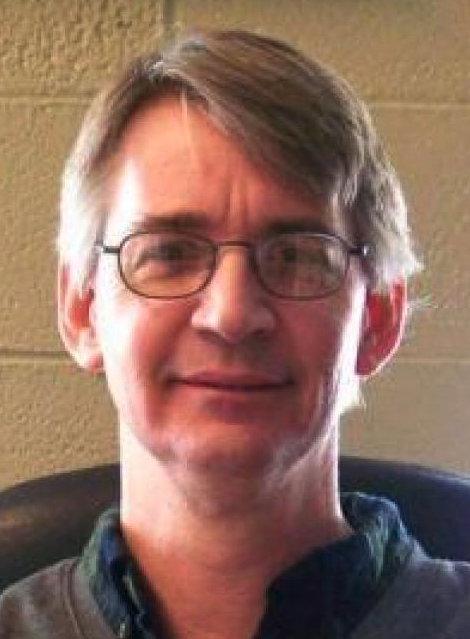 Mike D. Sumption合作论文数Department of Materials Science and Engineering, College of Engineering, The Ohio State University2
 Anton Velichko合作论文数Kurchatov Institute of Atomic Energy Moscow USSR2r m tumilty合作论文数1Mark S. Trimmer合作论文数1Panos Laskaridis合作论文数1Robert Gilchrist合作论文数1luca gallo合作论文数1
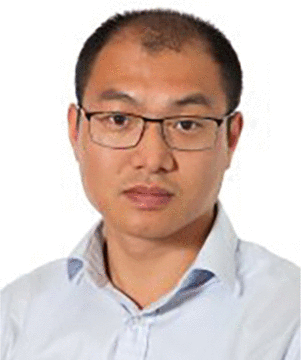 Xianwu Zeng合作论文数1bernard tashielewis合作论文数1
 Min Zhang合作论文数Department of Electronic and Electrical Engineering, University of Strathclyde1Marie-Claire Flynn合作论文数1
 Sumeet Singh Thakur合作论文数1Cedric Rouaud合作论文数1Michael Parizh合作论文数1




