In this paper, we present a satellite-integrated 5G testbed that was produced for the EU-commissioned Satellite and Terrestrial Networks for 5G (SaT5G) project. We first describe the testbed's 3GPP Rel. 15/6-compliant mobile core and radio access network (RAN) that have been established at the University of Surrey. We then detail how satellite NTN UE and gateway components were integrated into the testbed using virtualization and software-defined orchestration. The satellite element provides 5G backhaul, which in concert with the terrestrial/mobile segment of the testbed forms a fully integrated end-to-end (E2E) 5G network. This hybrid 5G network exercised and validated the four major use cases defined within the SaT5G project: cell backhaul, edge delivery of multimedia content, multicast and caching for media delivery and multilinking using satellite and terrestrial. In this document, we describe the MEC implementations developed to address each of the aforementioned use cases and explore how each MEC system integrates into the 5G network. We also provide measurements from trials of the use cases over a live GEO satellite system and indicate in each case the improvements that result from the use of satellite in the 5G network.
The convergence of innovation in satellite communications, 5G terrestrial systems and cloud technology promises a ubiquitous networking solution, which offers a wide range of features, including but not limited to: universal multiaccess coverage at extraordinarily high speeds & capacity, multi-tenancy, fixed and wireless access network convergence, software controlled, agile service provisioning, on-demand service-oriented resource allocation, and highly orchestrated. To meet the needs of future communication, a paradigm shift both in the terrestrial and satellite segments is needed, transforming them from data-only transport media to intelligent services, equipped with computational, storage and decision-making capacities. In this article, we present H2020 SaT5G project vision to integrate the next generation satellite systems into 5G terrestrial networks at different levels. To this end, after highlighting the benefits of the integrated satellite-5G systems via some potential use cases, we detail the architectural options proposed by the project. In addition, we will present a management solution for the effective management and orchestration of the end-to-end heterogeneous technologies (terrestrial and satellite services).
Satellite communication has recently been included as one of the key enabling technologies for 5G backhauling, especially for the delivery of bandwidth-demanding enhanced mobile broadband (eMBB) applications in 5G. In this paper, we present a 5G-oriented network architecture that is based on satellite communications and multi-access edge computing to support eMBB applications, which is investigated in the EU 5GPPP phase-2 satellite and terrestrial network for 5G project. We specifically focus on using the proposed architecture to assure quality-of-experience (QoE) of HTTP-based live streaming users by leveraging satellite links, where the main strategy is to realize transient holding and localization of HTTP-based (e.g., MPEG-DASH or HTTP live streaming) video segments at 5G mobile edge while taking into account the characteristics of satellite backhaul link. For the very first time in the literature, we carried out experiments and systematically evaluated the performance of live 4K video streaming over a 5G core network supported by a live geostationary satellite backhaul, which validates its capability of assuring live streaming users' QoE under challenging satellite network scenarios.
 Joe Cahill合作论文数4
 Christos Politis合作论文数Kingston University London3
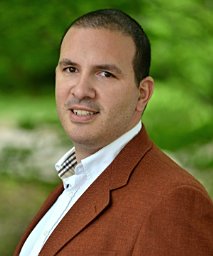 Konstantinos P. Liolis合作论文数School of Electrical and Computer Engineering, National Technical University of Athens3Daniel Guija合作论文数2Gint Atkinson合作论文数2Oriol Vidal合作论文数2
 Yogaratnam Rahulan合作论文数Univ Surrey, Inst Commun Syst, 5GIC, Guildford, Surrey, England2
 Boris Tiomela Jou合作论文数Airbus Defence & Space, Telecom System Department, Toulouse, France2
 Carolina Fernandez合作论文数Department of Information and Communication Technologies, Universitat Pompeu Fabra2
 Simon Watts合作论文数2
 Hamzeh Khalili合作论文数2
 Barry Evans合作论文数Institute for Communication Systems, University of Surrey2
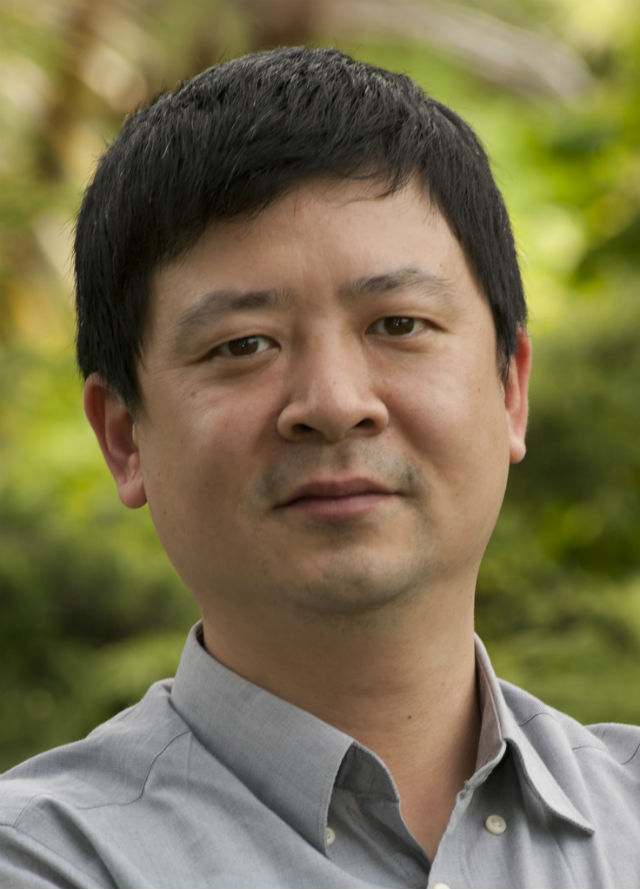 Ning Wang合作论文数Centre for Communication Systems Research (CCSR)
Faculty of Engineering and Physical Science
University of Surrey2
Ning Wang合作论文数Centre for Communication Systems Research (CCSR)
Faculty of Engineering and Physical Science
University of Surrey2 Pouria Sayyad Khodashenas合作论文数Advanced Broadband Communications Center (CCABA),, Universitat Politècnica de Catalunya (UPC),2Georgia Poziopoulou合作论文数1Alain-Pierre Brunel合作论文数1Chau Duy-Kha合作论文数1Jeremy Desmauts合作论文数1
 Mamoutou Diarra合作论文数Ekinops Valbonne France1
 Ioannis Selinis合作论文数Univ Surrey, Inst Commun Syst 5GIC, Guildford GU2 5XH, Surrey, England1
 Kumar Satish合作论文数1
 Chang Ge合作论文数1Robert L. King合作论文数School of Earth and Environmental Sciences, Washington State University1
 Fabrice Arnal合作论文数1




