This Viewpoint discusses the need for health care systems and the medical profession to prepare to protect immigrant patients and their families and to avoid being coerced into compromising patient care and the values of the profession.
Abstract Despite predictions that the United States will experience a growing physician shortage in the coming decades, there remains a population of would-be clinicians who are barred from becoming licensed physicians because of their immigration status. Undocumented medical students who do not have Deferred Action for Childhood Arrivals (DACA) status have to overcome many barriers to gain admittance to medical school, but because they lack work authorization in the United States, they are unable to enter residency training. In this article, the authors highlight the implications of this dilemma for academic medicine. After detailing the experiences of an undocumented medical student, they examine the historical and policy background of this barrier to licensure and board certification. The authors consider the most immediate option available to academic medical institutions: to create a viable training program that is an alternative to residency. Such an alternative training program would need to be equivalent in quality to an accredited residency program and enable its trainees to become board-certified but not be a form of employment. Finally, the authors conclude with a call for academic medicine to engage in advocacy in support of legislative solutions for undocumented young people.
Policy Points Models for access to care for uninsured immigrant children that mitigate structural and sociopolitical barriers to inclusive health care include funding structures (e.g., state-sponsored coverage) and care delivery systems (e.g., federally qualified health centers,). Although the quintessential model of access to care necessitates health coverage for all children regardless of immigration status or date of United States entry, incremental policy change may more realistically and efficiently advance equitable access to high-quality health care. Intentional advocacy efforts should prioritize achievable goals that are grounded in data, are attentive to the sociopolitical milieu, are inclusive of diverse perspectives, and would meaningfully impact health care access and outcomes.
Report Card Time: How Has the Biden Administration Addressed the U.S. Hispanic Community’s Social Determinants of Health? Cesar Montelongo Hernandez, Sullibet Ramirez Alvarado, Joanne Suarez & Mark Kuczewski To cite this article: Cesar Montelongo Hernandez, Sullibet Ramirez Alvarado, Joanne Suarez & Mark Kuczewski (2022): Report Card Time: How Has the Biden Administration Addressed the U.S. Hispanic Community’s Social Determinants of Health?, The American Journal of Bioethics, DOI: 10.1080/15265161.2022.2135880 To link to this article: https://doi.org/10.1080/15265161.2022.2135880
The United States (U.S.) health professions are becoming more invested in diversity. Information on students who are undocumented or recipients of Deferred Action for Childhood Arrivals (DACA), and international students on student visas entering U.S. medical education is sparse. Few programs offer targeted training for educators on advising students who are undocumented, DACA recipients, or on a visa. We piloted a virtual program for pre-health advisors and educators on supporting students who are undocumented or recipients of DACA and international students transitioning to medical school. Program evaluation consisted of an anonymous retrospective pre-post survey. Of 117 registrants, 40% completed the survey. Prior to the program, most participants indicated that they were unsure or thought students were ineligible for financial aid during medical school if they were DACA recipients (40% unsure, 26.6% ineligible) or on a student visa (30% unsure, 30% ineligible). After the program, most respondents reported students were eligible for merit scholarship or private loans with DACA (66.6% eligible) or an international student visa (60% eligible). Perceptions of students with DACA being able to lawfully practice medicine in the U.S. changed from pre-program (43.3% unsure or not eligible) to post-program (90% eligible). Participants indicated they were more confident advising DACA recipients and international students post program. This virtual program was an effective step in providing support for advisors who are assisting non-citizen or permanent resident students start their careers in healthcare. Our findings show the need for more information on advising students who are DACA recipients, undocumented, or on student visas prior to matriculating to medical school and throughout training.
We recommend that vaccination for COVID-19 should be a requirement for waitlist activation for solid organ transplant (SOT). We also recommend that such vaccination be required of the primary member of the in-home support team. We argue that these requirements are consistent with current standard practices that draw on a well-established ethical framework. As a result, these recommendations should be easily received and are only controversial owing to the inflamed and politicized state of public discourse.
ENG | 中文 En respuesta a un caso relacionado con un anuncio abierto a medicos para trabajar en un centro de detencion privado que alberga a solicitantes de asilo e inmigrantes
In response to a case involving an advertisement for a physician to work in a private detention center housing asylum seekers and immigrants, this commentary considers ethical obligations of physicians responsible for detainees' health care. The commentary also suggests key points a physician should make during a job interview at a detention center and concerns a physician might articulate about caregiving practices for detainees.
The Deferred Action for Childhood Arrivals (DACA) program has dramatically improved the lives of undocumented youth in the United States. In particular, DACA has improved these young adults' health by improving the social determinants of health. Furthermore, as health professionals, DACA recipients increase the diversity of medicine and the health professions and are thereby suited and well positioned to promote health equity. The medical profession should continue its support for ad hoc legislative remedies, such as the DREAM Act, which target relief for particular populations of undocumented youth. In addition, the medical profession should highlight the need for a legislative solution that goes beyond a one-time fix and corrects the systemic marginalization of undocumented youth.
ENG | ESP 本评论针对的案例涉及一则收容避难者和移民的私人收容中心招聘医生工作的广告,其中考虑了为被收容者卫生保健负责的医生的伦理职责。评论还说明了医生在面试收容所工作时应注意的要点,以及医生可能会对如何护理被收容者提出的担忧。
Because the United States has failed to provide a pathway to citizenship for its long-term undocumented population, clinical ethicists have more than 20 years of addressing issues that arise in caring for this population. I illustrate that these challenges fall into two sets of issues. First-generation issues involve finding ethical ways to treat and discharge patients who are uninsured and ineligible for safety-net resources. More recently, ethicists have been invited to help address second-generation issues that involve facilitating the presentation for care of undocumented patients. In the current environment of widespread fear of deportation in the immigrant community, ethicists are working with health care providers to address patient concerns that prevent them from seeking care. I illustrate that in both generations of issues, values implicit within health care, namely, caring, efficiency, and promotion of public health, guide the strategies that are acceptable and recommended.
I analyze the insights present in Elisabeth Kübler-Ross's seminal work, On Death and Dying that have laid the foundation for contemporary clinical bioethics as it is practiced by clinical ethics consultants. I highlight the landmark insight of Elisabeth Kübler-Ross that listening to dying patients reveals their needs and enables them to enjoy a better death. But more important for contemporary clinical ethics is that the text highlights three tensions that the clinical ethicist must navigate but can never truly resolve. Clinical ethicists must balance: (1) the need to hear the patient's voice with the temptation to overly medicalize the case, (2) helping the patient achieve a better death with enabling the patient to die in the way he or she chooses, and (3) keeping professional distance with engaging the patient in a way that respects the intimacy of the patient's disclosures.
The termination of the Deferred Action for Childhood Arrivals (DACA) immigration policy poses unique challenges for medical education and healthcare. A survey on DACA was administered online using Qualtrics Software System to 121 unique U.S.-MD granting medical school admissions leadership using e-mails between January 2018 and April 2018. A total of 39 individuals out of 121 (32%) responded to the survey; 23 (59%) of respondents identified as medical school admissions deans, 11 (28%) identified as directors and 5 (13%) as staff/officers. During the past 4 years, 19 (49%) reported having accepted DACA students. The majority either incorrectly answered or were otherwise unsure about the effect of DACA on medical education. The correlation between perception of understanding DACA and mean knowledge composite score was 0.38, P < 0.05. This study found that U.S.-MD granting medical school admissions leaders self-reported knowledge was moderately correlated with actual knowledge about DACA.
Purpose To describe and analyze qualitatively the impact of implementing the "Stritch Deferred Action for Childhood Arrivals (DACA) Initiative" (SDI) at the Stritch School of Medicine (SSOM), Loyola University, Chicago in 2012. The SDI is a three-step process that included: 1) opening the Stritch admissions policy to welcome DACA students to apply, 2) evaluating DACA applicants equitably with all other applicants, and 3) seeking funding to enable these students to matriculate. Method Focus groups and in-depth interviews were conducted to explore DACA and non-DACA students' experience of the SDI on their medical school journey and the institutional culture. During the study (in 2017-18), the medical school year (M)1-M3 cohorts included DACA students, while the M4 class did not. A grounded theory method was used to summarize and analyze qualitative data. Results Four major themes and 11 subthemes emerged from the data analysis. "Beliefs and Attitudes" included the subthemes of motivation to become physicians, resilience, and the mission and values of individuals and the institution. Students noted "obstacles" in reaching medical school, along with those they encountered within it. They also noted multiple "opportunities" presented through the SDI and the importance of mentors and allies. Lastly, the "impact" of the SDI on individuals, the institution, and the wider community was discussed by participants. Conclusion Enacting the SDI enabled cohorts of DACA recipients to matriculate at SSOM. Both DACA and non-DACA students in this study identified the importance of including these students as future physicians and articulated the impact of this change on them, their classmates, the institution, and the community as solidarity was formed and students' awareness of their power as future physicians to advocate for underserved populations developed.
 Wasson Katherine合作论文数12Parsi Kayhan合作论文数9Michael McCarthy合作论文数Neiwswanger Inst Bioeth, Loyola Univ Chicago8Emily E Anderson合作论文数6
 Anita J. Tarzian合作论文数Maryland Health Care Ethics Committee Network, University of Maryland6Felicia Cohn合作论文数5
 Joseph J. Fins合作论文数Division of Medical Ethics, Weill Cornell Medicine, Cornell University5Linda Brubaker合作论文数Department of Obstetrics, Gynecology and Reproductive Sciences, University of California, San Diego;ORCID: http://orcid.org/0000-0002-8598-2589.;Department of Obstetrics, Gynecology and Reproductive Sciences, University of California, San Diego4
 Lena Hatchett合作论文数4
 Glenn Mcgee合作论文数Center for Bioethics;Departments of Philosophy and History & Sociology of Science;Leonard Davis Institute for Healthcare;Economics;University of Pennsylvania;Department of Philosophy;Leonard Davis Institute for Healthcare, University of Pennsylvania4Aaron Michelfelder合作论文数3Amy Blair合作论文数3
 Danish Zaidi合作论文数Dept Internal Med, Yale Univ3
 Arthur L. Caplan合作论文数Division of Medical Ethics, Department of Population Health, Grossman School of Medicine, New York University;New York University Langone Medical Center3
 Marion Danis合作论文数Department of Bioethics, National Institutes of Health3
 Paul R Wolpe合作论文数Department of Psychiatry, Jefferson Medical College3
 Rosa L Pinkus合作论文数3Stephen R. Latham合作论文数3
 Robert Allen Pearlman合作论文数Division of Gerontology & Geriatric Medicine, University of Washington;National Center for Ethics in Health Care3
 Ryan Spellecy合作论文数3
 Arthur Derse合作论文数Center for the Study of Bioethics, Medical College of Wisconsin3
 Suzanne Holland合作论文数3Tod S. Chambers合作论文数3Sural Shah合作论文数2Hilde Lindemann合作论文数2Juan Raul Gutierrez合作论文数2Martin L Smith合作论文数2Ana C Monterrey合作论文数2A Meisel合作论文数2Wear Delese合作论文数2
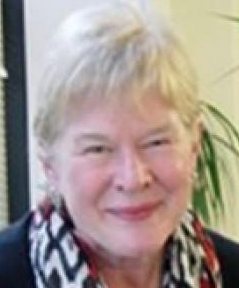 Patricia A. Marshall合作论文数Department of Bioethics, School of Medicine, Case Western Reserve University2
 Kristi Kirschner合作论文数Department of Medical Humanities and Bioethics, Northwestern University Feinberg School of Medicine2
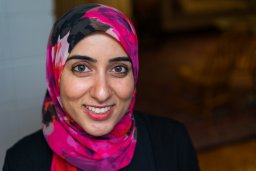 Saadi Altaf合作论文数Harvard Medical School, Boston, MA 02150, USA. altaf_saadi@hms.harvard.edu2Hutchison Paul J合作论文数2Kenneth V. Iserson合作论文数2Nancy Neveloff Dubler合作论文数2David John Doukas合作论文数2Catherine F. Belling合作论文数2
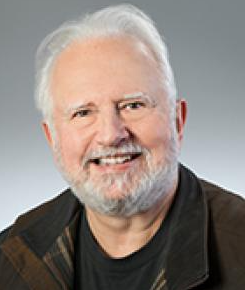 Stuart J. Youngner合作论文数Department of Bioethics, School of Medicine, Case Western Reserve University2Clarence H. Braddock合作论文数2Julie M. Linton合作论文数2
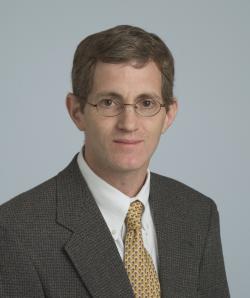 Eric D. Kodish合作论文数Department of Bioethics, School of Medicine, Case Western Reserve University;Center for Bioethics, Cleveland Clinic2Erich H. Loewy合作论文数2Dena S. Davis合作论文数2Irma G. Fiedler合作论文数2Joseph Kaufert合作论文数1Bridget Boyd合作论文数1Jesus Ruiz合作论文数1Andrew Taylor合作论文数1




