on a county level for the entire USA (including AK and HI where possible), considering all removal methods that are currently well-enough developed for us to estimate the likely costs in 2050. We anticipate that more than 1 Gt CO2e of removal will be available to the Nation. We will identify how much of each CO2 removal approach is available in specific regions of the Nation and provide cumulative costs and volumes (a supply curve) by region for 2050. We expect to complete this detailed analysis by late 2023.
Achieving more sustainable production of food, fiber and energy and reducing environmental burdens from agricultural systems is a global challenge. Meeting this challenge will create new opportunities for producers to provide a broader range of ecosystem services, including reducing greenhouse gas emissions (and sequestering more carbon) in their production systems. To meet these new objectives, land managers will need new decision tools and performance metrics. The COMET-Farm system was designed to fill this need by incorporating state-of-the-art greenhouse gas quantification methods into a web-based tool that can be used by farmers, ranchers, land managers and others. The system is capable of doing a full greenhouse gas assessment for CO2, CH4, and N2O, from all major on-farm emission sources (and CO2 removal into biomass and soil sinks), including land management of annual and perennial crops, pasture, range and agroforestry systems, as well as emissions from livestock and on-farm energy use. The system uses a fully spatial mapping and menu-driven graphical user interface (GUI) to facilitate data entry and evaluation of user-defined conservation practices. In this paper we provide an overview of the system and a description of the user interface and integrated databases in the system. We follow this with a brief description of the models and data requirements for the major emission source categories in the system. We illustrate the application of the system using examples of emission reductions from adoption of different conservation management practices and discuss how the tool can help meet needs for different policy-and market-driven greenhouse gas reduction efforts.
Conservation planners must assess a range of environmental, agronomic and economic impacts of implementing conservation practices on farms. While environmental impacts such as soil erosion control, improved soil quality, reduced nonpoint source pollution and a number of other sitespecific benefits are currently considered, conservation practices may also have significant climate benefits, through carbon sequestration and/or reduction of greenhouse gas (GHG) emissions. If conservation planners wish to incorporate greenhouse gas impacts in their planning process, they will need access to quick, easy-to-use tools to assess greenhouse gas impacts of conservation practices on farms. COMET-Planner (www.comet-planner.com) was developed to provide generalized estimates of GHG impacts of adoption of USDA National Resources Conservation Service (NRCS) conservation practice standards in a simple, web-based platform. Conservation scenarios were modeled in COMETFarm, a whole farm and ranch carbon and greenhouse gas accounting system based on USDA entityscale quantification methods, across a range of agricultural management, climate and soil types within Major Land Resource Areas (MLRA). Mean carbon sequestration and emission changes (CO2, N2O and CH4) associated with USDA-NRCS conservation practice adoption were estimated by MLRA. Results are provided to users via the web interface and a detailed methods report.
Liquid chromatography coupled to electrospray ionization-mass spectrometry (LC-ESI-MS) is a versatile and robust platform for metabolomic analysis. However, while ESI is a soft ionization technique, in-source phenomena including multimerization, nonproton cation adduction, and in-source fragmentation complicate interpretation of MS data. Here, we report chromatographic and mass spectrometric behavior of 904 authentic standards collected under conditions identical to a typical nontargeted profiling experiment. The data illustrate that the often high level of complexity in MS spectra is likely to result in misinterpretation during the annotation phase of the experiment and a large overestimation of the number of compounds detected. However, our analysis of this MS spectral library data indicates that in-source phenomena are not random but depend at least in part on chemical structure. These nonrandom patterns enabled predictions to be made as to which in-source signals are likely to be observed for a given compound. Using the authentic standard spectra as a training set, we modeled the in-source phenomena for all compounds in the Human Metabolome Database to generate a theoretical in-source spectrum and retention time library. A novel spectral similarity matching platform was developed to facilitate efficient spectral searching for nontargeted profiling applications. Taken together, this collection of experimental spectral data, predictive modeling, and informatic tools enables more efficient, reliable, and transparent metabolite annotation.
Phaeodactylum tricornutum is a widely used model organism for studying diatom biology. We created a P. tricornutum-specific literature database, or bibliome, that can be interactively annotated by users to improve the relevance and accuracy of search queries. A bibliome represents the current knowledge about a specific organism or biological process and is the foundation for genome-scale computation models. The bibliome of P. tricornutum was assembled from literature searches of ‘P. tricornutum’ (as topic) in two different existing databases, the Web of Knowledge and PubMed resulting in 2497 independent articles. We manually curated the bibliome for relevance to biochemical, physiological, and molecular biology studies. Literature that described the use of P. tricornutum as feed source and ecotoxicology studies were excluded from the bibliome. This process resulted in a final list of 1124 entries – 20% of which received additional classification in the form of notes or keywords. We present the bibliome in an HTML format that is easily searched and that can be customized according to the interests of individual researchers. This HTML tool can also easily be adapted for other algal species or specific research topics.
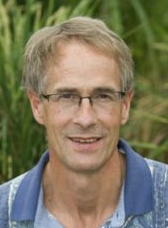 Keith Paustian合作论文数Department of Soil and Crop Sciences, College of Agricultural Sciences, Colorado State University;Natural Resource Ecology Laboratory, Colorado State University5
 Amy Swan合作论文数4
 Mark Easter合作论文数4
 Yao Zhang合作论文数Natural Resource Ecology Laboratory, Colorado State University2
 Graham Peers合作论文数Department of Plant and Microbial Biology, University of California2Ernest Marx合作论文数1Alessandra A. Gallina合作论文数1Hannah M. Goldstein合作论文数1Adam Chambers合作论文数1Daniel L Sanchez合作论文数1Ames Fowler合作论文数Civil and Environmental Engineering, Washington State University1
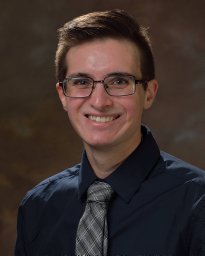 Maxwell Pisciotta合作论文数Dept Chem & Biomol Engn, Univ Penn1
 Dr. Alex Bump合作论文数Bureau of Economic Geology, Jackson School of Geosciences, University of Texas at Austin1
 Nicolás M. Clauser合作论文数Consejo Nacional de Investigaciones Científicas y Técnicas, Universidad Nacional de Misiones1Allegra Mayer合作论文数Dept Environm Sci Policy & Management, Univ Calif Berkeley1
 Mu Hong合作论文数1
 Noah Sokol合作论文数Lawrence Livermore Natl Lab1
 Karsten Zengler合作论文数Department of Bioengineering, Jacobs School of Engineering, University of California, San Diego1
 Bingquan Zhang合作论文数Energy and Sustainability Research Institute Groningen, University of Groningen1Ernie Marx合作论文数Nat Resource Ecol Lab, Colorado State Univ1
 Helene Pilorge合作论文数Dept Chem & Biomol Engn, Univ Penn1
 Sinead M Crotty合作论文数Univ Florida, Engn Sch Sustainable Infrastruct & Environm, Dept Environm Engn Sci, Gainesville, FL 32611 USA1Weier Liu (刘威尔)合作论文数1
 Mark Ducey合作论文数College of Life Sciences and Agriculture, University of New Hampshire1
 Eric Slessarev合作论文数Phys & Life Sci Directorate, Lawrence Livermore Natl Lab1Matthew Langholtz合作论文数Oak Ridge Natl Lab, POB1
 Yuan Yao合作论文数Chemical and Environmental Engineering, School of Engineering & Applied Science, Yale University1
 Peter Psarras合作论文数Department of Chemical and Biomolecular Engineering, School of Engineering and Applied Science, University of Pennsylvania1
 Prenni Jessica E合作论文数Prote & Metabol Facil, Colorado State Univ1Levering Jennifer合作论文数1
 Corey D Broeckling合作论文数Prote & Metabol Facil, Colorado State Univ1
 Corinne D. Scown合作论文数Lawrence Berkeley National Lab1
 King Zachary A合作论文数Department of Bioengineering, University of California, San Diego1
 Sara Kuebbing合作论文数Department of Ecology and Evolutionary Biology, University of Tennessee1
 Pang Simon H合作论文数Department of Chemical and Biological Engineering, University of Colorado Boulder1
 Ganna Andrea合作论文数Department of Medicine, Massachusetts General Hospital and Harvard Medical School1
 Georgiou Katerina合作论文数1
 Bernhard O. Palsson合作论文数Department of Bioengineering, University of California, San Diego;NNF Center for Biosustainability, University of California, San Diego1
 Dermot J. Hayes合作论文数Center for Agricultural and Rural Development;Iowa State University;Center for Agricultural and Rural Development, Iowa State University1Chad M. Hellwinckel合作论文数1
 Jerome Robert Florian Dumortier合作论文数Gastroenterology, Hôpital Edouard Herriot1
 Bruno Basso合作论文数Department of Earth and Environmental Sciences, College of Natural Science, Michigan State University;W.K. Kellogg Biological Station, Michigan State University1
 Roger D. Aines合作论文数Lawrence Livermore National Laboratory1Peter S. Nico合作论文数Chemistry Department;Cal State University;Chemistry Department, Cal State University1I. K. Busch合作论文数1
 Jennifer Pett-Ridge合作论文数Lawrence Livermore National Laboratory1
 Marlen Eve合作论文数1
 Erik Ingelsson合作论文数Wave Life Sciences1
 Susan D. Hovorka合作论文数Bureau of Economic Geology, Jackson School of Geosciences, The University of Texas at Austin1




