We investigate the propagation of counter-rotating convection rolls in Rayleigh-Bénard convection initiated locally in a quiescent fluid layer under supercritical conditions. The velocity of the front separating quiescent fluid from the forming convection rolls, and the wavenumber of the convection rolls remaining behind the front, are explored. We numerically investigate fronts of forming convection rolls over five orders of magnitude of the reduced Rayleigh number, ε, in 2D and 3D domains, for a broad range of boundary conditions, and for different front initiation approaches. In all cases, the front velocity increases as ε^1/2 with increasing ε for ε≲ 1 in agreement with predictions using the amplitude equation. The amplitude equation description of the front velocity remains accurate for ε≲ 10 except when the Prandtl number is large which yields a velocity that is faster than predicted for a fluid layer far from threshold. The wavenumber of the convection rolls increases linearly with ε in agreement with the wavenumber that maximizes the growth rate of perturbations in the linear regime. Farther from onset, the wavenumber growth transitions to a reduced scaling of ε^1/4 in agreement with predictions using the Swift-Hohenberg equation in the large ε limit. The scalings describing the wavenumber variation with ε are independent of the domain geometry, boundary conditions, and front initiation method. However, the front-selected wavenumber at criticality does not equal the critical wavenumber of the bulk instability, in general, and depends significantly upon these details. We compare our results with experimental measurements where possible.
Even a relatively weak drive force is enough to push a typical nanomechanical resonator into the nonlinear regime. Consequently, nonlinearities are widespread in nanomechanics and determine the critical characteristics of nanoelectromechanical systems (NEMS) resonators. A thorough understanding of the nonlinear dynamics of higher eigenmodes of NEMS resonators would be beneficial for progress, given their use in applications and fundamental studies. Here, we characterize the nonlinearity and the linear dynamic range (LDR) of each eigenmode of two nanomechanical beam resonators with different intrinsic tension values up to eigenmode $n=11$. We find that the modal Duffing constant increases as $n^4$, while the critical amplitude for the onset of nonlinearity decreases as $1/n$. The LDR, determined from the ratio of the critical amplitude to the thermal noise amplitude, increases weakly with $n$. Our findings are consistent with our theory treating the beam as a string, with the nonlinearity emerging from stretching at high amplitudes. These scaling laws, observed in experiments and validated theoretically, can be leveraged for pushing the limits of NEMS-based sensing even further.
We explore the chaotic dynamics of a large one-dimensional lattice of coupled maps with diffusive coupling of varying strength using the covariant Lyapunov vectors (CLVs). Using a lattice of diffusively coupled quadratic maps, we quantify the growth of spatial structures in the chaotic dynamics as the strength of diffusion is increased. When the diffusion strength is increased from zero, we find that the leading Lyapunov exponent decreases rapidly from a positive value to zero to yield a small window of periodic dynamics which is then followed by chaotic dynamics. For values of the diffusion strength beyond the window of periodic dynamics, the leading Lyapunov exponent does not vary significantly with the strength of diffusion with the exception of a small variation for the largest diffusion strengths we explore. The Lyapunov spectrum and fractal dimension are described analytically as a function of the diffusion strength using the eigenvalues of the coupling operator. The spatial features of the CLVs are quantified and compared with the eigenvectors of the coupling operator. The chaotic dynamics are composed entirely of physical modes for all of the conditions we explore. The leading CLV is highly localized and localization decreases with increasing strength of the spatial coupling. The violation of the dominance of Oseledets splitting indicates that the entanglement of pairs of CLVs becomes more significant between neighboring CLVs as the strength of diffusion is increased.
The stochastic dynamics of small elastic objects in fluid are central to many important and emerging technologies. It is now possible to measure and use the higher modes of motion of elastic structures when driven by Brownian motion alone. Although theoretical descriptions exist for idealized conditions, computing the stochastic multimodal dynamics for the complex conditions of experiment is very challenging. We show that this is possible using deterministic finite element calculations with the fluctuation dissipation theorem by exploring the multimodal stochastic dynamics of a doubly-clamped nanobeam. We use a very general, and flexible, finite-element computational approach to quantify the stochastic dynamics of multiple modes simultaneously using only a single deterministic simulation. We include the experimentally relevant features of an intrinsic tension in the beam and the influence of a nearby rigid boundary on the dynamics through viscous fluid interactions. We quantify the stochastic dynamics of the first eleven flexural modes of the beam when immersed in air or water. We compare the numerical results with theory, where possible, and find excellent agreement. We quantify the limitations of the computational approach and describe its range of applicability. These results pave the way for computational studies of the stochastic dynamics of complex 3D elastic structures in a viscous fluid where theoretical descriptions are not available.
We explore the high-dimensional chaos of a one-dimensional lattice of diffusively coupled tent maps using the covariant Lyapunov vectors (CLVs). We investigate the connection between the dynamics of the maps in the physical space and the dynamics of the covariant Lyapunov vectors and covariant Lyapunov exponents that describe the direction and growth (or decay) of small perturbations in the tangent space. We explore the tangent space splitting into physical and transient modes and find that the splitting persists for all of the conditions we explore. In general, the leading CLVs are highly localized in space and the CLVs become less localized with increasing Lyapunov index. We consider the dynamics with a conservation law whose strength is controlled by a parameter that can be continuously varied. Our results indicate that a conservation law delocalizes the spatial variation of the CLVs. We find that when a conservation law is present, the leading CLVs are entangled with fewer of their neighboring CLVs than in the absence of a conservation law.
Brownian motion imposes a hard limit on the overall precision of a nanomechanical measurement. Here, we present a combined experimental and theoretical study of the Brownian dynamics of a quintessential nanomechanical system, a doubly-clamped nanomechanical beam resonator, in a viscous fluid. Our theoretical approach is based on the fluctuation-dissipation theorem of statistical mechanics: We determine the dissipation from fluid dynamics; we incorporate this dissipation into the proper elastic equation to obtain the equation of motion; the fluctuation-dissipation theorem then directly provides an analytical expression for the position-dependent power spectral density (PSD) of the displacement fluctuations of the beam. We compare our theory to experiments on nanomechanical beams immersed in air and water, and obtain excellent agreement. Within our experimental parameter range, the Brownian force noise driving the nanomechanical beam has a colored PSD due to the ``memory"of the fluid; the force noise remains mode-independent and uncorrelated in space. These conclusions are not only important for nanomechanical sensing but also provide insight into the fluctuations of elastic systems at any length scale.
We numerically explore the propagation of reacting fronts in a shallow and horizontal layer of fluid. We focus on fronts that couple with the fluid due to density differences between the products and reactants and also due to heat release from the reaction. We explore fronts where this solutal and thermal coupling is cooperative or antagonistic. We quantify the fluid motion induced by the front and investigate the interactions of the front with the fluid as it propagates through quiescent, cellular and chaotic flow fields. The solutal coupling induces an extended convection roll that travels with the front, the thermal coupling due to heat release from the reaction generates a pair of convection rolls that travels with the front, and when both couplings are present there is a complex signature of these contributions. The details of the front dynamics depend significantly upon the interactions of the front-induced flow field with the fluid ahead of the front.
We explore the dynamics of a nanoscale doubly clamped beam that is under high tension, immersed in a viscous fluid, and driven externally by a spatially varying drive force. We develop a theoretical description that is valid for all possible values of tension, includes the motion of the higher modes of the beam, and accounts for a harmonic force that is applied over a limited spatial region of the beam near its ends. We compare our theoretical predictions with experimental measurements for a nanoscale beam that is driven electrothermally and immersed in air and water. The theoretical predictions show good agreement with experiments, and the validity of a simplified string approximation is demonstrated.
Rotating spiral patterns in Rayleigh-Benard convection are known to induce azimuthal flows, which raises the question of how different neighboring spirals interact with each other in spiral chaos, and the role of hydrodynamics in this regime. Far from the core, we show that spiral rotations lead to an azimuthal body force that is irrotational and of magnitude proportional to the topological index of the spiral and its angular frequency. The force, although irrotational, cannot be included in the pressure field as it would lead to a nonphysical, multivalued pressure. We calculate the asymptotic dependence of the resulting flow, and show that it leads to a logarithmic dependence of the azimuthal velocity on distance r away from the spiral core in the limit of negligible damping coefficient. This solution dampens to approximately $1/r$ when accounting for no-slip boundary conditions for the convection cell's plate. This flow component can provide additional hydrodynamic interactions among spirals including those observed in spiral defect chaos. We show that the analytic prediction for the azimuthal velocity agrees with numerical results obtained from both two-dimensional generalized Swift-Hohenberg and three-dimensional Boussinesq models, and find that the velocity field is affected by the size and charges of neighboring spirals. Numerically, we identify a correlation between the appearance of spiral defect chaos and the balancing between the mean-flow advection and the diffusive dynamics related to roll unwinding.
We study the frequency spectrum of the thermal force giving rise to Brownian motion of a nanomechanical beam resonator in a viscous liquid. In the first set of experiments, we measure the power spectral density (PSD) of the position fluctuations of the resonator around its fundamental mode at its center. Then, we measure the frequency-dependent linear response of the resonator, again at its center, by driving it with a harmonic force that couples well to the fundamental mode. These two measurements allow us to determine the PSD of the Brownian force noise acting on the structure in its fundamental mode. The PSD of the force noise from multiple resonators spanning a broad frequency range displays a "colored spectrum" and follows the dissipation of a blade oscillating in a viscous liquid-by virtue of the fluctuation-dissipation theorem of statistical mechanics.
We numerically study the propagation of reacting fronts in a shallow and horizontal layer of fluid with solutal feedback and in the presence of a thermally driven flow field of counterrotating convection rolls. We solve the Boussinesq equations along with a reaction-convection-diffusion equation for the concentration field where the products of the nonlinear autocatalytic reaction are less dense than the reactants. For small values of the solutal Rayleigh number the characteristic fluid velocity scales linearly, and the front velocity and mixing length scale quadratically, with increasing solutal Rayleigh number. For small solutal Rayleigh numbers the front geometry is described by a curve that is nearly antisymmetric about the horizontal midplane. For large values of the solutal Rayleigh number the characteristic fluid velocity, the front velocity, and the mixing length exhibit square-root scaling and the front shape collapses onto an asymmetric self-similar curve. In the presence of counterrotating convection rolls, the mixing length decreases while the front velocity increases. The complexity of the front geometry increases when both the solutal and convective contributions are significant and the dynamics can exhibit chemical oscillations in time for certain parameter values. Last, we discuss the spatiotemporal features of the complex fronts that form over a range of solutal and thermal driving.
We probe the effectiveness of using topological defects to characterize the leading Lyapunov vector for a high-dimensional chaotic convective flow field. This is accomplished using large-scale parallel numerical simulations of Rayleigh-Bénard convection for experimentally accessible conditions. We quantify the statistical correlations between the spatiotemporal dynamics of the leading Lyapunov vector and different measures of the flow field pattern's topology and dynamics. We use a range of pattern diagnostics to describe the flow field structures which includes many of the traditional diagnostics used to describe convection as well as some diagnostics tailored to capture the dynamics of the patterns. We use the ideas of precision and recall to build a statistical description of each pattern diagnostic's ability to describe the spatial variation of the leading Lyapunov vector. The precision of a diagnostic indicates the probability that it will locate a region where the Lyapunov vector is larger than a threshold value. The recall of a diagnostic indicates its ability to locate all of the possible spatial regions where the Lyapunov vector is above threshold. By varying the threshold used for the Lyapunov vector magnitude, we generate precision-recall curves which we use to quantify the complex relationship between the pattern diagnostics and the spatiotemporally varying magnitude of the leading Lyapunov vector. We find that pattern diagnostics which include information regarding the flow history outperform pattern diagnostics that do not. In particular, an emerging target defect has the highest precision of all of the pattern diagnostics we have explored.
This corrects the article DOI: 10.1103/PhysRevE.84.046215.
We explore the chaotic dynamics of Rayleigh-B\'enard convection using large-scale, parallel numerical simulations for experimentally accessible conditions. We quantify the connections between the spatiotemporal dynamics of the leading-order Lyapunov vector and different measures of the flow field pattern's topology and dynamics. We use a range of pattern diagnostics to describe the spatiotemporal features of the flow field structures which includes many of the traditional diagnostics used to describe convection as well as some diagnostics tailored to capture the dynamics of the patterns. Using precision-recall curves, we quantify the complex relationship between the pattern diagnostics and the regions where the magnitude of the leading-order Lyapunov vector is significant.
We explore the spatiotemporal dynamics of the spectrum of covariant Lyapunov vectors for chaotic Rayleigh-Bénard convection. We use the inverse participation ratio to quantify the amount of spatial localization of the covariant Lyapunov vectors. The covariant Lyapunov vectors are found to be spatially localized at times when the instantaneous covariant Lyapunov exponents are large. The spatial localization of the Lyapunov vectors often occurs near defect structures in the fluid flow field. There is an overall trend of decreasing spatial localization of the Lyapunov vectors with increasing index of the vector. The spatial localization of the covariant Lyapunov vectors with positive Lyapunov exponents decreases an order of magnitude faster with increasing vector index than all of the remaining vectors that we have computed. We find that a weighted covariant Lyapunov vector is useful for the visualization and interpretation of the significant connections between the Lyapunov vectors and the flow field patterns.
 m c cross合作论文数14Mu Xu合作论文数12
 Michael Schatz合作论文数School of Physics, College of Sciences, Georgia Institute of Technology;Center for Nonlinear Science, Georgia Institute of Technology10
 William Ducker合作论文数Department of Chemical Engineering, Virginia Tech10
 Saikat Mukherjee合作论文数International Institute of Information Technology10
 Konstantin Mischaikow合作论文数Department Mathematics and BioMaPS Institute
Rutgers Universit9
Konstantin Mischaikow合作论文数Department Mathematics and BioMaPS Institute
Rutgers Universit9 Milad Radiom合作论文数School of Mechanical and Aerospace Engineering, Nanyang Technological University9Andrew Duggleby合作论文数8
 Brian Robbins合作论文数7
 Rachel Levanger合作论文数Dept Elect & Syst Engn, Univ Penn7
 Harry Dankowicz合作论文数Department of Mechanical Science and Engineering, The Grainger College of Engineering, University of Illinois at Urbana-Champaign7
 Ted M Clark合作论文数Department of Chemistry, The Ohio State University7Johnathon Barbish合作论文数Virginia Tech, Dept Mech Engn, Blacksburg, VA 24061 USA6
 John Tyson合作论文数Department of Biological Sciences, College of Science, Virginia Polytechnic Institute and State University;Virginia Bioinformatics Institute6
 John Walz合作论文数6
 Kamil L. Ekinci合作论文数Department of Mechanical Engineering, College of Engineering, Boston University6
 Paul Fischer合作论文数Spectral Element Analysis Lab, Scientific Computing Group, Department of Computer Science, University of Illinois at Urbana-Champaign;Department of Mechanical Science & Engineering, University of Illinois at Urbana-Champaign;Siebel School of Computing and Data Science, The Grainger College of Engineering, University of Illinois at Urbana-Champaign6
 Jacek Cyranka合作论文数Institute of Computer Science, Jagiellonian University6A Karimi合作论文数5
 Nicole Hashemi合作论文数Department of Mechanical and Aerospace Engineering, College of Engineering, University of Missouri5Kenneth S Ball合作论文数Department of Mechanical Engineering;Virginia Polytechnic Institute, State University;Department of Mechanical Engineering, Virginia Polytechnic Institute and State University5
 Jeffrey Tithof合作论文数University of Tennessee5
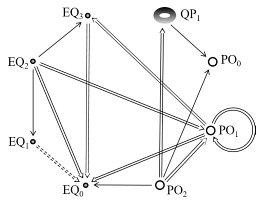 Balachandra Suri合作论文数Dept Mech Engn, Indian Inst Sci4
 Selim Hanay合作论文数International Iberian Nanotechnology Laboratory;Department of Mechanical Engineering, Bilkent University4Mehrvarzi C O合作论文数Department of Mechanical Engineering, Virginia Polytechnic Institute and State University4
 Miroslav Kramar合作论文数4F. Issacci合作论文数4William T. Baumann合作论文数Department of Electrical and Computer Engineering;Virginia Polytechnic;Institute and State Uni - versity;Department of Electrical and Computer Engineering, Virginia Polytechnic|Institute and State Uni - versity4
 Ivan Catton合作论文数Samueli School of Engineering, University of California, Los Angeles4Brett Tregoning合作论文数3
 Henry Greenside合作论文数Department of Physics, School of Medicine, Duke University;Duke Institute for Brain Sciences, Duke University3Christopher Honig合作论文数Department of Chemical Engineering, School of Chemical and Biomedical Engineering, Faculty of Engineering and Information Technology, The University of Melbourne3Chiam Keng-Hwee合作论文数Mechanobiology Institute of Singapore, National University of Singapore;Bioinformatics Institute, Agency for Science, Technology and Research3
 Alireza Karimi合作论文数Department of Mechanical and Industrial Engineering, Northeastern University3J. D. Scheel合作论文数3J. E. Solomon合作论文数2I. I. Kaya合作论文数2george apostolakis合作论文数2M Xu合作论文数2Oleksiy Svitelskiy合作论文数2
 Atakan B. Ari合作论文数Photon Ctr, Boston Univ2
 Cenk Yanik合作论文数SUNUM Nanotechnol Res & Applicat Ctr, Sabana Univ2
 Huang Zhifeng合作论文数2
 Kartik Subramanian合作论文数2
 George E. Apostolakis合作论文数Nuclear Risk Research Center, Central Research Institute of Electric Power Industry;Nuclear Science and Engineering, Massachusetts Institute of Technology2S. Jones合作论文数2
 Sandip Kar合作论文数Department of Chemistry, Indian Institute of Technology Bombay2
 Jason Cleveland合作论文数Quantum Diamond Technologies Inc;DE-CRUIT INC2
 Debashis Barik合作论文数Indian Association for the Cultivation of Science2




