This paper provides an overview of the national Telephone Dispute Resolution Service that has been operated by Relationships Australia Queensland since July 2007. The document applies an operational and clinical perspective to the achievements of the service and an overview of the Online Family Dispute Resolution Project which was funded by the Attorney-General's Department to develop and evaluate online technologies, including video-conferencing, for clients of the Telephone Dispute Resolution Service.Following changes to Australia's Family Law system in 2006 separated parents in dispute about their children can apply to a family law court for a Parenting Order only after obtaining a certificate from a certified family dispute resolution (FDR) practitioner which states that genuine effort has been made to resolve the dispute through a FDR process.(2) To support these changes, the Australian Government funded the establishment of 65 Family Relationship Centres (FRCs) around Australia between 2006 and 2008. The purpose of the centres is to act as a source of information and advice to assist families at all stages of their lives, with a focus on providing FDR to separated parents.(3) The Family Relationship Advice Line (FRAL) was also established in 2006 to complement the services offered by FRCs, ensuring anyone who cannot access a centre could receive help.(4)
Whereas the number of family disputes makes other disputes pale into insignificance, there is remarkably little decision support or information technology to support disputants in their negotiations. In Australia, pre-trial mediation has become compulsory in family matters. To help disputants better resolve their conflicts, services have evolved to meet demand, reduce costs and leverage the benefits of technology. This paper examines and reports on a number of methods and tools that have been and are being developed to support parties in family conflicts. First, Negotiation support tools have been developed to provide advice about BATNAs (alternatives should the mediation fail). Second, Telephone Dispute Resolution services are taking an increasingly important role in supporting parties to reach agreements. Finally, technological developments, service efficiencies and community sophistication herald opportunities for Online Family Dispute Resolution services. Such a system adds to the range of offerings and modalities among which those seeking to resolve family disputes can choose. An important adjunct rather than replacement for existing face-to-face or telephone services, are on-line approaches to mediation and education. Such approaches provide potential benefits for educating and preparing parties so that dispute resolution can proceed more effectively, reach more people and extend range of services to secure mutually satisfactory agreements.
The 2004 enlargement of the European Union brought in 10 new member states: Estonia, Latvia, Lithuania, Poland, the Czech and Slovak Republics, Hungary, Slovenia, Malta and Cyprus. Echoing concerns...
ABSTRACT This paper unpacks the problematic designation of ‘Turks’ as a migrant group within the context of migration, integration and policy-making in the UK, especially London. Three groups are identified—Turkish Cypriots, Turks from mainland Turkey, and Kurds from Turkey. Their variable experiences of arrival, settlement and socio-economic and cultural integration are documented through a small-scale qualitative study based on in-depth interviews with members of each community. Policy has often had limited relevance to these groups, except at the local level.
This paper examines the importance of information security awareness programs in modern organisations. An expanded program is suggested to cater for more employee groupings in the organisation. Techniques, which could make the presentation of the program more effective, are explained and the envisaged program is then presented.
This introductory paper to the special issue of JEMS on the second generation in Europe reviews some of the key themes underpinning the growing interest in the second generation, and asks what 'integration' actually means in contemporary debates about immigration and settlement. The authors attempt to place these debates within their specific national contexts, in particular by applying US-developed theories of second-generation integration to Europe. In this way, we build on the embryonic transatlantic dialogue about which factors potentially account for different patterns of second-generation integration in different countries. Integration, in this sense, refers both to structural aspects such as educational and labour-market status as well as to a broader and at times fuzzier concept that includes ideas of culture, ethnic or religious identity and citizenship. The paper also sets the scene for the various articles in this special issue which together illustrate the thematic breadth of European-based research on the children of immigrants. We conclude by offering two theoretical avenues for future research on ethnic minority groups and their settlement patterns.
It is late on a Wednesday evening and I find myself comfortably ensconced in my home office. I am deep in thought, paused over my keyboard, ready to set it alight with my knowledge on security, and yet I am unable to type.
The key problematique of this chapter is to understand how migration and the integration of migrants unfold through time, across generations and as gendered processes. This is an extremely broad canvas on which to try to paint a picture of the temporal and socio-demographic dimensions of the processes of immigration and settlement in Europe.
Security — It’s the bugbear of every company because so many threats to business integrity exist. Most organizations focus on external threats to their operations, spending time — and extensive budgets — building firewalls, fighting viruses, etc, owing to widely held beliefs that the external threats are rife.
A confining, Goldstone theorem preserving, separable ansatz for the ladder kernel of the two-body Bethe-Salpeter equation is constructed from phenomenologically efficacious u, d, and s dressed-quark propagators. The simplicity of the approach is its merit. It provides a good description of the ground-state flavor-octet pseudoscalar, vector, and axial-vector meson spectrum facilitates an exploration of the relative importance of various components of the two-body Bethe-Salpeter amplitudes, showing that subleading Dirac components an quantitatively important in the flavor-octet pseudoscalar meson channels, and allows a scrutiny of the domain of applicability of ladder truncation studies. A color-antitriplet diquark spectrum is obtained. The shortcomings of separable Ansatze and the ladder kernel are highlighted.
We present details of a model for calculating the mass spectrum of light-quark mesons and decay constants of the pseudoscalar meson octet from a phenomenological model based on Dyson–Schwinger and Bethe–Salpeter equations. In this model the Bethe-Salpeter kernel is approximated by a separable ansatz obtained from input quark propagators.
The charged and neutral kaon form factors are calculated as a phenomenological application of model QCD Dyson-Schwinger equations. The results are compared with the pion form factor calculated in the same framework and yield FK±(Q2) > Fπ±(Q2) on Q2 ϵ [0, 3] GeV2; and a negative charge radius for the neutral kaon. These results are sensitive to the difference between the kaon and pion Bethe-Salpeter amplitude and the u- and s-quark propagation characteristics.
We calculate the mass spectrum and decay constants of the pseudoscalar meson octet, and mass spectrum of the vector meson octet from a separable approximation to the Bethe-Salpeter equation. In the model, quark propagators inspired by earlier studies of QCD Dyson-Schwinger equations are taken as the only input.
The electromagnetic form factor of the charged and neutral kaon is calculated using the approach applied in the successful study of the pion form factor, described above. The charged kaon form factor will be measured in forthcoming experiments at CEBAF. Our calculation involves the dressed strange quark propagator, to which F{sub {pi}}(q{sup 2}) is not sensitive, and hence it provides us with constraints on the strange-quark sector of QCD. Our preliminary results are encouraging. We find that the strange and up/down quark propagators are not too different, once the change in the current-quark-mass is accounted for. However, the difference that remains is important since it allows {l_angle}{bar s}s{r_angle}<{l_angle}{bar u}u{r_angle}. This calculation is the first to yield a value of f{sub K}/f{sub {pi}} that is in good agreement with experiment and also yields r{sub K+}/r{sub {pi}} in good agreement with experiment. Our calculated charged kaon form factor provides a prediction that will be tested in the forthcoming CEBAF experiments. Our studies also show that K{sup 0} has a negative charge radius, as is to be expected. Our calculated value will be compared with that measured in K{sub s}{sup 0} regeneration from electrons.
The spectroscopy and weak decays of mesons composed of u, d, and s quarks is being studied using a separable approximation to the quark-quark scattering kernel. This is a first, simple step towards an extraction of the form of the quark-quark interaction at small space-like-q{sup 2} directly from experimental observables. The kernel is obtained by using a separable approximation to invert the DSE for the quark propagator. The quark propagator used is the phenomenologically-efficacious, confining model form derived in the study of F{sub {pi}}(q{sup 2}), which is described above. Preliminary results are encouraging, showing that pion observables can indeed be used as a sensitive probe of the effective quark-quark interaction in the infrared.
We investigate the physics of an ensemble of oscillating neutrinos in the primordial plasma of the early Universe. The result is a coupled set of quantum kinetic equations both for the neutrino density operator and the momentum distributions of other species in the plasma. In the appropriate momentum-averaged limit, a comparable set of quantum rate equations arises. For the case of oscillations within the weakly interacting sector we find surprising new contributions to the forward scattering effective potential, as well as new quantum contributions to the kinetic and/or rate equations. The possibility that neutrino oscillations might affect primordial nucleosynthesis is discussed.
The Dirac equation in Kerr spacetime is separated using the rotating tetrad formalism. This allows solutions of the Dirac equation, in flat spacetime, written in oblate and prolate spheroidal coordinates to be extracted. The usual MIT bag boundary condition, -igamma(mu)n(nu)PSI = PSI is then found to be incompatible with a non-vanishing separated wavefunction except in the spherical limit. However, it is shown that an alternative boundary condition exists that is physically motivated and allows for a non-trivial solution.
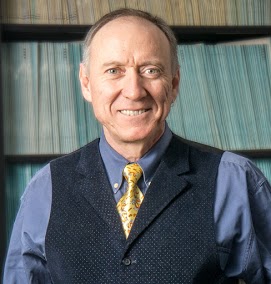 Craig D. Roberts合作论文数Institute for Nonperturbative Physics, Nanjing University;School of Physics, Nanjing University6
 Conrad Burden合作论文数6
 Peter C Tandy合作论文数Department of Physics, Kent State University4
 Russell King合作论文数Sussex Centre for Migration Research, School of Global Studies, University of Sussex4
 L QIAN合作论文数3
 Kari Pekka Enqvist合作论文数Department of Physics, University of Helsinki3Kimmo Kainulainen合作论文数Department of Physics, Faculty of Science, University of Helsinki3Tony Fielding合作论文数2Bhj Mckellar合作论文数2Tony Warnes合作论文数2Deborah Macfarlane合作论文数1g j stephenson合作论文数1
 Maurice Crul合作论文数University of Amsterdam;University of Groningen;University of Amsterdam, University of Groningen1
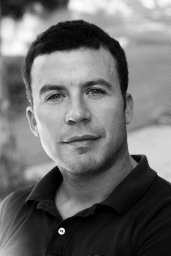 Nicola Mai合作论文数London Metropolitan Univ1
 E. Wilson-Evered合作论文数Monash University1
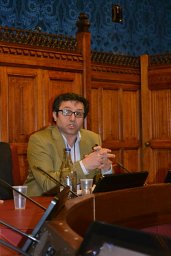 Janroj Yilmaz Keles合作论文数1
 John Zeleznikow合作论文数Laboratory for Decision Support and Dispute Management, School of Management and Information Systems1Port Elizabeth Technikon合作论文数1




