Abstract. Snowpack nitrate photolysis is a major source of nitrogen oxides and nitrous acid that control atmospheric oxidants in polar environments. It remains unclear at what temperature nitrate salts crystalize in snow and how this impacts the photolysis product yields. Here we show, using near‑edge X‑ray absorption fine structure (NEXAFS) spectroscopy, that sodium nitrate does not precipitate at temperatures down to 23 K below the eutectic temperature at ice surfaces, but does so in absence of ice. This indicates that strong interfacial supercooling or liquid‑like solvation persists. Complementary snow photolysis experiments demonstrate that such liquid-like nitrate shows a higher HONO to NO2 emission ratio than precipitated nitrate, which is consistent with the enhanced role of secondary chemistry in the aqueous phase. These findings show that supercooled nitrate might be present over wide ranges of Arctic, Antarctic, and upper tropospheric temperatures with a significant impact on the HONO and NO2 fluxes and thus the composition and chemistry in the air above snow or in contact with ice clouds.
Determining the particle chemical morphology is crucial for unraveling reactive uptake in atmospheric multiphase and heterogeneous chemistry. However, it remains challenging due to the complexity and inhomogeneity of aerosol particles. Using a scanning transmission X-ray microscopy (STXM) coupled with near-edge X-ray absorption fine structure (NEXAFS) spectroscopy and an environmental cell, we imaged and quantified the chemical morphology and hygroscopic behavior of individual submicron urban aerosol particles. Results show that internally mixed particles composed of organic carbon and inorganic matter (OCIn) dominated the particle population (73.1 +/- 7.4%). At 86 % relative humidity, 41.6 % of the particles took up water, with OCIn particles constituting 76.8 % of these hygroscopic particles. Most particles exhibited a core-shell structure under both dry and humid conditions, with an inorganic core and an organic shell. Our findings provide direct observational evidence of the core-shell structure and water uptake behavior of typical urban aerosols, which underscore the importance of incorporating the core-shell structure into models for predicting the reactive uptake coefficient of heterogeneous reactions.
Natural salts are ubiquitous in saline environments and atmospheric aerosols, where their surface chemistry influences multiphase reactions and chlorine activation. The release of chloride as reactive chlorine species affects tropospheric oxidation and ozone chemistry, yet the molecular-level processes governing chloride speciation near deliquescence remain poorly understood. Here, we investigate humidity-driven interfacial chemistry of a natural chloride-rich salt using ambient-pressure X-ray photoelectron spectroscopy (APXPS) and near-edge X-ray absorption fine structure (NEXAFS) spectroscopy. By systematically varying relative humidity (RH) near the deliquescence threshold of MgCl2·6H2O, we observe reversible changes in chloride speciation prior to the formation of a fully deliquesced bulk phase. Hydration induces pronounced surface enrichment and redistribution of chlorine-containing species, accompanied by the emergence of molecular HCl at the interface. This enrichment increases the surface availability of HCl-like species, suggesting a greater potential for gas-phase release under fluctuating atmospheric conditions. Depth-resolved measurements show that these transformations are confined to the outermost nanometers and are fully reversible upon dehydration. Complementary NEXAFS measurements reveal the structural transition from a crystalline salt to a hydrated and ultimately aqueous phase. These results demonstrate that RH-driven phase transitions in hygroscopic components such as MgCl2 create reactive, transient interfaces that govern chloride chemistry and may enhance chlorine activation under atmospherically relevant humidity fluctuations.
Secondary organic aerosol (SOA) is a significant contributor to the global burden of fine particulate matter, which impacts both climate and health. α-Pinene is a widely-studied volatile organic compound (VOC) with high global emissions and SOA-forming potential. However, the vast majority of SOA forms on preexisting particles whose composition leads to different molecular species and physical properties. Understanding the viscosity of SOA-containing particles is critical to predicting their atmospheric behavior, as it influences heterogeneous chemistry, particle growth, and particle aging. The viscosity of SOA can range over many orders of magnitude from liquid (<102 Pa s) to viscous to glassy (>1012 Pa s). Nanothermal analysis (NanoTA) measures single particle melting temperatures (T m) for submicron particles, which can be converted to glass transition temperatures (T g), viscosities, and, ultimately, mixing time scales. In this study, we directly measured the T m of α-pinene SOA formed with no seeds, ammonium sulfate seeds, and Fe-containing ammonium sulfate seeds, both before and after UV exposure. We compare these to modeled viscosities based on chemical composition measurements of the bulk aerosol. The median viscosity of measured particles was 1-3 orders of magnitude more viscous than predicted by existing models for all conditions except those of freshly-emitted, unseeded SOA. After UV exposure, the T m values for all seed conditions converged, indicating that aged SOA viscosity was less dependent on the initial seed. These results indicate the importance of pre-existing seed particles for initial SOA viscosity and that this viscosity evolves during a particle's atmospheric lifetime.
This article, the ninth in the series, presents kinetic and photochemical data sheets evaluated by the International Union of Pure and Applied Chemistry (IUPAC) Task Group on Atmospheric Chemical Kinetic Data Evaluation. It covers an extension of the gas phase and photochemical reactions of halogenated alkanes, alkenes, and oxygenated organic compounds implemented on the IUPAC website since 2008. The article consists of a summary table of the recommended kinetic parameters for the evaluated reactions, and a supplement containing the data sheets providing information upon which the recommendations are made.
Atomic and molecular ions (AIs and MIs) play distinct yet complementary roles in atmospheric chemistry, influencing aerosol reactivity, cloud formation, and climate. AIs, with high charge density and structural simplicity, generate intense interfacial fields that accelerate reactions such as halogen activation and sulfate formation. In contrast, MIs, with complex bonding and hydration, enable redox transformations, proton transfer, and molecular rearrangement, particularly at interfaces where reactivity deviates from bulk behavior. Specific MIs such as ammonium and sulfate can also generate strong interfacial fields, showing this behavior is not exclusive to AIs. We distinguish between the local field near individual ions or pairs and the interfacial field, the mesoscale field, from organized ion–water structures at surfaces. Traditionally treated as one class, new evidence highlights fundamental mechanistic differences between AIs and MIs in interfacial dynamics, ion pairing, and ability to structure fields. This study introduces the AIMI framework, which explicitly differentiates between atomic and molecular ion-driven processes and emphasizes the need for atomic-level insight into interfacial reactivity. Advances in APXPS, SFG, THz spectroscopy, and cryogenic ion-trapping now resolve ion stratification, hydration asymmetry, and field-driven reactivity at unprecedented resolution. By re-evaluating transformations through the lens of ion-specific structure and behavior, the AIMI approach reveals new mechanistic pathways and improves predictive capability for multiphase reactions. Integrating atomic- and molecular-level perspectives is critical for resolving persistent challenges in atmospheric modeling, including unexplained reactive species, SOA variability, and ice nucleation efficiency.
Biomass burning events, including wildfires, emit large amounts of phenolic compounds such as catechol. These compounds can react with nitrate radicals (NO3), a key nighttime oxidant, to form secondary organic aerosol (SOA). Although SOA is traditionally assumed to be noncrystalline, we present surprising evidence from X-ray diffraction that SOA formed from catechol + NO3 in an atmospheric simulation chamber contains crystalline material. In addition, the diffraction pattern and mass spectrum of this SOA closely resemble those of nebulized crystalline 4-nitrocatechol (4-NC), suggesting the presence of crystalline 4-NC within the SOA. These findings help explain unusual size distributions of catechol + NO3 SOA observed in prior studies and conflicting measurements of 4-NC's effective saturation vapor concentrations. Calculations of 4-NC's melting temperature as a function of its mole fraction in SOA, combined with observations of ambient 4-NC concentrations, suggest that 4-NC can exist in a solid crystalline phase state at temperatures below 288 K in wildfire plumes in the atmosphere. The presence of crystalline 4-NC and crystalline SOA in wildfire plumes may affect particle size distributions, cloud formation, and heterogeneous and photolytic reaction rates, with potentially important implications for atmospheric chemistry, air quality, and climate, warranting additional studies on this topic.
The toxicity of particulate matter (PM) is highly related to the concentration of particle-bound reactive oxygen species (ROS). Chemical properties, including dissolved metals and the sources of PM, influence ROS production and ROS oxidative potential. Here, the photochemical aging of a secondary organic aerosol proxy (citric acid, CA) with metal complexes (iron–citrate, FeIII(Cit)) is assessed toward the production of particle-bound ROS with an online instrument (OPROSI). We studied the photochemically induced redox chemistry in iron/copper–citrate particles experimentally with an aerosol flow tube (AFT), mimicking atmospheric UV aging. Experiments were performed at different relative humidity (RH) levels, leading to variation in the physicochemical properties of the particles, e.g., viscosity. We found that UV-aged CA aerosol containing 10 mol % FeIII generated ROS concentrations on the order of 0.1 nmol H2O2 eq.µg-1, indicating the photochemically driven formation of peroxides. An increase in RH leads to only a slight but overall lower concentration of ROS, possibly due to a loss of volatile HO2 and H2O2 in the gas phase in the less viscous particles. The RH effect is enhanced in absence of oxygen. Compared to the FeIII(Cit)/CA particles, the iron/copper–citrate samples show a uniformly decreased ROS level. Interestingly, in the high-RH nitrogen experiment with copper, we found an enhanced drop in the ROS concentration down to 0.02 nmolH2O2eq.µg-1 compared to all other irradiation experiments. We suggest that copper may suppress radical redox reactions, and when particles are more viscous, ROS are still produced with photochemistry, but the levels are more sensitive to the presence of copper than under humid or lower-viscosity conditions.
Lack of action in climate change mitigation is driving research on solar radiation modification via stratospheric aerosol injection (SAI), i.e., the injection of aerosols or their precursors into the stratosphere to increase Earth’s albedo, inducing global cooling. The idea evolved from observations of the cooling effect of large volcanic eruptions, which emitted SO2 into the stratosphere. Therefore, SAI research mainly focused on sulfur dioxide (SO2) injection, the main precursor of H2SO4 aerosols. However, SO2 injection could lead to adverse side effects such as stratospheric ozone depletion, stratospheric heating, and sizable effects on the large-scale atmospheric circulation. Recent studies suggested that injection of solid particles such as calcite (CaCO3), alumina (Al2O3) and diamond (C) instead of SO2 could reduce some of these adverse side effects. However, the expected improvements are subject to large uncertainties. Heterogeneous chemistry on solid aerosols in the stratosphere can increase ozone depletion by moving passive chlorine reservoir species such as HCl or ClONO2 into their active, ozone depleting form (e.g., ClO). Furthermore, alkaline materials such as CaCO3 are subject to acid-base reactions resulting in an uptake of acidic gases which could impact stratospheric ozone. We constrain some of these uncertainties by experimental work on heterogeneous chemistry of CaCO3 in presence of gaseous HCl, HNO3, and H2SO4 under near-stratospheric conditions. Single crystalline CaCO3 {001} and {104} faces were exposed to controlled gas mixtures closely above either a binary HNO3/H2SO4 or HCl/H2SO4 solution, or a ternary HNO3/HCl/H2SO4 solution for several days. Fixed temperature ranging between -20°C and -60°C were investigated, reaching lower temperature conditions than in previous experiments. Various Relative Humidities (RH) were as well probed. Elastic Recoil Detection Analysis (ERDA), an ion beam analysis technique to obtain elemental concentration depth profile of up to 300 nm, was used to observe surface reaction and diffusion in the material. Uptake coefficients were calculated from these observations. This work presents a path forward for climate intervention research and more specifically for more reliably assessing the impact of SAI of solid particles on stratospheric ozone.
Secondary organic aerosol (SOA) comprises most of the submicron atmospheric particle mass, and often becomes internally mixed with other particles. When SOA mixes with transition metal (e.g., iron) containing particles, metal-organic complexes can form, enabling photochemical reactions that change aerosol physicochemical properties. We studied the photochemistry of α-pinene SOA formed on iron-containing ammonium sulfate seed particles at varying relative humidities (RH). Chemical composition and photochemical reduction of particles were analyzed by X-ray spectromicroscopy and infrared spectroscopy. SOA formed at low vs. high RH had different chemical functionality, including abundant carboxylic acids and alcohols. Following photolysis, carboxylic acids and unsubstituted alkanes decreased, and alcohols increased, consistent with decarboxylation reactions. Iron in SOA formed at high RH was readily photochemically reduced, but iron in SOA formed at low RH was not. Overall, RH conditions at SOA formation affect not only chemical composition but also iron-complex formation and hence photochemical processing of aerosols.
Oxides of nitrogen (NOx = NO + NO2) and nitrous acid (HONO) play crucial roles in forming tropospheric ozone (O3), hydroxyl radicals (·OH), and secondary aerosols. The photochemical reactions of nitrate aerosol are of significant atmospheric interest as they produce HONO and NOx, a process termed renoxification. Light-absorbing organic species, particularly chromophoric Brown Carbon (BrC) predominantly derived from biomass burning, are suggested to be key players in renoxification, though the mechanism remains controversial. Here, we investigate BrC-associated renoxification upon irradiation of films containing BrC extracts from authentic biomass-burning aerosols and BrC model compounds using the coated wall flow tube (CWFT) technique. We mimic real-world aerosol conditions by adjusting the pH, nitrate concentration, and relative humidity of the CWFT films, ensuring atmospheric relevance. We show that the renoxification rate is enhanced in the presence of BrC. This is likely due to the photosensitizing effect of BrC, which enhances the reduction of nitrate, rather than the previously proposed surface-enhanced direct photolysis of adsorbed nitrate. Given the efficient use of the solar spectrum from UV to visible light by this photosensitized mechanism and the widespread coexistence of nitrates and BrC in various environmental systems, we suggest BrC-photosensitized renoxification could be a substantial source of HONO and NOx. This process may significantly influence the trends and distributions of tropospheric O3, ·OH and secondary aerosols, marking an important, yet largely unexplored, area in atmospheric chemistry.
Photochemical aging in secondary organic aerosol (SOA) particles alters their chemical composition and affects their adverse health effects. However, there is limited mechanistic insight on the role of transition metals in photochemical SOA aging and the evolution of the oxidative potential through their effect on radical chemistry. Here, we investigated the influence of copper (Cu) on the photochemical aging of iron (Fe) containing SOA in single particles using scanning transmission X-ray microscope measurements and chemical box modeling. The SOA proxy included citric acid (CA), iron(III) citrate (FeIII(Cit)), and copper(II) citrate (CuII(HCit)), which were exposed to UV light (lambda=365 nm) in a humidified environmental cell. We modeled known catalytic radical destruction mechanisms resulting from cross-redox reactions between copper and iron. Simulating anoxic FeIII(Cit)/CuII(HCit)/CA aging experiments showed a lower initial iron(III) reduction compared to FeIII(Cit)/CA particles, indicating a reduced iron(II) quantum yield than from the photolysis of the FeIII(Cit) alone. We hypothesize that this effect may be due to copper replacing an iron center in a polynuclear complex. At higher relative humidity up to 60 %, a lower iron(II) quantum yield could not account for our observations of iron reoxidation in the dark. Instead, reoxidation appears to be highly sensitive to a potential copper(II)-induced reoxidation reaction. We provide a comprehensive discussion and evaluation of the poorly understood role of copper in modifying redox and radical chemistry, which is relevant for reactions involving transition metals mixed with SOA in the atmosphere.
Atmospheric chemistry in cold environments refers to key chemical processes occurring in Earth's atmosphere in locations relevant for society including the polar areas, the free and upper troposphere, and the stratosphere. Atmospheric chemistry in these areas is relevant for local air quality, ecosystem health, regional and global climate. This Faraday Discussion comprised excellent coverage of these areas in terms of longitude and latitude, altitude and temperature. It also featured a broad coverage of disciplines between physical, analytical and theoretical chemistry and also the related fields covering aspects of biology, health, meteorology, social sciences and even including policy and economic aspects. A core aspect of the discussions was rooted in interfacing the related diverse competences. Because traditional atmospheric chemistry has evolved around knowledge of mechanisms and kinetics of chemical reactions first in the gas phase and later including condensed phases of aerosol particles and ground surfaces centering around room temperature, the speciality of relevance in this Faraday Discussion was the recent progress in better understanding the evolution of multiphase chemistry at low temperatures, where many relevant properties such as solubility and volatility change dramatically. This was embedded in discussions of the results and challenges of the most recent measurements from a range of campaigns and long-term observations at research stations. The discussion evolved around the chemical cycles of important trace constituents, the formation and evolution of particulate matter under cold conditions, the link between cloud glaciation and air-mass characteristics, air-quality in cold urban environments, biosphere-atmosphere interactions in a warming Arctic, but also the role of interfacial chemistry and reactivity as they are involved in multiphase chemistry processes. Future threats for the cold part of our atmosphere come from increasing human activities in both polar regions with their impacts on ecosystems, air quality and broader scale atmospheric composition as well as from discussions of geoengineering via solar radiation modification by stratospheric aerosol injection.
Stratospheric aerosol injection could mitigate harmful effects of global warming, but could have undesirable side effects, such as warming the stratosphere and depleting the ozone layer. We explore the potential benefits of solid alumina and calcite particles as alternatives to sulfate aerosols by using an experimentally informed aerosol-chemistry-climate model. Compared to sulfur dioxide, injection of solids reduces stratospheric warming by up to 70% and diffuse radiation by up to 40%, highlighting their potential benefits. Achieving -1 W m-2 of radiative forcing would likely result in very small ozone changes, but sizable uncertainties remain. These arise from poorly understood heterogeneous chemical and microphysical processes, which, under less likely assumptions, could lead to larger global ozone column changes between -14% and +4%. Our work provides recommendations for improving the understanding of stratospheric aerosol injection using materials other than sulfur dioxide, and underscores the need for kinetic laboratory studies.
Halide ions in oceans and sea-spray aerosol particles are an important source of reactive halogen species in the atmosphere that impact the ozone budget and radiative balance. The multiphase cycling of halogen species is linked to the abundance of halide ions at the aqueous solution-air interface. Ubiquitously present surface-active organic compounds may affect the interfacial abundance of halide ions. Here, we use liquid jet X-ray photoelectron spectroscopy and molecular dynamics (MD) simulations to assess the impact of surfactants with different headgroups on the abundance of bromide and sodium ions at the interface. Core level spectra of Br 3d, Na 2s, and O 1s are reported for solutions containing tetrabutylammonium, hexylamine (HA), and propyl sulfate. We used a photoelectron attenuation model to retrieve the interfacial concentration of bromide in the presence of these different surfactants. The experimental results confirm the previously reported strong enhancement of bromide in the presence of tetrabutylammonium at the interface. In turn, propyl sulfate had a minor impact on the abundance of bromide but led to a significantly enhanced concentration of sodium cations. The MD simulations performed for bromide solutions containing hexylammonium and propyl sulfate show an enhancement of the interfacial bromide and sodium concentrations, respectively, comparable to the experimental results. The difference between the measured enhancement of bromide for HA and the nearly nonexistent effect of HA on bromide in the MD simulations is ascribed to the small amounts of hexylammonium present in the experimental solution. The present work suggests an important role of electrostatic interactions at the interface, which may guide the assessment of anion and cation abundances in atmospheric particles more generally.
Metals are important components of atmospheric aerosols for both health and atmospheric reactivity. Coordination chemistry, leading to the formation of metal-ligand complexes, can alter metal solubility and their redox activity in solution; however, such processes have been so far predominantly studied via thermodynamic modeling approaches alone. Such approaches have indicated iron-oxalate complexes as major species of interest in urban environments. In this study, aerosol samples collected in the urban environment of Padua (Italy) are used to compare the speciation picture of iron obtained by thermodynamic modeling with that measured experimentally using X-ray absorption spectroscopy (XAS). The results showed broadly consistent speciation pictures between the two approaches, however, with some quantitative differences probably due to a discrepancy between bulk and single particle chemical composition of the aerosol samples. The XAS results showed the presence of iron-oxalate complexes in the samples, with both Fe(III) and Fe(II), and also suggested that most of the Fe may be mixed with organic matter on an atomic level. The thermodynamic modeling results indicated malonate as an additional important ligand besides oxalate and a potential candidate for explaining the mixed iron-organic nature of the aerosol samples.
Iron contained in atmospheric aerosol particles can form complexes with organic ligands and initiate photochemical reactions that alter the composition and physicochemical properties of the particles. Depending on the temperature and humidity, organic particles exist in different phase states, which affects reactant diffusivity and chemical reaction rates. We performed coated-wall flow-tube experiments using citric acid films doped with iron as proxies for secondary organic aerosols. We quantified the CO2 production under UV irradiation as a function of time and relative humidity (RH) and observed a pronounced decrease of CO2 production with decreasing RH. The kinetic multilayer model of aerosol surface and bulk chemistry (KM-SUB) and a Monte Carlo-based global optimization method were applied to all measured data to determine the underlying effects of mass transport and chemical reactions. The model analysis revealed that after an initial rapid reaction, photooxidation becomes limited by the reoxidation of Fe-II. Under dry conditions (RH < 65%), the reoxidation of Fe-II is kinetically limited by the supply of O-2, as slow diffusion in the viscous organic matrix leads to anoxia in the interior of the film. At high humidity (RH > 85%), mass transport limitations cease, resulting in full O-2 saturation, and photooxidation becomes limited by the chemical reaction of Fe-II with oxidants. Reactive oxygen species play a key role in Fe-II reoxidation and thus in perpetuating photooxidation chemistry. A single O-2 molecule triggers a redox cascade from O-2 to HO2, H2O2, and OH, leading to approximate to 3 cycles of the Fe-II/Fe-III redox pair. Our model and kinetic parameters provide new insights and constraints in the interplay of microphysical properties and photochemical aging of mixed organic-inorganic aerosol particles, which may influence their effects on air quality, climate, and public health.
 Thorsten Bartels-Rausch合作论文数Labor für Radio- und Umweltchemie, Paul Scherrer Institut102
 Huthwelker Thomas合作论文数56
 Luca Artiglia合作论文数Lab Environm Chem, Paul Scherrer Inst49Heinz Gäggeler合作论文数Paul Scherrer Institute;Bern University47
 Peter Aaron Alpert合作论文数School of Marine and Atmospheric Sciences, Stony Brook University39
 Pablo Corral Arroyo合作论文数Paul Scherrer Inst, Lab Environm Chem, CH-5232 Villigen, Switzerland37
 Urs Baltensperger合作论文数Department of Environmental Systems Science, ETH Zurich;Laboratory of Atmospheric Chemistry, Paul Scherrer Institut35
 Christian George合作论文数Research Institute on Catalysis and the Environment at Lyon Ircelyon, CNRS-University Lyon 134
 Ulrich Pöschl合作论文数Multiphase Chemistry Department, Max Planck Institute for Chemistry;Department of Chemistry, Pharmacy and Geosciences, Johannes Gutenberg University26
 Thomas Peter合作论文数Department of Environmental Systems Science, Eidgenössische Technische Hochschule Zürich24Orlando Fabrizio合作论文数23Anthony Boucly合作论文数22
 Markus Kalberer合作论文数Switzerland Department of Environmental Sciences, University of Basel;Departement Umweltwissenschaften, Philosophisch-Naturwissenschaftliche Fakultät, Universität Basel22
 Sarah Sulamith Steimer合作论文数20
 Thomas Berkemeier合作论文数†Multiphase Chemistry Department, Max Planck Institute for Chemistry20Ulrich K. Krieger合作论文数20
 Xiangrui Kong合作论文数Department of Chemistry and Molecular Biology, Faculty of Science and Technology, University of Gothenburg19
 Manabu Shiraiwa合作论文数Max Planck Institute for Chemistry;Biogeochemistry Department;Biogeochemistry Department, Max Planck Institute for Chemistry19
 Yang Huanyu合作论文数18
 Jing Dou合作论文数16
 Hendrik Bluhm合作论文数Department of Inorganic Chemistry, Fritz Haber Institute of the Max Planck Society16
 Hartmut Herrmann合作论文数Atmospheric Chemistry Department, Leibniz Institute For Tropospheric Research;Department of Environmental Science and Engineering, Fudan University;School of Environmental Science and Engineering, Shandong University16
 Andreas Türler合作论文数Departement für Chemie, Biochemie und Pharmazie, Universität Bern15
 Benjamin Watts合作论文数Paul Scherrer Inst15Beiping Luo合作论文数Institute for Atmospheric and Climate Science, ETH Zurich14adela křepelova合作论文数13Matthew Brown合作论文数13
 Gladich Ivan合作论文数Institute of Organic Chemistry and Biochemistry, Academy of Sciences of the Czech Republic13
 Konrad Stemmler合作论文数Institute of Materials Science and Technology13F. Arens合作论文数13
 Ming-Tao Lee合作论文数13Dt Jost合作论文数12Goran Gržinić合作论文数12veronika zelenay合作论文数12
 Fabian Mahrt合作论文数Institute for Atmospheric and Climate Science, ETH Zurich12
 Dwayne Heard合作论文数School of Chemistry, Faculty of Engineering and Physical Sciences, University of Leeds12
 Martin Schneebeli合作论文数WSL Institute for Snow;Avalanche Research;WSL Institute for Snow|Avalanche Research12christophe guimbaud合作论文数11
 Shuzhen Chen合作论文数Paul Scherrer Inst, Lab Environm Chem, CH-5232 Villigen, Switzerland11
 Jeroen Anton van Bokhoven合作论文数Institute for Chemical and Bioengineering, Department of Chemistry and Applied Biology, ETH Zurich11Birrer Mario合作论文数11
 Erik S. Thomson合作论文数Department of Geology and Geophysics, Yale University11
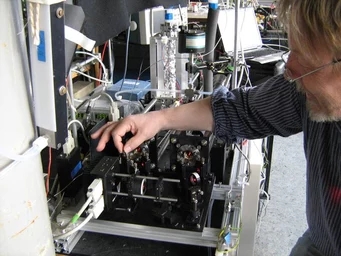 John N. Crowley合作论文数Division of Atmospheric Chemistry, Max-Planck-Institut fur Chemie11Lukas Gutzwiller合作论文数11
 Rainer Volkamer合作论文数Department of Chemistry, College of Arts and Sciences, University of Colorado Boulder11
 Armin Kleibert合作论文数Laboratory for Condensed Matter, Center for Photon Science, Paul Scherrer Institute11Lucia Iezzi合作论文数10Kevin Kilchhofer合作论文数10Barbara D’Anna合作论文数Université de Lyon, Université Lyon 1/CNRS10




