We observe weakly-bound Π-symmetry electronic states in the spectroscopy of ^87Rb(nP_3/2)+^87Rb(5S_1/2) ultralong-range Rydberg molecules. We detect these molecules in Rydberg states having principal quantum number 13≤ n ≤ 16. Their Π-state character is unambiguously identified via their observed multiplet structure: the 2F+1 magnetic sublevels of the ground-state rubidium atom separate, as in the Zeeman effect, because of the spin-spin coupling between the Rydberg and valence electrons. We find a rapid decrease in the molecular binding energy ∝ (n-μ_P_3/2)^-11, where μ_P_3/2 is the quantum defect, indicating that the low-n regime of Rydberg states is ideally suited for studies of Π-symmetry molecules. Our observations are in good agreement with Green's function-based calculations for 14≤ n≤ 16, with poorer agreement for n=13 hinting at the beginning of a breakdown of the Fermi pseudopotential approach at low n.
We demonstrate a method for controlling the outcome of an ultracold chemical few-body reaction by redirecting a tunable fraction of reaction flux from one selected product channel to another one. In the reaction, three ultracold atoms collide to form a diatomic molecule. This product molecule can be produced in various internal states, characterizing the different product channels of the reaction. Our scheme relies on the coupling between two such product channels at an avoided molecular energy level crossing in the presence of an external magnetic field. The degree of coupling can be set by the magnetic field strength and allows for a widely tunable flux control between the two channels. This scheme is quite general and also holds great promise for a large variety of chemical processes with diverse species, since molecular energy level crossings are ubiquitous in molecular systems and are often easily accessible by standard laboratory equipment.
Gaining control over chemical reactions at the quantum level is a central goal of cold and ultracold chemistry. Here we demonstrate a method for coherently steering the reaction flux across different product spin channels for a three-body recombination process in a cloud of trapped cold atoms. We use a magnetically tunable Feshbach resonance to admix, in a controlled way, a specific spin state to the reacting collision complex. This allows us to control the reaction flux into the admixed spin channel, which can be used to alter the reaction products. We also investigate the influence of an Efimov resonance on the reaction dynamics, observing a global enhancement of three-body recombination without favouring particular reaction channels. Our control scheme can be extended to other reaction processes and could be combined with other methods, such as quantum interference of reaction paths, to achieve further tuning capabilities of few-body reactions. Coherent control of chemical reactions is a central theme in quantum chemistry. Now, a cold atom experiment demonstrates a method for steering the outcome of three-body recombination processes using a tunable Feshbach resonance.
We review recent progress in the field of cold trapped molecular ions. A new generation of collision and cold chemistry experiments between atoms and ions has emerged, where cold atoms and ions are brought into contact in a controlled way in novel hybrid atom-ion platforms. Furthermore, new possibilities for the preparation and detection of molecular quantum states with high sensitivity and precision have been demonstrated based on quantum-logic schemes. These advances represent important stepping stones for new directions in fundamental research and technological applications across various domains including precision measurements, quantum technologies and chemical dynamics.
Three-body recombination is a chemical reaction where the collision of three atoms leads to the formation of a diatomic molecule. In the ultracold regime it is expected that the production rate of a molecule generally decreases with its binding energy Eb, however, its precise dependence and the physics governing it have been left unclear so far. Here we present a comprehensive experimental and theoretical study of the energy dependency for three-body recombination of ultracold Rb. For this, we determine production rates for molecules in a state-to -state resolved manner, with the binding energies Eb ranging from 0.02 to 77 GHz x h. We find that the formation rate approximately scales as E-alpha b , where alpha is in the vicinity of 1. The formation rate typically varies only within a factor of two for different rotational angular momenta of the molecular product, apart from a possible centrifugal barrier suppression for low binding energies. In addition to numerical three-body calculations we present a perturbative model which reveals the physical origin of the energy scaling of the formation rate. Furthermore, we show that the scaling law potentially holds universally for a broad range of interaction potentials.
We explore the physical origin and the general validity of a propensity rule for the conservation of the hyperfine spin state in three-body recombination. This rule was recently discovered for the special case of ^{87}Rb with its nearly equal singlet and triplet scattering lengths. Here, we test the propensity rule for ^{85}Rb for which the scattering properties are very different from ^{87}Rb. The Rb_{2} molecular product distribution is mapped out in a state-to-state fashion using resonance-enhanced multiphoton ionization detection schemes which fully cover all possible molecular spin states. Interestingly, for the experimentally investigated range of binding energies from zero to ∼13 GHz×h we observe that the spin-conservation propensity rule also holds for ^{85}Rb. From these observations and a theoretical analysis we derive an understanding for the conservation of the hyperfine spin state. We identify several criteria to judge whether the propensity rule will also hold for other elements and collision channels.
We present a novel binding mechanism where a neutral Rydberg atom and an atomic ion form a molecular bound state at a large internuclear distance. The binding mechanism is based on Stark shifts and level crossings that are induced in the Rydberg atom due to the electric field of the ion. At particular internuclear distances between the Rydberg atom and the ion, potential wells occur that can hold atom–ion molecular bound states. Apart from the binding mechanism, we describe important properties of the long-range atom–ion Rydberg molecule, such as its lifetime and decay paths, its vibrational and rotational structure, and its large dipole moment. Furthermore, we discuss methods of how to produce and detect it. The unusual properties of the long-range atom–ion Rydberg molecule give rise to interesting prospects for studies of wave packet dynamics in engineered potential energy landscapes.
We study the evolution of a cold single BaRb+ molecule while it continuously collides with ultracold Rb atoms. The initially weakly bound molecule can undergo a sequence of elastic, inelastic, reactive, and radiative processes. We investigate these processes by developing methods for discriminating between different ion species, electronic states, and kinetic ion energy ranges. By analyzing the experimental data while taking into account theoretical insights, we obtain a consistent description of the typical trajectory through the manifold of available atomic and molecular states. Monte Carlo simulations describe the measured dynamics well. As a further result, we determine rates for collisional and radiative relaxation as well as photodissociation, spin-flip collisions, and chemical reactions.
We present experimental evidence for spin-orbit interaction of an electron as it scatters from a neutral atom. The scattering process takes place within a Rb-2 ultralong-range Rydberg molecule, consisting of a Rydberg atomic core, a Rydberg electron, and a ground state atom. The spin-orbit interaction leads to characteristic level splittings of vibrational molecular lines which we directly observe via photoassociation spectroscopy. We benefit from the fact that molecular states dominated by resonant p-wave interaction are particularly sensitive to the spin-orbit interaction. Our work paves the way for studying novel spin dynamics in ultralong-range Rydberg molecules. Furthermore, it shows that the molecular setup can serve as a microlaboratory to perform precise scattering experiments in the low-energy regime of a few meV.
We present a method to control collisions between ultracold neutral atoms in the electronic ground state and trapped ions. During the collision, the neutral atom is resonantly excited by a laser to a low-field-seeking Rydberg state, which is repelled by the ion. As the atom is reflected from the ion, it is de-excited back into its electronic ground level. The efficiency of shielding is analyzed as a function of laser frequency and power, initial atom-ion collision energy, and collision angle. The suitability of several Rydberg levels of Na and Rb for shielding is discussed. Useful applications of shielding include the suppression of unwanted chemical reactions between atoms and ions, a prerequisite for controlled atom-ion interactions.
We report on the compensation of excess micromotion due to parasitic rf-electric fields in a Paul trap. The parasitic rf-electric fields stem from the Paul trap drive but cause excess micromotion, e.g., due to imperfections in the setup of the Paul trap. We compensate these fields by applying rf-voltages of the same frequency, but adequate phases and amplitudes to Paul trap electrodes. The magnitude of micromotion is probed by studying elastic collision rates of the trapped ion with a gas of ultracold neutral atoms. Furthermore, we demonstrate that also reactive collisions can be used to quantify micromotion. We achieve compensation efficiencies of about 1 Vm(-1), which is comparable to other conventional methods.
We report on Rydberg spectroscopy of ultracold atoms in an atom-ion hybrid trap for probing the electric fields in a mixture of atoms and ions. We obtain spectra which exhibit excitation gaps corresponding to avoided level crossings in the Stark map. From these measurements we can conclude that the ground state atoms experience electrical fields of up to 250 V/cm. There is, however, a difficulty in interpreting the results, because some data indicate that the electrical fields are produced by the ions while other data indicate that they stem from the Paul trap. We discuss possible scenarios for explaining the measured data, provide first measurements to check these scenarios, and propose methods to finally solve this puzzle.
We extend state-to-state chemistry to a realm where besides vibrational, rotational and hyperfine quantum states magnetic quantum numbers are also resolved. For this, we make use of the Zeeman effect which energetically splits levels of different magnetic quantum numbers. The chemical reaction which we choose to study is three-body recombination in an ultracold quantum gas of Rb atoms forming weakly-bound Rb2 molecules. Here, we find the propensity rule that the total mF quantum number of the two atoms forming the molecule is conserved. Our method can be employed for many other reactions and inelastic collisions and will allow for novel insights into few-body processes.
We present an experimental and theoretical study of the spin- and vibrational states of $16P-5S$ ultralong-range Rb$_2$ Rydberg molecules that are bound in the second outermost potential well. Due to resonant $p$-wave interaction, the admixture of a butterfly state, and the combination of spin-spin and spin-orbit couplings these molecules feature non-trivial spin state energy level manifolds. By carrying out Rydberg spectroscopy we observe several vibrational ladders. Each ladder exhibits a characteristic multiplet substructure which facilitates assigning a spin state to each level. Our calculations show that a specific type of spin-orbit interaction can significantly contribute to the multiplet line splittings. This spin-orbit interaction is given by the coupling between the total electron spin and the orbital angular momentum of the Rydberg electron in the reference frame of the ground state atom. Furthermore, we find that the diabaticity of the molecular motion across an avoided crossing in the potential energy curve has a strong impact on the vibrational level structure. Our investigation paves the way for further in-depth studies of subtle interaction mechanisms in Rydberg molecules.
We extend state-to-state chemistry to a realm where besides vibrational, rotational, and hyperfine quantum states magnetic quantum numbers are also resolved. For this, we make use of the Zeeman effect, which energetically splits levels of different magnetic quantum numbers. The chemical reaction which we choose to study is three-body recombination in an ultracold quantum gas of ^{87}Rb atoms forming weakly bound Rb_{2} molecules. Here, we find the propensity rule that the total m_{F} quantum number of the two atoms forming the molecule is conserved. Our method can be employed for many other reactions and inelastic collisions and will allow for novel insights into few-body processes.
We present a method to control the cold collision between an ultracold atom and a trapped ion. A laser is used to excite the ground state atom to a repulsive Rydberg potential level at a certain atom-ion distance. In this way the ion is effectively surrounded by a potential wall that the atom cannot cross. Once the atom leaves the interaction area, it is de-excited back to its original level. The adiabaticity of the scheme is analyzed as a function of different parameters such as laser frequency, laser power, initial atom-ion collision energy, as well as the direction of the collisional process with respect to the light field. By controlling e.g. the laser power and the laser frequency, as well as by addressing different Rydberg states, the properties of this shielding effect can be widely tuned. In particular, unwanted chemical reactions between atoms and ion can efficiently be suppressed, which is an important step towards realization of diverse quantum technological applications for hybrid atom-ion systems.
We spectroscopically investigate the hyperfine, rotational, and Zeeman structure of the vibrational levels ${v}^{\ensuremath{'}}=0,7,13$ within the electronically excited $c{\phantom{\rule{0.222222em}{0ex}}}^{3}{\mathrm{\ensuremath{\Sigma}}}_{g}{}^{+}$ state of $^{87}\mathrm{Rb}_{2}$ for magnetic fields of up to $1000\phantom{\rule{0.28em}{0ex}}\text{G}$. As spectroscopic methods we use short-range photoassociation of ultracold Rb atoms as well as photoexcitation of ultracold molecules which have been previously prepared in several well-defined quantum states of the $a{\phantom{\rule{0.222222em}{0ex}}}^{3}\mathrm{\ensuremath{\Sigma}}{}_{u}^{+}$ potential. As a by-product, we present optical two-photon transfer of weakly bound Feshbach molecules into $a{\phantom{\rule{0.222222em}{0ex}}}^{3}\mathrm{\ensuremath{\Sigma}}{}_{u}^{+}$, $v=0$ levels featuring different nuclear spin quantum numbers. A simple model reproduces well the molecular level structures of the $c{\phantom{\rule{0.222222em}{0ex}}}^{3}{\mathrm{\ensuremath{\Sigma}}}_{g}{}^{+}$ vibrational states and provides a consistent assignment of the measured resonance lines. Furthermore, the model can be used to predict the relative transition strengths of the lines. From fits to the data we extract for each vibrational level the rotational constant, the effective spin-spin interaction constant, as well as the Fermi contact parameter and the anisotropic hyperfine constant. In an alternative approach, we perform coupled-channel calculations where we fit the relevant potential energy curves, spin-orbit interactions, and hyperfine functions. The calculations reproduce the measured hyperfine level term frequencies with an average uncertainty of $\ifmmode\pm\else\textpm\fi{}9\phantom{\rule{0.28em}{0ex}}\mathrm{MHz}$, similar as for the simple model. From these fits we obtain a section of the potential energy curve for the $c{\phantom{\rule{0.222222em}{0ex}}}^{3}{\mathrm{\ensuremath{\Sigma}}}_{g}{}^{+}$ state which can be used for predicting the level structure for the vibrational manifold ${v}^{\ensuremath{'}}=0$ to 13 of this electronic state.
Exploring and controlling inelastic and reactive collisions on the quantum level is a main goal of the developing field of ultracold chemistry. For this, the preparation of precisely defined initial atomic and molecular states in tailored environments is necessary. Here we present experimental studies of inelastic collisions of metastable ultracold Rb2 molecules in an array of quasi-1D potential tubes. In particular, we investigate collisions of molecules in the absolute lowest triplet energy level where any inelastic process requires a change of the electronic state. Remarkably, we find similar decay rates as for collisions between rotationally or vibrationally excited triplet molecules where other decay paths are also available. The decay rates are close to the ones for universal reactions but vary considerably when confinement and collision energy are changed. This might be exploited to control the collisional properties of molecules.
 Johannes Hecker Denschlag合作论文数Institut für Quantenmaterie, Universität Ulm28
 Eberhard Tiemann合作论文数Institut fur Quantenoptik, Fakultat fur Mathematik und Physik, Leibniz Universität Hannover12Joschka Wolf合作论文数Univ Ulm, Inst Quantenmaterie, D-89069 Ulm, Germany10Haze Shinsuke合作论文数9
 Jose D'Incao合作论文数Department of Physics, University of Massachusetts Boston;JILA8
 Paul S. Julienne合作论文数Department of Physics, College of Computer, Mathematical, & Natural Sciences, University of Maryland;National Institute of Standards and Technology7Dominik Dorer合作论文数5Krükow Artjom合作论文数5
 Bjoern Drews合作论文数5Olivier Dulieu合作论文数Laboratoire Aimé Cotton, Université Paris Sud5Limei Wang合作论文数4
 Jinglun li合作论文数3
 Nadia Bouloufa合作论文数3Vexiau Romain合作论文数3Brandon Ruzic合作论文数3
 Christian Fey合作论文数Max Planck Inst Quantum Opt2Frederic Hummel合作论文数Zentrum Opt Quantentechnol, Univ Hamburg2
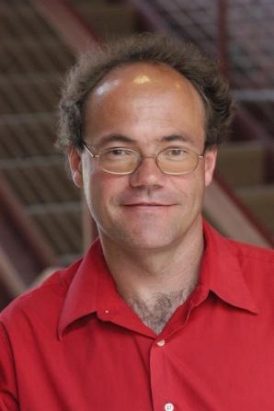 Georg Raithel合作论文数Department of Physics, College of Literature, Science, and the Arts, University of Michigan2
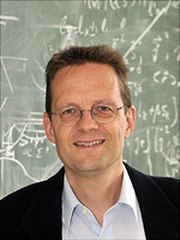 Peter Schmelcher合作论文数Institute for Quantum Physics, Department of Physics, University of Hamburg2
 Florian Meinert合作论文数Institut für Experimentalphysik und Zentrum für Quantenphysik, Universität Innsbruck2Wang Yujun合作论文数Department of Physics and JILA, University of Colorado2Jesús Pérez Ríos合作论文数1
 Humberto da Silva Jr合作论文数1Amir Mahdian合作论文数Ulm University1
 Krzysztof Jachymski合作论文数Faculty of Physics, University of Warsaw1Härter Arne合作论文数1
 Amir Mohammadi合作论文数School of Engineering, University of KwaZulu-Natal1
 Stefan Willitsch合作论文数Department of Chemistry;University of Basel;Department of Chemistry, University of Basel1Benjamin Deissler合作论文数Physics Department;University of Virginia;Physics Department, University of Virginia1Maurice Raoult合作论文数1Zbigniew Idziaszek合作论文数BEC Center, CNR-INFM1Yujun Wang合作论文数Oracle USA, Redwood City, CA1




