Lipid nanoparticles (LNPs) are the most successful drug delivery carrier to date, but optimizing lipid formulations to improve membrane fusion capabilities for effective drug release has been challenging due to lack of a quantitative measure for fusogenicity. Here we introduce a new framework based on small angle X-ray scattering to experimentally measure for lipids used in LNP formulations such as glycerol monooleate (GMO) and ionizable lipids (SM-102 and ALC-0315). Q intrinsically captures spontaneous curvature ( J 0 ), which is traditionally used to assess fusogenicity. The change of cubic lattice parameters with temperature was measured for GMO-containing lipid mixtures, and the Q extracted quantitatively correlated with LNP fusogenicity power validated by fluorescence-based fusion assays and cryogenic electron microscopy. Fusogenicity of SM-102 and ALC-0315 was quantified by adding them to host membranes and assessing change in Q . This framework provides researchers with the ability to optimize the fusogenicity of LNP formulations for potent drug release and enhances understanding of parameters governing fusion in all biomembranes.
Fission and fusion of lipid membranes are ubiquitous shape transformations in living cells, necessary for maintaining the shape of organelles and enabling a host of transport processes between them. These topology-changing events involve curvature-elastic free energy changes proportional to the Gaussian curvature modulus, κ[over ¯]. However, precisely because of its topological nature, the value of this modulus is exceptionally hard to determine. Here we propose a novel method to computationally determine κ[over ¯] that involves simulating triply periodic minimal surfaces. We measure their excess curvature energy E and infer the associated free energy F via a thermodynamic argument that rests on the strong temperature dependence of E and the relatively weak temperature dependence of E/F. Our approach is unique in that it circumvents the complications arising in alternative procedures that require an open membrane edge to break the constraints of the Gauss-Bonnet theorem. As an illustration, we determine κ[over ¯] for a coarse-grained lipid model over a range of temperatures and lipid shapes. We show that the observed changes of both the Gaussian curvature modulus as well as its ratio to the ordinary bending modulus follow widely held expectations.
Eukaryotic lipid membranes are both compositionally complex and strongly asymmetric. Preferential lipid interactions enable coexistence between two fluid phases and an associated critical point, while bilayer asymmetry leads to leaflet-specific values for many observables-most saliently composition, but also a difference in leaflet tensions, for which we introduced the term "differential stress." Lipid mixing thermodynamics has been extensively studied, notably in idealized ternary model systems, and interest in asymmetry has grown significantly in the past decade, but their interplay remains poorly understood. Here we propose a conceptual framework for the thermodynamics of asymmetric ternary lipid membranes. Cholesterol emerges as an essential actor playing two different roles: first, it controls lipid mixing; second, it couples the compositional phase points of the two leaflets by achieving chemical equilibrium between them. Since differential stress can squeeze cholesterol from one leaflet into the other, this couples mechanical properties such as lateral stresses and curvature torques directly to mixing thermodynamics. Using coarse-grained simulations, we explore implications for leaflet coexistence, mechanical stability of giant vesicles, and differential stress driven phase segregation in a single leaflet. We hope this framework enables a fresh look at some persistent puzzles in this field, most notably the elusive nature of lipid rafts.
The apparent bending moduli (KC) of bilayers composed of binary mixtures of lipids with different spontaneous curvatures have been obtained using x-ray diffuse scattering (XDS). The mixtures that were studied are POPC/POPE, POPC/POPA, POPC/POPS, and DLPC/DiPhyPC. The data are qualitatively consistent with what is expected from the theory of diffusional softening for lipids with different spontaneous curvatures. However, the derived spontaneous curvature differences are larger than those obtained from the hexagonalII (HII) phase and from a recent giant unilamellar vesicle (GUV) study. We propose that the interactions between lipids, which we have added to the theory, also play an important role in the values of KC obtained at the short length scale of XDS. Inclusion of a mean field term in the analysis brings the calculated difference in spontaneous curvatures ΔC0 of the two lipids closer to the values from the HII and GUV methods. The use of XDS opens a new experimental window on diffusional softening and the interactions between lipids in mixtures.
Lipid rafts are nanoscopic assemblies of sphingolipids, cholesterol, and specific membrane proteins that are widely believed to underlie the experimentally well-established lateral heterogeneity of eukaryotic plasma membranes. Membrane rafts, which are enriched in cholesterol, function as signaling platforms in diverse cellular processes, such as immune regulation, cell cycle control, membrane trafficking and fusion events. The coexistence of distinct fluid phases, particularly the liquid-ordered (Lo) and liquid-disordered (Ld) phases, is considered to be a highly plausible model for the formation of lipid rafts.
Lipid rafts are nanoscopic assemblies of sphingolipids, cholesterol, and specific membrane proteins. They are believed to underlie the experimentally observed lateral heterogeneity of eukaryotic plasma membranes and implicated in many cellular processes, such as signaling and trafficking. Ternary model membranes consisting of saturated lipids, unsaturated lipids, and cholesterol are common proxies because they exhibit phase coexistence between a liquid-ordered (lo) and liquid-disordered (ld) phase and an associated critical point. However, plasma membranes are also asymmetric in terms of lipid type, lipid abundance, leaflet tension, and corresponding cholesterol distribution, suggesting that rafts cannot be examined separately from questions about elasticity, curvature torques, and internal mechanical stresses. Unfortunately, it is challenging to capture this wide range of physical phenomenology in a single model that can access sufficiently long length- and time scales. Here we extend the highly coarse-grained Cooke model for lipids, which has been extensively characterized on the curvature-elastic front, to also represent raft-like lo/ld mixing thermodynamics. In particular, we capture the shape and tie lines of a coexistence region that narrows upon cholesterol addition, terminates at a critical point, and has coexisting phases that reflect key differences in membrane order and lipid packing. We furthermore examine elasticity and lipid diffusion for both phase separated and pure systems and how they change upon the addition of cholesterol. We anticipate that this model will enable significant insight into lo/ld phase separation and the associated question of lipid rafts for membranes that have compositionally distinct leaflets that are likely under differential stress-like the plasma membrane.
Many biological membranes host different lipid species in their two leaflets. Since their spontaneous curvatures are typically not the same, this compositional asymmetry generally entails bending torques, which can be counteracted by differential stress—the difference between the two leaflet tensions. This stress, in turn, can affect elastic parameters or phase behavior of the membrane or each individual leaflet, or push easily flippable species, especially cholesterol, from the compressed leaflet into the tense leaflet. In short, breaking the symmetry of a single observable (to wit: composition), essentially breaks all other symmetries as well, with many potentially interesting consequences. This brief report examines the elastic aspects of this interplay, focusing on some elementary conditions of mechanical and thermodynamic equilibrium, but also shows how this poses novel questions that we are only beginning to appreciate.
DNA nanostructures (DNs) have found increasing use in biosensing, drug delivery, and therapeutics because of their customizable assembly, size and shape control, and facile functionalization. However, their limited cellular uptake and nuclear delivery have hindered their effectiveness in these applications. Here, we demonstrate the potential of applying cell-surface binding as a general strategy to enable rapid enhancement of intracellular and intranuclear delivery of DNs. By targeting the plasma membrane via cholesterol anchors or the cell-surface glycocalyx using click chemistry, we observe a significant 2 to 8-fold increase in the cellular uptake of three distinct types of DNs that include nanospheres, nanorods, and nanotiles, within a short time frame of half an hour. Several factors are found to play a critical role in modulating the uptake of DNs, including their geometries, the valency, positioning and spacing of binding moieties. Briefly, nanospheres are universally preferable for cell surface attachment and internalization. However, edge-decorated nanotiles compensate for their geometry deficiency and outperform nanospheres in both categories. In addition, we confirm the short-term structural stability of DNs by incubating them with cell medium and cell lysate. Further, we investigate the endocytic pathway of cell-surface bound DNs and reveal that it is an interdependent process involving multiple pathways, similar to those of unmodified DNs. Finally, we demonstrate that cell-surface attached DNs exhibit a substantial enhancement in the intranuclear delivery. Our findings present an application that leverages cell-surface binding to potentially overcome the limitations of low cellular uptake, which may strengthen and expand the toolbox for effective cellular and nuclear delivery of DNA nanostructure systems.
The lateral stress profile of a lipid bilayer constitutes a valuable link between molecular simulation and mesoscopic elastic theory. Even though it is frequently calculated in simulations, its statistical precision (or that of observables derived from it) is often left unspecified. This omission can be problematic, as uncertainties are prerequisite to assessing statistical significance. In this chapter, we provide a comprehensive yet accessible overview of the statistical error analysis for the lateral stress profile. We detail two relatively simple but powerful techniques for generating error bars: block-averaging and bootstrapping. Combining these methods allows us to reliably estimate uncertainties, even in the presence of both temporal and spatial correlations, which are ubiquitous in simulation data. We illustrate these techniques with simple examples like stress moments, but also more complex observables such as the location of stress profile extrema and the monolayer neutral surface.
 Christian Holm合作论文数Institute for Computational Physics, University of Stuttgart16
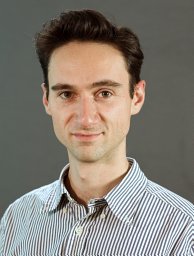 Tristan Bereau合作论文数Carnegie Mellon University13
 Martin Michael Müller合作论文数Max Planck Institute for Polymer Research, 55128 Mainz, Germany11
 patrick m diggins合作论文数10
 Malavika Varma合作论文数Department of Physics, Carnegie Mellon University10
 Mingyang Hu合作论文数10
 Zachary Mcdargh合作论文数Advanced Material Processing and Analysis Center and Department of Physics, University of Central Florida9
 Samuel L Foley合作论文数8
 Zun-Jing Wang合作论文数Carnegie Mellon University8
 Jemal Guven合作论文数Instituto de Ciencias Nucleares;noma de Mexico, Universidad Nacional Auto;Instituto de Ciencias Nucleares, Universidad Nacional Autonoma de Mexico8
 Muhammed F. Erguder合作论文数7M. Mert Terzi合作论文数7
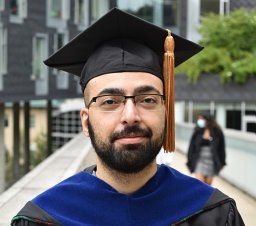 Amirali Hossein合作论文数Eunice Kennedy Shriver National Institute of Child Health and Human Development),, Eunice Kennedy Shriver National Institute of Child Health and Human Development6Christine Peter合作论文数Laboratory of Physical Chemistry;Swiss Federal Institute of Technology Zürich;Laboratory of Physical Chemistry, Swiss Federal Institute of Technology Zürich6
 Reinhard Lipowsky合作论文数Department of Theory and Biosystems, Max Planck Institute of Colloids and Interfaces5
 Kurt Kremer合作论文数Max Planck Institute for Polymer Research5
 Christoph Globisch合作论文数Department of Chemistry, University of Konstanz5
 Румяна Димова合作论文数Max Planck Institute of Colloids and Interfaces5
 Michael Misha Kozlov合作论文数Department of Physiology and Pharmacology, Sackler Faculty of Medicine, Tel Aviv University4
 Erwin London合作论文数Department of Biochemistry and Cell Biology, College of Arts & Sciences, Stony Brook University;Department of Chemistry, College of Arts & Sciences, Stony Brook University4
 John F. Nagle合作论文数Department of Physics, Mellon College of Science, Carnegie Mellon University4Cem Yolcu合作论文数Department of Physics;Carnegie Mellon University4
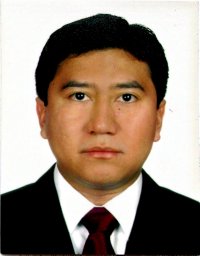 Pablo Vazquez-Montejo合作论文数Instituto de Ciencias Nucleares;Universidad Nacional Autde Mexico;Instituto de Ciencias Nucleares, Universidad Nacional Autde Mexico4
 Milka Doktorova合作论文数4
 Michael Bachmann合作论文数3Gonen Golani合作论文数3Vernita Gordon合作论文数3Weitao Wang合作论文数Carnegie Mellon University3
 Changjiang Liu合作论文数University of Michigan–Ann Arbor3
 Siewert Jan Marrink合作论文数Faculty of Science and Engineering, University of Groningen3
 Krishnamani Venkatramanan合作论文数Department of Physiology and Biophysics, University of California3
 Rebecca E. Taylor合作论文数Department of Biomedical Engineering, College of Engineering, Carnegie Mellon University3
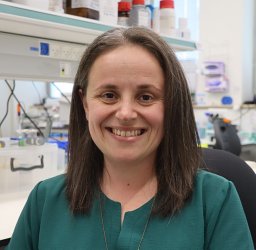 Raya Sorkin合作论文数Department of Materials and Interfaces, Weizmann Institute of Science3
 Wilson Poon (潘志基)合作论文数School of Physics and Astronomy, The University of Edinburgh3
 Marcia Barbosa合作论文数Instituto de F ´ õsica;Universidade Federal do Rio Grande do Sul;Instituto de F ´ õsica, Universidade Federal do Rio Grande do Sul3
 Xi Ren合作论文数Mechanical Engineering, Carnegie Mellon University3
 Stefan U. Egelhaaf合作论文数3
 Martina Pannuzzo合作论文数Dipartimento di Scienze Chimiche, Università di Catania3Benedict J. Reynwar合作论文数Max-Planck-Institute for Polymer Research3
 Edward Lyman合作论文数Department of Computational Biology;School of Medicine;University of Pittsburgh;School of Medicine, University of Pittsburgh3Hans Jörg Limbach合作论文数3
 Raffaello Potestio合作论文数Max Planck Inst Polymer Res3
 Heiko Heerklotz合作论文数Department of Pharmaceutical Technology and Biopharmacy, University of Freiburg/University of Toronto3Walter Nickel合作论文数3Djurre H. De Jong合作论文数3
 Ilya Levental合作论文数Department of Bioengineering, University of Pennsylvania3
 Ira R. Cooke合作论文数Max-Planck-Institut fur Polymerforschung3
 Georg Pabst合作论文数Institute of Biophysics;X-ray Structure Research;Austrian Academy of Sciences;Institute of Biophysics, Austrian Academy of Sciences3
 Davood Norouzi合作论文数Institute for Advanced Studies in Basic Sciences;Max-Planck-Institut fur Polymerforschung;Institute for Advanced Studies in Basic Sciences, Max-Planck-Institut fur Polymerforschung3




