The novel regulatory framework on Energy Communities (ECs) is a first step towards a decentralized energy supply. In a next step, the regulatory framework could be used to ensure certain power limits within the EC enabling higher hosting capacities in the electric grid. However, ECs require digital solutions for fitting within the local limits of the distribution grid while handling complex tasks such as controlling flexible loads or performing invoicing processes. These needs require suitable system engineering processes specifically developed for ECs. Therefore, the paper proposes a system engineering process that was established during the implementation of a real-world solution in an Austrian village. The result shows a structured process combining well-established tools, such as the Double Diamond process and the IEC 62559 use case methodology.
To achieve the ambitious targets of net-zero greenhouse gas emissions by 2050, there is a need for change in all parts of society, industry, and mobility, as well as in all energy sectors. For this purpose, sector coupling plays a crucial role, e.g., in the form of coupling the electricity with the heat sector using power-to-heat systems. In this article, the effects of the integration of intermittent wind energy via a direct cable, as well as the integration of a boiler into district heating systems powered by a biomass plant and/or a gas boiler, are investigated. Sector coupling in the district heating networks is achieved via the integration of a boiler connected to a local grid station and the use of two air-to-water and two water-to-water heat pumps, which are solely powered by electricity produced by local wind turbines. Furthermore, this work evaluates the economic impacts of the exploding energy prices on the sustainability of district heating systems. Our analysis shows that despite high electricity prices, a reduction in fossil-fuel-based energy generators in the winter season can be determined, and thus a sustainable heat supply can be ensured.
Um den voranschreitenden Klimawandel in erträglichem Ausmaß zu halten, sind ambitionierte und innovative Methoden zur Transformation der Energiesysteme voranzutreiben. In diesem Prozess führt die vermehrte Einbindung erneuerbarer Energiebereitstellung zu wachsenden Herausforderungen für die Energienetze. Im Burgenland spielt vor allem die Windkraft eine tragende Rolle in der Energieerzeugung und führt bereits jetzt zu einem bilanziellen Überschuss der Elektrizitätsproduktion gegenüber dem Verbrauch. Die Wirtschaftlichkeit der bestehenden Windkraftanlagen wurde in der Vergangenheit vor allem durch die Tariffördersysteme sichergestellt, die jetzt allmählich auslaufen. Daher müssen neue Geschäftsmodelle und -prozesse entwickelt werden, um bestehende Windkraftanlagen weiterhin wirtschaftlich betreiben zu können. Eine Möglichkeit hierzu ist die Nutzung von Sektorkopplungsoptionen, beispielsweise kann unter Nutzung von erneuerbar erzeugtem Strom Wärme für Fernwärmenetze mittels Wärmepumpen bereitgestellt werden. Die dabei entstehenden hybriden Energiesysteme können sektorübergreifend Speicher- und Flexibilitätspotenziale nutzen. Um ein adäquates Zusammenspiel der unterschiedlichen Technologien zu gewährleisten, bietet sich die Betriebsführung mittels mathematischer Modellierung und Optimierung (Modellprädiktive Regelung) an. Die vorliegende Arbeit beschäftigt sich mit der Modellierung und Optimierung eines hybriden Energiesystems in der Stadt Neusiedl am See, Burgenland. Ein regionaler Windpark, der mittels Direktleitung Wärmepumpen versorgt und dadurch das Fernwärme- mit dem Stromnetz koppelt, ermöglicht die Einbindung erneuerbarer Energie ins Fernwärmenetz. Die Betriebsoptimierung minimiert dabei die Wärmegestehungskosten des Systems über ein Jahr unter Berücksichtigung wirtschaftlicher und technischer Randbedingungen. Die Ergebnisse zeigen, dass der Fernwärmebedarf zu über 99 % mit erneuerbaren Energien gedeckt werden kann.
Due to the increase of volatile renewable energy resources, additional flexibility will be necessary in the electricity system in the future to ensure a technically and economically efficient network operation. Although home energy management systems hold potential for a supply of flexibility to the grid, private end users often neglect or even ignore recommendations regarding beneficial behavior. In this work, the social acceptance and requirements of a participatively developed home energy management system with focus on (i) system support optimization, (ii) self-consumption and self-sufficiency optimization, and (iii) additional comfort functions are determined. Subsequently, the socially-accepted flexibility potential of the home energy management system is estimated. Using methods of online household survey, cluster analysis, and energy-economic optimization, the socially-accepted techno-economic potential of households in a three-community cluster sample area is computed. Results show about a third of the participants accept the developed system. This yields a shiftable load of nearly 1.8 MW within the small sample area. Furthermore, the system yields the considerably larger monetary surplus on the supplier-side due to its focus on system support optimization. New electricity market opportunities are necessary to adequately reward a systemically useful load behavior of households.
Interactions between different energy carriers (electricity, heat and gas) are considered beneficial for using renewable energy and reducing carbon emissions in the energy system. Nevertheless, the establishment of such hybrid grids or systems, also called multi-, integrated or smart energy systems, remains relatively unexplored. The concept is characterised by great complexity, questioning the common isolated view of energy grids. This paper analyses the changing requirements from historically grown, isolated energy grids towards renewable hybrid energy systems and the associated potential and challenges. A hybrid grid offers alternative use options, which make energy production and consumption more flexible. No peer-reviewed research provides quantitative analysis on the expected utilisation of the electricity, gas and thermal grid in a hybrid grids scenario. However, the traditional grids will compete among each other and increasingly with distributed power generation and consumption by prosumers. In addition, a reversal and reduction of the gas grid and possible new structures of a hydrogen network have to be considered. To achieve the desired savings in energy demand and carbon emissions while maintaining the security of supply and eco-nomic feasibility in hybrid energy systems, appropriate technologies, infrastructure financing, integrated system planning based on the relevant data and supportive market frameworks are required.
The historically grown centralized energy system is undergoing massive changes due to the transformation from centralized energy production with large assets (e.g. fossil-thermal power plants) towards a sustainable, clean and decentralized energy system. This transformation is based on the inclusion of renewable energy sources (RESs) (e.g., wind and solar) into the classical systems. However, as the energy production stemming from RESs is extremely volatile and thus challenging to predict, new approaches have to be found in order to guarantee a successful integration of RESs into the existing infrastructure. In the Austrian state of Burgenland approximately 1,000 MW of wind capacity is available. As already mentioned above, the high volatility of wind energy together with forecast uncertainties hinders the optimal integration of this RES into the existing energy system. Furthermore, the successful deployment of wind turbines was based on an attractive but timely limited subsidy scheme with a fixed feed-in tariff. As these subsidies now come to an end for more and more wind turbines and future support systems will rely on market premiums and tendering models, new approaches and business models have to be devised in order to sustain the rapid transformation of the classical energy systems. In the research project HDH Demo in close cooperation with the city of Neusiedl am See, Burgenland, Austria, the aim is to integrate wind energy into the existing district heating grid of the city. This is realized by utilizing power-to-heat technologies, e.g., heat pumps. However, an economically feasible and successful integration is based on accurate forecasts for both, wind production and district heating demand as well as the actual energy prices. Therefore, this work evaluates the applied data-driven forecasting methods. In particular, ensemble approaches that combine autoregressive models with artificial intelligent techniques are used to exploit the strengths of different methods (e.g. stability, flexibility). To compare the model performance, an overview on the accuracy and efficiency of the ensembles by using appropriate score metrics (e.g. RMSE, MAPE, R2) is given. Furthermore, a mixed integer linear optimization model is presented for computing optimized schedules for the different components (e.g., heat pumps, energy storage units, biomass boiler) of the district heating grid. Together, these two approaches, forecasting and optimization, are used to investigate and evaluate different business models, which help to ensure the future market integration of wind production.
Due to the rising use of fluctuating renewable energy production, electricity production curve in the future will not be able to follow the demand curve anymore. Therefore, time-critical, variable charges are likely to be introduced. Whereas large consumers of electricity already have to pay attention to this issue - the peak demand is measured and cost effective for customers with a consumption higher than 100,000 kW h or connection power more than 50 kW [1] - the topic will become relevant for other customers in the future. Due to the roll-out of smart metres, it is very likely that time-relevant tariffs will become standard for all kinds of users, which means that the moment of electricity consumption will be cost-relevant. This paper deals with the electric load behaviour of office buildings and their potential to use demand side management (DSM) to optimise load behaviour. Because of use during the day, when prices are usually higher than during the night, office buildings mainly demand electrical energy during periods of high prices. By identification and utilisation of DSM potential, considerable sections of the demand can be shifted to hours with lower prices. Concerning integration of photovoltaic systems, two aspects has to be taken into account. When PV is an additional option to reduce electrical energy demand during high prices, on-site produced electricity should be also used on-site and therefore it has to be assured, that demand does not fall below PV-production. Another possibility to shift loads is to use thermal or electrochemical storage systems. (C) 2015 Elsevier B.V. All rights reserved.
 Lukas Gnam合作论文数Forsch Burgenland GmbH6
 Thomas Nacht合作论文数4ward Energy Res GmbH4
 Gernot Steindl合作论文数Inst Comp Engn, TU Wien2
 Thomas Paul Kremsner合作论文数1
 Ina V. Tomaschitz合作论文数1
 Claudia Maier合作论文数1
 Jasmine Ramsebner合作论文数1Markus Schindler合作论文数1
 Hans Auer合作论文数Energy Economics Group, Vienna University of Technology1
 Christian Pfeiffer合作论文数1
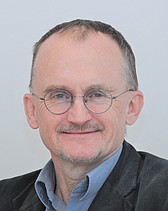 Reinhard Haas合作论文数Institute of Energy Systems and Electric Drives, Vienna University of Technology/Energy Economics Group, School of Electrical Engineering, Technische Universitat Wien1
 Wolfgang Gawlik合作论文数1
 Amela Ajanovic合作论文数Institute of Energy Systems and Electrical Drives, Technische Universität Wien1




