Atomic properties such as partial charges or multipoles encode chemically meaningful information that can inform downstream molecular property prediction, but their evaluation as machine learning targets has been complicated by the absence of a principled out-of-distribution evaluation protocol at the atomic level. In this work, we propose a held-out evaluation protocol that clusters atomic environments by SOAP descriptors and computes metrics accounting only for cluster labels unseen during training. Following this procedure, we use 5×5 cross-validation and Tukey's HSD to run a statistically rigorous comparison of E(3)-equivariant against non-equivariant, rotationally augmented models for predicting electron populations and multipoles of H, C, N, and O atoms. Building on our results, we introduce the Quantum Topological Neural Network (QT-Net), a rotationally augmented, non-equivariant graph neural network. We show that QT-Net can be used to infer properties of atoms in molecules from QM9 outside our training set, and that these inferred properties can yield improvement when used as input features for downstream molecular property prediction. To further validate the framework, molecular dipole moments computed from QT-Net's per-atom outputs recover the ground-truth values reported in QM9. We release all code and data, including a JAX implementation of QT-Net, to support the broader use of learned QTA properties as inductive biases for atomic-scale molecular machine learning.
Hydrogen cyanide (HCN) is present in many astrochemical environments, including interstellar clouds and comets. On Saturn's moon Titan, large amounts of HCN ice are present in the atmosphere and, following surface deposition, may influence both chemical and geological evolution. However, despite HCN's relevance to origin of life chemistry, the physiochemical properties of its solid state remain poorly characterized. For example, the crystals of HCN exhibit a range of rare properties, including pyroelectricity, and the ability to glow and jump under certain conditions. Here we use quantum chemical methods to predict HCN crystal surface energies, from which we derive the needle-like, high-aspect-ratio morphology of HCN nanocrystals. The predicted tips expose high-energy polar facets imbued with strong electric fields. We suggest that the combination of tips of opposite polarity helps to explain the cobweb-structure of solid HCN, and that fracture can transiently expose energetic surfaces, capable of catalysis at low temperature. One such process is predicted to be the near-barrierless formation of isocyanide (HNC) on HCN crystals, following proton addition or abstraction, for example, via radiation or acid/base-chemistry. Such field-assisted surface mechanisms may contribute to HCN-to-HNC isomerization under relevant conditions, and are suggested to explain part of the out-of-equilibrium abundance of HNC in cold environments such as Titan's atmosphere, and, potentially, in cometary comae.
The abiotic formation of adenine from hydrogen cyanide (HCN) has long been suspected to be a key step in the origin of life. However, the inherent complexity of HCN's self-reaction chemistry has challenged researchers for decades, obscuring the detailed mechanistic pathway to adenine. In this study, we employ quantum chemistry and microkinetic modeling to predict and compare four interwoven base-catalyzed pathways to adenine in liquid HCN. Our analysis incorporates both previously proposed aminomalononitrile (AMN) and diaminomaleonitrile (DAMN) intermediates and reveals previously unknown reaction steps, including one in which polyimine can serve as an oxidizing agent. Our modeling offers compelling evidence of a complex, nonequilibrium interplay between these pathways and confirms DAMN as a necessary intermediate. This work establishes a foundational reference for the exploration of abiotic nucleobase formation and highlights how rigorous testing of origin-of-life chemistry pushes the boundaries of state-of-the-art computational chemistry.
Quantum error mitigation (QEM) strategies are essential for improving the precision and reliability of quantum chemistry algorithms on noisy intermediate-scale quantum devices. Reference-state error mitigation (REM) is a cost-effective chemistry-inspired QEM method that performs well for weakly correlated problems. However, the effectiveness of REM is often limited when applied to strongly correlated systems. Here, we introduce multireference-state error mitigation (MREM), an extension of REM that systematically captures quantum hardware noise in strongly correlated ground states by utilizing multireference states. A pivotal aspect of MREM is using Givens rotations to efficiently construct quantum circuits to generate multireference states. To strike a balance between circuit expressivity and noise sensitivity, we employ compact wavefunctions composed of a few dominant Slater determinants. These truncated multireference states, engineered to exhibit substantial overlap with the target ground state, can effectively enhance error mitigation in variational quantum eigensolver experiments. We demonstrate the effectiveness of MREM through comprehensive simulations of molecular systems H2O, N2, and F2, underscoring its ability to realize significant improvements in computational accuracy compared to the original REM method. MREM broadens the scope of error mitigation to encompass a wider variety of molecular systems, including those exhibiting pronounced electron correlation.
With a predicted record heat formation, energy density, and an outstanding performance as a rocket propellant, dinitroacetylene stretches the imagination for what is possible in terms of organic chemical explosives and monopropellants. In this study, we employ quantum chemical methods to predict its thermodynamic properties, ionization potential, electron affinity, UV/Vis spectra, NMR, and vibrational spectra, and to investigate proposed decomposition mechanisms. While unimolecular decomposition pathways are predicted to have high activation energies, NOx radical species – commonly present in reaction mixtures of energetic materials – are found to significantly catalyze the decomposition of dinitroacetylene. This catalytic effect may explain previous unsuccessful synthesis attempts. A frontier orbital analysis suggests that partial reduction could increase C–N bond order, offering a strategy to stabilize this elusive high-energy-density material.
We explore a hypothesis in which the detection of classes of lipid-like molecules with similar abundance-averaged lengths would constitute a biosignature for other worlds. This is based on the functional requirements of membrane molecules: they must have enough hydrophobic length to not diffuse away from the membrane, be capped by one or two hydrophilic polar groups, and also maintain a semipermeable membrane. Our hypothesis is that once membrane thickness is set in a biological system, it is very difficult to modify it, due to the necessity to redesign all the other associated molecules; the membrane thickness will be constant across all molecular classes that constitute membranes resulting from a common ancestor. In such a scenario, similar thickness values would thus constitute a biosignature and cross-correlate between different molecular classes. We tested this hypothesis by developing a simple method to use modeled lengths of lipid-like molecules to estimate the thicknesses of membranes formed by these molecules. We examined abundance patterns of four different classes of membrane molecules used by terrestrial life: fatty acids, glycerol dialkyl glycerol tetraether lipids, carotenoids, and ladderanes from microbial isolates and environmental samples, as well as abiotic samples of fatty acids. We found that the modeled cell membrane thicknesses from each of these molecular classes were similar and gave results consistent with the observed values. From these results, we propose that our approach provides a framework to identify potential membrane component molecules as an agnostic biosignature. The power of our approach is that our method enables multiple molecular classes to be compared and provides increasing confidence of a biological detection.
Carbon is arguably the most versatile element in the periodic table. It can form bonds to other elements in one-, two- and three-dimensions, allowing the formation of structurally and electronically diverse materials. Carbon allotropes, materials made only of carbon, were for long limited to diamond, graphite, fullerene, carbon nanotubes, and graphene. However, recently a series of zero- one- and two-dimensional carbon allotropes have been made. Until now, diamond is the only known three-dimensional carbon allotrope. Here we report the successful synthesis of a new 3D carbon allotrope, which we refer to as diamondiyne. The synthesis of diamondiyne is performed using inexpensive laboratory glassware. It is formed as a film at a liquid-liquid interface, and we show that the method is scalable in both the thickness and lateral area of the film. The received films are polycrystalline, and the crystal structure has been confirmed using transmission electron microscopy. Our results enrich the carbon allotrope family, enabling non-naturally occurring ones extending in full 3D space. New carbon allotropes have historically found widespread use in materials science, and we look forward to what applications might emerge for diamondiyne.
This work reveals a striking exception to the well-established rule in chemistry that polar and nonpolar compounds do not spontaneously mix: insertion of methane, ethane, and other small hydrocarbons into the crystal lattice of hydrogen cyanide (HCN), a highly polar molecule. By mixing these components at cryogenic temperatures, we can observe distinct shifts in vibrational modes using Raman spectroscopy. Our computational predictions confirm that cocrystal structures of HCN and ethane, which match our experimental vibrational shifts closely, are thermodynamically and kinetically stable. Given that methane, ethane, and HCN are major components of the atmosphere and surface of Saturn's moon Titan-where they play key roles in shaping chemistry, weather, and landscape-our findings may prove instrumental for explaining Titan's chemical and geological evolution.
Computational exploration of condensed phases made of potassium and carbon monoxide leads to predictions of stable salts composed of cyclic six-membered oxocarbon anions and K + cations, K n (C 6 O 6 ) m . The states of reduction in these systems are wide-ranging, with C 6 O 6 molecules formally reduced by −2, −3, −3.5, and −6 in semiconducting and metallic phases. Special attention is paid to K 3 C 6 O 6 , in which triply charged radical anions stack closely and equidistantly in one dimension. Equidistant interactions of radicals are exceedingly rare and typically unstable due to spontaneous symmetry breaking, Peierls or Jahn–Teller distortion. The predicted exception of K 3 C 6 O 6 is explained by inter-ring multicenter bonding, also known as pancake bonding, in combination with large ionic repulsion. This fascinating interplay of interactions facilitates an exceptionally high density of states at the Fermi level and leads us to predictions of metallicity, a negative temperature coefficient of resistivity, and rare π-band superconductivity. These predictions reinvigorate the search for new organic conductors and superconductors using molecular design of metallic salts.
This work poses and partially explores an astrobiological hypothesis: might polymeric sulfur and phosphorus-based oxides form heteropolymers in the acidic cloud decks of Venus’ atmosphere? Following an introduction to the emerging field of computational astrobiology, we demonstrate the use of quantum chemical methods to evaluate basic properties of a hypothetical carbon-free heteropolymer that might be sourced from feedstock in the Venusian atmosphere. Our modeling indicates that R-substituted polyphosphoric sulfonic ester polymers may form via multiple thermodynamically favorable pathways and exhibit sufficient kinetic stability to persist in the Venusian clouds. Their thermodynamic stability compares favorably to polypeptides, whose formation is slightly thermodynamically unfavored relative to amino acids in most known abiotic conditions. We propose a combined approach of vibrational spectroscopy and mass spectrometry to search for related materials in Venus’s atmosphere but note that none of the currently planned missions are well suited for their detection. While predicted Ultraviolet–Visible spectra suggest that the studied polymers are unlikely candidates for Venus’s unidentified UV absorbers, the broader possibility of sulfuric acid–based chemistry supporting alternative biochemistries challenges the traditional carbon-centric models of life. We argue that such unconventional lines of inquiry are warranted in the search for life beyond Earth.
The predictive and explanatory roles of atomic properties like size, charge, and electronegativity are closely linked to their definitions. However, establishing suitable definitions becomes increasingly challenging when examining atoms within materials. This study presents a quantum-mechanical framework for the quantitatively assessment of these atomic properties in crystalline structures. Our approach utilizes Kohn-Sham density functional theory to approximate the electron energy density. We then employ a quantum chemical topological analysis of this density to derive atomic properties. The average electron energy density is conceptually powerful because it can be interpreted as a product of the electron density and the average energy of occupied molecular orbitals. Our method therefore bridges descriptive and predictive theories of electronic structure, including the quantum theory of atoms in molecules and molecular orbital theory. The applicability of our methodology is demonstrated across various materials, encompassing metals, ionic salts, semiconductors, and a hydrogen-bonded molecular crystal. This work provides insights into electronegativity inversion during bond formation. It also highlights the complementary roles of partial charge and electronegativity in electronic structure analysis, with one indicating spatial electron accumulation or depletion and the other reflecting average electron binding.
That polar and non-polar compounds do not spontaneously mix is a textbook rule of chemistry with few exceptions. Here we provide evidence for the intercalation of methane, ethane, and small hydrocarbons into the lattice structure of hydrogen cyanide (HCN), a highly polar molecule. Using cryogenic syntheses and Raman spectroscopy, we observe distinct shifts in vibrational modes in line with enhanced hydrogen bonding upon hydrocarbon insertion. Co-crystal structures composed of HCN and ethane that are both thermodynamically stable, and that closely match measured vibrational shifts are computationally predicted. Methane, ethane and HCN are major components of the atmosphere and surface of Saturn’s moon Titan, where they play key roles in shaping chemistry, weather, and landscape. Their intermixing may prove instrumental for explaining Titan’s chemical and geological evolution.
Quantum computing is emerging as a new computational paradigm with the potential to transform several research fields including quantum chemistry. However, current hardware limitations (including limited coherence times, gate infidelities, and connectivity) hamper the implementation of most quantum algorithms and call for more noise-resilient solutions. We propose an explicitly correlated Ansatz based on the transcorrelated (TC) approach to target these major roadblocks directly. This method transfers, without any approximation, correlations from the wave function directly into the Hamiltonian, thus reducing the resources needed to achieve accurate results with noisy quantum devices. We show that the TC approach allows for shallower circuits and improves the convergence toward the complete basis set limit, providing energies within chemical accuracy to experiment with smaller basis sets and, thus, fewer qubits. We demonstrate our method by computing bond lengths, dissociation energies, and vibrational frequencies close to experimental results for the hydrogen dimer and lithium hydride using two and four qubits, respectively. To demonstrate our approach's current and near-term potential, we perform hardware experiments, where our results confirm that the TC method paves the way toward accurate quantum chemistry calculations already on today's quantum hardware.
The near-term utility of quantum computers is hindered by hardware constraints in the form of noise. One path to achieving noise resilience in hybrid quantum algorithms is to decrease the required circuit depth -- the number of applied gates -- to solve a given problem. This work demonstrates how to reduce circuit depth by combining the transcorrelated (TC) approach with adaptive quantum ans\"atze and their implementations in the context of variational quantum imaginary time evolution (AVQITE). The combined TC-AVQITE method is used to calculate ground state energies across the potential energy surfaces of H$_4$, LiH, and H$_2$O. In particular, H$_4$ is a notoriously difficult case where unitary coupled cluster theory, including singles and doubles excitations, fails to provide accurate results. Adding TC yields energies close to the complete basis set (CBS) limit while reducing the number of necessary operators -- and thus circuit depth -- in the adaptive ans\"atze. The reduced circuit depth furthermore makes our algorithm more noise-resilient and accelerates convergence. Our study demonstrates that combining the TC method with adaptive ans\"atze yields compact, noise-resilient, and easy-to-optimize quantum circuits that yield accurate quantum chemistry results close to the CBS limit.
There is currently no combination of quantum hardware and algorithms that can provide an advantage over conventional calculations of molecules or materials. However, if or when such a point is reached, new strategies will be needed to verify predictions made using quantum devices. We propose that the electron density, obtained through experimental or computational means, can serve as a robust benchmark for validating the accuracy of quantum computation of chemistry. An initial exploration into topological features of electron densities, facilitated by quantum computation, is presented here as a proof of concept. Additionally, we examine the effects of constraining and symmetrizing measured one-particle reduced density matrices on noise-driven errors in the electron density distribution. We emphasize the potential benefits and future need for high-quality electron densities derived from diffraction experiments for validating classically intractable quantum computations of materials.
Hydrogen cyanide (HCN)-derived molecules and polymers feature in several hypotheses on the origin of life. Over half-a-century of investigations into HCN self-reactions have led to many suggestions regarding the structural nature of the products, and an even greater number of proposed polymerization pathways. A comprehensive overview of possible reactions and structures is missing. In this work, we use quantum chemical calculations to map the relative free energy of most HCN-derived molecules and polymers that have been discussed in the literature. Our computed free energies indicate that several previously considered polymerization pathways are not spontaneous and should be discarded from future consideration. Among the most thermodynamically favored products are polyaminoimidazole and adenine.
Organic dyes typically have electronically excited states of both singlet and triplet multiplicity. Controlling the energy difference between these states is a key factor for making efficient organic light emitting diodes and triplet sensitizers, which fulfill essential functions in chemistry, physics, and medicine. Here, we propose a strategy to shift the singlet excited state of a known sensitizer to lower energies without shifting the energy of the triplet state, thus without compromising the ability of the sensitizer to do work. We covalently connect two to four sensitizers in such a way that their transition dipole moments are aligned in a head-to-tail fashion, but, through steric encumbrance, the delocalization is minimized between each moiety. Exciton coupling between the singlet excited states considerably lowers the first excited singlet state energy. However, the energy of the lowest triplet excited state is unperturbed because the exciton coupling strength depends on the magnitude of the transition dipole moments, which for triplets are very small. We expect that the presented strategy of designed intramolecular exciton coupling will be a useful concept in the design of both photosensitizers and emitters for organic light emitting diodes as both benefits from a small singlet-triplet energy gap. Controlling energetics is a key factor for efficient organic light emitting diodes and triplet sensitizers. Here, the authors use intramolecular exciton coupling to selectively lower the energy of a singlet state without perturbing the triplet state.
Decoherence and gate errors severely limit the capabilities of state-of-the-art quantum computers. This work introduces a strategy for reference-state error mitigation (REM) of quantum chemistry that can be straightforwardly implemented on current and near-term devices. REM can be applied alongside existing mitigation procedures, while requiring minimal postprocessing and only one or no additional measurements. The approach is agnostic to the underlying quantum mechanical ansatz and is designed for the variational quantum eigensolver. Up to two orders-of-magnitude improvement in the computational accuracy of ground state energies of small molecules (H2, HeH+, and LiH) is demonstrated on superconducting quantum hardware. Simulations of noisy circuits with a depth exceeding 1000 two-qubit gates are used to demonstrate the scalability of the method.
 Ralf Haiges合作论文数Dornsife College of Letters, Arts and Sciences, University of Southern California21
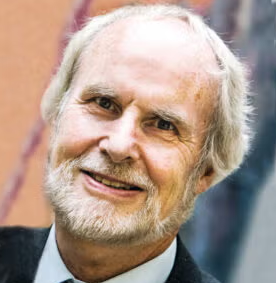 Karl O. Christe合作论文数Department of Chemistry, Dana and David Dornsife College of Letters, Arts and Sciences, University of Southern California19
 Tore Brinck合作论文数Division of Applied Physical Chemistry, Department of Chemistry, School of Engineering Sciences in Chemistry, Biotechnology and Health, KTH Royal Institute of Technology15
 Fang Wang合作论文数Wang Group, Department of Chemistry, University of Rhode Island;Koch Institute, Massachusetts Institute of Technology14
 Surya Prakash合作论文数Department of Chemsitry, Dana and David Domsife College of Letters, Arts and Sciences, University of Southern California;Loker Hydrocarbon Research Institute, University of Southern California13
 Guillaume Belanger-Chabot合作论文数10
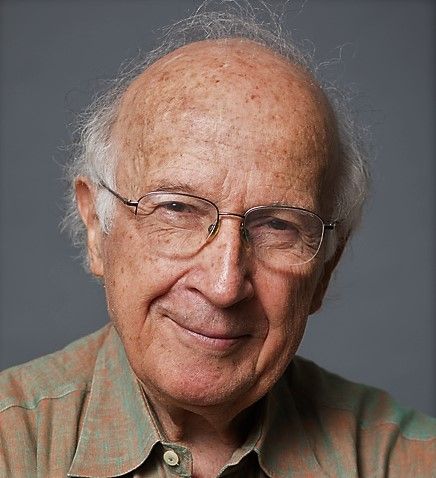 Roald Hoffmann合作论文数Department of Chemistry & Chemical Biology, The College of Arts & Sciences, Cornell University9
 Lolur Phalgun合作论文数7
 Roberto Cammi合作论文数Dipartimento di Scienze Chimiche, della Vita e della Sostenibilita Ambientale, Universita di Parma7
 Hilda Sandstrom合作论文数Dept Chem & Chem Engn, Chalmers Univ Technol6
 Fernando Izquierdo-Ruiz合作论文数Chalmers University of Technology6
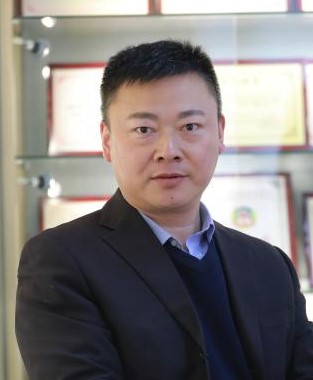 Zhe Zhang (张哲)合作论文数兰州大学马克思主义学院6
 N W Ashcroft合作论文数Cornell University6
 M. Skogh合作论文数Dept Chem & Chem Engn, Chalmers Univ Technol5
 Werner Dobrautz合作论文数Department of Chemistry and Chemical Engineering, Chalmers University of Technology5
 Hai Dong (董海)合作论文数School of Chemistry and Chemical Engineering, Huazhong University of Science and Technology5
 Clara Schäfer合作论文数4
 Chuanfa Ni (倪传法)合作论文数University of Chinese Academy of Sciences;Key Laboratory of Organofluorine Chemistry, Shanghai Institute of Organic Chemistry, Chinese Academy of Sciences4
 Stefano Racioppi合作论文数Dept Chem & Chem Engn, Chalmers Univ Technol4
 Karl Borjesson合作论文数Dept. of Chem. & Bio. Eng., Chalmers Univ. of Tech.;c;Dept. of Chem. & Bio. Eng., Chalmers Univ. of Tech.4Saal Thomas合作论文数4
 Thomas Mathew合作论文数Loker Hydrocarbon Research Institute, University of Southern California4
 Robert Hodyss合作论文数Jet Propulsion Laboratory, 4800 Oak Grove Dr., Pasadena Ca, 91109-8099, USA4
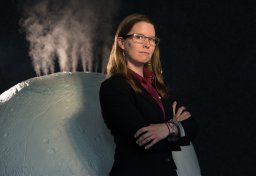 Morgan Cable合作论文数Harriet L. Wilkes Honors College, Florida Atlantic University4William W. Wilson合作论文数3
 Eva Malmström Jonsson合作论文数Division of Coating Technology, Department of Fibre and Polymer Technology, School of Engineering Sciences in Chemistry, Biotechnology and Health, KTH Royal Institute of Technology3Álvaro Lobato合作论文数Dept Quim Fis, Univ Complutense Madrid3Jingguo Shen合作论文数Loker Hydrocarbon Res Inst, Univ So Calif3Yizhou Yang合作论文数3Yixuan Zhou合作论文数3
 Bo Ren合作论文数3Zhang Xiaoling合作论文数3
 Guochun Yang (杨国春)合作论文数School of Science, Yanshan University3
 Paul Erhart合作论文数Department of Physics, Chalmers University of Technology3
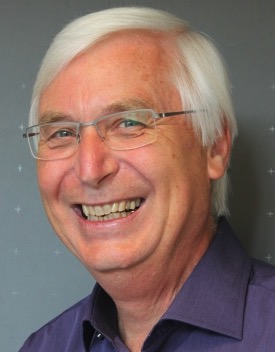 Herbert Mayr合作论文数Department Chemie, Ludwig-Maximilians-Universitat Munchen3
 George A. Olah合作论文数Department of Chemistry, College of Letters, Arts and Sciences, University of Southern California3
 Per Hyldgaard合作论文数Department of Microtechnology and nanoscience, MC2, Chalmers University of Technology3
 Angel Puente合作论文数3
 Andrew Paterson合作论文数2Oskar Leinonen合作论文数2Emmelie Hammarvid合作论文数2Janka Biznárová合作论文数2Petter Dunås合作论文数2
 Sabine Becker合作论文数2Chanan Sessler合作论文数2Jacob M Goldberg合作论文数2
 Ke Liao合作论文数2Mattias Ångqvist合作论文数Dept Phys, Chalmers Univ Technol2
 J. Magnus Rahm合作论文数Department of PhysicsGothenburg, Chalmers University of Technology2




