Understanding how quantum chaotic systems generate entanglement can provide insight into their microscopic chaotic dynamics and can help distinguish between different classes of chaotic behavior. Using von Neumann entanglement entropy, we study a nonentangled state evolved under three variants of the Sachdev-Ye-Kitaev (SYK) model with a finite number of Majorana fermions N. All the variants exhibit linear entanglement growth at early times, which at late times saturates to a universal value consistent with random matrix theory (RMT), but their growth rates differ. We interpret this as a large-N effect, arising from the enhanced nonlocality of fermionic operators in SYK and binary SYK, absent in spin operators of the spin-SYK model. Numerically, we find that these differences emerge gradually with increasing N. Although all variants are quantum chaotic, their entanglement dynamics reflect varying scrambling rates and indicate that the entanglement production rate serves as a fine-grained probe of scrambling beyond conventional measures. To probe its effect on the thermalization properties of these models, we study the two-point autocorrelation function, finding no differences between the SYK variants, but deviations from RMT predictions for N≥24, particularly near the crossover from exponential decay to saturation regime.
The Sachdev-Ye-Kitaev (SYK) model may provide us with a good starting point for the experimental study of quantum chaos and holography in the laboratory. Still, the four-local interaction of fermions makes quantum simulation challenging, and it would be good to search for simpler models that keep the essence. In this paper, we argue that the four-local interaction may not be important by introducing a few models that have two-local interactions. The first model is a generalization of the spin-SYK model, which is obtained by replacing the spin variables with SU(d) generators. Simulations of this class of models might be straightforward on qudit-based quantum devices. We study the case of d=3,4,5,6 numerically and observe quantum chaos already for two-local interactions in a wide energy range. We also introduce modifications of spin-SYK and SYK models that have similar structures as the SU(d) model (e.g., H=∑_{p,q}J_{pq}χ_{p}χ_{p+1}χ_{q}χ_{q+1} instead of the original SYK Hamiltonian H=∑_{p,q,r,s}J_{pqrs}χ_{p}χ_{q}χ_{r}χ_{s}), which shows strongly chaotic features although the interaction is essentially two-local. These models may be a good starting point for the quantum simulation of the original SYK model.
Information scrambling is a hallmark of quantum chaos and thermalization in isolated quantum many-body systems. We investigate scrambling dynamics in the all-to-all interacting spin Sachdev-Ye-Kitaev (SYK)-q model using both pure- and mixed-state entanglement measures. We show that von-Neumann and Rényi entropies exhibit rapid growth followed by saturation near Haar-random values, signaling efficient scrambling. The scrambling rate reveals a nontrivial dependence on the interaction order, system size, and Hamiltonian scaling. We further employ mixed-state entanglement as a powerful probe of information scrambling. We numerically find a universal relation between the Rényi-1/2 mutual information and entanglement negativity for minimal interaction order in the early growth regime. Furthermore, entanglement negativity displays a Page-curve-like behavior under unequal subsystem partitioning, characterized by the birth, spread, and eventual death of quantum correlations. Our results provide a generic description of information scrambling using entanglement dynamics in all-to-all interacting spin systems with multi-body interactions.
We elaborate further on the matter coupling of Dirac matter in the SYK framework, incorporating non-Gaussian coupling distributions and bulk fermion mass effects. Our study analyzes quartic matter couplings generated by a non-Gaussian distribution as an illustrative example. The introduction of bulk-fermion mass alters the boundary coupling between the Dirac and Majorana fermions. The averaged adjacent gap ratio is sensitive to the distribution of random couplings, which remains independent of the Hamiltonian's symmetry. The generalization of the SYK model to non-Gaussian distributions and the inclusion of bulk fermion mass remain qualitatively similar to the Gaussian and massless cases. Key deviations are observed only in the time scales for the linear ramp in the spectral form factor and the saturation of entanglement entropy.
We investigate the bulk-boundary correspondence in the SYK model from a quantum information perspective. The SYK model describes a system of Majorana fermions with random all-to-all interactions, whose disorder average-typically taken over a Gaussian ensemble-admits a dual description in terms of JT gravity in the large-N, low-energy limit. This framework provides a minimal setting for exploring holography and emergent spacetime in nearly AdS_2. We probe the holographic principle through diagnostics of quantum chaos and entanglement. In the early-time regime, the SYK model saturates the universal bound on the Lyapunov exponent, signaling maximal chaos consistent with semiclassical black hole dynamics. In the late-time regime, its spectral statistics are governed by random matrix theory, reflecting universal features of strongly chaotic quantum systems. These dynamical properties establish a concrete link between boundary quantum chaos and bulk semiclassical gravity. In parallel, we analyze quantum entanglement and the structure of operator algebras to investigate transitions in the associated von Neumann algebras and their implications for emergent geometry. To explore the robustness of these phenomena, we consider deformations of the SYK model through modified matter couplings and alternative random distributions. Our results clarify how quantum information-theoretic structures encode bulk gravitational dynamics and provide insight into the mechanism of spacetime emergence.
Exploring the spectral properties of non-Hermitian systems presents a substantial theoretical challenge due to the presence of a complex eigenvalue spectrum. Singular values for such systems are inherently real and non-negative, and the techniques used for Hermitian systems can be used with ease. As a prototypical example of such systems, we investigate the singular-value spectrum of a non-Hermitian extension of the sparse SachdevYe-Kitaev (SYK) model, a solvable toy model of quantum chaos and quantum gravity with significant interest in digital quantum simulation. Our findings reveal a congruence between the statistics of singular values and those of the analogous Hermitian Gaussian ensembles. An increase in sparsity results in the model deviating from its chaotic behavior, a phenomenon precisely captured by both short- and long-range correlations in the singular-value spectrum. These findings indicate the existence of a critical sparsity threshold, beyond which the chaotic nature of the model breaks down, suggesting a potential collapse of holographic duality in such systems.
The Sachdev–Ye–Kitaev (SYK) model may provide us with a good starting point for the experimental study of quantum chaos and holography in the laboratory. Still, the four-local interaction of fermions makes quantum simulation challenging, and it would be good to search for simpler models that keep the essence. In this paper, we argue that the four-local interaction may not be important by introducing a few models that have two-local interactions. The first model is a generalization of the spin-SYK model, which is obtained by replacing the spin variables with SU(d) generators. Simulations of this class of models might be straightforward on qudit-based quantum devices. We study the case of d=3, 4, 5, 6 numerically and observe quantum chaos already for two-local interactions in a wide energy range. We also introduce modifications of spin-SYK and SYK models that have similar structures to the SU(d) model (e.g., H=∑_p,qJ_pqχ_pχ_p+1χ_qχ_q+1 instead of the original SYK Hamiltonian H=∑_p,q,r,sJ_pqrsχ_pχ_qχ_rχ_s), which shows strongly chaotic features although the interaction is essentially two-local. These models may be a good starting point for the quantum simulation of the original SYK model.
It is often expected (and assumed) for a quantum chaotic system that the presence of correlated eigenvalues implies that all the other properties as dictated by random matrix theory are satisfied. We demonstrate using the spin-1/2 kicked field Ising model that this is not necessarily true. We study the properties of eigenvalues of the reduced density matrix for this model, which constitutes the entanglement spectrum. It is shown that the largest eigenvalue does not follow the expected Tracy–Widom distribution even for the large system sizes considered. The distribution instead follows the extreme value distribution of Weibull type. Furthermore, we also show that such deviations do not lead to drastic change in the thermalization property of this system by showing that the models satisfy the diagonal and off-diagonal eigenstate thermalization hypothesis. Finally, we study the spin-spin autocorrelation function and numerically show that it has the characteristic behavior for chaotic systems: it decreases exponentially and saturates to a value at late time that decreases with system size.
We model backreaction in AdS$_2$ JT gravity via a proposed boundary dual Sachdev-Ye-Kitaev quantum dot coupled to Dirac fermion matter and study it from the perspective of quantum entanglement and chaos. The boundary effective action accounts for the backreaction through a linear coupling of the Dirac fermions to the Gaussian-random two-body Majorana interaction term in the low-energy limit. We calculate the time evolution of the entanglement entropy between graviton and Dirac fermion fields for a separable initial state and find that it initially increases and then saturates to a finite value. Moreover, in the limit of a large number of fermions, we find a maximally entangled state between the Majorana and Dirac fields in the saturation region, implying a transition of the von Neumann algebra of observables from type I to type II. This transition in turn indicates a loss of information in the holographically dual emergent spacetime. We corroborate these observations with a detailed numerical computation of the averaged nearest-neighbor gap ratio of the boundary spectrum and provide a useful complement to quantum entanglement studies of holography.
Information scrambling refers to the unitary dynamics that quickly spreads and encodes localized quantum information over an entire many-body system and makes the information accessible from any small subsystem. While information scrambling is the key to understanding complex quantum many-body dynamics and is well-understood in random unitary models, it has been hardly explored in Hamiltonian systems. In this Letter, we investigate the information recovery in various time-independent Hamiltonian systems, including chaotic spin chains and Sachdev-Ye-Kitaev (SYK) models. We show that information recovery is possible in certain, but not all, chaotic models, which highlights the difference between information recovery and quantum chaos based on the energy spectrum or the out-of-time-ordered correlators. We also show that information recovery probes transitions caused by the change of information-theoretic features of the dynamics.
We construct a model of Pauli spin operators with all-to-all 4-local interactions by replacing Majorana fermions in the SYK model with spin operators. Equivalently, we replace fermions with hard-core bosons. We study this model numerically and compare the properties with those of the SYK model. We observe a striking quantitative coincidence between the spin model and the SYK model, which suggests that this spin model is strongly chaotic and, perhaps, can play some role in holography. We also discuss the path-integral approach with multi-local fields and the possibility of quantum simulations. This model may be an interesting target for quantum simulations because Pauli spins are easier to implement than fermions on qubit-based quantum devices.
Utilizing singular value decomposition, our investigation focuses on the spectrum of the singular values within a sparse non-Hermitian Sachdev-Ye-Kitaev (SYK) model. Unlike the complex eigenvalues typical of non-Hermitian systems, singular values are inherently real and positive. Our findings reveal a congruence between the statistics of singular values and those of the analogous Hermitian Gaussian ensembles. An increase in sparsity results in the non-Hermitian SYK model deviating from its chaotic behavior, a phenomenon precisely captured by the singular value ratios. Our analysis of the singular form factor (FF), analogous to the spectral form factor (SFF) indicates the disappearance of the linear ramp with increased sparsity. Additionally, we define singular complexity, inspired by the spectral complexity in Hermitian systems, whose saturation provides a critical threshold of sparseness. Such disintegration is likely associated with the breakdown of the existing holographic dual for non-Hermitian systems.
Understanding how and whether local perturbations can affect the entire quantum system is a fundamental step in understanding non-equilibrium phenomena such as thermalization. This knowledge of non-equilibrium phenomena is applicable for quantum computation, as many quantum computers employ non-equilibrium processes for computations. In this paper, we investigate the evolution of bi- and tripartite operator mutual information of the time-evolution operator and the Pauli spin operators in the one-dimensional Ising model with magnetic field and the disordered Heisenberg model to study the properties of quantum circuits. In the Ising model, the early-time evolution qualitatively follows an effective light cone picture, and the late-time value is well described by Page's value for a random pure state. In the Heisenberg model with strong disorder, we find that many-body localization prevents the information from propagating and being delocalized. We also find an effective Ising Hamiltonian that describes the time evolution of bi- and tripartite operator mutual information for the Heisenberg model in the large disorder regime.
To simulate bosons on a qubit- or qudit-based quantum computer, one has to regularize the theory by truncating infinite-dimensional local Hilbert spaces to finite dimensions. In the search for practical quantum applications, it is important to know how big the truncation errors can be. In general, it is not easy to estimate errors unless we have a good quantum computer. In this paper, we show that traditional sampling methods on classical devices, specifically Markov Chain Monte Carlo, can address this issue for a rather generic class of bosonic systems with a reasonable amount of computational resources available today. As a demonstration, we apply this idea to the scalar field theory on a two-dimensional lattice, with a size that goes beyond what is achievable using exact diagonalization methods. This method can be used to estimate the resources needed for realistic quantum simulations of bosonic theories, and also, to check the validity of the results of the corresponding quantum simulations.
The sparse version of the Sachdev-Ye-Kitaev (SYK) model reproduces essential features of the original SYK model while reducing the number of disorder parameters. In this paper, we propose a further simplification of the model which we call the binary-coupling sparse SYK model. We set the nonzero couplings to be $\pm 1$, rather than being sampled from a continuous distribution such as Gaussian. Remarkably, this simplification turns out to be an improvement: the binary-coupling model exhibits strong correlations in the spectrum, which is the important feature of the original SYK model that leads to the quick onset of the random-matrix universality, more efficiently in terms of the number of nonzero terms. This model is better suited for analog or digital quantum simulations of quantum chaotic behavior and holographic metals due to its simplicity and scaling properties.
We numerically study an anyon chain based on the Haagerup fusion category and find evidence that it leads in the long-distance limit to a conformal field theory whose central charge is ∼2. Fusion categories generalize the concept of finite group symmetries to noninvertible symmetry operations, and the Haagerup fusion category is the simplest one which comes from neither finite groups nor affine Lie algebras. As such, ours is the first example of conformal field theories which have truly exotic generalized symmetries. Basically the same result was independently obtained in the preceding Letter [Phys. Rev. Lett. 128, 231602 (2022)PRLTAO0031-900710.1103/PhysRevLett.128.231602].
Low-dimensional systems of interacting fermions in a synthetic gauge field have been experimentally realized using two-component ultra-cold Fermi gases in optical lattices. Using a two-leg ladder model that is relevant to these experiments, we have studied the signatures of topological Lifshitz transitions and the effects of the inter-species interaction $U$ on the gauge-invariant orbital current in the regime of large intra-leg hopping $\Omega$. Focusing on non-insulating regimes, we have carried out numerically exact density-matrix renormalization-group (DMRG) calculations to compute the orbital current at fixed particle number as a function of the interaction strength and the synthetic gauge flux per plaquette. Signatures of topological Lifshitz transitions where the number Fermi points changes are found to persist even in the presence of very strong repulsive interactions. This numerical observation suggests that the orbital current can be captured by an appropriately renormalized mean-field band structure, which is also described here. Quantitative agreement between the mean-field and the DMRG results in the intermediate interaction regime where $U \lesssim \Omega$ is demonstrated. We also have observed that interactions can change the sign of the current susceptibility at zero field and induce Lifshitz transitions between two metallic phases, which is also captured by the mean-field theory. Correlation effects beyond mean-field theory in the oscillations of the local inter-leg current are also reported. We argue that the observed robustness against interactions makes the orbital current a good indicator of the topological Lifshitz transitions.
We demonstrate the universal properties of dissipative Tomonaga-Luttinger (TL) liquids by calculating correlation functions and performing finite-size scaling analysis of a non-Hermitian XXZ spin chain as a prototypical model in one-dimensional open quantum many-body systems. Our analytic calculation is based on effective field theory with bosonization, finite-size scaling approach in conformal field theory, and the Bethe-ansatz solution. Our numerical analysis is based on the density-matrix renormalization group generalized to non-Hermitian systems (NH-DMRG). We uncover that the model in the massless regime with weak dissipation belongs to the universality class characterized by the complex-valued TL parameter, which is related to the complex generalization of the $c=1$ conformal field theory. As the dissipation strength increases, the values of the TL parameter obtained by the NH-DMRG begin to deviate from those obtained by the Bethe-ansatz analysis, indicating that the model becomes massive for strong dissipation. Our results can be tested with the two-component Bose-Hubbard system of ultracold atoms subject to two-body loss.
We present a fully analytical description of a many body localization (MBL) transition in a microscopically defined model. Its Hamiltonian is the sum of one- and two-body operators, where both contributions obey a maximum-entropy principle and have no symmetries except hermiticity (not even particle number conservation). These two criteria paraphrase that our system is a variant of the Sachdev-Ye-Kitaev (SYK) model. We will demonstrate how this simple `zero-dimensional' system displays numerous features seen in more complex realizations of MBL. Specifically, it shows a transition between an ergodic and a localized phase, and non-trivial wave function statistics indicating the presence of `non-ergodic extended states'. We check our analytical description of these phenomena by parameter free comparison to high performance numerics for systems of up to $N=15$ fermions. In this way, our study becomes a testbed for concepts of high-dimensional quantum localization, previously applied to synthetic systems such as Cayley trees or random regular graphs. We believe that this is the first many body system for which an effective theory is derived and solved from first principles. The hope is that the novel analytical concepts developed in this study may become a stepping stone for the description of MBL in more complex systems.
We generalize Page's result on the entanglement entropy of random pure states to the many-body eigenstates of realistic disordered many-body systems subject to long range interactions. This extension leads to two principal conclusions: first, for increasing disorder the "shells" of constant energy supporting a system's eigenstates fill only a fraction of its full Fock space and are subject to intrinsic correlations absent in synthetic high-dimensional random lattice systems. Second, in all regimes preceding the many-body localization transition individual eigenstates are thermally distributed over these shells. These results, corroborated by comparison to exact diagonalization for an SYK model, are at variance with the concept of "non-ergodic extended states" in many-body systems discussed in the recent literature.
 Masanori Hanada (花田政範)合作论文数Centre for Geometry, Analysis and Gravitation, School of Mathematical Sciences, Queen Mary University of London;Faculty of Science and Engineering, Queen Mary University of London15
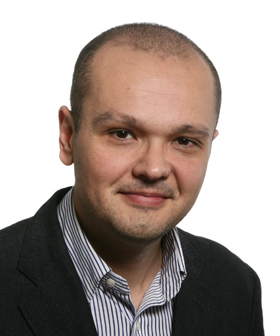 Antonio Miguel García-García合作论文数Institute of Condensed Matter Physics, School of Physics and Astronomy, Shanghai Jiao Tong University;School of Physics, Shanghai Jiao Tong University;Shanghai Center For Complex Physics12
 Norio Kawakami (川上則雄)合作论文数Department of Physics, Kyoto University12
 Masahito Ueda (上田正仁)合作论文数Department of Physics, The University of Tokyo;Quantum Condensate Research Team, Quantum Information Electronics Division, RIKEN Center for Emergent Matter Science7
 Ryutarou Ohbuchi (大渕竜太郎)合作论文数Computer Science and Engineering Department, Faculty of Engineering, University of Yamanashi6
 Tanay Pathak合作论文数Indian Institute of Science5
 Chen-Te Ma (马承德)合作论文数Institute of Quantum Matter, South China Normal University5
 Jeff Murugan合作论文数Cosmology & Gravity Center;Department of Mathematics and Applied Mathematics;University of Cape;Cosmology & Gravity Center, University of Cape5Pak Hang Chris Lau合作论文数4Fuyuki Matsuda合作论文数4
 Gharibyan Hrant合作论文数Department of Physics &MIT Kavli Institute, Massachusetts Institute of Technology;Department of Physics & MIT Kavli Institute, Massachusetts Institute of Technology4
 Ryotaro Arita合作论文数Department of Physics;University of Tokyo;Department of Physics, University of Tokyo4
 Hideo Aoki (青木秀夫)合作论文数Advanced Industrial Science and Technology;Department of Physics, Faculty of Science & School of Science, University of Tokyo4Takahiko Furuya合作论文数University of Yamanashi4
 Enrico Rinaldi合作论文数3
 Aurelio Romero Bermudez合作论文数Inst Lorentz Theoret Phys, Leiden Univ3
 Petros Daras合作论文数Visual Computing Laboratory of Information Technologies Institute of The Centre for Research and Technology Hellas;d-Cube Private Company;COMPLAGO3
 Thibault Napoleon合作论文数Université de Caen / GREYC UMR 60723
 Helin Dutagaci合作论文数Eskisehir Osmangazi University3
 Bruno Loureiro合作论文数Departement d'Informatique, CNRS;Centre for Data Science, École Normale Supérieure;Université Paris Sciences et Lettres3Apostolos Axenopoulos合作论文数University of Thessaly3
 Afzal Godil合作论文数Visualization and Usability Group, National Institute of Standards and Technology3
 Brian Swingle合作论文数Department of Physics, College of Computer,
Mathematical, and Natural Sciences, University of Maryland3
Brian Swingle合作论文数Department of Physics, College of Computer,
Mathematical, and Natural Sciences, University of Maryland3 Stephen Shenker合作论文数Department of Physics, Stanford University3Athanasios Mademlis合作论文数3Felipe Monteiro合作论文数2Douglas Stanford合作论文数Stanford University2
 Pratik Nandy合作论文数Ctr High Energy Phys, Indian Inst Sci2
 Paul L. Rosin合作论文数School of Computer Science, Cardiff University2
 Byung Il Min合作论文数Department of Physics, Pohang University of Science and Technology2
 Tobias Schreck合作论文数Institute of Visual Computing, Graz University of Technology2
 Joseph Polchinski合作论文数Kavli Institute for Theoretical Physics, University of California, Santa Barbara2
 Youichi Yanase (栁瀬陽一)合作论文数Department of Physics, Graduate School of Science, Kyoto University2Alexander Altland合作论文数2
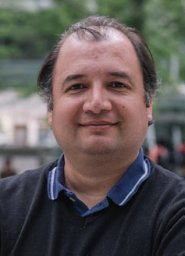 Benjamin Bustos合作论文数Department of Computer Science, University of Chile2
 Mohamed Chaouch合作论文数Universite de Bourgogne2
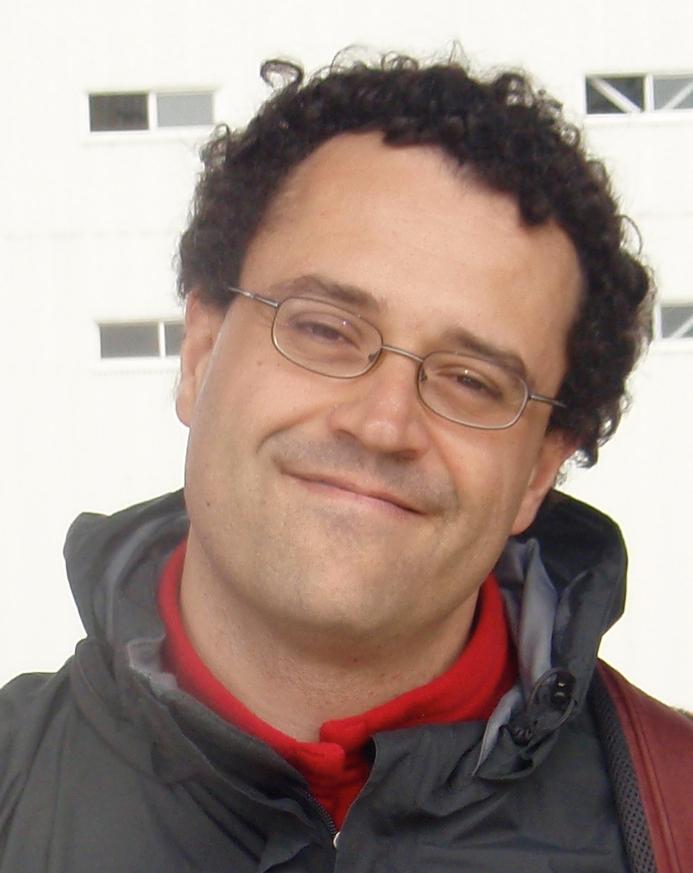 Miguel A. Cazalilla (米格爾)合作论文数Department of Physics, National Tsing Hua University2
 Yücel Yemez合作论文数Department of Computer Engineering, Koç University;Department of Design, Technology and Society, Graduate School of Social Sciences and Humanities, Koç University2
 Alejandro Lobos合作论文数University of Geneva2
 Ceyhun Burak Akgül合作论文数Volumetric Analysis and Visualization Lab., Boğaziçi University2Hidehiko Shimada合作论文数Max-Planck-Institut fur Gravitationsphysik;School of Mathematics;Trinity College;Max-Planck-Institut fur Gravitationsphysik, Trinity College2
 Bülent Sankur合作论文数Electrical and Electronic Engineering Department, Bogazici University2Masayoshi Taniguchi合作论文数2
 Ippei Danshita合作论文数2
 Monodeep Chakraborty合作论文数S.N. Bose National Centre for Basic Sciences2
 Zhouhui Lian (连宙辉)合作论文数Institute for Artificial Intelligence, Peking University;Wangxuan Institute of Computer Technology, Peking University2Alexandre Streicher合作论文数1Chen-How Huang合作论文数1
 Xianlong Liu合作论文数1




