This paper develops a hazard- and pathway-based framework for high-level radioactive waste (HLW) disposal grounded in intrinsic radionuclide decay characteristics, geochemical behavior, and comparative hazard. We examine the physical and geochemical properties of key radionuclides and quantify lifetime cancer risk from chronic ingestion on a per-unit-mass basis using established regulatory models. Long-lived radionuclides are weakly radioactive and emit little or no penetrating gamma radiation; their hazards are therefore dominated by internal exposure pathways, analogous to those of chemical carcinogens commonly disposed of in the shallow subsurface. Actinides exhibit cancer risks comparable to dioxin but are strongly immobilized under reducing deep-geological conditions, while mobile long-lived radionuclides are associated with lower carcinogenic risk than typical persistent chemical contaminants. These findings support a paradigm shift in disposal strategies: (a) from heavily engineered containment systems toward nature-based approaches for ensuring long-term post-closure safety that explicitly leverage intrinsic radionuclide properties, along with slow release from waste forms and diffusion-limited transport, assuming appropriate site selection and geological stability; and (b) toward consideration of lifecycle perspectives and trade-offs between future hypothetical risks and present-day actual environmental impacts, including material use and fuel-cycle emissions. We further highlight asymmetries between radioactive and chemical waste stewardship. Public institutions and regulatory authorities are already responsible for actively managing large inventories of persistent chemical carcinogens in the shallow subsurface indefinitely. Increased efforts are needed to integrate radiological and chemical hazards within a unified environmental risk framework to establish more coherent, lifecycle-aware waste management strategies across industries.
Burnup measurement is essential for monitoring and operating pebble-bed reactors (PBRs), where fuel pebbles circulate rapidly through the core. However, conventional gamma spectroscopy using high-purity germanium (HPGe) detectors is challenging due to high activity levels in discharge pebbles, leading to excessive dead time and Compton scattering. This study explores the use of bent crystal diffraction (BCD) spectrometers to filter the emitted gamma spectrum and isolate key peaks for improved measurement accuracy and speed. Pebble-wise depletion calculations were performed and the resulting spectra were analyzed using ray tracing (SHADOW3) and gamma response modeling (GADRAS). Key isotopes, 137mBa/137Cs, 239Np, 144Ce, 148mPm, and 140La, were found to strongly correlate with burnup, residence time, core passes, plutonium production, and fluence. Machine learning regression models that were given synthetic spectra achieved a coefficient of determination (R2) as high as 0.995 for burnup prediction. Among various BCD configurations, mosaic silicon crystals in the (440) orientation combined with an HPGe detector provided optimal performance for measuring 137Cs decay (via 137mBa), while silicon (220) and (440) paired with scintillators were effective for the shorter-lived isotopes.
This study investigates the impact of 35Cl nuclear data uncertainties on the neutronics of Molten Chloride Fast Reactors (MCFR), specifically focusing on two models: MCFR-C and MCFR-D. Using the Monte Carlo code SERPENT2, a comprehensive sensitivity analysis and uncertainty quantification was conducted for both initial and equilibrium fuel compositions. This study was done synchronously with nuclear data evaluators at Los Alamos National Laboratory who were creating a new evaluation for 35Cl. These findings reveal that the new 35Cl evaluation has minimal effect on core neutronics for these designs (however could have a significant impact for a different flux spectrums), but significantly reduces the uncertainty in the effective neutron multiplication factor (keff) to similar to 1000 pcm (from similar to 1400 pcm). A robust method and workflow was developed to propagate uncertainties through SERPENT's sensitivity analysis, incorporating the Monte Carlo statistical uncertainties and using a Positive Semi-Definite correction algorithm for nuclear covariance data. Though limited by significant computational time and memory usage, this approach offers a reliable method for uncertainty propagation offering valuable insights into the static and uncertainty parameters of MCFR-C and MCFR-D reactors, thereby contributing to the advancement of MCFR technology. It also provides a valuable example of how downstream applied neutronics can work together with nuclear data evaluators to improve reactor analyses.
Machine learning methods are applied to predict the volumetric swelling rate of the nuclear fuel uranium nitride (UN) over various temperatures, irradiation conditions, and power densities. Both kernel-based methods and symbolic regression models for UN swelling are developed and compared with multiple experimental datasets. We find that the UN pellet geometry and dimensions must be taken into account to accurately model swelling behavior. Strong agreement is observed between the developed machine learning models and the data. The predictive error generated by the machine learning models improves on empirical models taken from the literature. Sensitivity analysis is performed to determine which properties such as temperature, burnup, and power density, are most important in the swelling process. We find that machine learning can be used to quickly develop accurate swelling models for nuclear materials. The presented results illustrate the potential of machine learning to determine volumetric swelling in UN.
Verification and validation of the Monte Carlo particle transport code Serpent 2 depletion calculation capabilities in the context of tristructural isotropic (TRISO) particles was performed against available data from the second Advanced Gas Reactor irradiation campaign (AGR-2), which was irradiated in the Advanced Test Reactor (ATR) at Idaho National Laboratory. The AGR-2 test train contained both uranium oxycarbide (UCO) and uranium dioxide (UO2) TRISO particles, which were irradiated for 12 ATR power cycles over a period of 3.5 years. For this study, the AGR-2 test train was reconstructed in full detail using Serpent 2, and depletion calculations replicating the experimental irradiation conditions were performed. The fast neutron fluence and AGR-2 fuel burnup resulting from the depletion calculations for the 12 irradiation cycles are compared with the corresponding reported MCNP-computed data. The total AGR-2 fuel burnup accumulated by the end of the AGR-2 test train irradiation is also compared with available experimental data. The fission product inventory at the end of the AGR-2 irradiation obtained from the Serpent 2 depletion calculations is compared with the reported computational data. The Serpent 2 results for the fast neutron fluence (E-n > 0.18 MeV) differ on average by 5.10% from the MCNP-computed results. Similarly, the Serpent 2 model underpredicts the AGR-2 fuel burnup at the end of the irradiation by 5.13%, on average for all capsules, when compared with the MCNP-computed results and by 2.01% when compared with the experimental results. Last, the fission product inventory calculated by Serpent 2 is underpredicted by 5.27%, on average for all capsules, in comparison with the reference MCNP data. Serpent 2 is generally in satisfactory agreement with the AGR-2 reported values. These results provide confidence in the performance of Serpent 2 depletion calculations for TRISO fuel particles.
Pebble bed reactor (PBR) operation presents unique advantages and challenges due to the ability to continuously change the fuel mixture and excess reactivity. Each operation parameter affects reactivity on a different timescale. For example, fuel insertion changes may take months to fully propagate, whereas control rod movements have immediate effects. In-core measurements are further limited by the high temperatures, intense neutron flux, and dynamic motion of the fuel bed. In this study, long short-term memory (LSTM) networks are trained to predict reactivity, flux profiles, and power profiles as functions of operating history and synthetic batch-level pebble measurements, such as discharge burnup distributions. The model's performance is evaluated using unseen temporal data, achieving an $R^2$ of 0.9914 on the testing set. The capability of the network to forecast reactivity responses to future operational changes is also examined, and its application for optimizing reactor running-in procedures is explored.
During the operation of fast-spectrum liquid-fueled molten salt reactors (MSRs), the salt composition of the fuel salt changes due to the generation of transmutation products (TPs) with the depletion of fuel, which can influence the thermophysical properties of the salt. Here, we evaluate changes in thermophysical properties of NaCl-UCl3, such as density, viscosity, heat capacity, and thermal conductivity, due to generation of TPs after a representative burn-up of 180 MWd/Kg-HM. Concentration of TPs was determined from Monte Carlo simulations. Thermophysical properties were evaluated using semi-empirical models with input from experiments, ab initio molecular dynamics, and machine learning potentials. Our analysis predicts that although the aforementioned properties of the salt mixture are altered after the burn-up period, the concentration of TPs is small enough so that the overall changes in these properties in the fuel salt are likely not significant for nuclear applications.
The molten salt reactor is one candidate among the Generation IV nuclear reactor designs, with its deployment relying on advanced computational tools to capture the unique behavior of the circulating fuel system. The Molten Salt Reactor Experiment (MSRE) provides valuable experimental data for validating these computational tools. This work develops a reactor transient benchmark based on the MSRE pump transient tests.Two computational models are evaluated in the benchmark: a simplified one-dimensional (1D) system-level model and a more detailed R-Z axisymmetric model using the porous medium approximation. The models are used to evaluate the impact of spatial resolution on predicted reactivity responses during the transient. Several impactful factors are examined during the benchmark evaluation, including the neutron diffusion multigroup energy structure, delayed neutron precursor (DNP) diffusion, DNP group structure, bypass flow, and transient flow rates.The reactivity predictions using the computational models are compared to the experimental data. The mean errors in the predicted reactivity responses ranged from 11 to 21 pcm (1 pcm = 10-5) for the pump startup transient and 5 to 13 pcm for the pump coastdown transient. These results indicate that the 1D model can provide adequate accuracy on MSRE pump transients with limitations in predicting the rate of reactivity at the early stage of the transient, while the higher-order model improves this capability by incorporating the influence of radial salt flow distribution and bypass flow on transient reactivity.4
Traditional nuclear fuel qualification is a lengthy process challenged by erratic or incomplete irradiation experimental data, leading to many unqualified fuels. In response, this paper presents an accelerated fuel qualification (AFQ) framework that integrates multiscale modeling, machine learning, and legacy data assimilation to inform specific integral testing. The framework leverages atomistic simulations to elucidate fundamental mechanisms, such as xenon diffusion and defect kinetics, which inform mechanistic models of fuel behavior. These mechanistic models are then validated against legacy experimental data, while machine learning is used to refine critical parameters, such as Xe diffusivity, and to further reduce computational uncertainties.As a demonstration, the framework is applied to characterize uranium mononitride (UN) fuel, resulting in the quantification of swelling, which is a dominant failure mechanism, uncertainty quantification of the swelling process in UN, and the development of performance envelopes as a function of temperature, linear heat generation rate, and burnup. The AFQ methodology outlined here offers a robust proof-of-concept template for qualifying advanced nuclear fuels, supporting regulatory modernization efforts for next-generation reactor technologies.
Monte Carlo (MC) codes coupled to depletion solvers are increasingly used to provide high fidelity fuel cycle modeling capabilities. These coupled depletion-MC tools produce accurate results in general but can experience nonphysical spatial oscillations when time steps are large or when a system's dominance ratio approaches unity. Two substepping techniques have been developed previously to remedy and dampen these spatial oscillations without needing to reduce step sizes. The first approach relied on higher-order techniques to account for spectral changes within steps (extrapolation and interpolation techniques). The second approach used the first order perturbation (FOP) theory to account for the change in the one-group spatial flux distribution within steps. This paper develops a hybrid depletion methodology which, in a way, combines how the flux is handled in both substepping techniques. Specifically, the multigroup (MG) MC Shift code is used to update the flux distribution within steps rather than a one-group FOP solver. A fully reflected pincell is investigated, which is not spatially dependent in the MG representation. Thus, the analysis in this paper is an initial demonstration of hybrid depletion. An upcoming companion paper will focus on how the hybrid depletion dampens spatial oscillations. The hybrid depletion approach is verified to be consistent with previous constant extrapolation depletion (CED) methods. This paper finds that the hybrid CED exhibits some error in the eigenvalue and one group constants within macro steps. To address this discrepancy, a simple interpolation scheme (CELI) is investigated. This work found that CELI sufficiently addresses the discrepancy in spectrum for macro steps up to 100 days. Overall, this work demonstrates that the hybrid depletion method can significantly reduce the number of high fidelity MC executions in a MC-coupled depletion with an acceptable eigenvalue error.
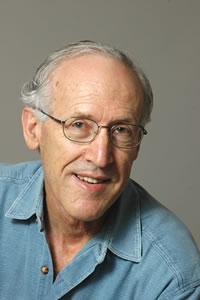 Ehud Greenspan合作论文数University of California, Berkeley31
 Manuele Aufiero合作论文数Milano Multiphysics, 20158 Milan, Italy12
 Yves Robert合作论文数11
 Jeffrey J. Powers合作论文数11
 Tatiana Siaraferas合作论文数9H R Greenberg合作论文数9
 K. Kramer合作论文数Department of Physics;College of William and Mary;Department of Physics|College of William and Mary9
 Chris Keckler合作论文数8
 Per F Peterson合作论文数Department of Nuclear Engineering, University of California, Berkeley;Thermal Hydraulics Research Laboratory, University of California, Berkeley8
 Jeffery F Latkowski合作论文数TerraPower7Jeffrey E. Seifried合作论文数7Ludovic Jantzen合作论文数6
 Dan Kotlyar合作论文数Corresponding author.6Jeffery F. Latkowski合作论文数6
 James DeMuth合作论文数5
 Guanheng Zhang合作论文数Corresponding author.5
 Lee Bernstein合作论文数Department of Nuclear Engineering, University of California Berkeley;Nuclear Data Group, Lawrence Berkeley National Laboratory5YiShu Qiu合作论文数5
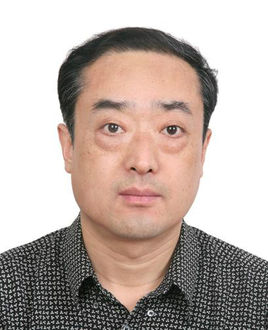 Kan Wang (王侃)合作论文数Department of Engineering Physics, Tsinghua University5
 Susana Reyes合作论文数5
 Inhyung Kim合作论文数4
 Eugene Shwageraus合作论文数Department of Engineering, University of Cambridge4
 Ryan P. Abbott合作论文数4
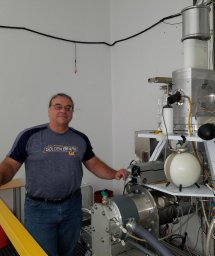 J. C. Batchelder合作论文数Lousiana State University4Francesco Ganda合作论文数3Bailey Painter合作论文数3
 Sandra Bogetic合作论文数3phillip m gorman合作论文数3JA BLINK合作论文数3Dan Shen合作论文数3
 Milos Atz合作论文数3
 Alejandra Jolodosky合作论文数Department of Nuclear Engineering, University of California3Alex Salazar合作论文数3mark sutton合作论文数3Vedant K. Mehta合作论文数Georgia Institute of Technology3L MONTI合作论文数3S. Mattafirri合作论文数3
 Kurt Terrani合作论文数Standard Nuclear3Bassem S. El-Dasher合作论文数3
 Nader Satvat合作论文数3
 Per Peterson合作论文数UC Berkeley Berkeley Engineering3
 Wayne R. Meier合作论文数Lawrence Livermore National Laboratory;Department of Physics and Astronomy and Ames, Iowa State University;Lawrence Livermore National Laboratory3
 Joonhong Ahn合作论文数Department of Nuclear Engineering, University of California, Berkeley3H Greenberg合作论文数2J Blink合作论文数2James Blink合作论文数2W Halsey合作论文数2Ernest L. Hardin合作论文数2James A. Blink合作论文数2




