The concept of redundancy in SAT leads to more expressive and powerful proof search techniques, e.g., able to express various inprocessing techniques, and originates interesting hierarchies of proof systems [Heule et.al'20, Buss-Thapen'19]. Redundancy has also been integrated in MaxSAT [Ihalainen et.al'22, Berg et.al'23, Bonacina et.al'24]. In this paper, we define a structured hierarchy of redundancy proof systems for MaxSAT, with the goal of studying its proof complexity. We obtain MaxSAT variants of proof systems such as SPR, PR, SR, and others, previously defined for SAT. All our rules are polynomially checkable, unlike [Ihalainen et.al'22]. Moreover, they are simpler and weaker than [Berg et.al'23], and possibly amenable to lower bounds. This work also complements the approach of [Bonacina et.al'24]. Their proof systems use different rule sets for soft and hard clauses, while here we propose a system using only hard clauses and blocking variables. This is easier to integrate with current solvers and proof checkers. We discuss the strength of the systems introduced, we show some limitations of them, and we give a short cost-SR proof that any assignment for the weak pigeonhole principle PHP (m)(n) falsifies at least m - n clauses.
Proofs in propositional logic are typically presented as trees of derived formulas or, alternatively, as directed acyclic graphs of derived formulas. This distinction between tree-like vs. dag-like structure is particularly relevant when making quantitative considerations regarding, for example, proof size. Here we analyze a more general type of structural restriction for proofs in rule-based proof systems. In this definition, proofs are directed graphs of derived formulas in which cycles are allowed as long as every formula is derived at least as many times as it is required as a premise. We call such proofs “circular”. We show that, for all sets of standard inference rules with single or multiple conclusions, circular proofs are sound. We start the study of the proof complexity of circular proofs at Circular Resolution, the circular version of Resolution. We immediately see that Circular Resolution is stronger than dag-like Resolution since, as we show, the propositional encoding of the pigeonhole principle has circular Resolution proofs of polynomial size. Furthermore, for derivations of clauses from clauses, we show that Circular Resolution is, surprisingly, equivalent to Sherali-Adams, a proof system for reasoning through polynomial inequalities that has linear programming at its base. As corollaries we get: (1) polynomial-time (LP-based) algorithms that find Circular Resolution proofs of constant width, (2) examples that separate Circular from dag-like Resolution, such as the pigeonhole principle and its variants, and (3) exponentially hard cases for Circular Resolution. Contrary to the case of Circular Resolution, for Frege we show that circular proofs can be converted into tree-like proofs with at most polynomial overhead.
We introduce a novel take on sum-of-squares that is ableto reason with complex numbers and still make use of polynomial inequalities.This proof system might be of independent interest since itallows to represent multivalued domains both with Boolean and Fourierencoding. We show degree and size lower bounds in this system for anatural generalization of knapsack: the vanishing sums of roots of unity.These lower bounds naturally apply to polynomial calculus as-well.
Unrefinable partitions are a subset of partitions into distinct parts which satisfy an additional unrefinability property. More precisely, being an unrefinable partition means that none of the parts can be written as the sum of smaller integers without introducing a repetition. We address the algorithmic aspects of unrefinable partitions, such as testing whether a given partition is unrefinable or not and enumerating all the partitions whose sum is a given integer. We design two algorithms to solve the two mentioned problems and we discuss their complexity.
A partition into distinct parts is refinable if one of its parts a can be replaced by two different integers which do not belong to the partition and whose sum is a, and it is unrefinable otherwise. Clearly, the condition of being unrefinable imposes on the partition a non-trivial limitation on the size of the largest part and on the possible distributions of the parts. We prove a O(n1/2)-upper bound for the largest part in an unrefinable partition of n, and we call maximal those which reach the bound. We show a complete classification of maximal unrefinable partitions for triangular numbers, proving that if n is even there exists only one maximal unrefinable partition of n(n + 1)/2, and that if n is odd the number of such partitions equals the number of partitions of ⌈n/2⌉ into distinct parts. In the second case, an explicit bijection is provided.
We prove that for k ≪ n 1/4 regular resolution requires length n Ω( k ) to establish that an Erdos-Renyi graph with appropriately chosen edge density does not contain a k-clique. This lower bound is optimal up to the multiplicative constant in the exponent, and also implies unconditional n Ω( k ) lower bounds on running time for several state-of-the-art algorithms for finding maximum cliques in graphs.
Semialgebraic proof systems have been studied extensively in proof complexity since the late 1990s to understand the power of Gröbner basis computations, linear and semidefinite programming hierarchies, and other methods. Such proof systems are defined alternately with only the original variables of the problem and with special formal variables for positive and negative literals, but there seems to have been no study how these different definitions affect the power of the proof systems. We show for Nullstellensatz, polynomial calculus, Sherali-Adams, and sums-of-squares that adding formal variables for negative literals makes the proof systems exponentially stronger, with respect to the number of terms in the proofs. These separations are witnessed by CNF formulas that are easy for resolution, which establishes that polynomial calculus, Sherali-Adams, and sums-of-squares cannot efficiently simulate resolution without having access to variables for negative literals.
We give upper bounds for a positional game – in the sense of Beck – based on the Paris–Harrington Theorem for bi-colorings of graphs and uniform hypergraphs of arbitrary dimension. The bounds for the positional game show a striking difference when compared to the bounds for the combinatorial principle itself. Our results confirm a phenomenon already observed by Beck and others: the upper bounds for the game version of a combinatorial principle are drastically smaller than the upper bounds for the principle itself. In the case of Paris–Harrington games the difference is qualitatively very striking. For example, the bounds for the game on 3-uniform hypergraphs are a fixed stack of exponentials while the bounds for the corresponding combinatorial principle are known to be at least Ackermannian. For higher dimensions, the combinatorial Paris–Harrington numbers are known to be cofinal in the Schwichtenberg–Wainer Hierarchy of fast-growing functions up to the ordinal ε0, while we show that the game Paris–Harrington numbers are bounded by fixed stacks of exponentials.
We introduce a new way of composing proofs in rule-based proof systems that generalizes tree-like and dag-like proofs. In the new definition, proofs are directed graphs of derived formulas, in which cycles are allowed as long as every formula is derived at least as many times as it is required as a premise. We call such proofs circular. We show that, for all sets of standard inference rules, circular proofs are sound. We first focus on the circular version of Resolution, and see that it is stronger than Resolution since, as we show, the pigeonhole principle has circular Resolution proofs of polynomial size. Surprisingly, as proof systems for deriving clauses from clauses, Circular Resolution turns out to be equivalent to Sherali-Adams, a proof system for reasoning through polynomial inequalities that has linear programming at its base. As corollaries we get: (1) polynomial-time (LP-based) algorithms that find circular Resolution proofs of constant width, (2) examples that separate circular from dag-like Resolution, such as the pigeonhole principle and its variants, and (3) exponentially hard cases for circular Resolution. Contrary to the case of circular resolution, for Frege we show that circular proofs can be converted into tree-like ones with at most polynomial overhead.
Proof complexity can be a tool for studying the efficiency of algorithms. By proving a single lower bound on the length of certain proofs, we can get running time lower bounds for a wide category of algorithms. We survey the proof complexity literature that adopts this approach relative to two 𝖭𝖯 -problems: k-clique and 3-coloring.
In this note we show two results about k-DNF resolution. First we prove that there are CNF formulas which require exponential length refutations in resolution extended with parities of size k, but have polynomial length refutations in k-DNF resolution. Then we show that small proofs in tree-like k-DNF resolution and narrow proofs in dag-like resolution have the same proving power, over CNFs. This latter result is clearly implicit in Krajíček (1994) [24] but this direct proof is focused on resolution and provides information about refutation width.
We show the close connection between the enumeration of cliques in a k-clique free graph G, the running time of DPLL-style algorithms for k-clique problem, and the length of tree-like resolution refutations for formula Clique(G,k), which claims that G has a k-clique. The length of any such tree-like refutation is within a “fixed parameter tractable” factor from the number of cliques in the graph. We then proceed to drastically simplify the proofs of the lower bounds for the length of tree-like resolution refutations of Clique(G,k) shown in Beyersdorff et at. 2013, Lauria et al. 2017, which now reduce to a simple estimate of said quantity.
Cutting planes proofs for integer programs can naturally be defined both in a syntactic and in a semantic fashion. Filmus et al. (STACS 2016) proved that semantic cutting planes proofs may be exponentially stronger than syntactic ones, even if they use the semantic rule only once. We show that when semantic cutting planes proofs are restricted to have coefficients bounded by a function growing slowly enough, syntactic cutting planes can simulate them efficiently. Furthermore if we strengthen the restriction to a constant bound, then the simulating syntactic proof even has polynomially small coefficients.
We present CNFgen, a generator of combinatorial benchmarks in DIMACS and OPB format. The proof complexity literature is a rich source not only of hard instances but also of instances that are theoretically easy but “extremal” in different ways, and therefore of potential interest in the context of SAT solving. Since most of these formulas appear not to be very well known in the SAT community, however, we propose CNFgen as a resource to make them readily available for solver development and evaluation. Many formulas studied in proof complexity are based on graphs, and CNFgen is also able to generate, parse and do basic manipulation of such objects. Furthermore, it includes a library cnfformula giving access to the functionality of CNFgen to Python programs.
We say that a graph with n vertices is c -Ramsey if it does not contain either a clique or an independent set of size c log n . We define a CNF formula which expresses this property for a graph G . We show a superpolynomial lower bound on the length of resolution proofs that G is c -Ramsey, for every graph G . Our proof makes use of the fact that every c -Ramsey graph must contain a large subgraph with some properties typical for random graphs.
We exhibit families of $4$-CNF formulas over $n$ variables that have sums-of-squares (SOS) proofs of unsatisfiability of degree (a.k.a. rank) $d$ but require SOS proofs of size $n^{\Omega(d)}$ for values of $d = d(n)$ from constant all the way up to $n^{\delta}$ for some universal constant$\delta$. This shows that the $n^{O(d)}$ running time obtained by using the Lasserre semidefinite programming relaxations to find degree-$d$ SOS proofs is optimal up to constant factors in the exponent. We establish this result by combining $\mathsf{NP}$-reductions expressible as low-degree SOS derivations with the idea of relativizing CNF formulas in [Kraj\'i\v{c}ek '04] and [Dantchev and Riis'03], and then applying a restriction argument as in [Atserias, M\"uller, and Oliva '13] and [Atserias, Lauria, and Nordstr\"om '14]. This yields a generic method of amplifying SOS degree lower bounds to size lower bounds, and also generalizes the approach in [ALN14] to obtain size lower bounds for the proof systems resolution, polynomial calculus, and Sherali-Adams from lower bounds on width, degree, and rank, respectively.
 Nicola Galesi合作论文数Dipartimento di Ingegneria informatica, automatica e gestionale, Università degli Studi di Roma "La Sapienza"12
 Jakob Nordström合作论文数Department of Computer Science, University of Copenhagen10
 Marc Vinyals合作论文数KTH Royal Institute of Technology6
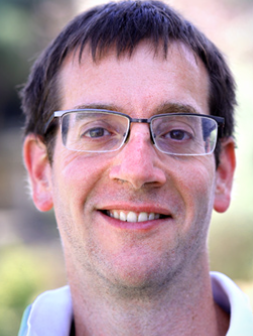 Yuval Filmus合作论文数Math Department, The Henry and Marilyn Taub Faculty of Computer Science, Technion - Israel Institute of Technology;Computer Science Department, The Henry and Marilyn Taub Faculty of Computer Science, Technion - Israel Institute of Technology6
 Olaf Beyersdorff合作论文数Institute of Computer Science, Friedrich Schiller University Jena;Faculty of Mathematics and Computer Science, Friedrich Schiller University Jena5Angelo Monti合作论文数Dipartimento di Informatica, Università degli Studi di Roma “La Sapienza”5
 Riccardo Silvestri合作论文数5
 Ilario Bonacina合作论文数Department of Ciencies de la Computacio, Universitat Politecnica de Catalunya5Miriam Di Ianni合作论文数Universit?? degli Studi di Roma "Tor Vergata";Dipartimento di Matematica5Gianluca Rossi合作论文数4
 Albert Atserias合作论文数Universitat Politecnica de Catalunya, Barcelona, Spain4
 Andrea Eduardo Filippo Clementi合作论文数Dipartimento di Scienze dell'Informazione, Universita' degli Studi di Roma "La Sapienza"4Neil Thapen合作论文数Institute of Mathematics, Czech Academy of Sciences4Jan Elffers合作论文数3
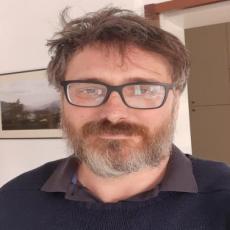 Lorenzo Carlucci合作论文数Department of Mathematics, University of Roma La Sapienza3Sam Buss合作论文数2Lorenzo Campioni合作论文数2
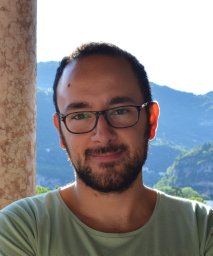 Civino, R.合作论文数2Maria Luisa Bonet合作论文数Lenguajes y Sistemas Informaticos, Universidad Politecnica de Cataluna, Barcelona, Spain2
 Riccardo Aragona合作论文数Dipartimento di Matematica2Susanna F. De Rezende合作论文数Lund University2
 Alexander Razborov合作论文数Department of Mathematics, University of Chicago2Mladen Miksa合作论文数2
 Noga Ron-Zewi合作论文数Department of Computer Science, University of Haifa2
 Dmitry Sokolov合作论文数École Polytechnique Fédérale de Lausanne1
 Jan Johannsen合作论文数Institut für Informatik, Ludwig-Maximilians-Universität München1
 Vojtěch Rödl合作论文数Department of Mathematics and Computer Science, Emory University1
 Pavel Pudlák合作论文数Department of Mathematical Logic, Algebra and Theoretical Computer Science1
 Tiziana Calamoneri合作论文数Computer Science Department;University of Rome "La Sapienza"1Pavel Hrubes合作论文数1María Luisa Bonet合作论文数Universidad Politecnica de Cataluna (UPC)
Lenguajes y Sistemas Informaticos (LSI)1Siu Man Chan合作论文数1Andrea E.F. Clementi合作论文数Universita' degli Studi di Roma "La Sapienza";Dipartimento di Scienze dell'Informazione1
Tiziana Calamoneri合作论文数Computer Science Department;University of Rome "La Sapienza"1Pavel Hrubes合作论文数1María Luisa Bonet合作论文数Universidad Politecnica de Cataluna (UPC)
Lenguajes y Sistemas Informaticos (LSI)1Siu Man Chan合作论文数1Andrea E.F. Clementi合作论文数Universita' degli Studi di Roma "La Sapienza";Dipartimento di Scienze dell'Informazione1




