Amputated salamander limbs or fish fins precisely regenerate to their pre-injury size, providing a paradigm for positional memory. Although this phenomenon has been appreciated for centuries, how position-dependent cues control tissue growth remains unresolved. Here we quantify extracellular signal-regulated kinase (Erk) activity in whole populations of osteoblasts during zebrafish fin regeneration. We show that Erk activity scales with the amount of amputated tissue, predicts the likelihood of osteoblast cycling and predicts the size of regenerated skeletal structures. We find that osteoblast Erk activity depends on fibroblast growth factor receptor signalling and organizes into millimetre-long gradients spanning from the distal tip to the amputation site. Mathematical modelling suggests gradients are established by acute, distally restricted deposition of ligand, whose activity is long-lived and transported by tissue growth. This mechanism is supported by the observed scaling of the expression of essential epidermal ligand Fgf20a with extents of amputation. Our work provides evidence that the localized, scaled expression of pro-regenerative ligands instructs long-range signalling and cycling to control size in regenerating appendages. Zebrafish can regenerate amputated fins back to their original size. It is now shown that gradients in extracellular signal-regulated kinase activity act as rulers during fin bone regeneration.
Cells integrate signals and make decisions about their future state in short amounts of time. A lot of theoretical effort has gone into asking how to best design gene regulatory circuits that fulfill a given function, yet little is known about the constraints that performing that function in a small amount of time imposes on circuit architectures. Using an optimization framework, we explore the properties of a class of promoter architectures that distinguish small differences in transcription factor concentrations under time constraints. We show that the full temporal trajectory of gene activity allows for faster decisions than its integrated activity represented by the total number of transcribed mRNA. The topology of promoter architectures that allow for rapidly distinguishing low transcription factor concentrations result in a low, shallow, and non cooperative response, while at high concentrations, the response is high and cooperative. In the presence of non-cognate ligands, networks with fast and accurate decision times need not be optimally selective, especially if discrimination is difficult. While optimal networks are generically out of equilibrium, the energy associated with that irreversibility is only modest, and negligible at small concentrations. Instead, our results highlight the crucial role of rate-limiting steps imposed by biophysical constraints.
During development, cells must interpret extracellular signals with speed and accuracy. While morphogen gradients pattern tissues, how cells respond to dynamic morphogens remains unclear. Here, we investigate how dorsal patterning in the Drosophila embryo is specified by a rapidly evolving BMP gradient. Using a live reporter of BMP pathway activity and nascent transcription reporters, we find that gene expression is best predicted by time integration of BMP signaling, rather than instantaneous levels. We show that the transcription factor Zen lowers the signaling threshold required for activation, enabling integration to drive rapid transcriptional responses even at low BMP levels. We tested our integration model using mutants that alter BMP signaling dynamics. Within the normal expression domain, integration was still predictive of gene expression. However, higher levels of integrated signaling were needed in more lateral regions of the embryo, suggesting additional spatial patterning regulation. Together, these results suggest that cells interpret dynamic morphogen signals through the combined action of temporal integration and spatial competence, providing a framework for robust pattern formation on fast developmental timescales.
During embryogenesis, the earliest cell fate decision is often linked to nuclear positioning, whose control arises from the integration of the cell cycle oscillator and associated cytoskeletal dynamics. Yet, the mechanisms that ensure that the correct number of nuclei move to the appropriate place remain poorly understood. Here, using light sheet microscopy, we show that in Drosophila embryos spindle orientation controls which nuclei migrate towards the cortex and which remains inside the embryo, thereby determining nuclear fate and the number of cells undergoing development. Combining computational methods inspired by integral geometry and manipulations of cell cycle genes, we show that spindle orientation is controlled by topological spindle-spindle interactions and not by internuclear distance. Using arguments describing the behavior of space-filling systems, we develop a theory for topological dependency in microtubule structures. Our work shows how topological interplay of microtubule mechanics can ensure robust control of density and cell fate determination.
Regeneration of an amputated salamander limb or fish fin restores pre-injury size and structure, illustrating the phenomenon of positional memory. Although appreciated for centuries, the identity of position-dependent cues and how they control tissue growth are not resolved. Here, we quantify Erk signaling events in whole populations of osteoblasts during zebrafish fin regeneration. We find that osteoblast Erk activity is dependent on Fgf receptor signaling and organized into millimeter-long gradients that extend from the distal tip to the amputation site. Erk activity scales with the amount of tissue amputated, predicts the likelihood of osteoblast cycling, and predicts the size of regenerated skeletal structures. Mathematical modeling suggests gradients are established by the transient deposition of long-lived ligands that are transported by tissue growth. This concept is supported by the observed scaling of expression of the essential epidermal ligand fgf20a with extents of amputation. Our work provides evidence that localized, scaled expression of pro-regenerative ligands instructs long-range signaling and cycling to control skeletal size in regenerating appendages.
Animals actively sense their environment to extract features of interest to guide behaviors. For mammals, odors are prominent environmental features which are sampled by active modulation of sniffing and orofacial orientation. We sought to understand the strategies that mice use to navigate surface-bound odor cues. We presented mice with dynamic, non-repeating odor trails using a paper treadmill, and observed their behaviors as they collected rewards offered randomly along the trail. By combining high-speed videography over long distances with quantitative behavioral analyses, we find that mice rapidly learn to track odor trails persistently and precisely. Mice with a single nostril blocked can track odor trails, but with a lateral bias and lower precision than control animals. Tracking is severely impaired in animals with both nostrils intact but with interhemispheric communication disrupted by anterior commissure transection. Respiration measurements revealed that a sniff close to the trail triggers a rapid turn towards the trail, a reaction that is lost in commissure-cut animals. Importantly, trail tracking is not simply reactive but involves adaptation to and retention of a short-term memory of the trail geometry and statistics. Our results, recapitulated by a Bayesian inference model, indicate that mice combine immediate sensory information with an internal model of the odor environment to follow odor trails efficiently.
Animals rely on their sense of smell to survive, but important olfactory cues are mixed with confounding background odors that fluctuate due to atmospheric turbulence. It is unclear how the olfactory system habituates to such stochastic backgrounds to detect behaviorally important odors. Here, we explicitly consider the high-dimensional nature of odor coding, the natural statistics of odor fluctuations and the architecture of the early olfactory pathway. We show that their combination favors a manifold learning mechanism for olfactory habituation over alternatives based on predictive filtering. Manifold learning is implemented in our model by a biologically plausible network of inhibitory interneurons in the early olfactory pathway. We demonstrate that plasticity rules based on IBCM or online PCA are effective at implementing this mechanism in turbulent conditions and outperform previous models relying on mean background subtraction. Interneurons with an IBCM plasticity rule acquire selectivity to independently varying odors. This manifold learning mechanism offers a path towards distinguishing plasticity rules in experiments and could be leveraged by other biological circuits facing fluctuating environments.
Spatial non-homogeneities can synchronize clusters of spatially-extended oscillators in different frequency plateaus. Motivated by physiological rhythms, we fully characterize the phase diagram of a Ginzburg-Landau (GL) model with a gradient of frequencies. For large gradients and diffusion, the rest state is stable, and the linear spectrum around it maps onto the non-Hermitian Bloch-Torrey equation. When complex pairs of eigenvalues turn unstable, precursors of plateaus grow, separated by defects where the GL amplitude vanishes. Nonlinear effects either saturate the amplitude of plateaus or lead to a phase-locked state, with saddle-node bifurcations separating the two regimes. In the region of plateaus, we trace the formation of defects to a non-linear renormalization of the diffusivity, and determine the scaling of their number and length vs dynamical parameters.
During embryogenesis, the first cell fate decision - whether the cell participates in development of the embryo or not - is often linked to the positioning of the nucleus. The cell cycle oscillator and associated cytoskeletal dynamics contribute to the control of nuclear positioning. Yet, the mechanisms that ensure that the correct number of nuclei move to their appropriate place remain poorly understood. Here, we show that the orientation of the mitotic spindle controls the first fate decision in Drosophila embryos using light sheet microscopy experiments. Combining computational methods inspired by integral geometry, manipulation of cell cycle genes and investigation of the relationship between geometry and topology, we show that spindle orientation is controlled by topological interactions and not by internuclear distance. Leveraging physics of space-filling systems, we develop a theory for topological dependency in microtubule structures. Our work shows how topological interplay of microtubule mechanics can ensure robust control of nuclear density and determine cell fate.
In turbulent flows, tracking the source of a passive scalar cue requires exploiting the limited information that can be gleaned from rare, stochastic encounters with the cue. When crafting a search policy, the most challenging and important decision is what to do in the absence of an encounter. In this work, we perform high-fidelity direct numerical simulations of a turbulent flow with a stationary source of tracer particles, and obtain quasi-optimal policies (in the sense of minimal average search time) with respect to the empirical encounter statistics. We study the trajectories under such policies and compare the results to those of the infotaxis heuristic. In the presence of a strong mean wind, the optimal motion in the absence of an encounter is zigzagging (akin to the well-known insect behavior "casting") followed by a return to the starting location. The zigzag motion generates characteristic t^1/2 scaling of the rms displacement envelope. By passing to the limit where the probability of detection vanishes, we connect these results to the classical linear search problem and derive an estimate of the tail of the arrival time pdf as a stretched exponential, which agrees with Monte Carlo results. We also discuss what happens as the wind speed decreases.
The problem of tracking the source of a passive scalar in a turbulent flow is relevant to flying insect behavior and several other applications. Extensive previous work has shown that certain Bayesian strategies, such as "infotaxis," can be very effective for this difficult "olfactory search" problem. More recently, a quasioptimal Bayesian strategy was computed under the assumption that encounters with the scalar are independent. However, the Bayesian approach has not been adequately studied in realistic flows which exhibit spatiotemporal correlations. In this work, we perform direct numerical simulations (DNSs) of an incompressible flow at Re-lambda similar or equal to 150, while tracking Lagrangian particles that are emitted by a point source and imposing a uniform mean flow with several magnitudes (including zero). We extract the spatially dependent statistics of encounters with the particles, which we use to build Bayesian policies, including generalized ("space-aware") infotactic heuristics and quasioptimal policies. We then assess the relative performance of these policies when they are used to search using scalar cue data from the DNSs, and in particular we study how this performance depends on correlations between encounters. Among other results, we find that quasioptimal strategies continue to outperform heuristics in the presence of strong mean flow but fail to do so in the absence of a mean flow. We also explore how to choose optimal search parameters, including the frequency and threshold concentration of observation.
Thierry Emonet and Massimo Vergassola discuss what research shows about how animals perform the feat of navigating by smell.
Animals chain movements into long-lived motor strategies, exhibiting variability across scales that reflects the interplay between internal states and environmental cues. To reveal structure in such variability, we build Markov models of movement sequences that bridges across time scales and enables a quantitative comparison of behavioral phenotypes among individuals. Applied to larval zebrafish responding to diverse sensory cues, we uncover a hierarchy of long-lived motor strategies, dominated by changes in orientation distinguishing cruising versus wandering strategies. Environmental cues induce preferences along these modes at the population level: while fish cruise in the light, they wander in response to aversive stimuli, or in search for appetitive prey. As our method encodes the behavioral dynamics of each individual fish in the transitions among coarse-grained motor strategies, we use it to uncover a hierarchical structure in the phenotypic variability that reflects exploration-exploitation trade-offs. Across a wide range of sensory cues, a major source of variation among fish is driven by prior and/or immediate exposure to prey that induces exploitation phenotypes. A large degree of variability that is not explained by environmental cues unravels motivational states that override the sensory context to induce contrasting exploration-exploitation phenotypes. Altogether, by extracting the timescales of motor strategies deployed during navigation, our approach exposes structure among individuals and reveals internal states tuned by prior experience.
Animal behavior is shaped by a myriad of mechanisms acting on a wide range of scales. This immense variability hampers quantitative reasoning and renders the identification of universal principles elusive. Through data analysis and theory, we here show that slow non-ergodic drives generally give rise to heavy-tailed statistics in behaving animals. We leverage high-resolution recordings of C. elegans locomotion to extract a self-consistent reduced order model for an inferred reaction coordinate, bridging from sub-second chaotic dynamics to long-lived stochastic transitions among metastable states. The slow mode dynamics exhibits heavy-tailed first passage time distributions and correlation functions, and we show that such heavy tails can be explained by dynamics on a time-dependent potential landscape. Inspired by these results, we introduce a generic model in which we separate faster mixing modes that evolve on a quasi-stationary potential, from slower non-ergodic modes that drive the potential landscape, and reflect slowly varying internal states. We show that, even for simple potential landscapes, heavy tails emerge when barrier heights fluctuate slowly and strongly enough. In particular, the distribution of first passage times and the correlation function can asymptote to a power law, with related exponents that depend on the strength and nature of the fluctuations. We support our theoretical findings through direct numerical simulations.
Brain arterioles are active, multicellular complexes whose diameters oscillate at ∼ 0.1 Hz. We assess the physiological impact and spatiotemporal dynamics of vaso-oscillations in the awake mouse. First, vaso-oscillations in penetrating arterioles, which source blood from pial arterioles to the capillary bed, profoundly impact perfusion throughout neocortex. The modulation in flux during resting-state activity exceeds that of stimulus-induced activity. Second, the change in perfusion through arterioles relative to the change in their diameter is weak. This implies that the capillary bed dominates the hydrodynamic resistance of brain vasculature. Lastly, the phase of vaso-oscillations evolves slowly along arterioles, with a wavelength that exceeds the span of the cortical mantle and sufficient variability to establish functional cortical areas as parcels of uniform phase. The phase-gradient supports traveling waves in either direction along both pial and penetrating arterioles. This implies that waves along penetrating arterioles can mix, but not directionally transport, interstitial fluids.
Cytoplasmic flows are widely emerging as key functional players in development. In early Drosophila embryos, flows drive the spreading of nuclei across the embryo. Here, we combine hydrodynamic modeling with quantitative imaging to develop a two-fluid model that features an active actomyosin gel and a passive viscous cytosol. Gel contractility is controlled by the cell cycle oscillator, the two fluids being coupled by friction. In addition to recapitulating experimental flow patterns, our model explains observations that remained elusive and makes a series of predictions. First, the model captures the vorticity of cytosolic flows, which highlights deviations from Stokes' flow that were observed experimentally but remained unexplained. Second, the model reveals strong differences in the gel and cytosol motion. In particular, a micron-sized boundary layer is predicted close to the cortex, where the gel slides tangentially while the cytosolic flow cannot slip. Third, the model unveils a mechanism that stabilizes the spreading of nuclei with respect to perturbations of their initial positions. This self-correcting mechanism is argued to be functionally important for proper nuclear spreading. Fourth, we use our model to analyze the effects of flows on the transport of the morphogen Bicoid and the establishment of its gradients. Finally, the model predicts that the flow strength should be reduced if the shape of the domain is more round, which is experimentally confirmed in Drosophila mutants. Thus, our two-fluid model explains flows and nuclear positioning in early Drosophila, while making predictions that suggest novel future experiments.
In many practical scenarios, a flying insect must search for the source of an emitted cue which is advected by the atmospheric wind. On the macroscopic scales of interest, turbulence tends to mix the cue into patches of relatively high concentration over a background of very low concentration, so that the insect will detect the cue only intermittently and cannot rely on chemotactic strategies which simply climb the concentration gradient. In this work we cast this search problem in the language of a partially observable Markov decision process and use the Perseus algorithm to compute strategies that are near-optimal with respect to the arrival time. We test the computed strategies on a large two-dimensional grid, present the resulting trajectories and arrival time statistics, and compare these to the corresponding results for several heuristic strategies, including (space-aware) infotaxis, Thompson sampling, and QMDP. We find that the near-optimal policy found by our implementation of Perseus outperforms all heuristics we test by several measures. We use the near-optimal policy to study how the search difficulty depends on the starting location. We also discuss the choice of initial belief and the robustness of the policies to changes in the environment. Finally, we present a detailed and pedagogical discussion about the implementation of the Perseus algorithm, including the benefits-and pitfalls-of employing a reward-shaping function.
 A. Celani合作论文数18
 Andrea Mazzino合作论文数Dipartimento di Ingegneria Civile, Chimica e Ambientale, Università degli Studi di Genova14R. Benzi合作论文数13
 Stefano Di Talia合作论文数Department of Cell Biology, Duke University School of Medicine13
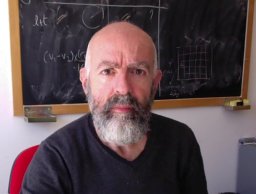 Antonio Celani合作论文数INLN CNRS13
 Uriel Frisch合作论文数Observatoire De La Côte D'Azur, CNRS13
 Gautam Reddy合作论文数Department of Physics, Princeton University;Physics & Informatics Labs, NTT Research;Center for Brain Science, Harvard University12
 Luca Biferale合作论文数Department of Physics, University of Roma, Tor Vergata10
 Emmanuel Villermaux合作论文数Institut Universitaire de France;Aix-Marseille Université9
 Boris Shraiman合作论文数Kavli Institute for Theoretical Physics, University of California, Santa Barbara;Department of Physics, University of California, Santa Barbara8
 Melbinger Anna合作论文数6
 Guido Boffetta合作论文数Dipartimento di Fisica, Università degli studi di Torino6
 Sauro Succi合作论文数Center for Life Nano Science, Istituto Italiano di Tecnologia;School of Engineering and Applied Sciences, Harvard University6Suckjoon Jun合作论文数5
 Puliafito Alberto合作论文数Laboratory of Cell Migration, Candiolo Cancer Institute - FPO5Deneke Victoria合作论文数5
 Alain Noullez合作论文数Observatoire de Nice5
 Sattar Taheri-Araghi合作论文数5Jerome Wong-Ng合作论文数CNRS URA 2171, Institut Pasteur5
 Igor V. Kolokolov合作论文数Landau Institute for Theoretical Physics, Russian Academy of Sciences;HSE University5
 Petra Levin合作论文数Department of Biology, Washington University in St. Louis5Serena Bradde合作论文数School for Advanced Studies, International5S Gama合作论文数4
 John Sauls合作论文数4J-B. Masson合作论文数4Luke Hayden合作论文数4
 Norbert S Hill合作论文数Dept Mol & Cell Biol, Univ Calif Berkeley4
 David Kleinfeld合作论文数Department of Neurobiology, School of Biological Sciences, University of California, San Diego4
 Johan Paulsson合作论文数Johan Paulsson Lab, Department of Systems Biology, Harvard Medical School4
 Antoine Danchin (唐善安東)合作论文数School of Biomedical Sciences, Li Ka Shing Faculty of Medicine, Hong Kong University;Meletios Therapeutics;Kodikos Labs;Beijing Genome Institute4
 Venkatesh Murthy合作论文数Department of Molecular and Cellular Biology, Harvard University;Center for Brain Science, Harvard University4Guillaume Voisinne合作论文数CNRS URA 2171, Institut Pasteur4
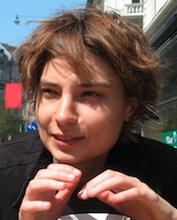 Aleksandra Walczak合作论文数Laboratoire de Physique, Ecole Normale Supérieure4
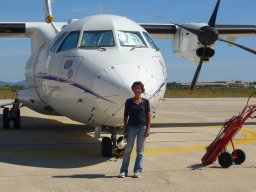 Alessandra S. Lanotte合作论文数Sezione di Lecce, CNR-ISAC and INFN4
 Miriam B. Goodman合作论文数The Goodman Laboratory, Department of Molecular and Cellular Physiology, Stanford University;Wu Tsai Neurosciences Institute, Stanford University4A. Sanzeni合作论文数3M. Cencini合作论文数3
 Pascale Cossart合作论文数Institut Pasteur;Académie des Sciences3
 Andrea Crisanti合作论文数3Philipp Mächler合作论文数Dept Biomed Engn, Boston Univ3
 Alessandro Sanzeni合作论文数NIMH, Intramural Program, NIH, Bethesda, MD 20892 USA3
 Mudassar Iqbal合作论文数Division of Informatics, Imaging and Data Sciences, School of Health Sciences, Faculty of Biology, Medicine and Health, The University of Manchester3
 Jean-Baptiste Masson合作论文数Physics of Biological Systems, Institut Pasteur;Unité Mixte de Recherche 3525, Centre National de la Recherche Scientifique;Centre National de la Recherche Scientifique, Institut Pasteur3
 Broggini Thomas合作论文数Department of Neurosurgery, Universitätsmedizin Charite3
 De Simone Alessandro合作论文数School of Life Sciences, Swiss Federal Institute of Technology (EPFL) Lausanne3
 Wyart Claire合作论文数Institut du Cerveau et de la Moelle Épinière, Hôpital de la Pitié-Salpêtrière Paris;UMR 1127 Paris, Institut National de la Santé et de la Recherche Médicale;UMR 7225 Paris, Centre National de la Recherche Scientifique;UPMC Univ.;Institut du Cerveau et de la Moelle Épinière, UPMC Univ.3Katta Samata合作论文数3
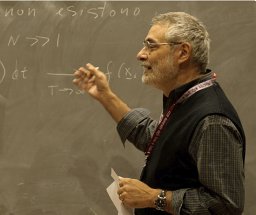 Angelo Vulpiani合作论文数Dipartimento di Fisica;Universita di Roma " La Sapienza;Dipartimento di Fisica, Universita di Roma " La Sapienza3
 Satya Majumdar合作论文数Laboratoire de Physique Theorique et Modeles Statistiques, Université Paris-Saclay;Centre National de la Recherche Scientifique3




