Current commercial tracking systems do not process fast enough to perform in real-time. State-of-the-art (SOTA) methods use entire scenes to locate objects frame by frame and are commonly slowed by large convolutions. Alternatively, attention mechanisms track more efficiently by mimicking human optical cognitive interaction to only process small portions of an image. Thus, we took an attention approach to create a single model that learns to compare features along a sequence using dilated convolutions. Using popular data sets like Modified National Institute of Standards and Technology (MNIST) handwritten digits, we tested our work against previous attention based networks like Deep Recurrent Attentive Writer (DRAW) and Recurrent Attention Tracking Model (RATM) to compare tracking abilities. Here we present a novel Conditional Dilated Convolution Attention Network that builds on previous attention principles to achieve generic, efficient, and recurrent-less object tracking.
Transfer Subspace Learning (TSL) is beginning to gain popularity for its ability to leverage classification knowledge of one database to classify objects in a related but different database. Recently, these techniques have been informally combined with Manifold Learning and have demonstrated improved cross-dataset class recognition. One such technique combines Diffusion Maps as the Manifold Learning technique and Transfer Fisher’s Linear Discriminative Analysis (TrFLDA) as the Transfer Subspace Learning (TSL) approach. To date these approaches, while successful, have only been applied to one database containing electro-optical (EO) vehicle images. Furthermore, the technique assumed all the data, source and target domain, could be processed at the same time. In this paper, we introduce a novel extension to these techniques, referred to here as Manifold Transfer Subspace Learning (MTSL), which utilizes an out-of-sample extension (OSE) method and allows for real-time data infusion without reconstruction of the diffusion map model. This dramatically lowers computational cost of incorporating new data. As an illustration of this technique, we apply MTSL to other large, high-dimensional datasets including handwritten digits and lung and breast cancer microarray gene expressions. We achieve classification rates of 90% for cross-domain handwritten digits and rates of 87% on cross-domain breast cancer recognition. For the cancer dataset, this is significant because we are able to achieve comparable results to traditional classification methods while only utilizing one-labeled sample per class and transferring the classification from lung cancer to breast cancer. Keywords—transfer learning; transfer subspace learning; electrooptical imaging; manifold learning; health informatics
This article describes how transfer subspace learning has recently gained popularity for its ability to perform cross-dataset and cross-domain object recognition. The ability to leverage existing data without the need for additional data collections is attractive for monitoring and surveillance technology, specifically for aided target recognition applications. Transfer subspace learning enables the incorporation of sparse and dynamically collected data into existing systems that utilize large databases. Manifold learning has also gained popularity for its success at dimensionality reduction. In this contribution, Manifold learning and transfer subspace learning are combined to create a new system capable of achieving high target recognition rates. The manifold learning technique used in this contribution is diffusion maps, a nonlinear dimensionality reduction technique based on a heat diffusion analogy. The transfer subspace learning technique used is Transfer Fisher's Linear Discriminative Analysis. The new system, manifold transfer subspace learning, sequentially integrates manifold learning and transfer subspace learning. In this article, the ability of the new techniques to achieve high target recognition rates for cross-dataset and cross-domain applications is illustrated using a variety of diverse datasets.
Transfer Subspace Learning has gained recent popularity in the literature for its ability to perform cross-dataset and cross-domain object recognition-enablers for data fusion. The ability to leverage existing data without the need for additional data collections is attractive for Automatic Target Recognition applications. For Automatic Target Recognition (or object assessment) applications, Transfer Subspace Learning is a game changer for dynamic systems, as it enables the incorporation of sparse and dynamically collected data into existing systems that utilize large, dense databases. A baseline Transfer Subspace Learning technique is the Transfer Fisher's Linear Discriminative Analysis, an approach based on Bregman divergence-based regularization. This paper modifies the implementation of the Transfer Fisher's Linear Discriminative Analysis technique by combining it with Manifold Learning and adjusting it to allow for a more systematic search of tuning parameters. Specifically, the Diffusion Map approach is utilized, a Manifold Learning approach based on heat diffusion. The modified technique is then utilized for cross-data and cross-domain electro-optical vehicle recognition.
Novel techniques are necessary in order to improve the current state-of-the-art for Aided Target Recognition (AiTR) especially for persistent intelligence, surveillance, and reconnaissance (ISR). A fundamental assumption that current AiTR systems make is that operating conditions remain semi-consistent between the training samples and the testing samples. Today's electro-optical AiTR systems are still not robust to common occurrences such as changes in lighting conditions. In this work, we explore the effect of systemic variation in lighting conditions on vehicle recognition performance. In addition, we explore the use of low-dimensional nonlinear representations of high-dimensional data derived from electro-optical synthetic vehicle images using Manifold Learning specifically Diffusion Maps on recognition. Diffusion maps have been shown to be a valuable tool for extraction of the inherent underlying structure in high-dimensional data
The ability to classify a vehicle is of extreme importance for both civilian and non-civilian applications. For non-civilian applications the state-of-the-art leaves much to be desired, as hierarchal and real-time classification have yet to be truly investigated. This paper provides a survey of the current state-of-the-art in vehicle classification and provides recommendations for future research areas to advance the current capabilities.
This paper provides an overview of deep learning and introduces the several subfields of deep learning including a specific tutorial of convolutional neural networks. Traditional methods for learning image features are compared to deep learning techniques. In addition, we present our preliminary classification results, our basic implementation of a convolutional restricted Boltzmann machine on the Mixed National Institute of Standards and Technology database (MNIST), and we explain how to use deep learning networks to assist in our development of a robust gender classification system.
This paper describes the process used to collect the Seasonal Weather And Gender (SWAG) dataset; an electro-optical dataset of human subjects that can be used to develop advanced gender classification algorithms. Several novel features characterize this ongoing effort (1) the human subjects self-label their gender by performing a specific action during the data collection and (2) the data collection will span months and even years resulting in a dataset containing realistic levels and types of clothing corresponding to the various seasons and weather conditions. It is envisioned that this type of data will support the development and evaluation of more robust gender classification systems that are capable of accurate gender recognition under extended operating conditions.
The urinary odors are commonly perceived as unpleasant. While numerous studies have identified the volatile organic compounds (VOCs) released from urine, the odorants responsible for the urine odor are not well characterized. Furthermore, anecdotal reports suggest that the odor of aged urine is different from that of fresh urine. However, no study has yet to investigate the specific VOCs released from aged urine. In this study, we analyzed and compared the VOCs released from fresh and aged urine samples, investigating the changes in the urinary VOCs as urine aged. We found an overall decrease in concentration of many urinary VOCs, and concluded this was due to the urine evaporating as it aged. On the contrary, some highly water-soluble compounds such as short and branched-chain organic acids and trimethylamine, increased. Their increased release is most likely due to the loss of water and the subsequent release of water-soluble VOCs as urine ages. We suggest that these VOCs may contribute to the odor of the aged urine.
Two different structural classes of chemical signals in mouse urine, i.e., volatile organic compounds (VOCs) and the major urinary proteins (MUPs), interact closely because MUPs sequester VOCs. Although qualitative and/or quantitative differences in each chemical class have been reported, previous studies have examined only one of the classes at a time. No study has analyzed these two sets simultaneously, and consequently binding interactions between volatile ligands and proteins in urines of different strains have not been compared. Here, we compared the release of VOCs in male urines of three different inbred strains (C57BL/6J, BALB/b and AKR) before and after denaturation of urinary proteins, mainly MUPs. Both MUP and VOC profiles were distinctive in the intact urine of each strain. Upon denaturation, each of the VOC profiles changed due to the release of ligands previously bound to MUPs. The results indicate that large amounts of numerous ligands are bound to MUPs and that these ligands represent a variety of different structural classes of VOCs. Furthermore, the degree of release in each ligand was different in each strain, indicating that different ligands are differentially bound to proteins in the urines of different strains. Therefore, these data suggest that binding interactions in ligands and MUPs differ between strains, adding yet another layer of complexity to chemical communication in mice.
In this paper we extend a previous exploration of histogram features extracted from 3D point cloud images of human subjects for gender discrimination. Feature extraction used a collection of concentric cylinders to define volumes for counting 3D points. The histogram features are characterized by a rotational axis and a selected set of volumes derived from the concentric cylinders. The point cloud images are drawn from the CAESAR anthropometric database provided by the Air Force Research Laboratory (AFRL) Human Effectiveness Directorate and SAE International. This database contains approximately 4400 high resolution LIDAR whole body scans of carefully posed human subjects. Success from our previous investigation was based on extracting features from full body coverage which required integration of multiple camera images. With the full body coverage, the central vertical body axis and orientation are readily obtainable; however, this is not the case with a one camera view providing less than one half body coverage. Assuming that the subjects are upright, we need to determine or estimate the position of the vertical axis and the orientation of the body about this axis relative to the camera. In past experiments the vertical axis was located through the center of mass of torso points projected on the ground plane and the body orientation derived using principle component analysis.In a natural extension of our previous work to partial body views, the absence of rotational invariance about the cylindrical axis greatly increases the difficulty for gender classification. Even the problem of estimating the axis is no longer simple. We describe some simple feasibility experiments that use partial image histograms. Here, the cylindrical axis is assumed to be known. We also discuss experiments with full body images that explore the sensitivity of classification accuracy relative to displacements of the cylindrical axis. Our initial results provide the basis for further investigation of more complex partial body viewing problems and new methods for estimating the two position coordinates for the axis location and the unknown body orientation angle.
A growing body of discoveries in molecular signatures has revealed that volatile organic compounds (VOCs), the small molecules associated with an individual's odor and breath, can be monitored to reveal the identity and presence of a unique individual, as well their overall physiological status. Given the analysis requirements for differential VOC profiling via gas chromatography/mass spectrometry, our group has developed a novel informatics platform, Metabolite Differentiation and Discovery Lab (MeDDL). In its current version, MeDDL is a comprehensive tool for time-series spectral registration and alignment, visualization, comparative analysis, and machine learning to facilitate the efficient analysis of multiple, large-scale biomarker discovery studies. The MeDDL toolset can therefore identify a large differential subset of registered peaks, where their corresponding intensities can be used as features for classification. This initial screening of peaks yields results sets that are typically too large for incorporation into a portable, electronic nose based system in addition to including VOCs that are not amenable to classification; consequently, it is also important to identify an optimal subset of these peaks to increase classification accuracy and to decrease the cost of the final system. MeDDL's learning tools include a classifier similar to a K-nearest neighbor classifier used in conjunction with a genetic algorithm (GA) that simultaneously optimizes the classifier and subset of features. The GA uses ROC curves to produce classifiers having maximal area under their ROC curve. Experimental results on over a dozen recognition problems show many examples of classifiers and feature sets that produce perfect ROC curves.
In this paper we describe preliminary efforts to extend previous gender classification experiments using feature histograms extracted from 3D point clouds of human subjects. The previous experiments used point clouds drawn from the Civilian American and European Surface Anthropometry Project (CAESAR anthropometric database provided by the Air Force Research Laboratory (AFRL) Human Effectiveness Directorate and SAE International). This database contains approximately 4,400 high-resolution LIDAR whole body scans of carefully posed human subjects. Features are extracted from each point cloud by embedding the cloud in series of cylindrical shapes and computing a point count for each cylinder that characterizes a region of the subject. These measurements define rotationally invariant histogram features that are processed by a classifier to label the gender of each subject. The recognition results with the tightly control CAESAR database reached levels of over 90% accuracy. A smaller secondary point cloud data set was generated at Wright State University to allow experimentation on clothed subjects that was not possible with the CAESAR data. We present the preliminary results for the transition of classification software using different combinations of training and tests sets taken from both the CAESAR and clothed subject data sets. As expected, the accuracy achieved with clothed subjects fell short of the earlier experiments using only the CAESAR data. Nevertheless, the new results provide new insights for more robust classification algorithms.
In this paper we explore the use of histogram features extracted from 3D point clouds of human subjects for gender classification. Experiments are conducted using point clouds drawn from the CAESAR anthropometric database provided by the Air Force Research Laboratory (AFRL) Human Effectiveness Directorate and SAE International. This database contains approximately 4400 high resolution LIDAR whole body scans of carefully posed human subjects. Features are extracted from each point cloud by embedding the cloud in series of cylindrical shapes and computing a point count for each cylinder that characterizes a region of the subject. These measurements define rotationally invariant histogram features that are processed by a classifier to label the gender of each subject. Preliminary results using cylinder sizes defined by human experts demonstrate that gender can be predicted with 98% accuracy for the type of high density point cloud found in the CAESAR database. When point cloud densities are reduced to levels that might be obtained using stand-off sensors; gender classification accuracy degrades. We introduce an evolutionary algorithm to optimize the number and size of the cylinders used to define histogram features. The objective of this optimization process is to identify a set of cylindrical features that reduces the error rate when predicting gender from low density point clouds. A wrapper approach is used to interleave feature selection with classifier evaluation to train the evolutionary algorithm. Results of classification accuracy achieved using the evolved features are compared to the baseline feature set defined by human experts.
In this paper we explore the robustness of histogram features extracted from 3D point clouds of human subjects for gender classification. Experiments are conducted using point clouds drawn from the Civilian American and European Surface Anthropometry Resource Project (CAESAR anthropometric database provided by the Air Force Research Laboratory (AFRL) Human Effectiveness Directorate and SAE International). This database contains approximately 4400 high resolution LIDAR whole body scans of carefully posed human subjects. Features are extracted from each point cloud by embedding the cloud in series of cylindrical shapes and computing a point count for each cylinder that characterizes a region of the subject. These measurements define rotationally invariant histogram features that are processed by a classifier to label the gender of each subject. Preliminary results using cylinder sizes defined by human experts demonstrate that gender can be predicted with 98% accuracy for the type of high density point cloud found in the CAESAR database. In our previous has shown that when point cloud densities are reduced to levels that might be obtained using stand-off sensors; gender classification accuracy degrades. In this paper we show the results of how the classification accuracy degrades as a function of center of mass displacements.
 Michael A. Zmuda合作论文数Miami University, Oxford21
 LA TAMBURINO合作论文数18Louis A. Tamburino合作论文数16Mendoza-Schrock, O.合作论文数11Grigsby Claude C合作论文数Air Force Research Laboratory, 711th Human Performance Wing/RHXBC, Wright-Patterson AFB, OH 45433, USA. claude.grigsby@us.af.mil.5
 Louis a Tamburino合作论文数5
 McCoppin, R.合作论文数Dept. of Comput. Sci. & Eng., Wright State Univ.;c;Dept. of Comput. Sci. & Eng., Wright State Univ.4
 Andries Engelbrecht合作论文数Department of Industrial Engineering, Stellenbosch University;Computer Science Division, Stellenbosch University;Center for Applied Mathematics and Bioinformatics, Gulf University for Science and Technology;Center for Research and Innovative Learning, South Asian University4
 Lothar Thiele合作论文数Computer Engineering and Networks Laboratory, Department of Information Technology and Electrical Engineering, Swiss Federal Institute of Technology Zurich4
 Simon Lucas合作论文数School of Electronic Engineering and Computer Science, Queen Mary University of London4Michael Conrad合作论文数4
 Bernhard Sendhoff合作论文数Kabushiki Kaisha Honda Research Institute Japan;Global Network Honda Research Institutes, Honda Research Institute Europe GmbH;Honda R&D Co., Ltd.4
 Vincent Velten合作论文数4jose a lozano合作论文数3aaron fouts合作论文数3
 Edward Tsang (曾炳均)合作论文数School of Computer Science and Electronic Engineering, University of Essex;Centre for Computational Finance and Economic Agents, University of Essex3
 Gary Fogel合作论文数Natural Selection, Inc.;San Diego State University;Health Innovation and Transformation Centre, Federation University Australia3
 Alice E. Smith合作论文数Department of Industrial and Systems Engineering, Auburn University;Department of Computer Science and Software Engineering, Auburn University;Samuel Ginn College of Engineering, Auburn University3
 Ian C. Parmee合作论文数3
 Moshe Sipper合作论文数Department of Computer Science, Ben Gurion University3
 Uwe Aickelin合作论文数Division of Engineering and IT, School of Computing and Information Systems, Faculty of Engineering and Information Technology, The University of Melbourne;School of Computer Science, Fudan University3
 Marco Dorigo合作论文数IRIDIA Universite Libre de Bruxelles3
 Hitoshi Iba (伊庭斉志)合作论文数Department of Information and Communication Engineering, Graduate School of Information Science and Technology, The University of Tokyo3
 Yen Gary G合作论文数School of Electrical and Computer Engineering, Oklahoma State University Stillwater3
 Hans-Georg Beyer合作论文数Research Center Business Informatics, Vorarlberg University of Applied Sciences;Faculty of Engineering, Computer Science, and Psychology, Ulm University;Department of Computer Science, Vorarlberg University of Applied Sciences3
 Bob Mckay合作论文数Seoul National University3
 Zbigniew Michalewicz合作论文数Complexica Pty Ltd;School of Computer Science, University of Adelaide;Polish-Japanese Academy of Information Technology3Dale E. Courte合作论文数2ponnuthurai n suganthan合作论文数2Tyler Highlander合作论文数2Freeman, A.合作论文数2Wicker, D.合作论文数2Boone, D.合作论文数2
 Edmund Burke合作论文数University of Leicester2
 David Wolfe Corne合作论文数Intelligent Systems Lab, Heriot Watt University2
 Yuhui Shi (史玉回)合作论文数Department of Computer Science and Engineering, College of Engineering, Southern University of Science and Technology2Eth Zurich合作论文数2
 Edmund Kieran Burke合作论文数Bangor University2Dirk V. Arnold合作论文数2
 Garrison Greenwood合作论文数Dept Elect & Comp Engn, Portland State Univ2
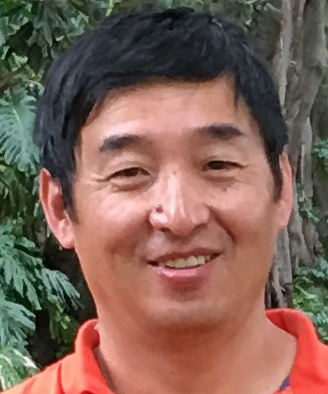 Xiaodong Li合作论文数School of Computing Technologies, RMIT University;STEM College, RMIT University2
 George Preti合作论文数Perelman School of Medicine, University of Pennsylvania2
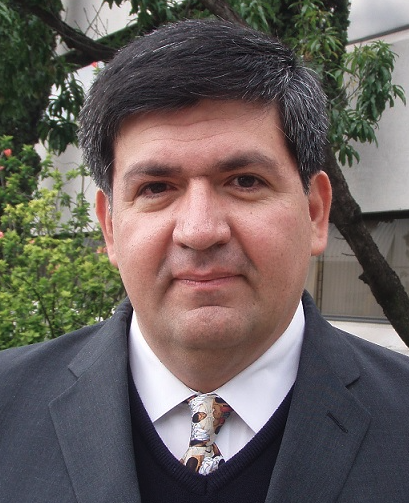 Carlos Artemio Coello Coello合作论文数Departamento de Computación, Gobierno de México2Daniel Ashlock合作论文数2
 David Fogel合作论文数Natural Selection, Inc.;LeadCrunch;Effect Technologies, Inc.2
 Dario Floreano合作论文数Laboratory of Intelligent Systems, Swiss Federal Institute of Technology Lausanne2
 P. N. Suganthan合作论文数KINDI Center for Computing Research, College of Engineering, Qatar University;Nanyang Technological University2
 Hisao Ishibuchi (石渕久生)合作论文数Department of Computer Science and Engineering, College of Engineering, Southern University of Science and Technology2Andy M. Tyrell合作论文数2




