Mitochondria are unique organelles harboring two distinct membranes, the mitochondrial inner and outer membrane (MIM and MOM, respectively). Mitochondria comprise only a subset of metabolic pathways for the synthesis of membrane lipids; therefore most lipid species and their precursors have to be imported from other cellular compartments. One such import process is mediated by the ER mitochondria encounter structure (ERMES) complex. Both mitochondrial membranes surround the hydrophilic intermembrane space (IMS). Therefore, additional systems are required that shuttle lipids between the MIM and MOM. Recently, we identified the IMS protein Mcp2 as a high-copy suppressor for cells that lack a functional ERMES complex. To understand better how mitochondria facilitate transport and biogenesis of lipids, we searched for genetic interactions of this suppressor. We found that MCP2 has a negative genetic interaction with the gene TGL2 encoding a neutral lipid hydrolase. We show that this lipase is located in the intermembrane space of the mitochondrion and is imported via the Mia40 disulfide relay system. Furthermore, we show a positive genetic interaction of double deletion of MCP2 and PSD1, the gene encoding the enzyme that synthesizes the major amount of cellular phosphatidylethanolamine. Finally, we demonstrate that the nucleotide-binding motifs of the predicted atypical kinase Mcp2 are required for its proper function. Taken together, our data suggest that Mcp2 is involved in mitochondrial lipid metabolism and an increase of this involvement by overexpression suppresses loss of ERMES.
Most cellular compartments counteract the formation of disulfide bridges to maintain proteins in a reduced state. In contrast, the bacterial periplasm, the endoplasmic reticulum and the intermembrane space of mitochondria contain dedicated machineries to introduce disulfide bonds into their proteins. The oxidation machinery in mitochondria, which was identified only very recently, uses protein oxidation to drive the vectorial import of precursor proteins across the outer membrane.
Determining the size of nanoparticles accurately, quickly and easily is becoming more and more important as the use of such particles increases. One of the common techniques for measuring the size of particles in suspension is dynamic light scattering (DLS). In principle, DLS is able to estimate the hydrodynamic particle diameter and its intensity-weighted distribution. However, the measured correlation function or power spectrum must be inverted to obtain this size distribution. The inversion is an ill-posed mathematical problem, and only under certain assumptions can the distribution be determined reliably. Suspensions containing bimodal (or multi-modal) particle size distributions are particularly challenging. This study reports on DLS measurements on a range of bimodal distributions of latex spheres with varying ratios of particle sizes. To determine the efficacy of different inversion techniques, the data has been analyzed both with the algorithms implemented in the DLS instrument's proprietary analysis software and with other inversion routines based on simple analytical models of the particle size distribution. In addition, the results of the DLS analysis have been compared to scanning and transmission electron microscopy (SEM and TEM) measurements.
Three different methods for extracting zinc oxide (ZnO) and titanium dioxide (TiO2) nanoparticles from commercially available sunscreen were investigated to determine the most appropriate route for producing a sample suitable for measuring the primary particle size. Direct dilution of the formulation, centrifugal methods and chemical washing were trialed in combination with ultrasonic processing and surfactant addition to generate samples that are suitable for particle size analysis. Transmission electron microscopy (TEM) and dynamic light scattering (DLS) were used to monitor the extraction and re-dispersion process. Washing with hexane, methanol and water to remove the formulation, in combination with pulsed high-powered ultrasonication and the addition of a charge-stabilizing surfactant was found to be the most efficient way of producing de-agglomerated samples. DLS measurements gave average hydrodynamic particle diameters of 87 nm for ZnO and 76 nm for TiO2, compared to equivalent spherical particle diameters of 21 ± 12 nm for ZnO (81 particles) and 19 ± 14 nm for TiO2 (81 particles) obtained from TEM analysis.
The photocatalytic degradation of the anthraquinonic dye, Acid Blue 25 was investigated in aqueous solutions containing TiO2 suspension as photocatalyst. The influence of parameters such as adsorption of the dye onto TiO2, pH, temperature, catalyst concentration and photon flux were studied. Results showed that adsorption played an important role in the control of the photocatalytic degradation rate and an optimal TiO2 concentration of 2.6gL−1 was determined. By comparing the disappearance of AB25 followed by HPLC–DAD (high performance liquid chromatography–diode array detector) and the bleaching of the solution followed by UV-Vis spectrometry (wavelength of analysis=600nm), two different kinetics were found proving that some of the intermediate products were still colored. This was confirmed using HPLC–DAD and HPLC–MS (high performance liquid chromatography—mass spectrometry) analysis.
During the evolution of mitochondria from free-living alpha-proteobacteria, many bacterial genes were transferred into the nuclear genome of eukaryotic cells. This required the development of both targeting signals on the respective polypeptides and protein translocation machineries (translocases) in the mitochondrial membranes. Most components of these translocases have no obvious homologies to bacterial proteins or proteins found in other organelles. Membrane integration of many inner membrane proteins, however, apparently occurs via a conserved sorting pathway whose components and characteristics resemble protein translocation in bacteria. Consistent with this, the topogenic signals of these mitochondrial inner membrane proteins mimic those of bacterial proteins. The requirement for post-translational transport to their final destination has placed considerable constraints on the evolution of mitochondrial protein sequences.
The endoplasmic reticulum (ER) contains a variety of specialized proteins that interact with secretory proteins and facilitate their uptake into transport vesicles destined for the Golgi apparatus. These accessory proteins might induce and/or stabilize a conformation that is required for secretion competence or they might be directly involved in the sorting and uptake of secretory proteins into Golgi-bound vesicles. Recent efforts have aimed to identify and characterize the role of several of these substrate-specific accessory proteins.
 John R Miles合作论文数Nanometrology Section, National Measurement Institute Australia2
 Victoria A. Coleman合作论文数Dept Elect Mat Engn, Australian Natl Univ2
 Malcolm A. Lawn合作论文数2
 Gregory Koningstein合作论文数1a fontaine合作论文数1jan raethel合作论文数1
 Michael J. Ford合作论文数1
 Sandra Backes合作论文数1Uri Weill合作论文数1van Bloois Edwin合作论文数Institute of Molecular Cell Biology, Vrije Universiteit1
 Doron Rapaport合作论文数Interfaculty Institute of Biochemistry, Universität Tübingen;Mathematisch-Naturwissenschaftliche Fakultät / Medizinische Fakultät, Universität Tübingen1
 Jämting Åsa K合作论文数1Weckbecker Daniel合作论文数1J. Cullen合作论文数1
 Jean-Marc Chovelon合作论文数Ecole Doctorale Inter-Disciplinaire Sciences-Santé, Université de Lyon1
 Thomas Langer合作论文数Department Langer, Max-Planck-Institute for Biology of Ageing1
 Takashi Tatsuta合作论文数1
 Randy Schekman合作论文数Division of Biochemistry and Molecular Biology, College of Letters & Science, University of California, Berkeley;Howard Hughes Medical Institute1
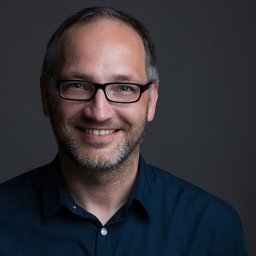 Jan Riemer合作论文数Cell Biology, University of Kaiserslautern1Per Malkus合作论文数1H. Bauerschmitt合作论文数1
 Semra Kurama合作论文数Department of Materials Science and Engineering, Anadolu University1
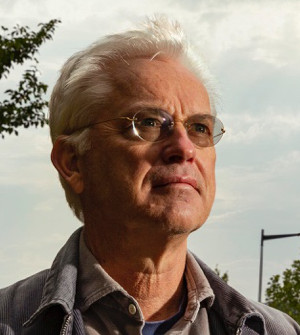 Joen Luirink合作论文数Department of Molecular Microbiology, Faculty of Science, Amsterdam Institute of Molecular and Life Sciences, Vrije Universiteit Amsterdam1
 Corinne Ferronato合作论文数Institut de Recherches sur la Catalyse et I’Environnement, Université Claude Bernard Lyon 11I Bouzaida合作论文数1Kai Stefan Dimmer合作论文数1Axel Bales合作论文数1Kerstin Sempf合作论文数1
 Maik Thiele合作论文数Technische Universität Dresden1Sebastian Longen合作论文数1
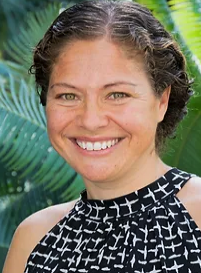 Maya Schuldiner合作论文数Department of Molecular Genetics, Weizmann Institute of Science1I Schulz合作论文数1
 Iakovos Sigalas合作论文数1




