It is now recognized that residues of medication and more generally of care products (such as sunscreens) contaminate and disturb aquatic and marine environments. The reduction of the source of micropollutants related to drug consumption, including improved management of unused drugs, is needed. In view of their role in the consumption of these drugs in France, we conducted a qualitative sociological study of physicians and pharmacists in private practice around the Arcachon basin (Gironde, France) to examine their understanding of this issue of micropollutants from drug consumption and how they integrate this issue into their drug prescription and dispensing practices. Our study shows their lack of consideration of this issue in general, including in terms of representations, and their failure to integrate this issue into their logic of prescribing, advising, and dispensing drugs to patients and consumers. The constraints and determinants (economic, sociological, organizational, symbolic and cultural, etc.) that structure physician-patient and pharmacist-patient-consumer relationships in France do not help to reduce drug consumption, be it by professionals' prescriptions or by self-medication. Despite their different professional representations and practices, the physicians and pharmacists surveyed always prioritized health issues (benefit-risk for the patient or the consumer) over the objective of preserving biodiversity. Nonetheless, they underline the existence of leeway for "optimizing" drug consumption in relation to micropollutants. A physician-patient relationship less constrained by time and less organized around drug prescription and a pharmacistdoctor-consumer relationship where pharmacists have a more recognized and active role in the management of individual drug treatments seem to be interesting avenues toward reducing these micropollutants at the source without jeopardizing health goals. Action by public authorities should support the greening of health professionals' practices, at least by offering them more information and training about the environmental risks associated with the current abundant consumption of medications. Other levers and tools should help health professionals to further integrate the issues of preservation of living things into their professional logic.
Healthcare professionals have a role to play in reducing micropollutant emissions from healthcare products at source. A survey was conducted on the practices of homecare workers, particularly on the management of drug residues and the recovery of excreta (urine and faeces). There are obstacles, but also levers to protect biodiversity from the toxicity of healthcare waste.
The contamination of water and natural environments by micropollutants linked to residues from health care activities (drugs, detergents, parapharmaceuticals, etc.) generates invisible, silent and alarming levels of pollution for the living world. The management of these phenomena is potentially a public health issue. It is necessary to raise awareness among caregivers in order to develop strategies for reducing pollution at the site, compatible with the multiple constraints of their care activities.
Healthcare professionals have a role to play in reducing micropollutant emissions from healthcare products at source. A survey was conducted on the practices of homecare workers, particularly on the management of drug residues and the recovery of excreta (urine and faeces). There are obstacles, but also levers to protect biodiversity from the toxicity of healthcare waste.
The environmental field is characterized by a variety of expertise systems that support local policies. "Urban hydrology observatories" are part of these public decision support systems: for several decades, they have been implementing an original dialogue on the topic of water management between scientists and practitioners of water and sanitation services. These observatories are set up in France in three large communities: Lyon, Nantes, and the Paris region. This article attempts to characterize this form of scientific collaboration, which reveals quite new practices: the co-construction of long-term programs, in-situ experiments, and the development of territorial research linked to local issues. The analysis underlines how the fact that researchers work with managers on a daily basis deeply transforms the working culture among technical services. Indeed, this scientific knowledge promotes a relatively cautious approach to innovation, by reintroducing doubt, reflexivity, and complexity.
The Cosmet’eau project (2015–2018) investigates the “changes in the personal care product (PCP) consumption practices: from whistle-blowers to impacts on aquatic environments.” In this project, the example of PCPs will be used to understand how public health concerns related to micropollutants can be addressed by public authorities—including local authorities, industries, and consumers. The project aims to characterize the possible changes in PCP consumption practices and to evaluate the impact of their implementation on aquatic contamination. Our goals are to study the whistle-blowers, the risk perception of consumers linked with their practices, and the contamination in parabens and their substitutes, triclosan, and triclocarban from wastewater to surface water. The project investigates the following potential solutions: modifications of industrial formulation or changes in consumption practices. The final purpose is to provide policy instruments for local authorities aiming at building effective strategies to fight against micropollutants in receiving waters.
HAL is a multi-disciplinary open access archive for the deposit and dissemination of scientific research documents, whether they are published or not. The documents may come from teaching and research institutions in France or abroad, or from public or private research centers. L’archive ouverte pluridisciplinaire HAL, est destinée au dépôt et à la diffusion de documents scientifiques de niveau recherche, publiés ou non, émanant des établissements d’enseignement et de recherche français ou étrangers, des laboratoires publics ou privés. Changements de pratiques dans les produits cosmétiques des lanceurs d’alerte aux impacts sur le milieu aquatique Adèle Bressy, Catherine Carre, Emilie Caupos, Bernard De Gouvello, José-Frédéric Deroubaix, Jean-Claude Deutsch, Jean-Emmanuel Gilbert, Anthony Marconi, Véronica Mitroi, Pascale Neveu, et al.
Urban hydrology as a scientific discipline has been gradually developed in France through networks gathering engineers from local authorities’ departments and local research teams. The “observatories of urban hydrology” (OPUR in Paris area, OTHU in Lyon, and ONEVU in Nantes) is the last step in this institutionalization’s process. This article shows how these new institutions influence the innovation process in stormwater management. Indeed, they impact the way these major cities’ public services are run. Observatories tend to spread among them a culture of “monitoring” and “evaluation” which relied on a rational analysis. Out of these scientific and technical networks, smaller cities (Rennes and Le Douaisis) show other ways to produce innovation: they favor “pragmatic and functional” approaches and the implementation of local solutions. We point how Rennes and Le Douaisis tend to promote a quite radical innovation, which can be implemented scientific backing and guarantee, while major cities, thanks to the observatories, develop innovation in much more cautious way. However, the reality is more balanced: the expertise produced by OPUR, OTHU and ONEVU is spread far beyond their own network: it reduces the risks really taken by local communities without observatories.
My thesis in sociology takes place in a big research program studying contaminated storm water in urban areas in order to develop new processes to cope with pollution. Most of the researchers of the program are biologists, chemists, hydrologists. The study also conveys sociology insisting on the importance of a multidisciplinary approach. Why would a sociologist be needed to help understand a topic such as water pollution, which seems to be a really technical issue? In fact, I am looking to “study my colleagues who study chemicals”, and the contribution of their discoveries. Because innovation isn’t just about technical inventions. It’s a political and social question too. How can a sociologist be part of such a project? What are his/her particular methods? These are important questions, as more and more scientific programs, especially regarding environmental issues, aim to associate hard sciences and social sciences.
HURRBIS is an informal network created in 2006, by the 3 French Observatories of Urban Hydrology: OPUR from Paris area, OTHU from Lyon and ONEVU from Nantes. OPUR, OTHU and ONEVU work mostly on the same topic: they analyse the whole urban water cycle, from the atmosphere to the ground including the in-between steps as water infrastructures and aquatic environment (groundwater and water courses). Part of their budget comes from local authorities, so researchers have to negotiate their research topics considering local management concerns about storm water and wet weather flows. Researches mainly focus on pollutants in urban areas and their impact on the aquatic environment. From an organisational point of view, HURRBIS is a non structural organisation to enhance relations between researchers working on different sites. It aims to become a special place for researchers and city engineers to share their needs and work on solutions to improve urban water management. It is supposed to favour communication between both parts and help to link scientific questions to management issues. Scientifically, the HURRBIS network is an opportunity for the observatories to put in common their local studies and to share methods, data and outcomes. All in all, HURRBIS questions the innovation process considering governance changes: how can research teams and programs help to change management practices dealing with this background? Is there a good scale to build efficient partnerships? In brief, main issues discussed in the paper are: HURRBIS as a network to link scientific issues to water management concerns An intent to share at a wider scale local territories' data and programs A will to find the good scale for innovation policies.
Les problemes croissants poses par la gestion de l'eau en ville ont entraine ces dernieres decennies la structuration d'une expertise en hydrologie urbaine, dont l'objectif est de resoudre les problemes d'inondations et les dommages environnementaux provoques par le ruissellement urbain. Cette expertise s'est appuyee sur le developpement de cooperations etroites entre des scientifiques et des praticiens des collectivites territoriales, qui ont donne naissance dans les annees quatre-vingt-dix, sur les territoires du Grand Lyon, de Nantes Metropole et de la region parisienne, a des formes institutionnelles inedites : les observatoires d'hydrologie urbaine. Ce travail de recherche analyse la constitution de ces dispositifs de production de connaissances en realisant une socio-histoire de ces collaborations depuis les annees soixante-dix. Celle-ci montre comment la structuration des observatoires est determinee par leur contexte d'origine et le poids de cet heritage sur leurs logiques de fonctionnement actuelles. La trajectoire de chaque observatoire traduit a la fois une histoire singuliere et l'existence de « points de passages obliges » empruntes par les trois entites. L'enquete saisit les formes d'organisation particulieres des observatoires, la facon dont ils construisent leur double legitimite (dans le champ academique et en s'appuyant sur une demande sociale), l'ambiguite de leur rapport au politique et les strategies deployees pour asseoir leur perennite. Nous questionnons egalement les modes de production de la science lorsque cette derniere participe a la construction des problemes et a leur representation. Cette sociologie de l'expertise est un point de depart a l'analyse des processus d'innovation a l'œuvre dans la gestion des eaux pluviales. Nous mettons en lumiere le modele d'innovation precautionneux induit par cette configuration d'acteurs, qui assigne aux observatoires un role d'evaluation et de regulation des pratiques dans un contexte de changement de paradigme de la gestion des eaux urbaines. Une demarche comparative permet de singulariser ce modele : l'enquete a ete elargie a deux terrains temoins « sans observatoire », Rennes Metropole et la communaute d'agglomeration du Douaisis, qui presentent un modele d'innovation plus radical et donnent a voir d'autres conceptions du changement. A travers l'exemple de la communaute scientifique et technique de l'hydrologie urbaine, nous interrogeons ce que produisent ces nouveaux modes d'intervention scientifique et la maniere dont ils reorganisent les rapports entre science, technique et politique. L'alterite apportee par les terrains temoins revele aussi d'autres facons d'envisager « l'agir dans un monde incertain » et de faire face aux risques qui marquent cette politique environnementale en construction
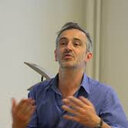 Jose-Frederic Deroubaix合作论文数CERGRENE-ENPC8
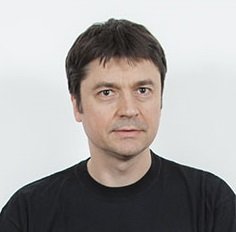 Bernard De Gouvello合作论文数6
 Julien Gauthey合作论文数5jeanclaude deutsch合作论文数4Anthony Marconi合作论文数3Pascale Neveu合作论文数3
 Catherine Carre合作论文数3Laurent Paulic合作论文数3
 Adele Bressy合作论文数3
 Emilie Caupos合作论文数3
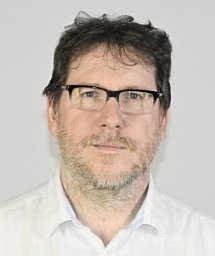 Régis Moilleron合作论文数Centre d'Enseignement et de Recherche sur l'Eau, la Ville et l'Environnement (CEREVE),, Université Paris 12-Val-de-Marne3
 Romain Valadaud合作论文数2
 Maurice Anne-Claire合作论文数Unité Mixte de Recherche 7204, Muséum National d'Histoire Naturelle2
 Clarisse Cazals合作论文数2
 Vincent Rocher合作论文数2
 Sandrine Lyser合作论文数2B. Bonnaud合作论文数1Pierre-François Staub合作论文数1Ghassan Chebbo合作论文数1Sébastien Pichon合作论文数1
 Veronica Mitroi合作论文数1Romain Mailler合作论文数1Zedek Sifax合作论文数1
 Sylvie Barraud合作论文数1Olivier Perceval合作论文数1Véronique Ruban合作论文数1
 Claude Joannis合作论文数LCPC-Division Eau1




