A series of sampling activities in the Tyre Coast Nature Reserve, on the Southern coast of Lebanon, in the context of the project Blue Tyre - Local Partnership for Sustainable Marine and Coastal Development, allowed for the collection of material to study the polychaete fauna of the area, with particular focus on Non-Indigenous Species (NIS). The detection of several taxonomical novelties resulted in the description of five new species belonging to four families: Dorvilleidae, Eunicidae, Nereididae, and Sabellidae. Based on clear differences compared to the historical polychaete fauna of the Mediterranean Sea and on the presence of morphological similarities or genetic correspondence with Indo-Pacific taxa, we suggest that, despite having Mediterranean type locality, the newly described species should be considered NIS in the Mediterranean. Thus, the present data reaffirm the importance of the Levantine Sea and the Lebanese coast as an outpost for the early tracking of bioinvasions in the Mediterranean area. Specific epithets of Pseudobranchiomma Jones, 1962 species are amended to their correct Latin gender, following article 30.1.2 of the I.Z.C.N. Lastly, a review of the available literature on both the genera Nereis Linnaeus, 1758 and Lysidice Lamarck, 1818 reveals the necessity of corrections to the taxonomic status of some species within these genera.
Taxonomists in the 19th and early 20th centuries described several species of Myxicola Meneghini, 1847 in Europe. Until recently, all historical taxa were considered synonyms of M. infundibulum. Using an integrative taxonomic approach-combining molecular phylogenetics and morphological re-evaluation of museum samples, and newly collected material from the Mediterranean Sea and Macaronesia-we uncovered significant diversity within this genus. Phylogenetic analyses based on three molecular markers reveal that Myxicola comprises two highly supported and deeply divergent clades. The morphological synapomorphies unique to one of these clades, reported for the first time for Sabellidae as a whole, led to the establishment of Paramyxicola gen. nov. We confirm the distinction of M. cosentini and M. giuliae from M. infundibulum, while M. cataldoi is identified as junior synonym of M. infundibulum. We describe two new species of Myxicola (M. albertoangelai sp. nov. and M. pirainoi sp. nov.) and two new species of Paramyxicola (P. mariacristinae sp. nov. and P. marielouisae sp. nov.). We synonymize M. polychroma with M. modesta and report it, together with M. cf. fauveli, in the Mediterranean Sea for the first time. The biogeography and distribution of species in these genera are discussed, with emphasis on their possible evolutionary history.
Biological invasions are a major driver of global biodiversity loss, with the Mediterranean Sea among the most heavily invaded marine regions. However, identification and monitoring of Non-Indigenous Species (NIS) are hindered by taxonomic uncertainty and cryptic diversity, especially in taxonomic groups whose complexity remains poorly explored, such as polychaete annelids. In this study, specimens morphologically identified as Dorvillea similis (Crossland, 1924) according to the current identification keys, were collected from the Mediterranean Sea, Red Sea, Arabian Gulf, and north-western Indian Ocean. Combined morphological and molecular analyses revealed eight distinct molecular operational taxonomic units (MOTUs), four of which are NIS in the Mediterranean. Five of these MOTUs (MOTUs 4–8) form a morphologically homogeneous group, designated here as the Dorvillea similis species complex. Two distinct lineages were shown to represent two new species, with one recently formalized as D. phoenicia Putignano et al. 2026 (MOTU 2), and another formally described herein as Dorvillea ariannae sp. nov. (MOTU 3). The MOTU 1 also belongs to a distinct but as yet unidentified Dorvillea sp. Although species previously identified as D. similis show a relatively homogeneous morphology of chaetae and jaw pieces, our results highlight the diagnostic value of both live colouration and arrangement of sub-epidermal glandular tissue for their distinction. This study further supports previous findings that marine annelid invasions in the Mediterranean Sea are currently underestimated and underscores the pivotal role of integrative taxonomy in improving our understanding of biological invasions.
The new species Bispira causioi sp. nov. is here described. This taxon shares several morphological features, such as the shape of both uncini and companion chaetae, with other Bispira species mostly of tropical origin. The first observation of this taxon, along the Apulian coast, dates back to 2012 and was never recorded before. At the present, it occurs along the whole Italian Coasts, being reported in several pictures by the SCUBA-diving photographers and tentatively identified as either Sabella pavonina Savigny, 1822 or Bispira viola (Grube, 1863).In addition, in depth comparisons were conducted with material housed at the Museo di Biologia Marina of the Salento University, especially with the similar Mediterranean species (B. viola described by Grube 1863 deep muddy substrates), but also with material of tropical Bispira species present in this collection. An extensive discussion on the literature concerning the reports of B. viola in the past precede the new species description, suggesting different interpretations for our findings.
Short-time cycles of the water column can reflect undetectable changes in seasonal cycles, providing a high temporal resolution for quantifying seston availability. Here, trends in seston quantity and quality were investigated through intensive temporal cycle assessments at an IMTA site and a nearby fish farm facility (control site) during two different periods of the year (July 2021 and March 2022).Chlorophyll-a values (max 10.28 mu g L- 1) showed no significant differences between sites, while lipid values (max 394.87 mu g L- 1) were significantly lower at the IMTA site than at the control site during most sampling times, suggesting that the bioremediating organisms at the IMTA site may help mitigate the impact of fish farming. The IMTA site structured a marine animal forest capable of increasing the abundance of zooplankton, reaching 109,021 ind m- 3. The short-time cycle appeared useful for detecting changes that occur at high temporal resolution, underlying the effects of mitigation measures behind the high variability of marine coastal systems.
The genus Amphiglena, comprising minute sabellid worms, is known for its cryptic diversity in the Mediterranean region. This study presents the first complete mitochondrial genome for the genus, corresponding to Amphiglena cf. mediterranea “clade IV” sensu Tilic et al. (2019). The mitogenome features 13 protein-coding genes, two rRNAs, and 22 tRNAs, totalling 16,401 base pairs. Notably, a novel gene order was identified, distinct from previously reported mitochondrial gene arrangement in annelids. This work provides essential genetic data for investigating mitochondrial genome evolution within Sabellidae and for understanding the evolutionary relationships within Amphiglena.
The non-indigenous syllid polychaete Myrianida pachycera (Augener, 1913), originally described from Australia, is reported for the first time in the Mediterranean Sea, based on individuals sampled in port environments in the Tyrrhenian and Ionian Sea. The identity of the specimens was investigated through morphological identification and DNA barcoding of two individuals, resulting in COI sequences with almost 100% identity with an individual from California. Myrianida pachycera must be considered non-indigenous for the Mediterranean Sea. The distribution of this species seems to be relatively wide in the basin, but its detection has possibly been hindered by the loss of the majority of the diagnostic characters following fixation. Conversely, due to their striking live colour pattern, live individuals might be successfully tracked via citizen science.
This Collective Article presents information about 30 species with records in eight countries (Greece, Israel, Italy, Montenegro, Slovenia, Spain, Syria and Türkiye) and six ecoregions extending from the Alboran to the Levantine Seas. The recorded species belong to eight Phyla (4 Chlorophyta, 1 Rhodophyta, 1 Porifera, 3 Cnidaria, 2 Platyhelminthes, 2 Arthropoda, 2 Mollusca and 15 Chordata) as follows: Chlorophyta: Didymosporangium repens, Ochlochaete hystrix and Phaeophila hirsuta are reported for the first time from the Aegean coasts of Türkiye and Penicillus capitatus is firstly recorded in Slovenian coastal waters; Rhodophyta: Ptilophora dentata is recorded for the first time in Turkish coasts, from the entrance of a marine cave; Porifera: Tethya meloni is reported from Montenegrin waters; Cnidaria: Savalia savaglia and Dendrophyllia ramea are firstly observed north of the Almeria-Oran front in the southeastern Iberian Peninsula, while Spinimuricea cf. atlantica is firstly recorded in the Gulf of Lion constituting the easternmost record of the species in the Mediterranean Sea; Platyhelminthes: the polyclad flatworms Thysanozoon brocchii and Planocera graffi are reported for the first time from Greek waters, observed inside marine caves; Mollusca: Ascobulla fragilis is firstly reported from the Eastern Levantine Sea while the blanket octopus Tremoctopus violaceus is recorded in Izmir Bay constituting its fifth sighting in the Aegean Sea after a quarter of a century; Arthropoda: the copepod Ditrychocorycaeus africanus is firstly recorded in the Ionian Sea while the tufted ghost crab Ocypode cursor is detected further north in the Tyrrhenian Sea; Chordata: the bothid flounder Arnoglossus grohmanni is firstly reported in Spain while specimens of the rare bythitid Bellottia apoda are presented for the Adriatic Sea; the chondrichthyans Chimaera monstrosa, Dalatias licha, Heptranchias perlo, Leucoraja circularis, Mustelus mustelus, Oxynotus centrina, Squatina aculeata and Torpedo marmorata are presented as collected within 13 continuous years in the bathyal zone of the Antalya Bay; the speleophilic fish Grammonus ater is firstly recorded in the Alboran Sea, observed in a marine cave; the critically endangered sandy ray Leucoraja circularis is reported from the eastern Ionian Sea; the crested oarfish Lophotus lacepede is reported for the first time from Sardinia, based on evidence dating back 20 years; the white trevally Pseudocaranx dentex is firstly recorded in Tremiti Islands (Adriatic Sea, Italy) while the phaeton dragonet Synchiropus phaeton and the gobid Zebrus pallaoroi are firstly reported from Syrian and Italian waters, respectively.
1. Rhodoliths, formed by free-living coralline algae, are distributed worldwide, and the rhodolith beds (RBs) that they form are recognized as structurally complex habitats. In the Mediterranean, they are generally distributed in the mesophotic zone, at depths of 30-100 m; so far, only a few shallow RBs (<2 m) have been reported (e.g. & Icirc;les Kuriat, Tunisia, and Stagnone Marsala, Italy).2. Here a shallow-water RB located in the Mar Piccolo of Taranto (south-eastern Italy, Mediterranean Sea) is described. The diversity of associated invertebrates, the rhodolith-forming algal species, the type of sediments, and the bed extent are characterized.3. The RB investigated extends over 5 ha at depths of 0.5-1.5 m. The rhodoliths vary in shape and size, from pralines to large spherical structures, and are formed by a single species, Neogoniolithon brassica-florida, growing around nuclei of both natural and anthropogenic origin. The associated fauna consisted of 158 taxa, 79 (50%) of which were new basin records. The associated diversity was approximately twice that of the underlying and nearby sediments.4. The structural complexity of the RBs promotes biodiversity and provides shelter, food, and a breeding ground for numerous species, including seahorses, which are a conservation priority in this basin.
The Salento Peninsula represents the eastern-most edge of the Italian Peninsula, and one of the first areas to be invaded by thermophilic non-indigenous species. The diversity of non-indigenous polychaetes occurring along the Salento Peninsula is reviewed based on literature data and new samples. Overall, fifteen non-indigenous polychaetes were recorded; among them, Syllis similisunzima is reported for the first time in the Mediterranean Sea; Lepidonotus tenuisetosus is recorded for the first time in Italian waters; Pseudonereis anomala, until now known only for Sicily, is reported for the first time from the Italian Peninsula; Dorvillea similis is a first record for the Ionian and Adriatic Sea. 16S rDNA and COI sequences were obtained for eleven species, allowing us in some cases to confirm their identity and/or geographical origin, while in the case of some species they represent the first molecular data ever obtained.
Sampling activities conducted in the Tyre Coast Nature Reserve, southern Lebanon, to study the marine annelid fauna of the area, allowed for the revision of the diversity of this group in Lebanon. We particularly focused on non-indigenous species (NIS), which were characterised from morphological and molecular points of view. A total of 116 taxa were collected; 10 species are reported here for the first time in the Mediterranean Sea, while 6 species with presumable Indo-Pacific affinity are likely new to science. Seventy-three taxa were native, while 43 taxa were NIS; among the latter, 24 species are reported for the first time in Lebanon. Molecular data were obtained for 28 NIS, representing the first data from the Mediterranean Sea for 23 of them. Non-indigenous annelids occurring along the coast of Lebanon mainly have Indo-Pacific affinity. However, molecular data highlighted inconsistencies between the sampled material and the sequences available in public repositories, suggesting the widespread occurrence of species complexes in these taxa. These results suggest that further research on Indo-Pacific annelids is needed to understand their diversity patterns and invasion pathways. Additionally, the large number of new records of annelids in Lebanese waters indicate that further studies are needed to explore their diversity in comparison with neighbouring Mediterranean regions.
Myxicola Koch in Renier in Meneghini, 1847, is a genus of the family Sabellidae (Annelida: Polychaeta) well known for its funnel-shaped crown and showy colouration. Several taxa from the coasts of North America were described in the first half of the twentieth century. However, due to several subsequent synonymisations, the biodiversity of this genus in American waters was reduced to the presence of only two species, both with their type locality in Europe. Preliminary molecular data suggested that this view is largely incorrect, and that American Myxicola include several species. The re-examination of type material from two American museums (Museum of Comparative Zoology of Harvard University and Yale Paebody Museum of Natural History), as well as other historically collected specimens, allowed the re-establishment of several American Myxicola species. Myxicola conjuncta Bush, 1905, Myxicola affinis Bush, 1905 and Myxicola glacialis Bush, 1905 are redescribed and considered valid species, while Myxicola monacis Chamberlin, 1919 is regarded as synonymous with M. affinis. Lastly, specimens from the Gulf of Maine originally identified as Myxicola infundibulum Montagu, 1808 were found to belong to two new species. http://www.zoobank.org/urn:lsid:zoobank.org:pub:38CF6282-FC6A-493A-AB8D-65AED10ABC16 http://www.zoobank.org/urn:lsid:zoobank.org:act:DA2796F7-5A5E-434A-9A79-87BB60C81BA2 http://www.zoobank.org/urn:lsid:zoobank.org:act:1EC9E4BC-010F-467A-98A0-460A0EEF1738
Due to the presence of companion chaetae on the thoracic notopodia, a feature unnoticed on the material of the original description, the species Pseudobranchiomma tarantoensis (Knight-Jones & Giangrande, 2003) and P. marmarensis (Çinar & Giangrande, 2018) are here transferred to different genera; the former to the genus Sabella Linnaeus, 1767 and the latter to Bispira Krøyer, 1856. A discussion on the boundary existing among the genera belonging to the clade Sabellinae is made, underlying the importance of the thoracic uncini shape, which shows consistency with species separation from a molecular point of view.
This paper is part of a series of studies aimed at understanding the potential exploitation of the biomass of the polychaete worm Sabella spallanzanii (Gmelin, 1791), which is obtained as a by-product of an innovative Integrated Multi-Trophic Aquaculture (IMTA) system. IMTA systems are designed according to an ecosystem approach with the aim to reduce marine monoculture impact while further increasing production via exploitation of valuable by-products. S. spallanzanii can remove large amounts of suspended matter by filtering large volumes of water per hour and performs well as an extractive organism under IMTA; however, it currently lacks any economic value, thus hindering its sustainable large-scale implementation. However, S. spallazanii has the potential to become competitive as a newcomer in fish bait, as an ornamental organism, and in fish feed markets. Notably, sabella meal has already been successfully tested as an attractant in an innovative fish feed. Here, we refer to the use of sabella meal as the main component (60%) in the formulation of a novel aquarium fish feed. Following the biochemical analysis of farmed sabella meal, the experimental feed was formulated by adding spirulina (25%) and dry garlic (15%) in such proportion as to be isoproteic and isoenergetic to the commercial control feed. After preliminary observations of the palatability of sabella meal for several tropical fish species, the novel experimental feed was tested on ocellaris clownfish, Amphiprion ocellaris (Cuvier, 1830), by evaluating their growth response in a 70-day feeding trial. The fish seemed to enjoy the experimental feed at least as much as the control, and both the control and treatment groups showed no significant differences in weight gain (p = 0.46), specific growth rate (p = 0.76), and feed conversion ratio (p = 0.48), reinforcing the suitability of S. spallanzanii as a viable source of animal proteins to be employed in the fish feed industry in a circular economy perspective.
This dataset includes information collected from published papers on annelid distribution along the Salento Peninsula without an exact georeferenced location. The dataset includes information on 539 records with information on species, descriptive location, type of sediment, depth and sampling dates.
The dataset includes new records of annelid species found along the Salento Peninsula. The dataset includes information on 1005 records collected between 2005 and 2023 with information on species, location including latitude and longitude in decimal degrees, type of sediment, depth and sampling dates.
This study presents a description of Bispira riccardi sp. nov., a new habitat-forming sabellid polychaete from the mesophotic NW Mediterranean Sea. Individuals, up to 20 cm long, show a peculiar morphology of radioles, thoracic uncini, companion chaetae and ventral shield of the collar. The phylogenetic position of this new taxon in the genus Bispira has been validated using nuclear (18S rRNA) and mitochondrial (COI) markers.& nbsp;Aggregations of B. riccardi sp. nov. were found by ROV on horizontal muddy bottoms between 56 and 85 m, in areas subjected to high trophic inputs. Patches are fragmented and dense (up to 943 individuals m-2) probably accounting for various hectares. A 5-days continuous monitoring, carried out using an autonomous lander, revealed that the contraction of the branchial crown was positively affected by temperature and current, rapidly responding to meteorological events. The filtering activity and high density of these fields suggest a considerable impact on the pelagic-benthic coupling and the amount of organic matter in the sediments. Indeed, meiofaunal abundance and diversity within the aggregations resulted significantly higher than in outer stations. These findings highlight the undisclosed potential of the deep Mediterranean Sea for sabellid diversity and their importance as habitat-forming species on mesophotic soft bottoms.
We report the description of nine new taxa of sabellid polychaetes belonging to the genus Amphiglena, of which diversity in the Mediterranean Sea has been widely underestimated. Examined material derived from both new collections along the Italian coast, including four CO2 vents/hydrothermal systems, and from a re-examination of older material previously attributed to A. mediterranera (Leydig, 1851) which was so far the only species of the genus reported for the Mediterranean area. The analysis revealed the presence of different taxa also consistent with a previous molecular analysis conducted on material from the Gulf of Naples and the Salento coast (Ionian Sea). This led to an increase in the number of species in the genus and to highlight the occurrence in the Mediterranean Sea of a high diversity within the genus. A key to the Mediterranean Sea species of Amphiglena is also provided. Some taxa, however, remain for the moment undescribed due to the poor preservation of the old material, and the lack of the type material for this taxon. A major revision of all the Mediterranean material previously attributed to A. mediterranea from both morphological and molecular points of view is needed.
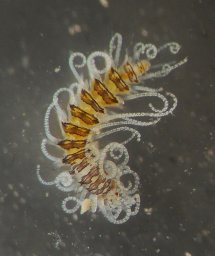 Joachim Langeneck合作论文数Consorzio Nazionale Interuniversitario per le Scienze Del Mare (CoNISMA),, DISTeBA9
 Adriana Giangrande合作论文数Dipartimento di Scienze e Tecnologie Biologiche ed Ambientali, Universita del Salento8
 Andrea Toso合作论文数Dept Biol & Environm Sci & Technol, Univ Salento7
 Luigi Musco合作论文数Department of Biological and Environmental Sciences and Technology, University of Lecce6
 Meri Bilan合作论文数Inst Mar, Univ Acores4
 Jacopo Borghese合作论文数Dept Biol & Environm Sci & Technol, Univ Salento2
 Daniele Arduini合作论文数Dept Biol & Environm Sci & Technol, Univ Salento2
 Roberta Trani合作论文数Dept Biosci Biotechnol & Environm, Univ Bari Aldo Moro2
 Stefano Piraino合作论文数CONISMA-Consorzio Nazionale Interuniversitario per le Scienze del Mare (ULR Lecce),, University of Salento2
 Ranim Othman合作论文数1Mohammad Galiya合作论文数1
 Stefania Lisco合作论文数1Claudio Calabrese合作论文数1Marzia Bo合作论文数1
 Caterina Longo合作论文数1Andrea Costa合作论文数1Federico Betti合作论文数1
 Marina Biel-Cabanelas合作论文数1
 Victor Orenes-Salazar合作论文数1Andrea Tursi合作论文数1Tamara Lazic合作论文数Dept Biol, Univ Bari Aldo Moro1
 Lorenzo Zacchetti合作论文数1Corinne Pelaprat合作论文数1
 Nikola Đorđević合作论文数Inst Marine Biol, Univ Montenegro1
 Daniele Grech合作论文数IMC - International Marine Centre1
 Margherita Toma合作论文数Dipartimento Sci Terra Ambiente & Vita DISTAV, Univ Genoa1
 Francesco Tiralongo合作论文数Department of Biological, Geological and Environmental Science, University of Catania1
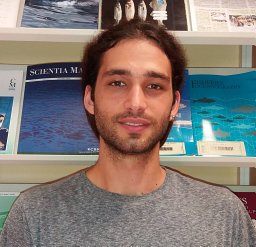 Markos Digenis合作论文数Dept Environm, Ionian Univ1
 Emine Şükran Okudan合作论文数Fac Aquat Sci & Fisheries, Akdeniz Univ1
 Andreu Santin Muriel合作论文数Inst Ciencias Mar ICM CSIC, Barcelona 08003, Spain1
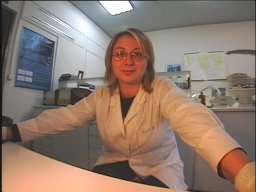 Archontia Chatzispyrou合作论文数Hellen Ctr Marine Res, Inst Marine Biol Resources & Inland Waters1
 Francesco Enrichetti合作论文数Dipartimento di Scienze della Terra, dell'Ambiente e della Vita (DISTAV),, University of Genova1Inci Tuney Kizilkaya合作论文数Ege University1Laure Benoit合作论文数1
 Slavica Petović合作论文数Inst Marine Biol, Univ Montenegro1
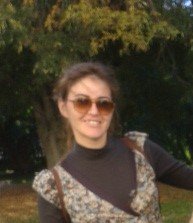 Lucia Rizzo合作论文数Stazione Zoologica Anton Dohrn;Institute of Sciences of Food Production, National Research Council;Institute of Sciences of Food Production, National Research Council1
 Filippo Domenichetti合作论文数CNR, Inst Marine Biol Resources & Biotechnol1
 Sara Kaleb合作论文数Dipartimento Sci Vita, Univ Trieste1
 De Domenico Stefania合作论文数Inst Sci Food Prod, CNR1
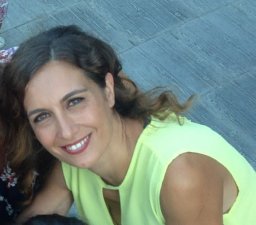 Parisi Maria-Giovanna合作论文数Scienze e Tecnologie Biologiche Chimiche e Farmaceutiche1
 Mehrez Gammoudi合作论文数1
 Navarro-Barranco Carlos合作论文数Laboratorio de Biología Marina, Universidad de Sevilla1
 Tilic Ekin合作论文数Institute of Evolutionary Biology and Animal Ecology, Rheinische Friedrich-Wilhelms-Universität Bonn1Elisa Baldrighi合作论文数1
 Vasilis Gerovasileiou合作论文数1
 Giulia Furfaro合作论文数1
 Giorgio Bavestrello合作论文数Dipartimento di Scienze del Mare, Università Politecnica delle Marche1
 Sergio Rossi合作论文数Institut de Ciència i Tecnologia Ambientals, Universitat Autònoma de Barcelona1
 Paolo G. Albano合作论文数Dipartimento di Matematica, Università di Bologna1




