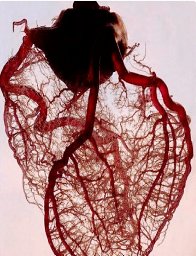
We present a case of cardioembolic stroke in a patient with a history of mechanical aortic valve who was compliant with anticoagulation medication. Cardiac computed tomography was used as an alternative, noninvasive means of evaluation for the cardioembolic source of stroke and identified subvalvular mobile pannus of the mechanical aortic valve.
BACKGROUND:Myositis is an inflammatory myopathy that can be caused by a variety of drugs, diseases, and toxins. The U.S. military uses chemoprophylaxis with intramuscular penicillin G to prevent group A streptococcal infection. We present a case of penicillin G-induced myositis, a rare cause of drug-induced myositis with limited discussion in the medical literature. CASE REPORT:A 25-year-old man with no pertinent medical history presented to the Emergency Department with right hip and leg pain after receiving a single dose of intramuscular penicillin G as part of standard prophylaxis for group A streptococcal infection during basic military training. He reported pain and leg weakness that was exacerbated by physical exertion and weight bearing but had no systemic symptoms, such as fevers or chills. Initial radiographs of the hip were normal; however, subsequent magnetic resonance imaging of the hip revealed intramuscular edema and features consistent with myositis of the right proximal thigh and hip musculature. He was admitted for isolated right gluteal myositis, attributed to his preceding local penicillin injection. He recovered with symptomatic care over the following 2 weeks, with return to baseline function. CONCLUSIONS:This case highlights a rare complication of intramuscular penicillin G as a cause of acute isolated myositis. It serves to inform physicians of this rare complication and to recommend the consideration of intramuscular penicillin G as a causative etiology in individuals presenting with myositis and recent penicillin G exposure.
INTRODUCTION:Battlefield-related wound infections are a significant source of morbidity among combat casualties. Seasonality of these infections was demonstrated in previous conflicts (e.g., Korea) but has not been described with trauma-related health care-associated infections from the war in Afghanistan.METHODS:The study population included military personnel wounded in Afghanistan (2009-2014) medevac'd to Landstuhl Regional Medical Center and transitioned to participating military hospitals in the United States with clinical suspicion of wound infections and wound cultures collected ≤7 days post-injury. Analysis was limited to the first wound culture from individuals. Infecting isolates were collected from skin and soft-tissue infections, osteomyelitis, and burn soft-tissue infections. Data were analyzed by season (winter [ December 1-February 28/29], spring [March 1-May 31], summer [June 1-August 31], and fall [September 1-November 30]).RESULTS:Among 316 patients, 297 (94.0%) sustained blast injuries with a median injury severity score and days from injury to initial culture of 33 and 3.5, respectively. Although all patients had a clinical suspicion of a wound infection, a diagnosis was confirmed in 198 (63%) patients. Gram-negative bacilli (59.5% of 316) were more commonly isolated from wound cultures in summer (68.1%) and fall (67.1%) versus winter (43.9%) and spring (45.1%; P < .001). Multidrug-resistant (MDR) Gram-negative bacilli (21.8%) were more common in summer (21.8%) and fall (30.6%) versus winter (7.3%) and spring (19.7%; P = .028). Findings were similar for infecting Gram-negative bacilli (72.7% of 198)-summer (79.5%) and fall (83.6%; P = .001)-and infecting MDR Gram-negative bacilli (27.3% of 198)-summer (25.6%) and fall (41.8%; P = .015). Infecting anaerobes were more common in winter (40%) compared to fall (11%; P = .036). Gram-positive organisms were not significantly different by season.CONCLUSION:Gram-negative bacilli, including infecting MDR Gram-negative bacilli, were more commonly recovered in summer/fall months from service members injured in Afghanistan. This may have implications for empiric antibiotic coverage during these months.
Abstract Background We examined the seasonality of wounds and wound infections, including occurrence of multidrug resistance, among combat casualties injured in Afghanistan. Methods The Trauma Infectious Disease Outcomes Study is a retrospective observational study of infectious complications among military personnel wounded during deployment (06/09-12/14). Wound cultures obtained ≤7 days following injury in Afghanistan were assessed. Epidemiologic, clinical, and microbiologic data were analyzed by injury season [winter (1 Dec-28/29 Feb), spring (1 Mar-31 May), summer (1 Jun-31 Aug), and fall (1 Sep-30 Nov)]. Multidrug-resistant (MDR) determinations for Gram-negative and Gram-positive organisms were per standardized definitions. Results The study population included 316 patients with a median of 3.5 (IQR 3-5) days from injury to initial culture. Gram-negatives (N=188, 59.5%) were more commonly isolated from wound cultures in summer (N=81, 43.1%) and fall (N=57, 30.3%) versus winter (N=18, 9.6%) and spring (N=32, 17%) (p< 0.001). The MDR Gram-negatives (N=69, 21.8%) were more common in summer (N=26, 37.7%), and fall (N=26, 37.7%) versus winter (N=3, 4.3%) and spring (N=14, 20.3%) (p=0.028). Wound infections were diagnosed in 198 (63%) patients. The pattern for infecting Gram-negative isolates (N=143, 72.2%, Table 1) was similar to that of overall Gram-negative isolates: summer (79.5%) and fall (83.6%; p< 0.001); MDR Gram-negatives (summer, 25.6%) and (fall, 41.8%; p=0.015). Escherichia coli and Enterobacter spp. were the most common infecting Gram-negative bacilli with no significant difference across the seasons. There was a higher proportion of infecting Acinetobacter baumannii isolates in the summer and fall compared to winter and spring. Infecting Gram-positive isolates (N=128, 65%) were not significantly different by season. Anaerobes associated with infections were also identified (N=30, 15%) with a higher proportion in the winter compared to summer, fall, and spring (p=0.036). Conclusion Gram-negatives, including MDR Gram-negative infecting organisms, were more common in summer/fall months in service members injured in Afghanistan. This may have implications for empiric antibiotic coverage during these months. Disclosures David R. Tribble, DrPH, AstraZeneca: The HJF, in support of the USU IDCRP, was funded to conduct or augment unrelated Phase III Mab and vaccine trials as part of US Govt. COVID19 response.
 Laveta Stewart合作论文数2
 Wesley R Campbell合作论文数2Andrea Nichole Keithler合作论文数2Joseph M Yabes合作论文数2John L Kiley合作论文数2Blyth Dana M合作论文数Joint Base San Antonio-Fort Sam Houston, San Antonio Military Medical Center2Carson M Leigh合作论文数2Shaikh Faraz合作论文数2
 Fentanes Emilio合作论文数Department of Medicine, Tripler Army Medical Center2David R. Tribble合作论文数2Clinton K. Murray合作论文数US Army2Ji-Min Park合作论文数1William P Hennrikus合作论文数1Mechelle A. Miller合作论文数1
 Ryan C Costantino合作论文数1Nathan A Boggs合作论文数1Nora Watson合作论文数Dept Res Programs, Walter Reed Natl Mil Med Ctr1
 V Koneti Rao合作论文数1Bradley Matthew合作论文数1




