Cyber-physical systems have witnessed fantastic leaps in their capabilities, thanks to advances in artificial intelligence and machine learning. With these great capabilities, however, should come great assurance that they will behave as expected. For example, an autonomous vehicle (AV) must protect passengers, bystanders, property and itself. Safety alone is insufficient, however. The AV is built for a mission, and mission assurance must also be addressed, i.e., getting the AV’s job done despite foreseen and unforeseen circumstances. Mission assurance should begin as far left in the engineering lifecycle as possible, ideally before the first vehicle is assembled. If the many hours of operational experience that familiarize system builders and operators with the vehicle’s performance and potential risky behaviors could be accrued through simulation, rather than expensive prototypes, a better vehicle can be developed at significantly less cost. The purpose of this paper is to demonstrate the value of cost-effective open-source based simulation in exercising and analyzing AV algorithms. Our results with DESCRETE, a testbed we developed for engineering mission assurance in the maritime domain, show that sufficient fidelity can be realized practically in the lab for unforeseen, but realistic, situations to arise and be examined in a more controlled and less costly environment. Collision avoidance algorithms, for example, must consider complex interactions between multiple vehicles, trading off safety for mission efficiency. Our experimental results demonstrate the interplay between these two competing goals, and help inform what to deem appropriately safe by both eliminating the obviously unsafe situations and identifying what might be too safe, which necessitates either accepting some risks or changing the mission to avoid them.
Does malware lurking in GitHub pose a threat? GitHub is the most popular open source software website, having 188 million repositories. GitHub hosts malware-related projects for research and educational purposes and has also been used by malware to attack users. In this paper, we explore the prevalence of unencrypted, uncompressed binary code malware in Microsoft Windows compatible C and C++ GitHub repositories and characterize the threat. We mined 1,835 repositories for already-compiled malicious files and data suggesting whether the repository is malware-related. We focused on these repositories because Windows is frequently targeted by malware written in C or C++. These repositories are good resources for attackers and could target Windows users. We extracted all Portable Executable (PE) files from all commits and queried the malware resource VirusTotal for analysis from its 76 anti-virus engines. Of the 24,395 files, 4,335 are suspicious, with at least one detection; 440 could be considered malicious, with at least seven detections. We identify topic tags suggesting malware or offensive security content, to differentiate from seemingly benign repositories. 197 of 440 malicious executables were in 27 ostensibly benign repositories. This work illustrates risks in source code repositories and lessons learned in relating GitHub and VirusTotal data.
We apply a variation of socio-cultural cognitive mapping (SCM) to computer malware features explored previously by Saxe and Berlin that characterized malware binaries as benign or malicious based on 1024 program features derived from a deep neural network-based detection system. In this work, we model the features as attributes within a latent spatial domain using a weighted consensus graph representation to visualize and analyze the malware binary communities. The data used in our analysis is extracted from a Remote Access Trojan family named Sakula that first appeared in 2012, and has been used to enable an adversary to run interactive commands and execute remote program functions. Our results show that by SCM we were able to identify distinct malware communities within the malware family, which revealed insights into the overall structure of the various binaries as well as possible temporal relationships between the binaries.
Autonomous vehicles are all but inevitable, and assurance that they will behave safely with respect to passengers, as well as bystanders incidentally exposed to them, is moving forward, albeit slowly. The state of the art often involves stopping the vehicle, perhaps after diverting it to a nearby safe place. While this is good news, it does not fully realize the benefits of autonomy. Autonomous vehicles are built for a purpose; call it a mission. Being able to perform the mission, or part of it, while experiencing faults (or cyber-attack) should be a factor in determining the vehicle's suitability for the mission. This paper explores the state of the art in achieving autonomous mission assurance in the context of autonomous undersea vehicles (AUVs). It identifies gaps in the literature and proposes a novel plan to address certain gaps.
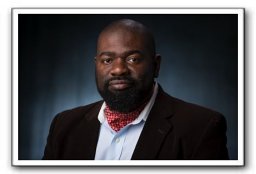 Lanier Watkins合作论文数Applied Physics Laboratory, Johns Hopkins University2
 Matthew D. Green合作论文数Department of Computer Science, Johns Hopkins University;Information Security Institute, Whiting School of Engineering, Johns Hopkins University;Cryptography Engineering LLC.;Sealance Corp.2
 Aviel D. Rubin合作论文数Information Security Institute, Whiting School of Engineering, Johns Hopkins University;Department of Computer Science, Whiting School of Engineering, Johns Hopkins University2
 Anton Dahbura合作论文数Department of Computer Science, Johns Hopkins University2
 Karl Siil合作论文数SRI International Shrewsbury2
 Iain Cruickshank合作论文数CASOS Inst, Carnegie Mellon Univ1
 Kathleen M. Carley合作论文数Institute for Software Research, School of Computer Science, Carnegie Mellon University;Software and Societal Systems Department, Carnegie Mellon University;Netanomics;Carley Technologies;Pittsburgh Supercomputing Center1
 Anthony N. Johnson合作论文数Department of Mathematical Sciences, United States Military Academy1




