This paper generalizes infinite games played with filters on algebras from the Welch Games to playing normal filters that concentrate on a fixed base set.
We discuss the isomorphism problem for ergodic actions of locally compact groups. In particular we show that the conjugacy relation is not Borel for ergodic measure preserving actions of indicable groups.
This paper has two parts. The first is concerned with a variant of a family of games introduced by Holy and Schlicht, that we call Welch games. Player II having a winning strategy in the Welch game of length [Formula: see text] on [Formula: see text] is equivalent to weak compactness. Winning the game of length [Formula: see text] is equivalent to [Formula: see text] being measurable. We show that for games of intermediate length [Formula: see text], II winning implies the existence of precipitous ideals with [Formula: see text]-closed, [Formula: see text]-dense trees. The second part shows the first is not vacuous. For each [Formula: see text] between [Formula: see text] and [Formula: see text], it gives a model where II wins the games of length [Formula: see text], but not [Formula: see text]. The technique also gives models where for all [Formula: see text] there are [Formula: see text]-complete, normal, [Formula: see text]-distributive ideals having dense sets that are [Formula: see text]-closed, but not [Formula: see text]-closed.
This file is composed of questions that emerged or were of interest during the workshop "Interactions between Descriptive Set Theory and Smooth Dynamics" that took place in Banff, Canada on 2022.
This is an expository paper about the Borel complexity of structure and classification theorems. It sorts several classical problems relative to known benchmarks of complexity. As a corollary various problems proposed by people such as von Neumann and Smale are shown to be infeasible using inherently countable information.
Construction sequences are a general method of building symbolic shifts that capture cut-and-stack constructions and are general enough to give symbolic representations of Anosov-Katok diffeomorphisms. We show here that any finite entropy system that has an odometer factor can be represented as the limit of a special class of construction sequences, the odometer based construction sequences. These naturally correspond to those cut-and-stack constructions that do not use spacers. The odometer based construction sequences can be constructed to have the small word property and every Choquet simplex can be realized as the simplex of invariant measures of the limit of an odometer based construction sequence.
In this paper we give explicit characterizations, based on the cutting and spacer parameters, of (a) which rank-one transformations factor onto a given finite cyclic permutation, (b) which rank-one transformations factor onto a given odometer, and (c) which rank-one transformations are isomorphic to a given odometer. These naturally yield characterizations of (d) which rank-one transformations factor onto some (unspecified) finite cyclic permutation, (d′) which rank-one transformations are totally ergodic, (e) which rank-one transformations factor onto some (unspecified) odometer, and (f) which rank-one transformations are isomorphic to some (unspecified) odometer.
The paper considers the equivalence relation of conjugacy-by-homeomorphism on diffeomorphisms of smooth manifolds. In dimension 2 and above it is shown that there is no Borel method of attaching complete numerical invariants. In dimension 5 and above it is shown that the equivalence relation is not Borel, and in fact is complete analytic.
In 1932 von Neumann proposed classifying the statistical behavior of differentiable systems. In modern language this is interpreted as classifying diffeomorphisms of compact manifolds up to measure isomorphism. This paper proves that this is impossible in a rigorous sense.
The paper is a naive introduction to descriptive set theory. It is aimed mathematicians without a background in logic. The goal is to provide the basic facts used for applications of descriptive set theory to other areas of mathematics, particularly analysis and dynamical systems. The only topological or set theoretic background required is covered in undergraduate courses. It covers the hierarchy of Borel sets and the analytic sets, trees, Suslin's operation A, reductions, norms, separation theorems and uniformization.
A basic problem in smooth dynamics is determining if a system can be distinguished from its inverse, i.e., whether a smooth diffeomorphism T is isomorphic to T^-1. We show that this problem is sufficiently general that asking it for particular choices of T is equivalent to the validity of well-known number theoretic conjectures including the Riemann Hypothesis and Goldbach's conjecture. Further one can produce computable diffeomorphisms T such that the question of whether T is isomorphic to T^-1 is independent of ZFC.
The main result of this paper is that two large collections of ergodic measure preserving systems, the Odometer Based and the Circular Systems have the same global structure with respect to joinings. The classes are canonically isomorphic by a continuous map that takes factor maps to factor maps, measure-isomorphisms to measure-isomorphisms, weakly mixing extensions to weakly mixing extensions and compact extensions to compact extensions. The first class includes all finite entropy ergodic transformations with an odometer factor. By results in a previous paper, the second class contains all transformations realizable as diffeomorphisms using the strongly uniform untwisted Anosov-Katok method. An application of the main result will appear in a forthcoming paper that shows that the diffeomorphisms of the torus are inherently unclassifiable up to measure-isomorphism. Other consequences include the existence measure distal diffeomorphisms of arbitrary countable distal height.
This paper is the first of a series of papers culminating in the result that measure preserving diffeomorphisms of the disc or 2-torus are unclassifiable. It addresses another classical problem: which abstract measure preserving systems are realizable as smooth diffeomorphisms of a compact manifold? The main result gives symbolic representations of Anosov–Katok diffeomorphisms.
Borel reductions provide a method of proving that certain problems are impossible using countably infinitary techniques based on countable information and provide a hierarchy of difficulty for classification problems. This is illustrated with examples, including a recent result that a classification problem in dynamical systems proposed by von Neumann in 1932 is impossible to solve with inherently countable tools. Mathematics is uniquely capable of producing impossibility results. The most famous examples include the impossibility of • proving the parallel postulate • squaring the circle • solving a general quintic polynomial • solving the word problem for finitely presented groups. What do these results have in common? They have rules that determine what methods are considered legal for a solution. For example, the quintic is unsolvable by radicals. Explicitly there is no algebraic formula for solving the general quintic that uses expressions of the form a1/n (a ∈ Q). Quintics are trivially solvable if you allow expressions that stand for solutions to arbitrary equations. Similarly it is impossible to square the circle using ruler and compass; it is impossible to prove the parallel postulate using the other Euclidean axioms, and so forth. The notion of unsolvability has various alternate meanings, including the related notion of independence. In the context of the word problem, being solvable would mean the existence of a recursive algorithm for deciding whether two words in the generators represent the same element of the group. Heuristically, this would mean that there is a protocol using inherently finite information Matthew Foreman is professor of mathematics at the University of California, Irvine. His email address is mforeman@math.uci.edu. For permission to reprint this article, please contact: reprint-permission@ams.org. DOI: http://dx.doi.org/10.1090/noti1747 that converges in finite time with a yes-no answer to the question. In contrast, here we describe a method for proving an emerging form of impossibility result that says Doing X is impossible using inherently countable techniques. Note that being unsolvable using inherently countable techniques is a much stronger result than unsolvability using inherently finite techniques. Moreover the objects we describe here give a “hierarchy of difficulty” for many types of problems in mathematics. What precisely does the phrase inherently countable technique mean? The context is Polish Spaces—those spaces whose topology can be induced by a complete separable metric. The collection of Borel sets is the smallest σ-algebra that contains the open sets. The Borel sets can be viewed as the broadest class of sets for which membership can be modeled as passing a countable— possibly transfinite—protocol of yes/no questions asked of an arbitrary countable collection of basic open sets. Thus the statement that “A is not Borel” says that there is no inherently countable method of determining membership in A. The natural setting for considering the Borel/non-Borel distinction is that of analytic sets, where a subset A of a Polish space X is analytic if it is the continuous image of a Borel subset B of a Polish space Y. Similarly, C is coanalytic if Y\C is analytic. An example of an impossibility result of this sort is due independently to Kaufman and Solovay, who in 1983-84 showed that the collection of closed sets of uniqueness for trigonometric series is not a Borel set. (A set E ⊆ [0, 1] November 2018 Notices of the AMS 1263 THE GRADUATE STUDENT SECTION is a set of uniqueness if whenever ∑cne = 0 on [0, 1] \E the series ∑cne is identically 0.) Hence the classical problem of deciding whether the complement of a given closed set determines the values of a trigonometric series is simply not possible using anything resembling even a countable transfinite computation. Following these results there have been a plethora of similar results in many areas, including one by Beleznay and the author in 1995 showing that the classically studied collection of so-called distal dynamical system is not a Borel set. B. Weiss and the author1 hope to publish soon a proof that the program initiated by von Neumann in 1932 ([3]) to classify the statistical behavior of Lebesgue measure-preserving diffeomorphisms of the 2-torus is impossible to carry out using inherently countable techniques. It is currently unknown if isomorphism for diffeomorphisms is strictly above graph isomorphism. Borel reduction is themain tool for proving certain procedures are impossible. It originated in the late 1980s in the work of Friedman and Stanley (1989) and independently Harrington, Kechris, and Louveau. The idea starts with the cliche that: To solve A you reduce it to a problem B which you already know how to solve. Turning this on its head: To show that solving B is impossible, you start with a known impossible problem A and reduce it to B. Formally: Definition. Let A and B be subsets of Polish spacesX and Y. Then A is Borel reducible to B if and only if there is a Borel function f ∶ X → Y such that for x ∈ X: x ∈ A if and only if f(x) ∈ B. Thus if A is not Borel, B cannot be either, since the inverse image of a Borel set by a Borel function is Borel. The function f is a Borel reduction. Define A ≤B B if A is Borel reducible to B. Then ≤B is transitive since one can compose Borel reductions. Defining the equivalence relation A ∼B B if A ≤B B and B ≤B A we see that ≤B induces a partial ordering of the ∼B equivalence classes. The heuristic above interprets A ≤B B as saying that B is at least as complicated as A (with respect to countably feasible computations) and A ∼B B as saying that they have the same complexity. Among analytic sets, there is a ≤B-maximal equivalence class, called the complete analytic sets. For Borel reductions to be useful we must have an example of a non-Borel set A to start with. There are many choices. One canonical example can be found by taking X to be the space of connected acyclic countable graphs (allowing infinite valence) and A ⊆ X to be the set of graphs with a nontrivial end (an end is an infinite path through the graph). Equivalently we can take X to be the space of rooted connected countable trees and A 1“Measure Preserving Diffeomorphisms of the Torus are Unclassifiable,” https://arxiv.org/abs/1705.04414 to be the collection of ill-founded trees—those trees that have an infinite branch. (Figure 1 represents a tree with an infinite branch.) In each example, the set A is complete analytic and not Borel. Thus if there is a Borel reduction of A to any set B then B is not Borel (and by transitivity B is also complete). Figure 1. The set of trees with an infinite path, like the tree pictured here, is an example of a complete analytic subset of the space of trees that is not Borel—i.e., cannot be determined by a countable process based on countable information. An extension of the ordering ≤B from subsets to relations is its two-dimensional version, which we write ≤B. For E ⊆ X×X and F ⊆ Y×Y, we let E ≤B F if and only if there is a Borel f ∶ X → Y such that for (x1, x2) ∈ X: x1Ex2 if and only if f(x1)Ff(x2). The function f is again called a Borel reduction. Classification problems are the most common objects of study here, because they are naturally given by equivalence relations, such as those coming from attaching invariants to collections of objects being studied. Saying that one classification problem E is Borel reducible to another classification problem F is a precise way of saying that determining whether y1Fy2 is at least as hard as determining whether x1Ex2. This subject has been studied extensively over the last thirty years by many mathematicians (see [2]). Analytic equivalence relations fall into five basic intersecting categories (see Figure 2): countable equivalence relations, S∞-actions, Polish group actions, Borel, and non-Borel. The first three are qualitative: {countable equivalence relations} ∩ {S∞-actions} ∩ {Polish group actions} To these we add the Borel/non-Borel distinction. The countable equivalence relations are all Borel, hence this 1264 Notices of the AMS Volume 65, Number 10 THE GRADUATE STUDENT SECTION distinction only applies to S∞-actions, Polish group actions, and those equivalence relations that are neither. We now define these classes, give examples of each type, and describe which are more complex than others. Many more examples are completely understood; we only scratch the surface of the subject. Countable equivalence relations A Borel equivalence relation with countable classes is called a countable equivalence relation. It is a theorem of Feldman and Moore (1975) that every such equivalence relation is the orbit relation of a countable group of Borel isomorphisms.
AbstractWe introduce a natural principleStrong Chang Reflectionstrengthening the classical Chang Conjectures. This principle is between a huge and a two huge cardinal in consistency strength. In this note we prove that it implies the existence of an inner model with a huge cardinal. The technique we explore for building inner models with huge cardinals adapts to show thatdecisiveideals imply the existence of inner models with supercompact cardinals. Proofs for all of these claims can be found in [10].1,2
Many consistency results in set theory involve forcing over a universe V 0 that contains a large cardinal to get a model V 1. The original large cardinal embedding is then extended generically using a further forcing by a partial ordering ℚ. Determining the properties of ℚ is often the crux of the consistency result. Standard techniques can usually be used to reduce to the case where ℚ is of the form P(Z)/J for appropriately chosen Z and countably complete ideal J. This paper proves a general algebraic Duality Theorem that exactly characterizes the Boolean algebra P(Z)/J. The Duality Theorem is general enough that it applies even if the original embedding in V 0 was itself generic. Thus it has as corollaries the theorems of Kakuda, Baumgartner, Laver and others about preservation properties of precipitous and saturated ideals. A corollary is drawn showing that precipitous ideals are indestructible under small proper forcing.
An analogue can be made between: (a) the slow pace at which species adapt to an environment, which often results in the emergence of a new distinct species out of a once homogeneous genetic pool and (b) the slow changes that take place over time within a fund, mutating its investment style. A fund’s track record provides a sort of genetic marker, which we can use to identify mutations. This has motivated our use of a biometric procedure to detect the emergence of a new investment style within a fund’s track record. In doing so, we answer the question: What is the probability that a particular PM’s performance is departing from the reference distribution used to allocate her capital? The EF3M algorithm, inspired by evolutionary biology, may help detect early stages of an evolutionary divergence in an investment style and trigger a decision to review a fund’s capital allocation.
An analogue can be made between: (a) the slow pace at which species adapt to an environment, which often results in the emergence of a new distinct species out of a once homogeneous genetic pool, and (b) the slow changes that take place over time within a fund, mutating its investment style. A fund’s track record provides a sort of genetic marker, which we can use to identify mutations. This has motivated our use of a biometric procedure to detect the emergence of a new investment style within a fund’s track record. In doing so, we answer the question: “What is the probability that a particular PM’s performance is departing from the reference distribution used to allocate her capital?”
 Menachem Magidor合作论文数Einstein Institute of Mathematics, Hebrew University of Jerusalem15
 Benjamin Weiss合作论文数Einstein Institute of Mathematics, Hebrew University of Jerusalem9
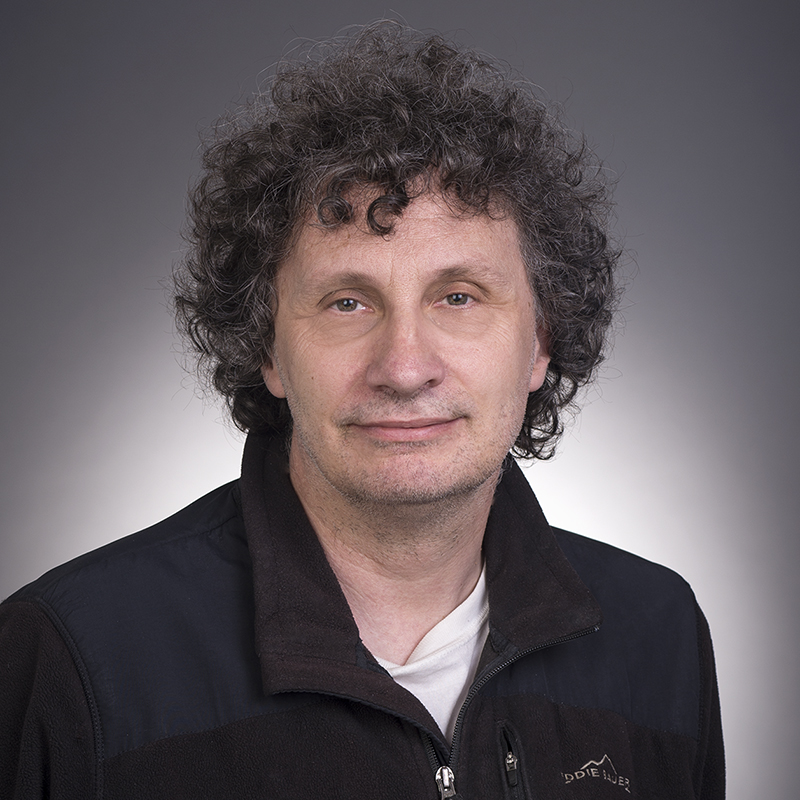 James Cummings合作论文数Mathematical Sciences, Mellon College of Science, Carnegie Mellon University6
 Saharon Shelah合作论文数Einstein Institute of Mathematics, The Hebrew University of Jerusalem;Rutgers University5
 Stevo Todorcevic合作论文数Department of Mathematics, Faculty of Arts & Science, University of Toronto;Centre National de la Recherche Scientifique in Paris5
 Carol Wood合作论文数3
 Su Gao (高速)合作论文数School of Mathematical Sciences, Nankai University3Andre Scedrov合作论文数2Paul C. Eklof合作论文数2Julia F. Knight合作论文数2Sy D. Friedman合作论文数2
 Steffen Lempp合作论文数Department of Mathematics
University of Wisconsin–Madison2
Steffen Lempp合作论文数Department of Mathematics
University of Wisconsin–Madison2 Anton Gorodetski合作论文数UC Irvine2
 Marcos Mailoc López De Prado合作论文数Lawrence Berkeley Natl Lab2Slawomir Solecki合作论文数University of Illinois at Urbana-Champaign2Kobi Peterzil合作论文数2Michael Makkai合作论文数Department of Mathematics, McGill University2Daniel J. Rudolph合作论文数2
 Alexandru Baltag合作论文数Comlab, the Oxford University Computing Laboratory2Randall Dougherty合作论文数Center for Communications Research2Federico Rodríguez-Hertz合作论文数1Peter Cambridge合作论文数1
 Mauro Ferrari合作论文数1Aaron Hill合作论文数1
 Felipe García-Ramos合作论文数Instituto de Física, Universidad Autónoma de San Luis Potosí1
 Stephen A. Cook合作论文数Department of Computer Science, University of Toronto1James E. Baumgartner合作论文数1Péter Komjáth合作论文数1Nishant Chandgotia合作论文数Sch Math Sci, Hebrew Univ Jerusalem1francois le maitre合作论文数1
 Gerhard Jaeger合作论文数1Rafael M. Diaz合作论文数1
 Michael Benedikt合作论文数University of Oxford1
 John Burgess合作论文数Employment Studies Centre;University of Newcastle;Employment Studies Centre, University of Newcastle1Uri Abraham合作论文数Ben-Gurion Univ. of the Negev1Pierangelo Miglioli合作论文数1
 Leonard J. Schulman合作论文数Computing and Mathematical Sciences Department, Division of Engineering and Applied Science, California Institute of Technology1Ulrich Kohlenbach合作论文数Department of Computer Science;University of Aarhus;Department of Computer Science, University of Aarhus1John P. Burgess合作论文数1Stan Wagon合作论文数1Michael Rathjen合作论文数1
 Menachem Kojman合作论文数Department of Mathematics and Computer Science, Ben Gurion University of the Negev1
 Richard A. Shore合作论文数Department of Mathematics, Cornell University1
 Saul A. Kripke合作论文数Princeton University Princeton1
 Simo Knuuttila合作论文数Department of Systematic Theology, Academy of Finland1
 Gilbert Herdt合作论文数1
 Aaron Belkin合作论文数San Francisco State University1Jerome Buzzi合作论文数Mathematics Subject Classification: 37 a€” Dynamical systems and ergodic theory1
 Robert M Kertzner合作论文数Columbia University;City University of New York;Columbia University, City University of New York1




