The permanent closure of large marine areas is often regarded as an effective strategy for conserving marine biodiversity. However, implementing large permanent closures can be difficult in many small-scale fisheries systems, where communities depend heavily on marine resources for their livelihoods and food security, and where issues of equity and access must be carefully considered. Around the world, many coastal communities instead rely on temporary closures - areas that open and close over time - to balance ecological recovery with ongoing use. Despite their prevalence and potential, these dynamic approaches remain conceptually underdeveloped compared to permanent marine-protected areas. This article calls for a reevaluation of marine management's prevailing focus on space by bringing time to the forefront of analysis. We introduce a framework that distinguishes two key temporal dimensions - duration and cyclicity - to clarify how different temporal designs shape ecological, social and governance outcomes. Within this framework, cyclicity captures how closures and openings alternate over time, including the relative balance between periods of access and closure (i.e., the access ratio). Drawing on diverse examples where temporary management is implemented, this framework lays the groundwork for developing more formal theory and comparative evidence about how temporal strategies can align ecological recovery with livelihood dynamics in resource-dependent systems.
Small-scale fisheries provide seafood for billions of people and are one of the largest employers in many coastal communities. Those households engaged in these fisheries who maintain diverse income sources are generally thought to be better prepared to cope with social or ecological perturbations such as the crises presented by the COVID-19 pandemic. One outcome of the COVID-19 crisis was the collapse of international tourism after many nations instituted strict border controls to slow the virus’s spread, severely impacting coastal communities that depend on tourism-related employment. This research assessed the effects of COVID-19-induced collapse of tourism on small-scale coral reef fishers and households in Moorea, French Polynesia. Ninety-five households were surveyed about their livelihoods, fishing, demographics, and income-generating occupations before and after the lockdown. Shifts in fish biomass were evaluated using time series data collected through underwater visual surveys, and roadside fish vendors were surveyed to assess fish sales. Results showed that after tourism employment evaporated more Moorea households began fishing to boost their incomes and food security. However, the increase in fishing pressure showed no appreciable decline in the biomass of fishable species. The households responsible for the increased fishing activities were those who were working in the tourism economy prior to the pandemic and subsequently lost their jobs. Households that combined fishing with construction or other stable sectors showed greater abilities to cope, while those combining fishing with tourism were heavily impacted. Importantly, results showed that those households devoted solely to fishing managed the crisis adeptly due to their superior fishing skills and ecological knowledge. This pattern suggests that not all forms of household livelihood diversification confer equal advantages and that resource-dependent households are not necessarily intrinsically less resilient. More generally, it is argued that we should be cautious when promoting livelihood diversification as a blanket solution to decrease household vulnerability, and that ecological knowledge diversity is underappreciated.
Both natural and anthropogenic stressors are increasing on coral reefs, resulting in large-scale loss of coral and potential shifts from coral- to macroalgae-dominated community states. Two factors implicated in shifts to macroalgae are nutrient enrichment and fishing of reef herbivores. Although either of these factors alone could facilitate establishment of macroalgae, reefs may be particularly vulnerable to coral-to-algae phase shifts in which strong bottom-up forcing from nutrient enrichment is accompanied by a weakening of herbivore control of macroalgae via intense fishing. We explored spatial heterogeneity and covariance in these drivers on reefs in the lagoons of Moorea, French Polynesia, where the local fishery heavily targets herbivorous fishes and there are spatially variable inputs of nutrients from agricultural fertilizers and wastewater systems. Spatial patterns of fishing and nutrient enrichment were not correlated at the two landscape scales we examined: among the 11 interconnected lagoons around the island or among major habitats (fringing reef, mid-lagoon, back reef) within a lagoon. This decoupling at the landscape scale resulted from patterns of covariation between enrichment and fishing that differed qualitatively between cross-shore and long-shore directions. At the cross-shore scale, nutrient enrichment declined but fishing increased from shore to the crest of the barrier reef. By contrast, nutrient enrichment and fishing were positively correlated in the long-shore direction, with both increasing with proximity to a pass in the barrier reef. Contrary to widespread assumptions in the scientific literature that human coastal population density correlates with impact on marine ecosystems and that fishing effort declines linearly with distance from the shore, these local stressors produced a complex spatial mosaic of reef vulnerabilities. Our findings support spatially explicit management involving the control of anthropogenic nutrients and strategic reductions in fishing pressure on herbivores by highlighting specific areas to target for management actions.
This paper presents an ethnographic case study of the design and revision of a decentralized marine management scheme implemented on the island of Moorea, French Polynesia named Plan de Gestion de l'Espace Maritime (PGEM). Drawing on an analysis of over 50 consultative workshops and meetings, held from 2018 to 2021 during the PGEM revision, we document the materials, discourses, and practices local stakeholders (e.g., fishers, cultural and environmental activists, government staff, and scientists) combine to build their interpretations of PGEM success or failure. We examine the diversity of domains these interpretations draw from (ecology, marine livelihoods, culture, religion, and politics) and how they are put into practice in people's engagement with-or resistance to-the local marine management and governance design. Our results highlight how the controversies around the revision of Moorea's PGEM overflowed the boundaries of ecology as construed by scientific experts. Stakeholders interpreted "marine resource management" as something well beyond just "marine resources" to include politics, identity, Polynesian cosmology, and livelihoods. Our findings provide generalizable patterns for understanding how natural-resource management policies are received and repurposed by local actors.
Many coral reefs have shifted from coral‐ to macroalgae‐dominated community states, heightening the need to understand resilience of coral communities. Fishing on herbivores often reduces resilience of the coral state, as lower herbivory fosters macroalgal establishment. Despite the acknowledged importance of fishing, relatively little attention has been paid to how fishers change their behavior as macroalgae overgrow reefs, or how the resulting dynamic feedbacks might affect resilience. We address these questions in Moorea, French Polynesia, where local fishers target herbivorous fishes and where shifts to algal dominance have occurred on some lagoon reefs. We quantified fisher preferences for reef habitats where they target various taxa. For the two most ecologically important taxa of herbivores targeted in the fishery, parrotfish (Scaridae) and unicornfish ( Naso ), fishers preferred to harvest from locations with less macroalgae. We incorporated these habitat preferences into a spatially explicit social–ecological model of reef dynamics to explore consequences of changes in fishing behavior for resilience of the coral state, particularly following disturbance. Fishing that targets low‐macroalgae locations typically generates resilience by facilitating local recovery of herbivores and thus of coral in the less‐targeted macroalgae‐dominated patches. However, the resulting movement of fishers across the seascape can sometimes create fragility; if coral loss is widespread, avoidance of macroalgae concentrates fishing in patches having the highest coral cover, resulting in loss of coral via reduced herbivory. Our results emphasize that resilience and coral‐macroalgae regime shifts cannot be understood without considering humans as a dynamic part of the system.
Ecosystem services (ES) are heralded as an approach that communicates across disciplines and between researchers and resource managers, encouraging more environmentally sustainable human behavior. However, most studies presuppose that "values" are ontologically distinct from "ecosystem services" without examining what this framing enables and occludes about human and other-than-human relations. Through a reflexive research approach, we conduct a conventional photo elicitation ES survey among four groups in Moorea, French Polynesia, while also eliciting respondents' evaluations of the survey method, and documenting the method in action as participants interacted with it. Photo elicitation results suggest that fishers valued the subsistence fishery while scientists favored habitats, yet all stakeholders were concerned about the role of economic activities in contributing to environmental degradation. Yet, survey participants had difficulties with interpreting the photos of ecosystem services as intended, an indication that the ES framework commits to a nature-culture dualism and displaces other ways of ordering human and other-than-human relations, particularly those present throughout the Global South. We argue that ecosystem services research is best treated as a situated practice where researcher and research participants jointly produce intended and unintended results and outcomes.
Reviewed by: Destination Anthropocene: Science and Tourism in The Bahamas by Amelia Moore Matthew Lauer Amelia Moore, Destination Anthropocene: Science and Tourism in The Bahamas. Oakland: University of California Press, 2019. 216 pp. During a boisterous academic conference in the late 1990s Paul Crutzen, an atmospheric chemist, made an off-the-cuff comment that we no longer live in the Holocene, but have entered the age of humans and are living in the Anthropocene geologic epic. The scientists were reviewing the growing evidence that human beings had fundamentally altered the geologic record to the extent that they could now declare that we had entered a new geologic anthropogenic era. Although defining this new geohistorical period continues to be controversial within geology, the concept has overrun its original boundaries, capturing the attention of scientists across the social and natural sciences as well as the humanities. In her lively and highly readable book, Amelia Moore explores the Anthropocene not as a concept to be contemplated or debated, but its effects in a particulate locale—the Bahamas. Rather than detailing Bahamian environmental degradation, the loss of species, or efforts to mitigate sea level rise, she instead describes how the idea of the Anthropocene has propelled the rise of "Global Change Science" (GCS), a burgeoning conglomeration of natural and social science disciplines focused on characterizing anthropologic change occurring to the earth system. She then asks a provocative question: What are the effects of GCS knowledge and practice in the lives of Bahamians? To answer this, Moore adeptly draws on series a of ethnographic accounts highlighting GCS field work at sites across the Bahamas. We learn that GCS researchers are descending on the islands in increasing [End Page 181] numbers, herself included, to document their environmental fragility as anthropogenic pressures mount. In each case she explores the intersection of GCS knowledge and the Bahamian tourist industry. The Bahamas, of course, have a long history as a global tourism destination. With its gorgeous coastlines, idyllic beaches, and close geographic proximity to the United States, tourism has formed the basis of the islands' economy for decades. In Moore's account, she details how the tourist industry has adeptly repositioned the islands' imaginary over time to attract tourists. The most recent form of repackaging involves leveraging GCS scientific discoveries and concepts into profitable tourist attractions. Thus a paradox lies at the heart of what Moore calls "Anthropocene tourism" (21): as GCS attempts to understand and protect critical habitats and threatened species on the island, the tourism industry capitalizes on their knowledge and practices to attract more tourists and perpetuate the damaging anthropogenic effects of the tourism industry. In the opening chapter, which also serves as the now requisite ethnographic "entrance story," Moore provides a personal and nuanced account from the frontlines of GCS research in action. Moore was introduced to the Bahamas as an undergraduate student employed by an interdisciplinary funded GCS project. As a ground-level field researcher conducting pilot surveys in a rural fishing community, she describes ethnographically how concepts such as "individual," "stakeholder," "livelihood," and the "social" tend to be produced rather than explained by GCS research. More broadly, she makes that point that GCS conceives of sociality in specific ways that enables its legibility. "Local people" people are framed as objects that need to be enumerated and described rather than project collaborators or knowledge producers who can contribute their own insights. Armed with "social" data, her project was also tasked with providing scientific input into the placement of marine protected areas (MPAs). The project was a means to validate environmental management in the region, which in this case was the creation of an MPA suitable for marine tourism. Moore's account uniquely contributes to the literature about the impacts of MPAs by suggesting that they not only extend the state apparatus, including tourism interests, but also the reach of GCS research itself. The second chapter, "Educational Islands," describes another manifestation of the Anthropocene: the entangling of science, tourism, and education. Here we become acquainted with a small island where a defunct, large-scale hotel was converted into an elite high school academy that [End Page 182] trains mainly US students in environmental science and...
Using two-stage Rosen’s model, this evaluation aims to deduce the implicit prices of the coral-reef fish species most commonly encountered in road-side market in Moorea (French Polynesia) during 2014–2015, from the prices of bundles of species, called tuis. Index value are calculated which vary, all else equal, between 33% (Selar) and 137% (Acanthurus) of the price of the reference species (Scarus). Estimating translogarithmic specifications allow the identification of positive cross-species elasticities which imply complementarity between reef species in each tui. The composition of tuis is therefore a market strategy to enhance the value of catches. These results demonstrate the relevance of empirical economic analysis in improving the understanding of small-scale coral-reef fisheries in the Pacific.
As the number of academic manuscripts explicitly referencing the Anthropocene increases, a theme that seems to tie them all together is the general lack of continuity on how we should define the Anthropocene. In an attempt to formalize the concept, the Anthropocene Working Group (AWG) is working to identify, in the stratigraphic record, a Global Stratigraphic Section and Point (GSSP) or golden spike for a mid-twentieth century Anthropocene starting point. Rather than clarifying our understanding of the Anthropocene, we argue that the AWG’s effort to provide an authoritative definition undermines the original intent of the concept, as a call-to-arms for future sustainable management of local, regional, and global environments, and weakens the concept’s capacity to fundamentally reconfigure the established boundaries between the social and natural sciences. To sustain the creative and productive power of the Anthropocene concept, we argue that it is best understood as a “boundary object,” where it can be adaptable enough to incorporate multiple viewpoints, but robust enough to be meaningful within different disciplines. Here, we provide two examples from our work on the deep history of anthropogenic seascapes, which demonstrate the power of the Anthropocene to stimulate new thinking about the entanglement of humans and non-humans, and for building interdisciplinary solutions to modern environmental issues.
The transformation of coral reefs has profound implications for millions of people. However, the interactive effects of changing reefs and fishing remain poorly resolved. We combine underwater surveys (271 000 fishes), catch data (18 000 fishes), and household surveys (351 households) to evaluate how reef fishes and fishers in Moorea, French Polynesia responded to a landscape-scale loss of coral caused by sequential disturbances (a crown-of-thorns sea star outbreak followed by a category 4 cyclone). Although local communities were aware of the disturbances, less than 20% of households reported altering what fishes they caught or ate. This contrasts with substantial changes in the taxonomic composition in the catch data that mirrored changes in fish communities observed on the reef. Our findings highlight that resource users and scientists may have very different interpretations of what constitutes ‘change’ in these highly dynamic social–ecological systems, with broad implications for successful co-management of coral reef fisheries.
 Sally Holbrook合作论文数Marine Science Institute, University of California, Santa Barbara11
 Andrew Rassweiler合作论文数Marine Science Institute, University of California11
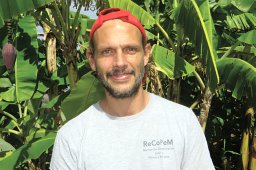 Jean Wencelius合作论文数8
 Shankar Aswani Canela合作论文数Department of Anthropology;Program in Marine Science;University of California , Santa Barbara;Department of Anthropology, University of California , Santa Barbara8
 Russell Schmitt合作论文数Department of Ecology, Evolution and Marine Biology, University of California6
 Sarah E. Lester合作论文数Marine Science Institute, University of California4Scott D. Miller合作论文数3
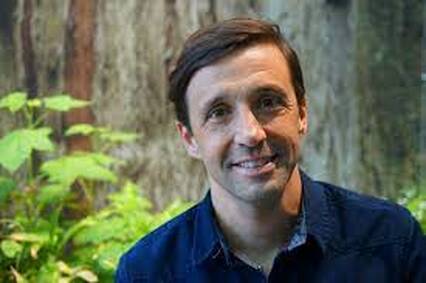 Todd J. Braje合作论文数Department of Anthropology, San Diego State University3
 Joachim Claudet合作论文数3
 Chelsea E. Hunter合作论文数Dept Anthropol, Ohio State Univ2Rakamaly Madi Moussa合作论文数2
 Simon Albert合作论文数School of Civil Engineering, Faculty of Engineering, Architecture and Information Technology, The University of Queensland2
 Ben Halpern合作论文数Bren School of Environmental Science & Management, University of California, Santa Barbara;National Center for Ecological Analysis and Synthesis, University of California, Santa Barbara2
 Tamatoa Bambridge合作论文数Rédaction en chef2
 Thomas C. Adam合作论文数Department of Ecology, Evolution and Marine Biology, University of California2A. Nassiri合作论文数1Lawrence Kiko合作论文数1Paige Dawson合作论文数1savanna schuermann合作论文数1Jaime Matera合作论文数1douglas la rose合作论文数1
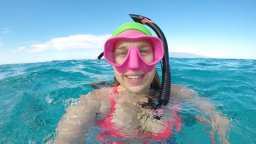 Alexandra K. Dubel合作论文数Dept Biol Sci, Florida State Univ1
 Pierre Leenhardt合作论文数1
 Katrina S. Munsterman合作论文数Dept Ecol & Evolutionary Biol, Univ Michigan1Luke Campanella合作论文数1
 Hunter Stanton Lenihan (Hunter S. Lenihan)合作论文数Bren Scool of Environmental Science and Management, University of California, Santa Barbara1Herbert L. Mitchell合作论文数1
 Olivier Thébaud合作论文数IFREMER, UMR AMURE1
 Kimberly A. Selkoe合作论文数Hawaii Institute of Marine Biology;University of Hawaii;Hawaii Institute of Marine Biology, University of Hawaii1
 Scott Michael Fitzpatrick合作论文数Department of Anthropology, University of Oregon1
 Arielle Sarah Levine合作论文数University of California1
 Andrew J Brooks合作论文数Marine Science Institute, University of California Santa Barbara1




