The purpose of predictive modeling on relational data is to predict future or missing values in a relational database, for example, future purchases of a user, risk of readmission of the patient, or the likelihood that a financial transaction is fraudulent. Typically powered by machine learning methods, predictive models are used in recommendations, financial fraud detection, supply chain optimization, and other systems, providing billions of predictions every day. However, training a machine learning model requires manual work to extract the required training examples - prediction entities and target labels - from the database, which is slow, laborious, and prone to mistakes. Here, we present the Predictive Query Language (PQL), an SQL-inspired declarative language for defining predictive tasks on relational databases. PQL allows specifying a predictive task in a single declarative query, enabling the automatic computation of training labels for a large variety of machine learning tasks, such as regression, classification, time-series forecasting, and recommender systems. PQL is already successfully integrated and used in a collection of use cases as part of a predictive AI platform. The versatility of the language can be demonstrated through its many ongoing use cases, including financial fraud, item recommendations, and workload prediction. We demonstrate its versatile design through two implementations; one for small-scale, low-latency use and one that can handle large-scale databases.
Well-designed open-source software drives progress in Machine Learning (ML) research. While static graph ML enjoys mature frameworks like PyTorch Geometric and DGL, ML for temporal graphs (TG), networks that evolve over time, lacks comparable infrastructure. Existing TG libraries are often tailored to specific architectures, hindering support for diverse models in this rapidly evolving field. Additionally, the divide between continuous- and discrete-time dynamic graph methods (CTDG and DTDG) limits direct comparisons and idea transfer. To address these gaps, we introduce Temporal Graph Modelling (TGM), a research-oriented library for ML on temporal graphs, the first to unify CTDG and DTDG approaches. TGM offers first-class support for dynamic node features, time-granularity conversions, and native handling of link-, node-, and graph-level tasks. Empirically, TGM achieves an average 7.8× speedup across multiple models, datasets, and tasks compared to the widely used DyGLib, and an average 175× speedup on graph discretization relative to available implementations. Beyond efficiency, we show in our experiments how TGM unlocks entirely new research possibilities by enabling dynamic graph property prediction and time-driven training paradigms, opening the door to questions previously impractical to study.
Relational Deep Learning (RDL) is a promising approach for building state-of-the-art predictive models on multi-table relational data by representing it as a heterogeneous temporal graph. However, commonly used Graph Neural Network models suffer from fundamental limitations in capturing complex structural patterns and long-range dependencies that are inherent in relational data. While Graph Transformers have emerged as powerful alternatives to GNNs on general graphs, applying them to relational entity graphs presents unique challenges: (i) Traditional positional encodings fail to generalize to massive, heterogeneous graphs; (ii) existing architectures cannot model the temporal dynamics and schema constraints of relational data; (iii) existing tokenization schemes lose critical structural information. Here we introduce the Relational Graph Transformer (RelGT), the first graph transformer architecture designed specifically for relational tables. RelGT employs a novel multi-element tokenization strategy that decomposes each node into five components (features, type, hop distance, time, and local structure), enabling efficient encoding of heterogeneity, temporality, and topology without expensive precomputation. Our architecture combines local attention over sampled subgraphs with global attention to learnable centroids, incorporating both local and database-wide representations. Across 21 tasks from the RelBench benchmark, RelGT consistently matches or outperforms GNN baselines by up to 18%, establishing Graph Transformers as a powerful architecture for Relational Deep Learning.
We introduce KumoRFM-2, the next iteration of a pre-trained foundation model for relational data. KumoRFM-2 supports in-context learning as well as fine-tuning and is applicable to a wide range of predictive tasks. In contrast to tabular foundation models, KumoRFM-2 natively operates on relational data, processing one or more connected tables simultaneously without manual table flattening or target variable generation, all while preserving temporal consistency. KumoRFM-2 leverages a large corpus of synthetic and real-world data to pre-train across four axes: the row and column dimensions at the individual table level, and the foreign key and cross-sample dimensions at the database level. In contrast to its predecessor, KumoRFM-2 injects task information as early as possible, enabling sharper selection of task-relevant columns and improved robustness to noisy data. Through extensive experiments on 41 challenging benchmarks and analysis around expressivity and sensitivity, we demonstrate that KumoRFM-2 outperforms supervised and foundational approaches by up to 8
PyG (PyTorch Geometric) has evolved significantly since its initial release, establishing itself as a leading framework for Graph Neural Networks. In this paper, we present Pyg 2.0 (and its subsequent minor versions), a comprehensive update that introduces substantial improvements in scalability and real-world application capabilities. We detail the framework's enhanced architecture, including support for heterogeneous and temporal graphs, scalable feature/graph stores, and various optimizations, enabling researchers and practitioners to tackle large-scale graph learning problems efficiently. Over the recent years, PyG has been supporting graph learning in a large variety of application areas, which we will summarize, while providing a deep dive into the important areas of relational deep learning and large language modeling.
Recommendation systems predominantly utilize two-tower architectures, which evaluate user-item rankings through the inner product of their respective embeddings. However, one key limitation of two-tower models is that they learn a pair-agnostic representation of users and items. In contrast, pair-wise representations either scale poorly due to their quadratic complexity or are too restrictive on the candidate pairs to rank. To address these issues, we introduce Context-based Graph Neural Networks (ContextGNNs), a novel deep learning architecture for link prediction in recommendation systems. The method employs a pair-wise representation technique for familiar items situated within a user's local subgraph, while leveraging two-tower representations to facilitate the recommendation of exploratory items. A final network then predicts how to fuse both pair-wise and two-tower recommendations into a single ranking of items. We demonstrate that ContextGNN is able to adapt to different data characteristics and outperforms existing methods, both traditional and GNN-based, on a diverse set of practical recommendation tasks, improving performance by 20\% on average.
This paper introduces FASTEN, a cutting-edge library developed to address the computational challenges inherent in Heterogeneous Graph Neural Networks (HGNNs). The key focus of FASTEN is the optimization of segmented matrix multiplication, a critical operator where existing GNN frameworks and linear algebra libraries often fall short. FASTEN offers an array of solutions to these challenges, including a routing table designed for efficient workload scheduling, adaptive algorithms tailored for handling segments of different shapes and segmented dimensions, and a performance model-guided autotuner to select the best configurations. Furthermore, FASTEN implements interfaces to integrate with widely-used frameworks like PyG, ensuring straightforward adoption in existing HGNN models with minimal adjustments. We have performed comprehensive benchmarks on advanced GPU architectures, including NVIDIA H100, A100, and RTX4090, to demonstrate that FASTEN significantly improves both operator-wise and end-to-end performance across various datasets and HGNNs.
We present RelBench, a public benchmark for solving predictive tasks over relational databases with graph neural networks. RelBench provides databases and tasks spanning diverse domains and scales, and is intended to be a foundational infrastructure for future research. We use RelBench to conduct the first comprehensive study of Relational Deep Learning (RDL) (Fey et al., 2024), which combines graph neural network predictive models with (deep) tabular models that extract initial entity-level representations from raw tables. End-to-end learned RDL models fully exploit the predictive signal encoded in primary-foreign key links, marking a significant shift away from the dominant paradigm of manual feature engineering combined with tabular models. To thoroughly evaluate RDL against this prior gold-standard, we conduct an in-depth user study where an experienced data scientist manually engineers features for each task. In this study, RDL learns better models whilst reducing human work needed by more than an order of magnitude. This demonstrates the power of deep learning for solving predictive tasks over relational databases, opening up many new research opportunities enabled by RelBench.
We present PyTorch Frame, a PyTorch-based framework for deep learning over multi-modal tabular data. PyTorch Frame makes tabular deep learning easy by providing a PyTorch-based data structure to handle complex tabular data, introducing a model abstraction to enable modular implementation of tabular models, and allowing external foundation models to be incorporated to handle complex columns (e.g., LLMs for text columns). We demonstrate the usefulness of PyTorch Frame by implementing diverse tabular models in a modular way, successfully applying these models to complex multi-modal tabular data, and integrating our framework with PyTorch Geometric, a PyTorch library for Graph Neural Networks (GNNs), to perform end-to-end learning over relational databases.
Time series forecasting has attracted significant attention in recent decades. Previous studies have demonstrated that the Channel-Independent (CI) strategy improves forecasting performance by treating different channels individually, while it leads to poor generalization on unseen instances and ignores potentially necessary interactions between channels. Conversely, the Channel-Dependent (CD) strategy mixes all channels with even irrelevant and indiscriminate information, which, however, results in oversmoothing issues and limits forecasting accuracy. There is a lack of channel strategy that effectively balances individual channel treatment for improved forecasting performance without overlooking essential interactions between channels. Motivated by our observation of a correlation between the time series model's performance boost against channel mixing and the intrinsic similarity on a pair of channels, we developed a novel and adaptable \textbf{C}hannel \textbf{C}lustering \textbf{M}odule (CCM). CCM dynamically groups channels characterized by intrinsic similarities and leverages cluster information instead of individual channel identities, combining the best of CD and CI worlds. Extensive experiments on real-world datasets demonstrate that CCM can (1) boost the performance of CI and CD models by an average margin of 2.4% and 7.2% on long-term and short-term forecasting, respectively; (2) enable zero-shot forecasting with mainstream time series forecasting models; (3) uncover intrinsic time series patterns among channels and improve interpretability of complex time series models.
Much of the world's most valued data is stored in relational databases and data warehouses, where the data is organized into many tables connected by primary-foreign key relations. However, building machine learning models using this data is both challenging and time consuming. The core problem is that no machine learning method is capable of learning on multiple tables interconnected by primary-foreign key relations. Current methods can only learn from a single table, so the data must first be manually joined and aggregated into a single training table, the process known as feature engineering. Feature engineering is slow, error prone and leads to suboptimal models. Here we introduce an end-to-end deep representation learning approach to directly learn on data laid out across multiple tables. We name our approach Relational Deep Learning (RDL). The core idea is to view relational databases as a temporal, heterogeneous graph, with a node for each row in each table, and edges specified by primary-foreign key links. Message Passing Graph Neural Networks can then automatically learn across the graph to extract representations that leverage all input data, without any manual feature engineering. Relational Deep Learning leads to more accurate models that can be built much faster. To facilitate research in this area, we develop RelBench, a set of benchmark datasets and an implementation of Relational Deep Learning. The data covers a wide spectrum, from discussions on Stack Exchange to book reviews on the Amazon Product Catalog. Overall, we define a new research area that generalizes graph machine learning and broadens its applicability to a wide set of AI use cases.
In recent years, algorithms and neural architectures based on the Weisfeiler--Leman algorithm, a well-known heuristic for the graph isomorphism problem, have emerged as a powerful tool for machine learning with graphs and relational data. Here, we give a comprehensive overview of the algorithm's use in a machine-learning setting, focusing on the supervised regime. We discuss the theoretical background, show how to use it for supervised graph and node representation learning, discuss recent extensions, and outline the algorithm's connection to (permutation-)equivariant neural architectures. Moreover, we give an overview of current applications and future directions to stimulate further research.
We present the Temporal Graph Benchmark (TGB), a collection of challenging and diverse benchmark datasets for realistic, reproducible, and robust evaluation of machine learning models on temporal graphs. TGB datasets are of large scale, spanning years in duration, incorporate both node and edge-level prediction tasks and cover a diverse set of domains including social, trade, transaction, and transportation networks. For both tasks, we design evaluation protocols based on realistic use-cases. We extensively benchmark each dataset and find that the performance of common models can vary drastically across datasets. In addition, on dynamic node property prediction tasks, we show that simple methods often achieve superior performance compared to existing temporal graph models. We believe that these findings open up opportunities for future research on temporal graphs. Finally, TGB provides an automated machine learning pipeline for reproducible and accessible temporal graph research, including data loading, experiment setup and performance evaluation. TGB will be maintained and updated on a regular basis and welcomes community feedback. TGB datasets, data loaders, example codes, evaluation setup, and leaderboards are publicly available at https://tgb.complexdatalab.com/.
Parameter sharing is a key technique in various state-of-the-art machine learning approaches. The underlying idea is simple yet effective. Given a highly overparametrized model whose input data obeys some repetitive structure, multiple subsets of parameters are tied together. On the one hand, this reduces the number of parameters, which simplifies the corresponding estimation problem. On the other hand, information is transferred from one part of the data space to another, thus allowing the model to learn patterns that never explicitly occurred in the training data. In the context of resource constrained data analysis, the primary interest lies in the reduced memory requirements, induced by the lower parameter space dimension and a presumably lower sample complexity. In this contribution, the concept that underlies parameter sharing is transferred to the spatio-temporal domain. More precisely, a re-parametrization of undirected probabilistic graphical models, known as Markov Random Fields (MRFs) is proposed for non-stationary time series of finite length. MRFs are equivalent to deep latent variable models [568] but obey an easier-to-interpret structure. Data for such spatio-temporal models arises naturally in distributed sensor networks. The corresponding machine learning models are, however, far too large to be processed directly at the sensor level. Re-parametrized probabilistic models exhibit a very sparse parameter space that facilitates probabilistic inference directly from a compressed model. This section studies different variants of the underlying re-parametrization and compares them in numerical experiments on benchmark data. Furthermore, we propose how the learning procedure can be embedded directly into a sensor network: proximal optimization is applied in a distributed setting. It turns out that the parameter optimization is purely local and that communication between sensor nodes is required only for the gradient computation. Different real-world applications, including traffic models and sensor network models underpin the practical relevance of compressed Spatio-Temporal Random Fields (STRF).
We present GNNAutoScale (GAS), a framework for scaling arbitrary message-passing GNNs to large graphs. GAS prunes entire sub-trees of the computation graph by utilizing historical embeddings from prior training iterations, leading to constant GPU memory consumption in respect to input node size without dropping any data. While existing solutions weaken the expressive power of message passing due to sub-sampling of edges or non-trainable propagations, our approach is provably able to maintain the expressive power of the original GNN. We achieve this by providing approximation error bounds of historical embeddings and show how to tighten them in practice. Empirically, we show that the practical realization of our framework, PyGAS, an easy-to-use extension for PyTorch Geometric, is both fast and memory-efficient, learns expressive node representations, closely resembles the performance of their non-scaling counterparts, and reaches state-of-the-art performance on large-scale graphs.
Graph neural networks have been shown to be vulnerable to adversarial attacks. While the majority of the literature focuses on such vulnerability in node-level classification tasks, little effort has been dedicated to attacks on graph-level classification, an important problem with numerous real-life applications such as biochemistry and social network analysis. The few existing methods often require unrealistic setups, such as access to internal information of the victim models, or an impractically-large number of queries. We present a novel Bayesian optimisation-based attack method for graph classification models. Our method is black-box, query-efficient and parsimonious with respect to the perturbation applied. We empirically validate the effectiveness and flexibility of the proposed method and analyse patterns behind the adversarial samples produced, which may shed further light on the adversarial robustness of graph classification models.
In recent years, algorithms and neural architectures based on the Weisfeiler-Leman algorithm, a well-known heuristic for the graph isomorphism problem, emerged as a powerful tool for (supervised) machine learning with graphs and relational data. Here, we give a comprehensive overview of the algorithm's use in a machine learning setting. We discuss the theoretical background, show how to use it for supervised graph- and node classification, discuss recent extensions, and its connection to neural architectures. Moreover, we give an overview of current applications and future directions to stimulate research.
Enabling effective and efficient machine learning (ML) over large-scale graph data (e.g., graphs with billions of edges) can have a great impact on both industrial and scientific applications. However, existing efforts to advance large-scale graph ML have been largely limited by the lack of a suitable public benchmark. Here we present OGB Large-Scale Challenge (OGB-LSC), a collection of three real-world datasets for facilitating the advancements in large-scale graph ML. The OGB-LSC datasets are orders of magnitude larger than existing ones, covering three core graph learning tasks---link prediction, graph regression, and node classification. Furthermore, we provide dedicated baseline experiments, scaling up expressive graph ML models to the massive datasets. We show that expressive models significantly outperform simple scalable baselines, indicating an opportunity for dedicated efforts to further improve graph ML at scale. Moreover, OGB-LSC datasets were deployed at ACM KDD Cup 2021 and attracted more than 500 team registrations globally, during which significant performance improvements were made by a variety of innovative techniques. We summarize the common techniques used by the winning solutions and highlight the current best practices in large-scale graph ML. Finally, we describe how we have updated the datasets after the KDD Cup to further facilitate research advances. The OGB-LSC datasets, baseline code, and all the information about the KDD Cup are available at https://ogb.stanford.edu/docs/lsc/.
 Jan Eric Lenssen合作论文数Department of Computer Vision and Machine Learning, Max Planck Institute for Informatics;Kumo.AI15
 Jure Leskovec合作论文数Department of Computer Science, Stanford University14
 Weihua Hu (胡緯華)合作论文数Anthropic8
 Christopher Morris合作论文数Faculty of Computer Science, RWTH Aachen University6
 Nils M. Kriege合作论文数5
 Frank Weichert合作论文数Department of Computer Science, Technische Universität Dortmund5
 Akihiro Nitta合作论文数4
 Vid Kocijan合作论文数Univ Oxford4Zecheng Zhang合作论文数4Xinwei He合作论文数3Yiwen Yuan合作论文数2Rishabh Ranjan合作论文数2
 Martin Ritzert合作论文数RWTH Aachen University2Manan Shah合作论文数The Harker School2
 Guillaume Rabusseau合作论文数Department of Computer Science and Operations Research,Universite de Montreal;Quebec Artificial Intelligence Institute, Mila2
 William L. Hamilton合作论文数Citadel LLC;IVADO Labs;Relation Therapeutics2
 Kexin Huang合作论文数Stanford University2
 Michael Bronstein合作论文数Department of Computer Science, University of Oxford;AITHYRA Research Institute for Biomedical Artificial Intelligence2
 Joshua Robinson合作论文数Massachusetts Institute of Technology2
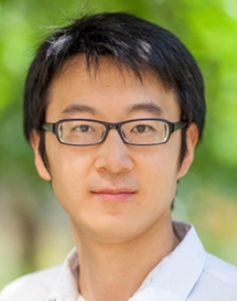 Yuxiao Dong (东昱晓)合作论文数Institute of Computer Software, Department of Computer Science and Technology, Tsinghua University2
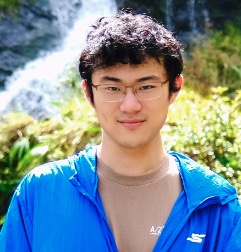 Hongyu Ren合作论文数Meta2
 Martin Grohe合作论文数Lehrstuhl für Informatik 7, RWTH Aachen University2
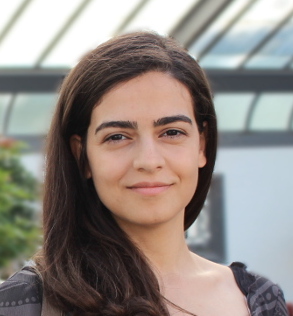 Reihaneh Rabbany合作论文数School of Computer Science, McGill University2
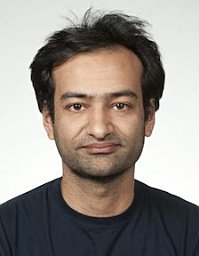 Gaurav Rattan合作论文数The Institute of Mathematical Sciences2Shenyang(Andy) Huang合作论文数1Blaz Stojanovic合作论文数1Alejandro Dobles合作论文数1Binqian Yin合作论文数1
 Jialin Chen合作论文数Yale University1
 Jacob Chmura合作论文数Mila - Quebec Artificial Intelligence Institute;McGill University1Nico Bertram合作论文数1
 Jiajia Li合作论文数1Zhitao Ying合作论文数1
 Charilaos Kanatsoulis合作论文数Department of Electrical and Systems Engineering, University of Pennsylvania1
 Farimah Poursafaei合作论文数School of Computer Science, McGill University1
 Jacob Danovitch合作论文数1Denis Fisseler合作论文数1
 Jiaqi Han合作论文数Stanford University1
 Jonas Ellert合作论文数TU Dortmund University1
 Keren Zhou (周可人)合作论文数Computer Science Department, Rice University1Christian Eichhorn合作论文数Technische Universitat Darmstadt1
 Bastian Grossenbacher Rieck合作论文数AIDOS Lab, Institute of AI for Health, Helmholtz Munich;Faculty of Mathematics, Technical University of Munich1
 Aosong Feng (冯傲松)合作论文数Amazon Web Services1
 Bowen Liu合作论文数Andreessen Horowitz1
 Jiaxuan You (尤佳轩)合作论文数Siebel School of Computing and Data Science, University of Illinois Urbana-Champaign1
 Haggai Maron合作论文数Faculty of Electrical and Computer Engineering, Technion;NVIDIA1
 Shenyang Huang合作论文数University of Oxford1
 Kaidi Cao合作论文数Anthropic1




