To achieve robust far-field automatic speech recognition (ASR), existing techniques typically employ an acoustic front end (AFE) cascaded with a neural transducer (NT) ASR model. The AFE output, however, could be unreliable, as the beamforming output in AFE is steered to a wrong direction. A promising way to address this issue is to exploit the microphone signals before the beamforming stage and after the acoustic echo cancellation (post-AEC) in AFE. We argue that both, post-AEC and AFE outputs, are complementary and it is possible to leverage the redundancy between these signals to compensate for potential AFE processing errors. We present two fusion networks to explore this redundancy and aggregate these multi-channel (MC) signals: (1) Frequency-LSTM based, and (2) Convolutional Neural Network based fusion networks. We augment the MC fusion networks to a conformer transducer model and train it in an end-to-end fashion. Our experimental results on commercial virtual assistant tasks demonstrate that using the AFE output and two post-AEC signals with fusion networks offers up to 25.9% word error rate (WER) relative improvement over the model using the AFE output only, at the cost of <= 2% parameter increase.
Audio-visual tracking of an unknown number of concurrent speakers in 3D is a challenging task, especially when sound and video are collected with a compact sensing platform. In this paper, we propose a tracker that builds on generative and discriminative audio-visual likelihood models formulated in a particle filtering framework. We localize multiple concurrent speakers with a de-emphasized acoustic map assisted by the image detection-derived 3D video observations. The 3D multi-modal observations are either assigned to existing tracks for discriminative likelihood computation or used to initialize new tracks. The generative likelihoods rely on color distribution of the target and the de-emphasized acoustic map value. Experiments on AV16.3 and CAV3D datasets show that the proposed tracker outperforms the uni-modal trackers and the state-of-the-art approaches both in 3D and on the image plane.
We study the problem of detecting and counting simultaneous, overlapping speakers in a multichannel, distant-microphone scenario. Focusing on a supervised learning approach, we treat Voice Activity Detection (VAD), Overlapped Speech Detection (OSD), joint VAD and OSD (VAD+OSD) and speaker counting in a unified way, as instances of a general Overlapped Speech Detection and Counting (OSDC) multi-class supervised learning problem. We consider a Temporal Convolutional Network (TCN) and a Transformer based architecture for this task, and compare them with previously proposed state-of-the art methods based on Recurrent Neural Networks (RNN) or hybrid Convolutional-Recurrent Neural Networks (CRNN). In addition, we propose ways of exploiting multichannel input by means of early or late fusion of single-channel features with spatial features extracted from one or more microphone pairs. We conduct an extensive experimental evaluation on the AMI and CHiME-6 datasets and on a purposely made multichannel synthetic dataset. We show that the Transformer-based architecture performs best among all architectures and that neural network based spatial localization features outperform signal-based spatial features and significantly improve performance compared to single-channel features only. Finally, we find that training with a speaker counting objective improves OSD compared to training with a VAD+OSD objective.
Dialogue act classification (DAC) is a critical task for spoken language understanding in dialogue systems. Prosodic features such as energy and pitch have been shown to be useful for DAC. Despite their importance, little research has explored neural approaches to integrate prosodic features into end-to-end (E2E) DAC models which infer dialogue acts directly from audio signals. In this work, we propose an E2E neural architecture that takes into account the need for characterizing prosodic phenomena co-occurring at different levels inside an utterance. A novel part of this architecture is a learnable gating mechanism that assesses the importance of prosodic features and selectively retains core information necessary for E2E DAC. Our proposed model improves DAC accuracy by 1.07% absolute across three publicly available benchmark datasets.
We introduce Caching Networks (CachingNets), a speech recognition network architecture capable of delivering faster, more accurate decoding by leveraging common speech patterns. By explicitly incorporating select sentences unique to each user into the network's design, we show how to train the model as an extension of the popular sequence transducer architecture through a multitask learning procedure. We further propose and experiment with different phrase caching policies, which are effective for virtual voice-assistant (VA) applications, to complement the architecture. Our results demonstrate that by pivoting between different inference strategies on the fly, CachingNets can deliver significant performance improvements. Specifically, on an industrial-scale, VA ASR task, we observe up to 7.4% relative word error rate (WER) and 11% sentence error rate (SER) improvements with accompanied latency gains.
End-to-end automatic speech recognition systems map a sequence of acoustic features to text. In modern systems, text is encoded to grapheme subwords which are generated by methods designed for text processing tasks and therefore don’t model or take advantage of the statistics of the acoustic features. Here, we present a novel method for generating grapheme subwords that are derived from phoneme sequences, therefore capturing phonetical statistics. The phonetically induced subwords can be used for training and inference in any system that benefits from subwords, regardless of architecture and without the need of a pronunciation lexicon. We compare our method to other commonly used methods, which are based on text statistics or on text-phoneme correspondence and present experiments on CTC and RNN-T architectures, evaluating subword sets of different sizes. We find that our phonetically induced subwords can improve performance of RNN-T models with relative improvements of up to 15.21% compared to other subword methods.
In many applications of multi-microphone multi-device processing, the synchronization among different input channels can be affected by the lack of a common clock and isolated drops of samples. In this work, we address the issue of sample drop detection in the context of a conversational speech scenario, recorded by a set of microphones distributed in space. The goal is to design a neural-based model that given a short window in the time domain, detects whether one or more devices have been subjected to a sample drop event. The candidate time windows are selected from a set of large time intervals, possibly including a sample drop, and by using a preprocessing step. The latter is based on the application of normalized cross-correlation between signals acquired by different devices. The architecture of the neural network relies on a CNN-LSTM encoder, followed by multi-head attention. The experiments are conducted using both artificial and real data. Our proposed approach obtained F1 score of 88% on an evaluation set extracted from the CHiME-5 corpus. A comparable performance was found in a larger set of experiments conducted on a set of multi-channel artificial scenes.
End-to-end (E2E) automatic speech recognition (ASR) systems often have difficulty recognizing uncommon words, that appear infrequently in the training data. One promising method, to improve the recognition accuracy on such rare words, is to latch onto personalized/contextual information at inference. In this work, we present a novel context-aware transformer transducer (CATT) network that improves the state-of-the-art transformer-based ASR system by taking advantage of such contextual signals. Specifically, we propose a multi-head attention-based context-biasing network, which is jointly trained with the rest of the ASR sub-networks. We explore different techniques to encode contextual data and to create the final attention context vectors. We also leverage both BLSTM and pretrained BERT based models to encode contextual data and guide the network training. Using an in-house far-field dataset, we show that CATT, using a BERT based context encoder, improves the word error rate of the baseline transformer transducer and outperforms an existing deep contextual model by 24.2% and 19.4% respectively.
Transformers are powerful neural architectures that allow integrating different modalities using attention mechanisms. In this paper, we leverage the neural transformer architectures for multi-channel speech recognition systems, where the spectral and spatial information collected from different microphones are integrated using attention layers. Our multi-channel transformer network mainly consists of three parts: channel-wise self attention layers (CSA), cross-channel attention layers (CCA), and multi-channel encoder-decoder attention layers (EDA). The CSA and CCA layers encode the contextual relationship "within" and "between" channels and across time, respectively. The channel-attended outputs from CSA and CCA are then fed into the EDA layers to help decode the next token given the preceding ones. The experiments show that in a far-field in-house dataset, our method outperforms the baseline single-channel transformer, as well as the super-directive and neural beamformers cascaded with the transformers.
We present a speech data corpus that simulates a "dinner party" scenario taking place in an everyday home environment. The corpus was created by recording multiple groups of four Amazon employee volunteers having a natural conversation in English around a dining table. The participants were recorded by a single-channel close-talk microphone and by five far-field 7-microphone array devices positioned at different locations in the recording room. The dataset contains the audio recordings and human labeled transcripts of a total of 10 sessions with a duration between 15 and 45 minutes. The corpus was created to advance in the field of noise robust and distant speech processing and is intended to serve as a public research and benchmarking data set.
We consider the problem of detecting the activity and counting overlapping speakers in distant-microphone recordings. We treat supervised Voice Activity Detection (VAD), Overlapped Speech Detection (OSD), joint VAD+OSD, and speaker counting as instances of a general Overlapped Speech Detection and Counting (OSDC) task, and we design a Temporal Convolu-tional Network (TCN) based method to address it. We show that TCNs significantly outperform state-of-the-art methods on two real-world distant speech datasets. In particular our best architecture obtains, for OSD, 29.1% and 25.5% absolute improvement in Average Precision over previous techniques on, respectively, the AMI and CHiME-6 datasets. Furthermore, we find that generalization for joint VAD+OSD improves by using a speaker counting objective rather than a VAD+OSD objective. We also study the effectiveness of forced alignment based labeling and data augmentation, and show that both can improve OSD performance.
In many applications of multi-microphone multi-device processing, the synchronization among different input channels can be affected by the lack of a common clock and isolated drops of samples. In this work, we address the issue of sample drop detection in the context of a conversational speech scenario, recorded by a set of microphones distributed in space. The goal is to design a neural-based model that given a short window in the time domain, detects whether one or more devices have been subjected to a sample drop event. The candidate time windows are selected from a set of large time intervals, possibly including a sample drop, and by using a preprocessing step. The latter is based on the application of normalized cross-correlation between signals acquired by different devices. The architecture of the neural network relies on a CNN-LSTM encoder, followed by multi-head attention. The experiments are conducted using both artificial and real data. Our proposed approach obtained F1 score of 88% on an evaluation set extracted from the CHiME-5 corpus. A comparable performance was found in a larger set of experiments conducted on a set of multi-channel artificial scenes.
Accurate annotation is fundamental to quantify the performance of multi-sensor and multi-modal object detectors and trackers. However, invasive or expensive instrumentation is needed to automatically generate these annotations. To mitigate this problem, we present a multi-modal approach that leverages annotations from reference streams (e.g. individual camera views) and measurements from unannotated additional streams (e.g. audio) to infer 3D trajectories through an optimization. The core of our approach is a multi-modal extension of Bundle Adjustment with a cross-modal correspondence detection that selectively uses measurements in the optimization. We apply the proposed approach to fully annotate a new multi-modal and multi-view dataset for multi-speaker 3D tracking.
Compact multi-sensor platforms are portable and thus desirable for robotics and personal-assistance tasks. However, compared to physically distributed sensors, the size of these platforms makes person tracking more difficult. To address this challenge, we propose a novel 3-D audio-visual people tracker that exploits visual observations (object detections) to guide the acoustic processing by constraining the acoustic likelihood on the horizontal plane defined by the predicted height of a speaker. This solution allows the tracker to estimate, with a small microphone array, the distance of a sound. Moreover, we apply a color-based visual likelihood on the image plane to compensate for misdetections. Finally, we use a 3-D particle filter and greedy data association to combine visual observations, color-based, and acoustic likelihoods to track the position of multiple simultaneous speakers. We compare the proposed multimodal 3-D tracker against two state-of-the-art methods on the AV16.3 dataset and on a newly collected dataset with co-located sensors, which we make available to the research community. Experimental results show that our multimodal approach outperforms the other methods both in 3-D and on the image plane.
This document describes our submission to the 2018 LOCalization And TrAcking (LOCATA) challenge (Tasks 1, 3, 5). We estimate the 3D position of a speaker using the Global Coherence Field (GCF) computed from multiple microphone pairs of a DICIT planar array. One of the main challenges when using such an array with omnidirectional microphones is the front-back ambiguity, which is particularly evident in Task 5. We address this challenge by post-processing the peaks of the GCF and exploiting the attenuation introduced by the frame of the array. Moreover, the intermittent nature of speech and the changing orientation of the speaker make localization difficult. For Tasks 3 and 5, we also employ a Particle Filter (PF) that favors the spatio-temporal continuity of the localization results.
Distant speech recognition is being revolutionized by deep learning, that has contributed to significantly outperform previous HMM-GMM systems. A key aspect behind the rapid rise and success of DNNs is their ability to better manage large time contexts. With this regard, asymmetric context windows that embed more past than future frames have been recently used with feed-forward neural networks. This context configuration turns out to be useful not only to address low-latency speech recognition, but also to boost the recognition performance under reverberant conditions. This paper investigates on the mechanisms occurring inside DNNs, which lead to an effective application of asymmetric contexts. In particular, we propose a novel method for automatic context window composition based on a gradient analysis. The experiments, performed with different acoustic environments, features, DNN architectures, microphone settings, and recognition tasks show that our simple and efficient strategy leads to a less redundant frame configuration, which makes DNN training more effective in reverberant scenarios.
A field that has directly benefited from the recent advances in deep learning is automatic speech recognition (ASR). Despite the great achievements of the past decades, however, a natural and robust human-machine speech interaction still appears to be out of reach, especially in challenging environments characterized by significant noise and reverberation. To improve robustness, modern speech recognizers often employ acoustic models based on recurrent neural networks (RNNs) that are naturally able to exploit large time contexts and long-term speech modulations. It is thus of great interest to continue the study of proper techniques for improving the effectiveness of RNNs in processing speech signals. In this paper, we revise one of the most popular RNN models, namely, gated recurrent units (GRUs), and propose a simplified architecture that turned out to be very effective for ASR. The contribution of this work is twofold: First, we analyze the role played by the reset gate, showing that a significant redundancy with the update gate occurs. As a result, we propose to remove the former from the GRU design, leading to a more efficient and compact single-gate model. Second, we propose to replace hyperbolic tangent with rectified linear unit activations. This variation couples well with batch normalization and could help the model learn long-term dependencies without numerical issues. Results show that the proposed architecture, called light GRU, not only reduces the per-epoch training time by more than 30% over a standard GRU, but also consistently improves the recognition accuracy across different tasks, input features, noisy conditions, as well as across different ASR paradigms, ranging from standard DNN-HMM speech recognizers to end-to-end connectionist temporal classification models.
Shifting from a single to a multi-microphone setting, distant speech recognition can be benefited from the multiple instances of the same utterance in many ways. An effective approach, especially when microphones are not organized in an array fashion, is given by channel selection (CS), which assumes that for each utterance there is at least one channel that can improve the recognition results when compared to the decoding of the remaining channels. In order to identify this most favourable channel, a possible approach is to estimate the degree of distortion that characterizes each microphone signal. In a reverberant environment, this distortion can vary significantly across microphones, for instance due to the orientation of the speaker’s head. In this work, we investigate on the application of cepstral distance as a distortion measure that turns out to be closely related to properties of the room acoustics, such as reverberation time and direct-to-reverberant ratio. From this measure, a blind CS method is derived, which relies on a reference computed by averaging log magnitude spectra of all the microphone signals. Another aim of our study is to propose a novel methodology to analyze CS under a wide set of experimental conditions and setup variations, which depend on the sound source position, its orientation, and the microphone network configuration. Based on the use of prior information, we introduce an informed technique to predict CS performance. Experimental results show both the effectiveness of the proposed blind CS method and the value of the aforementioned analysis methodology. The experiments were conducted using different sets of real and simulated data, the latter ones derived from synthetic and from measured impulse responses. It is demonstrated that the proposed blind CS method is well related to the oracle selection of the best recognized channel. Moreover, our method outperforms a state-of-the-art one, especially on real data.
We address the 3D audio-visual mouth tracking problem when using a compact platform with co-located audio-visual sensors, without a depth camera. In particular, we propose a multi-modal particle filter that combines a face detector and 3D hypothesis mapping to the image plane. The audio likelihood computation is assisted by video, which relies on a GCC-PHAT based acoustic map. By combining audio and video inputs, the proposed approach can cope with a reverberant and noisy environment, and can deal with situations when the person is occluded, outside the Field of View (FoV), or not facing the sensors. Experimental results show that the proposed tracker is accurate both in 3D and on the image plane.
 Piergiorgio Svaizer合作论文数Fondazione Bruno Kessler72
 Marco Matassoni合作论文数Centro per la Ricerca Scientifica e Tecnologica37
 Alessio Brutti合作论文数Fondazione Bruno Kessler36
 Diego Giuliani合作论文数Fondazione Bruno Kessler28
 Mirco Ravanelli合作论文数Department of Computer Science and Software Engineering, Gina Cody School of Engineering and Computer Science, Concordia University19
 Daniele Falavigna合作论文数Institute for Scientific and Technological Research I17
 Fabio Brugnara合作论文数17
 Luca Cristoforetti合作论文数ITC-irst14
 Francesco Nesta合作论文数Fondazione Bruno Kessler - Irst, Center of Information Technology, Italy13Christian Zieger合作论文数11Maksim Khadkevich合作论文数10R Gretter合作论文数8B Angelini合作论文数7
 Xinyuan Qian (钱馨园)合作论文数School of Computer & Communication Engineering, University of Science and Technology Beijing6
 Andrea Cavallaro合作论文数Centre for Intelligent Sensing, School of Electronic Engineering and Computer Science, Queen Mary University of London;École Polytechnique Fédérale de Lausanne;Idiap Research Institute6
 Athanasios Mouchtaris合作论文数Amazon6
 Climent Nadeu合作论文数TALP Res Ctr, Univ Politecn Cataluna5Georgina Tryfou合作论文数Department of Communication and Internet Studies, Cyprus University of Technology5
 Oswald Lanz合作论文数Fondazione Bruno Kessler5
 Federico Flego合作论文数Cambridge University;Engineering Department;Engineering Department, Cambridge University5Martin Radfar合作论文数Alexa Machine Learning, Amazon4
 Mahmoud Fakhry合作论文数4
 Yoshua Bengio (约书亚·本希奥)合作论文数Departement d'informatique et de Recherche Operationnelle, Faculte des Arts et des Sciences, Universite de Montreal;Mila - Quebec Artificial Intelligence Institute;LawZero4Bianca Angelini合作论文数4Luca Armani合作论文数4Alessandro Sosi合作论文数4
 Luca Brayda合作论文数Robot Brain & Cognit Sci Dept, Fdn Ist Italiano Tecnol4
 Philemon Brakel合作论文数Google DeepMind4A Sosi合作论文数3
 Alberto Abad合作论文数3References合作论文数3Guerrero, C.合作论文数3
 Walter Kellermann合作论文数Department Elektrotechnik-Elektronik-Informationstechnik, Technische Fakultät, Friedrich-Alexander-Universität3
 Dušan Macho合作论文数3Edwin Mabande合作论文数3
 Stephen Chu合作论文数IBM3Jaume Padrell合作论文数3
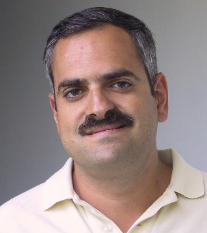 Gerasimos (Makis) Potamianos合作论文数Department of Electrical and Computer Engineering, University of Thessaly3
 Matthias Wolfel合作论文数Theoretische Informatik3
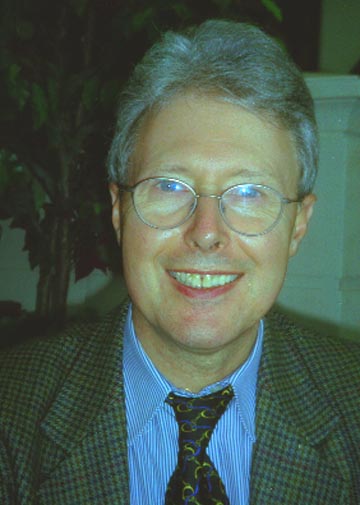 Renato De Mori合作论文数School of Computer Science, McGill University;Computer Science Laboratory, University of Avignon3
 Feng-Ju Chang合作论文数Electrical Engineering,University of Southern California3
 John Mcdonough合作论文数Carnegie Mellon University3Ch Knapp合作论文数2fondazione bruno kessler irst合作论文数2
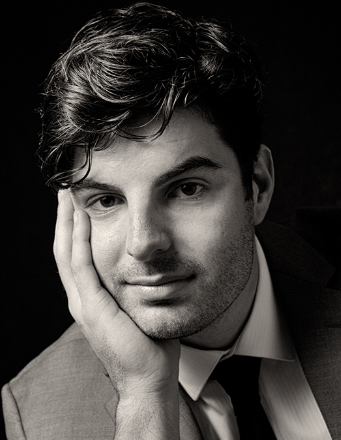 Grant P. Strimel合作论文数Amazon Alexa2Lutz Marquardt合作论文数2Jing Liu合作论文数2
 Alessio Xompero合作论文数Queen Mary University of London2
 Tina Raissi合作论文数RWTH Aachen University2




