The present research demonstrates the utility of the linear canonical transform (LCT) in constructing the characteristic function of real random variables. We refer to this construction as the linear canonical characteristic function (LCCF). The proposed LCCF aims to address the limitations of the classical characteristic function in both theoretical and applied aspects. Using this approach, we investigate its properties, such as Hermitian symmetry, continuity, convolution, and derivatives, which are generalized forms of the classical characteristic function in the literature. Finally, we implement the obtained results by calculating several probability density functions in the LCCF domains.
This research introduces the quaternion linear canonical S-transform. This transform is an extension of the linear canonical S-transform within quaternion algebra. We recall the properties and present the natural link between the quaternion linear canonical transform and the quaternion linear canonical S-transform. We exploit these properties and relation to establish the Lieb and Nazarov inequalities to the quaternion linear canonical S-transform.
The offset fractional Fourier transform (OFrFT) has emerged as a mathematical tool for time-frequency analysis of non-stationary signals. However, there has been relatively little research on investigating properties including the convolution theorem and the sampling formulas. This paper investigates the new form of convolution theorem and its product theorem associated with the OFrFT. We also establish a sampling formula related to the transformation. Finally, a simple example is displayed to verify the results related to the sampling formula for the OFrFT.
We introduce a generalized quaternion Fourier transform termed the linear canonical space-time transform (LCST). The uncertainty principles and convolution theorem are the prominent results that play a significant role in the development of the LCST, both theoretically and in its applications. This study explores the convolution theorem and then establish two uncertainty principles associated with the proposed transformation. In addition, we rigorously derive a new point-wise Heisenberg-type uncertainty inequality for the LCST and special cases of this new Heisenberg principle are also presented.
The linear canonical space-time transform (LCST) is an expanded version of the space-time Fourier transform (SFT). In the current work, we first define the LCST and the SFT. The direct relationship between the LCST and the SFT is presented. Hereafter, by means of the relation technique, we give the alternative proof of scalar Parseval's identity for the LCST. Further, by leveraging the relation, we give simple proofs of some uncertainty inequalities associated with the LCST. It is found that the principles differ from the existing literature. Simulation based on space-time Gabor filters is performed to verify the validity of the uncertainty principle. Finally, we derive a particular case of the sharp Hausdorff-Young inequality for the LCST that inherits Plancherel's formula for the LCST and the SFT.
The coupled fractional Fourier transform is a general form of the fractional Fourier transform. In the present work, we demonstrate basic properties of the proposed transformation, such as linearity, shifting and modulation. We also propose convolution and correlation theorems and then explore a generalized uncertainty principle for the coupled fractional Fourier transform. These crucial results are modifications of the corresponding properties pertaining to the fractional Fourier transform and the conventional Fourier transform.
Recently, the octonion Fourier transform (OFT) has been proposed and utilized in image processing. This transformation is intimately related to the three-dimensional Clifford Fourier transform. Similar to the Clifford Fourier transform, the uncertainty principle is recognized as an important result in the OFT. The present study explores Heisenberg-type inequality associated with the OFT. This uncertainty principle describes how an octonion-valued signal and its OFT relates. Variations on the uncertainty inequality are then established. Finally, we establish a new form of Heisenberg uncertainty principle for octonion linear canonical transform (OLCT). This result refines Heisenberg inequality for the OLCT in literature.
This paper explores the application of elliptic partial differential equations (PDEs) as a method for generating smooth and continuous vase designs, which can optimize 3D object workflows. Elliptic PDEs, such as Laplace’s equation, are well-suited for surface modeling as they maintain equilibrium and ensure smooth transitions between boundaries. With clear definitions and precise conditions, the proposed approach enables the generation of customized vase shapes while providing effective control over curvature and surface continuity. This method allows intuitive manipulation of parametric constraints, offering flexibility in design customization while minimizing computational complexity. Additionally, this paper demonstrates how boundary adjustments influence PDE-generated shapes, showing the diverse vase designs achievable through elliptic PDEs. By integrating these mathematical frameworks into computational design, this study highlights their potential to bridge the gap between theoretical modeling and real-world applications in art, design, and manufacturing. Furthermore, it emphasizes the role of PDE-based modeling in preserving cultural heritage through traditional vase design while fostering innovation in modern aesthetics.
The focus of this article is to propose two different versions of the Heisenberg uncertainty principle related to the fractional Fourier transform (FrFT). The first version is directly derived using the basic connection between the traditional Fourier transform (FT) and the FrFT, and the second is derived by exploiting time differentiation property and Parseval’s formula for the FrFT. In addition, a weighted uncertainty inequality related to this transformation is investigated. As a simple illustration of the use of the obtained results, we design the fractional characteristic function. An inequality describing the relation between the probability density function and its fractional characteristic function is presented.
In this research work, we focus on the one-dimensional quaternion linear canonical transform (1-D QLCT). Under certain conditions, we first derive the symmetry property of the 1-D QLCT for real signals. The new form of the convolution theorem related to this transformation is proposed. We develop this convolution definition to derive the correlation theorem for the 1-D QLCT. We then show that the direct connection between the quaternion convolution and quaternion correlation definitions permits us to provide a different way for proving the correlation theorem concerning the 1-D QLCT. Finally, we present a simple application of the convolution theorem to the study of quaternion swept-frequency filter analysis.
This article presents the construction of the fractional ambiguity function by combining the definition of the ambiguity function and the kernel of the fractional Fourier transform. Several properties of the fractional ambiguity function are presented, which are an expansion of the corresponding properties of the classical ambiguity function. Further, some examples of signals for estimating the fractional ambiguity function are presented. Finally, based on the properties, an in-depth investigation of various versions of the uncertainty principles involving the fractional ambiguity function is investigated.
In this present work, we first establish some basic properties of the offset quaternion linear canonical transform such as shifting and modulation, which are missed in the existing literature. We then present the relation of the quaternion Fourier transform to the quaternion linear canonical transform and the offset quaternion linear canonical transform. We also make a direct connection between the quaternion linear canonical transform and the offset quaternion linear canonical transform. By means of the properties and relations, we derive an analogue of sharp Hausdorff-Young inequality, Matolcsi-Sz & uuml;cs uncertainty principle, logarithmic Sobolev-type uncertainty inequality and Benedicks-Amrein-Berthier uncertainty inequality in the framework of the offset quaternion linear canonical transform. Additionally, we implement the quaternionic Gabor filter to verify sharp Hausdorff-Young inequality concerning the considered transformation. Finally, the utility of the proposed offset quaternion linear canonical transform in the quaternion linear frequency modulated (QLFM) signal is studied.
We introduce a 2-semi-inner product on the space of p-summable sequences. Using this 2-semi-inner product, we define the h_p-orthogonality and the h_p-angle between two vectors and discuss their properties. Moreover, we formulate the h_p-angle between two 2-dimensional subspaces that intersects a 1-dimensional subspace. Using this formula, we construct the space of p-summable sequences as a strictly convex 2-normed space.
This work deals with the offset fractional Fourier transform (OFrFT), which is a more general version of the fractional Fourier transform (FrFT). We demonstrate the basic properties such as translation, modulation and parity. The results are generalization of the FrFT properties. We study a relation of the OFrFT with the FrFT and the Fourier transform. Based on the relation, the key properties such as Parseval’s identity and inversion formula are derived. Applying the properties and the relation allow us to establish several versions of the uncertainty inequalities for the OFrFT. In addition, we discuss the comparison of the OFrFT with the FrFT in terms of properties and uncertainty principles. Finally, we perform an illustrative example to demonstrate that the value of Heisenberg uncertainty inequality for the OFrFT is bigger than that of Heisenberg uncertainty inequality for the FrFT and effect of the offset parameter in minimizing the Heisenberg uncertainty principle associated with the OFrFT.
In this work, we introduce the quaternion linear canonical S-transform, which is a generalization of the linear canonical S-transform using quaternion. We investigate its properties and seek the different types of uncertainty principles related to this transformation. The obtained results can be looked as an extension of the uncertainty principles for the quaternion linear canonical transform and the quaternion windowed linear canonical transform.
The windowed coupled fractional Fourier transform was recently proposed in the literature. It may be considered as a generalized version of the windowed fractional Fourier transform. In this study, we first present various basic properties of the windowed coupled fractional Fourier transform including linearity, shifting, modulation, parity, orthogonality relation, and inversion formula. Further, the close relation of the windowed coupled fractional Fourier transform with the two‐dimensional Fourier transform and the windowed fractional Fourier transform is studied. By combining the properties and relation, we derive several versions of the uncertainty inequalities related to the windowed coupled fractional Fourier transform.
 Ryuichi Ashino合作论文数27Nasrullah Bachtiar合作论文数12
 Amir Kamal Amir合作论文数Research Division;Faculty of Mathematics and Natural Sciences;Institut Teknologi Bandung;Faculty of Mathematics and Natural Sciences, Institut Teknologi Bandung12
 Samsul Ariffin BIN Abdul Karim合作论文数Fundamental & Appl. Sci. Dept., Univ. Teknol. Petronas;c;Fundamental & Appl. Sci. Dept., Univ. Teknol. Petronas9
 Syamsuddin Toaha合作论文数9
 Amran Rahim合作论文数8
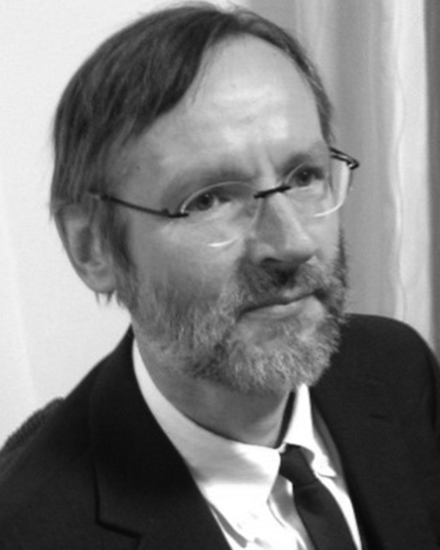 Eckhard Hitzer合作论文数6Moh. Ivan Azis合作论文数5
 Anna Islamiyati合作论文数Dept Stat, Hasanuddin Univ5
 Chrisandi Lande合作论文数4
 Muhammad Zakir合作论文数3
 Nur Erawaty合作论文数Algebra & Anal Lab, Hasanuddin Univ3Sriwulan Adji合作论文数3
 Naimah Aris合作论文数Dept Math, Hasanuddin Univ3Muhammad Nur合作论文数3
 Firdous A. Shah合作论文数3Rémi Vaillancourt合作论文数3
 J. Kusuma合作论文数Faculty of Engineering, Universiti Malaysia Sarawak3Amran合作论文数2Wahyuni Ekasasmita合作论文数2
 Sri Sulasteri合作论文数UIN Alauddin Makassar2
 Asriadi Asriadi合作论文数UNM2
 Aajaz A. Teali合作论文数Dept Math, Univ Kashmir2
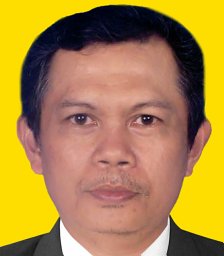 Budi Nurwahyu合作论文数Dept Math, Hasanuddin Univ2
 Al Azhary Masta合作论文数2
 Agustinus Ribal合作论文数Department of Mathematics;Faculty of Science;Hasanuddin University;Faculty of Science, Hasanuddin University2
 Jiman Zhao (赵纪满)合作论文数School of Mathematical Sciences, Beijing Normal University2Asriadi Nasrun合作论文数1
 Owen Tamin合作论文数1
 Muh. Irwan合作论文数Chem Engn Dept, Politekn Negeri Samarinda1
 Nurwahidah Nurwahidah合作论文数University of Mataram1
 Andi Galsan Mahie合作论文数Hasanuddin University1
 Harmanus Batkunde合作论文数University of Pattimura1
 Nirwan Ilyas合作论文数Hasanuddin University1Firman合作论文数1
 Azhar Y. Tantary合作论文数Department of Mathematics, University of KashmirSouth Campus1Soli Deo Gloria合作论文数1Ems Hitzer合作论文数1
 Loeky Haryanto合作论文数Department of Mathematics, Hasanuddin University1S. Musdalifah合作论文数Faculty of Mathematics and Natural Sciences, Tadulako University1
 Sukardi Sukardi合作论文数Faculty of Agricultural Technology, Bogor Agricultural University1Hatem Mejjaoli合作论文数Department of Mathematics, Faculty of Sciences of Tunis, CAMPUS, 1060 Tunis, Tunisia1
 Armin Lawi合作论文数Program of Creation Informatics, Kyushu Institute of Technology1




