Neben einer reibungslosen Entwicklung ist ein kontinuierliches Deployment, d. h. Bereitstellen Ihrer App für Tester und Kunden, extrem wichtig. Nur durch Continuous Integration und Development können Sie schnell Feedback zu Änderungen erhalten und Ihre App auf Herz und Nieren testen. Beim Testen Ihrer App, einem zentralen Pfeiler der Qualitätssicherung, sollten Sie auf eine Kombination von manuellen und automatisierten Verfahren setzen. Sobald Sie Ihre App in den Stores präsent haben, sollten Sie auf ein professionelles Cross-Plattform Management setzen, um den Auftritt Ihrer App auf den verschiedenen Plattformen einheitlich zu gestalten. Setzen Sie hier auf die richtigen Tools und Prozesse, um bei diesem wichtigen Schritt nicht den Überblick zu verlieren. Regelmäßige Release- und Updatezyklen können bei manuellen Prozessen schnell zum Zeit- und Kostenfresser werden.
Um schnell Feedback zu Ihren wichtigsten Kernhypothesen zu bekommen, ist es essenziell, einen Prototyp zu erstellen. In einem ersten Schritt „materialisieren“ Sie die App mittels User-Stories, User-Flows und Wireframes. So entstehen die ersten wichtigen Bausteine der App. Diese können dann durch potenzielle Kunden und Nutzer getestet werden. Mit Hilfe der iterativen Produktentwicklung und des „Build, Measure, Learn“-Zyklus wird die App stetig weiterentwickelt. Dabei ist ein tiefes Verständnis der Kundenbedürfnisse ebenso eine zentrale Grundlage wie die stetige Adaption und Weiterentwicklung der App-Idee.
While more and more services become virtualized and always accessible in our society, laboratories supporting computer science (CS) lectures have mainly remained offline and class-based. This apparent abnormality is due to several limiting factors, discussed in the literature, such as the high cost of deploying and maintaining computer network testbeds and the lack of standardization for the presentation of eLearning platforms. In this paper, we present the FORGE toolkit, which leverages experimentation facilities currently deployed in international initiatives for the development of e-learning materials. Thus, we solve the institutional challenge mentioned in the ACM/IEEE 2013 CS curricula concerning the access and maintenance of specialized and heterogeneous hardware thanks to a seamless integration with the networking test-bed community. Moreover, this project builds an ecosystem, where teaching and educational materials, tools, and experiments are available under open scheme and policies. We demonstrate how it already meets most of the requirements from the network and communication component of CS 2013 and some of the labs of the Cisco academy. Finally, we present experience reports illustrating the potential benefits of this framework based on the first deployments in four post-graduate courses in prestigious institutions around the world.
Experimental platforms (testbeds) play a significant role in the evaluation of new and existing technologies. Their popularity has been raised lately as more and more researchers prefer experimentation over simulation as a way for acquiring more accurate results. This imposes significant challenges in testbed operators since an efficient mechanism is needed to manage the testbed's resources and provision them according to the users' needs. In this paper we describe such a framework which was implemented for the management of networking testbeds. We present the design requirements and the implementation details, along with the challenges we encountered during its operation in the NITOS testbed. Significant results were extracted through the experiences of the every day operation of the testbed's management.
In addition to theoretical analysis and simulations, the evaluation of new networking technologies in a real-life context and scale is critical to their global adoption and deployment. Federations of experimental platforms (aka testbeds) offer a controlled and cost-effective solution to perform such an evaluation. Most recent efforts in that area focused on building those facilities and providing experimenters with tools to allow the discovery and provisioning of their shared resources. Many challenges remain in order to support the complete experiment life cycle in a federated environment.We propose OMF-F, a framework which allows the definition of networking experiments and their execution over shared resources provided by different federated administrative domains. OMF-F provides a domain-specific language enabling rich event-based experiment descriptions. It defines a specific resource model and protocol, which together with its publish-subscribe messaging system allows automatic experiment orchestrations at a large scale. OMF-F further provides interfaces to operate with existing resource discovery and provisioning tools for federated testbeds.Our contributions in this paper are threefold. First we provide detailed descriptions of OMF-F's design, its architecture, and its involved entities. Then, we present a quantitative evaluation of its underlying messaging and event-handling systems. Finally, we discuss two real examples of OMF-F deployed and used on federated domains to define and execute experiments. (C) 2014 Elsevier B.V. All rights reserved.
Nachdem Sie nun die Chancen, Möglichkeiten und Risiken von Onlinepräsentationen kennengelernt haben, fragen Sie sich jetzt bestimmt: „Womit kann ich denn überhaupt eine Onlinepräsentation machen?“ Wie funktioniert eine Onlinepräsentation überhaupt technisch und welche Voraussetzungen gibt es? Dieses Kapitel beschäftigt sich ausführlich mit den technischen Gegebenheiten. Zuerst klären wir ein paar grundlegende Begriffe und welche Art von Software man für Webinare benötigt. Dann schauen wir uns an, wie Sie Onlinepräsentationen durchführen können, welche Softwareanbieter und Programme auf dem Markt vorhanden sind und was es für verschiedene Unterscheidungskriterien für diese gibt. Im dritten Teil lernen wir dann die verschiedenen Grundfunktionen von Onlinepräsentationen kennen.
Experimental research on future Internet technologies involves observing multiple metrics at various distributed points of the networks under study. Collecting these measurements is often a tedious, repetitive and error prone task, be it in a testbed or in an uncontrolled field experiment. The relevant experimental data is usually scattered across multiple hosts in potentially different formats, and sometimes buried amongst a trove of other measurements, irrelevant to the current study. Collecting, selecting and formatting the useful measurements is a time-consuming and error-prone manual operation.In this paper, we present a conceptual Software-Defined Measurement (SDM) framework to facilitate this task. It includes a common representation for any type of experimental data, as well as the elements to process and collect the measurement samples and their associated metadata. We then present an implementation of this concept, which we built as a major extension and refactoring of the existing Orbit Measurement Library (OML). We outline its API, and how it can be used to instrument an experiment in only a few lines of code. We also evaluate the current implementation, and demonstrate that it efficiently allows measurement collection without interfering with the systems under observation. (C) 2014 Elsevier B.V. All rights reserved.
While most existing video summarization approaches aim to identify important frames of a video from either a global or local perspective, we propose a top-down approach consisting of scene identification and scene summarization. For scene identification, we represent each frame with global features and utilize a scalable clustering method. We then formulate scene summarization as choosing those frames that best cover a set of local descriptors with minimal redundancy. In addition, we develop a visual word-based approach to make our approach more computationally scalable. Experimental results on two benchmark datasets demonstrate that our proposed approach clearly outperforms the state-of-the-art.
GENI, the Global Environment for Networking Innovation, is a distributed virtual laboratory for transformative, at-scale experiments in network science, services, and security. Designed in response to concerns over Internet ossification, GENI is enabling a wide variety of experiments in a range of areas, including clean-slate networking, protocol design and evaluation, distributed service offerings, social network integration, content management, and in-network service deployment. Recently, GENI has been leading an effort to explore the potential of its underlying technologies, SDN and GENI racks, in support of university campus network management and applications. With the concurrent deployment of these technologies on regional and national R&E backbones, this will result in a revolutionary new national-scale distributed architecture, bringing to the entire network the shared, deeply programmable environment that the cloud has brought to the datacenter. This deeply programmable environment will support the GENI research mission and as well as enabling research in a wide variety of application areas.
We introduce Moana, an information-centric middleware service for distributed applications. Moana offers a shared persistent graph-based abstraction through which applications can communicate with each other by extending and observing the shared graph. This paper describes the Moana service model as well as discusses the design goals and challenges for such a middleware to be a viable and competitive alternative to current practice.
The constantly increasing diversity of the infrastructure used to deliver Internet services to the end user has created a demand for experimental network facilities featuring heterogeneous resources. Therefore, federation of existing network testbeds has been identified as a key goal in the testbed community, leading to a recent activity burst in this research field. In this paper, we present a federation scheme that was built during the Onelab 2 EU project. This scheme federates the NITOS wireless testbed with the wired PlanetLab Europe testbed, allowing researchers to access and use heterogeneous experimental facilities under an integrated environment. The usefulness of the resulting federated facility is demonstrated through the testing of an implemented end-to-end delay aware association scheme proposed for wireless mesh networks. We present extensive experiments under both wired congestion and wireless channel contention conditions that demonstrate the effectiveness of the proposed approach in realistic settings. The experiments are also reproduced in a well-established network simulator and a comparative study between the results obtained in the realistic and simulated environments is presented. Both the architectural building blocks that enable the federation of the testbeds and the execution of the experiment on combined resources, as well as the important insights obtained from the experimental results are described and analyzed, pointing out the importance of integrated experimental facilities for the design and development of the Future Internet.
The ability to repeat the experiments from a research study and obtain similar results is a corner stone in experiment-based scientific discovery. This essential feature has been often ignored by the distributed computing and networking community. There are many reasons for that, such as the complexity of provisioning, configuring, and orchestrating the resources used by experiments, their multiple external dependencies, and the difficulty to seamlessly record these dependencies. This paper describes a methodology based on well-established principles to plan, prepare and execute experiments. We propose and describe a family of tools, the LabWiki workspace, to support an experimenter's workflow based on that methodology. This proposed workspace provides services and mechanisms for each step of an experiment-based study, while automatically capturing the necessary information to allow others to repeat, inspect, validate and modify prior experiments. Our LabWiki workspace builds on existing contributions, and de-facto protocol and model standards, which emerged from recent experimental facility initiatives. We use a real experiment as a thread to guide and illustrate the discussion throughout this paper.
In this paper, we introduce the Moana network infrastructure. It draws on well-adopted practices from the database and software engineering communities to provide a robust and expressive information-sharing service using hypergraph-based network indirection. Our proposal is twofold. First, we argue for the need for additional layers of indirection used in modern information systems to bring the network layer abstraction closer to the developer's world, allowing for expressiveness and flexibility in the creation of future services. Second, we present a modular and extensible design of the network fabric to support incremental architectural evolution and innovation, as well as its initial evaluation.
This paper presents a case for the adoption of an information-centric architecture for a global disaster management system. Drawing from a case study of the 2010/2011 Queensland floods, we describe the challenges in providing every participant with relevant and actionable information. We use various examples to argue for a more flexible information dissemination framework which is designed from the ground up to minimise the effort needed to fix the unexpected and unavoidable information acquisition, quality, and dissemination challenges posed by any real disaster.
 daniel reininger合作论文数25
 Rakotoarivelo, T.合作论文数Data6117
 girishi welling合作论文数14
 Aruna Prasad Seneviratne合作论文数University of New South Wales;CSIRO13
 Guillaume Jourjon合作论文数CSIRO13
 Dipankar Raychaudhuri合作论文数Department of Electrical and Computer Engineering, Rutgers University;Wireless Information Network Laboratory, Rutgers University11
 Ivan Seskar合作论文数Wireless Information Networks Laboratory, Rutgers, The State University of New Jersey10
 Yan Shvartzshnaider合作论文数The Privacy Rhythm Research Lab, Department of Electrical Engineering and Computer Science, Lassonde School of Engineering, York University8Michelitsch, G.合作论文数7
 Thanasis Korakis合作论文数Polytechnic Institute of NYU7
 Kiyoharu Aizawa (相澤清晴)合作论文数Information Technology Center, The University of Tokyo;Organization for Research Advancement Research Institute for Science and Technology, Tokyo University of Science;Foo.log Inc.7Upendra Rathnayake合作论文数7
 Leandros Tassiulas合作论文数School of Engineering & Applied Science, Yale University;Yale Institute of Network Science6Kazumasa Enami合作论文数5
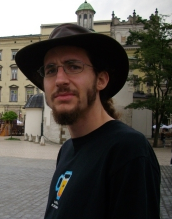 Olivier Mehani合作论文数Learnosity5David Levy合作论文数Sydney Health Ethics, University of Sydney4
 Kun-Chan Lan合作论文数4
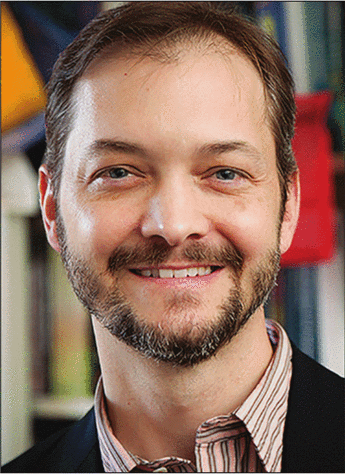 Errin W. Fulp合作论文数Wake Forest University4
 Mahbub Hassan合作论文数School of Computer Science & Engineering, The University of New South Wales, Sydney4
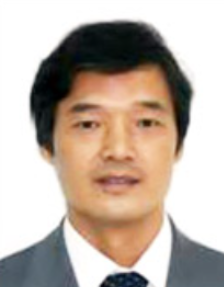 Junbiao Zhang (张俊飚)合作论文数College of Economics & Management, Huazhong Agricultural University4
 Zhe Wang合作论文数Singapore University of Technology and Design4
 Rodney Berriman合作论文数4
 Lavy Libman合作论文数Google4
 Ahmad Ali Iqbal合作论文数4Georg Michelitsch合作论文数4
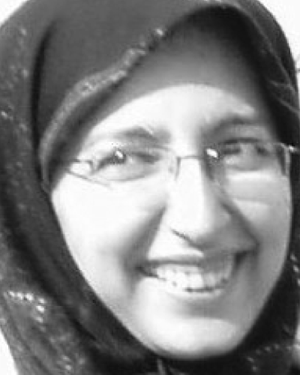 Zainab R. Zaidi合作论文数Dept . of Electrical and Computer Eng;George Mason University;Dept . of Electrical and Computer Eng, George Mason University4
 Mitsutoshi Hatori合作论文数The University of Tokyo4
 Björn Landfeldt合作论文数Department of Electrical and Information Technology, Lund University;Mobile and Pervasive Computing Research Institute, Lund University4
 Henrik Petander合作论文数NICTA, Sydney, Australia4Hatori, M.合作论文数3Luis Rodriguez合作论文数3Tim Moors合作论文数School of Electrical Engineering and Telecommunications3
 Manpreet Singh合作论文数Scheller College of Business, Georgia Institute of Technology3
 Rauf Izmailov合作论文数Peraton Labs3
 Apostolos Apostolaras合作论文数University of Thessaly3
 Dimitris Syrivelis合作论文数University of Thessaly3
 Angelos Christos Anadiotis合作论文数Ecole Polytechnique3Christoph Dwertmann合作论文数NICTA, Australian Technology Park3LC DESILVA合作论文数2Rj Siracusa合作论文数2John Hearn合作论文数2Satou, T.合作论文数2
 Zhiyong Wang合作论文数School of Computer Science, Faculty of Engineering, The University of Sydney;Sydney Institute of Agriculture, The University of Sydney2L. French合作论文数2
 David Dagan Feng合作论文数School of Computer Science, Faculty of Engineering, University of Sydney;School of Information Technologies, University of Sydney;Department of Electronic and Information Engineering, Hong Kong Polytechnic University2Sebastien Ardon合作论文数University of New South Wales2
 Saurabh Mathur合作论文数Columbia University2
 Sachin Ganu合作论文数Rutgers University2
 Vivek Bansal合作论文数Department of Radiology, Baylor College of Medicine2




