Students’ understanding of the equal sign is a well-researched topic. Recently, some new insights come to emerge. One is the phenomenon of students holding simultaneous operational and relational understanding (SOR). Researcher called for more investigation to this phenomenon as it is crucial to help in supporting students’ transition toward a robust relational understanding. This study utilised Rasch analysis and student interviews to delve deeper into the SOR level, involving 1008 Chinese Grade 1 students. This study provides empirical support for distinguishing SOR as a coherent level within the continuum of students’ understanding of the equal sign. It also reveals SOR students’ nuanced reasoning and contributing factors underlying their inconsistent thinking. Based on these insights, the study offered suggestions for refining the widely used number-sentence-based activities for teaching and learning the equal sign, as well as the assessment items used to examine students’ understanding.
The study aimed to establish an assessment model for mathematics teachers' knowledge of students' misconceptions in the Space and Shape domain, develop the testing tool, investigate and analyse the overall and differences in performance, and propose suggestions for improvement. The assessment model included content knowledge and performance standards. The content knowledge standard included cognition and content dimensions. The cognition dimension was subdivided into predicting the misconceptions, interpreting the misconceptions, analysing the reasons and teaching strategies to correct misconceptions. According to the division of Space and Shape in official curriculum standard, the content dimension was subdivided into Recognition of graphics, Measurement, Motion, and Location. 701 Chinese mathematics teachers from 8 provinces were involved to verify the assessment model. Item response theory was used to estimate teachers' performance, and combinations of response categories was used to divide the teachers' performance into three response levels: Low, Medium and High. 81% of teachers were performing at Medium and High response levels. Teachers performed the worst in Recognition of graphics and the best in Measurement. The worst performance occurred in analysing the reasons, the best in interpreting the misconceptions. These results have provided evidences for adjusting teacher activities, improving teacher education courses and teachers training.
This chapter deals with the recent development of computational thinking (CT) in the curricula of many countries, principally in mathematics. It aims at discussing, broadly, how CT changes the mathematical activity and impacts mathematical contents. More precisely, we study the relations between mathematics, computer science, mathematical thinking, and computational thinking, and discuss new content at the interface of computer science and mathematics as well as the transformation of mathematical content due to the integration of CT. We ground our discussions on examples of integration of CT and computer science in various countries; we further discuss the origins of CT in mathematics education and offer an epistemological reflection on the disciplines of mathematics and computer science. Finally, we discuss related issues for classroom implementation, teaching resources, and teacher development.
The so-called fourth industrial revolution, based upon widespread use of data analytics, rapid refinements in artificial intelligence and its applications, and near universal access to high-speed Internet supporting cloud storages, has created economic and social conditions that require an increasing supply of ICT skilled workers. If one of the important purposes of school mathematics is to help young people to understand these conditions and prepare them to take part in this revolution in their future work, then, among other issues, computational/ algorithmic thinking (CT/AT), which underpins the above conditions, can be expected to assume a more visible place in the mathematics curriculum of the future. This chapter summarises recent research on CT/AT and outlines current trends, challenges and possible directions for the future of school mathematics curriculum that should foster developing CT/AT.
An abstract is not available for this content. Please use the Full Text (PDF) button for the introduction of the special issue.
International assessment studies generally contribute to curriculum reform by highlighting certain aspects of curriculum needing improvement, usually attained though the recognition and application of some studies' components. By focusing on the question "How have international studies driven school mathematics curriculum reforms?", this chapter examines the role of international studies TIMSS (Trends in International Mathematics and Science Study) and PISA (Programme for International Student Assessment) in reforms in different countries. Emphasis is placed on examining components applied in (re)designing and implementing curriculum improvements. After presenting the global influences of TIMSS and PISA worldwide, the influences of these international studies are examined in case studies from four economically and geographically diverse countries. The chapter ends with a critical summary of the findings presented and outlines directions for further research.
The assessment model of primary school mathematics teachers’ knowledge about students’ misconceptions based on cognitive diagnostic assessment approach is a two-dimensional structure including cognition and content category. The cognition category includes four sub-categories, which were predicting the students’ misconceptions, using mathematics and curriculumrelated knowledge to identify and describe errors on a specific mathematical topic, analyzing and explaining the reasons for students’ misconceptions, and strategies for dealing with and correcting students’ misconceptions. The content category is developed based on Mathematics Curriculum Standard for Compulsory Education(2011 Edition). Interview and counseling method are used in construction and modification of model and developing the test tools. 701 primary school mathematics teachers from 8 provinces and cities in east, central and west of China are tested to verify the assessment model. The results show that the assessment model has good reliability and validity. On the whole, the performance of mathematics teachers’ knowledge about students’ misconceptions should be improved, and the performance of cognitive and content sub-categories is very different.
Background: The coronavirus disease 2019 (COVID-19) pandemic has provided rich data displays informing the public about the spread of infection, risks for certain population groups and the effectiveness of vaccines. These data sources offer opportunities for students and teachers to explore and discuss data of high relevance to their lives and their communities.Aim: This article argues that in the teaching of statistics and probability, greater attention needs to be given to understand the three key elements of statistical literacy, namely context, conventions and uncertainty. The article also identifies several key areas linking theory and practice.Setting: This article draws on different data displays using COVID-19-related websites internationally; nationally in Africa and South Africa; and locally in the State of Victoria in Australia.Methods: By investigating and analysing different data displays, the article shows the importance of assisting students to understand context, data conventions, uncertainty and risk–benefit to understand COVID-19 data. The article examines pertinent ‘frontier’ areas in the teaching of probability and statistics.Results: The article identifies important opportunities and challenges for the teaching of statistics in schools and for teacher education, including greater attention to frequentist expressions of probability, risk–benefit analysis, the importance of time series analyses and critical approaches to the evaluation of available data sets.Conclusion: For schools, greater attention needs to be given to the different conventions by which data are expressed, including the use of dynamic dashboard representations.Contribution: The article shows how available COVID-19 data can be used to enhance students’ statistical literacy and enrich teacher education.
This paper builds on our previous research and investigates how students' fractional competence and reasoning can provide clear evidence of non-symbolic algebraic thinking and its progressive transition towards fully generalised algebraic thinking. In a large-scale study, 470 primary students completed a written paper and pencil test. This included three reverse fraction tasks which required students to find an unknown whole when presented with a quantity representing a fraction of that whole. Seventeen students from one participating primary school undertook a semi-structured interview which included reverse fraction tasks, similar to those on the written test, but with progressive levels of abstraction, starting with particular instances and becoming more generalised. Two important products of the study are the Classification Framework for Reverse Fraction Tasks and the Emerging Algebraic Reasoning Framework. The interview results highlight two critical transition points for the emergence of students' algebraic reasoning. The first is the ability to transition from additive strategies to multiplicative strategies to solve reverse fraction problems. Students reliant on diagrams and additive strategies struggled to solve more generalised tasks that required multiplicative rather than additive strategies. The second transition is the shift from multiplicative thinking to algebraic reasoning where students could generalise their multiplicative knowledge to deal with any quantity represented in a reverse fraction task.
Our research question asks what kinds of educational effects are gained for a group of pre-service mathematics teachers when we address the A4 paper format task from the perspective that mathematical modelling can be used to enrich students' knowledge both in the real world and in mathematics. Around 60% of the pre-service teachers perceived that they could enrich their knowledge both in the real world and in mathematics, while around 30% were able to anticipate connections to their actual teaching in future. This suggests that pre-service teachers are able to appreciate these dual aims of modelling, that is, modelling can not only enrich students' ability to solve real-world problems but also deepen their ability to develop further mathematics.
In this article, three of David Clarke’s long time collaborators offer perspectives on how David shaped and continued to influence projects in which they were involved, over a 30 year period. The three sections of the article focus on David’s contributions to original research on high stakes assessment, research on the development and use of assessment alternatives to traditional pen and paper assessments, and research in three smaller projects involving the use of open-ended questions, the implementation of the Australian Curriculum: Mathematics , and the complexity of the mathematics classroom, respectively. Through discussion of these various national and international projects, the authors provide examples of David’s capacity to synthesise theoretical ideas, to appreciate the implications for classroom practice, and to communicate both perspectives to researchers, teacher educators and teachers. The authors argue that David’s capacity to distil crucially important ideas into brief, highly insightful statements, was fundamental to the enactment and effectiveness of both research studies and projects for the teaching profession.
The authors identify the lack of an explicit framework for students' development of multiplicative thinking in the curriculum documents of many countries-including Australia. They present ideas as ...
First-time author Mayamiko Malola, with Duncan Symons and Max Stephens, provide step-by-step examples of how teachers can scaffold students' transition from additive to multiplicative thinking. Some of the challenges of learning multiplicative thinking are discussed.
With regard to the internationalization of statistics education, this paper considers first a global context concerning modern statistical literacy, data science, and dashboards. Then, it examines data discovery using automated analytics, whereby data insights may be indicated by suitable signals generated by the computer environment used. This theoretical paper, directed towards statistics educators, as well as other educators in relevant high school subjects, should make them (more) aware of this context and such analytics, supporting them to identify issues that need be considered in their teaching (and research) in order to have their students better prepared for the jobs of tomorrow.
The aim of this paper is to investigate whether mathematical modelling, interpreted as a series of interactive translations, can also be effective to assist students to construct mathematical knowledge. We describe a series of possible teaching activities in which the theorem of a limit of a trigonometric function can be approached through solving a real-world problem how to determine the shortest air route between two cities. In this way, we show that these transformations have the potential to build up mathematical concepts. These findings are intended to form a framework for subsequent experimental teaching.
 Catherine Pearn合作论文数12Toshikazu Ikeda合作论文数9Djordje Kadijevich合作论文数Megatrend University & Mathematical Institute SANU5
 Qinqiong Zhang (章勤琼)合作论文数4
 Doug M. Clarke合作论文数Australian Catholic University4Robyn Pierce合作论文数4
 Marlon Ebaeguin合作论文数3
 Mayamiko Malola合作论文数3
 lorraine day合作论文数2
 Duncan Symons合作论文数Melbourne Grad Sch Educ, Univ Melbourne2
 Wenbin Xu (徐文彬)合作论文数School of Education Science, Nanjing Normal University2
 Peter Sullivan合作论文数2
 Marj Horne合作论文数2
 Chantal Buteau合作论文数Brock University St. Catharines2
 Ann Downton合作论文数School of Curriculum, Teaching and Inclusive Education, Faculty of Education, Monash University2Simon Modeste合作论文数1dian armanto合作论文数1Yue Zhang合作论文数1
 Laura Broley合作论文数1Armando Solares-Rojas合作论文数1
 Raisa Guberman合作论文数1pham sy nam合作论文数1
 Maryna Rafalska合作论文数1
 Rebecca Seah合作论文数RMIT Univ1
 Haozhe Jiang合作论文数1
 Chaochao Jia (郏超超)合作论文数1
 Abolfazl Rafiepour合作论文数Shahid Bahonar Univ Kerman1
 Dan Cloney合作论文数Australian Council Educ Res1
 Lianchun Dong (董连春)合作论文数College of Science, Minzu University of China1
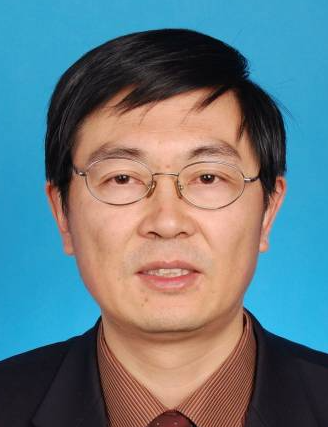 Yiming Cao (曹一鸣)合作论文数School of Mathematical Sciences, Beijing Normal University1
 Xiaomei Liu (刘晓玫)合作论文数首都师范大学教师教育学院数理科学教育系1Barbara Clarke合作论文数1
 Jane Watson合作论文数University of Tasmania1Marja Van Den Heuvel-Panhuizen合作论文数Utrecht University, University of Utrecht1
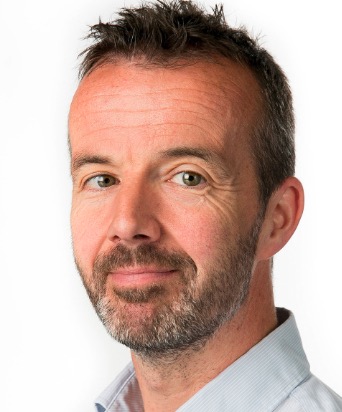 David Clarke合作论文数School of Microbiology, University College Cork1Ole Bjorkqvis合作论文数1
 Rosemary Callingham合作论文数University of New England1
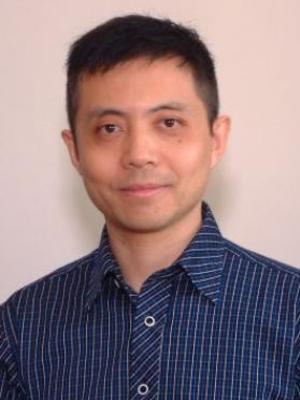 Lei Bao合作论文数Department of Physics, College of Arts and Sciences, The Ohio State University1
 Kazuhiro Aoyama合作论文数School of Engineering, The University of Tokyo1Miho Ueno合作论文数1
 Gilah Leder合作论文数La Trobe University1
 Joanne Mulligan合作论文数Macquarie University1Gerard Lewis合作论文数1Dianne Siemon合作论文数RMIT University1
 Colleen Vale合作论文数School of Curriculum, Teaching and Inclusive Education, Faculty of Education, Monash University1




