The eukaryotic cytoplasmic chaperonin-containing TCP-1 (CCT) is a complex formed by two back-to-back stacked hetero-octameric rings that assists the folding of actins, tubulins, and other proteins in an ATP-dependent manner. Here, we tested the significance of the hetero-oligomeric nature of CCT in its function by introducing, in each of the eight subunits in turn, an identical mutation at a position that is conserved in all the subunits and is involved in ATP hydrolysis, in order to establish the extent of 'individuality' of the various subunits. Our results show that these identical mutations lead to dramatically different phenotypes. For example, Saccharomyces cerevisiae yeast cells with the mutation in subunit CCT2 display heat sensitivity and cold sensitivity for growth, have an excess of actin patches, and are the only strain here generated that is pseudo-diploid. By contrast, cells with the mutation in subunit CCT7 are the only ones to accumulate juxtanuclear protein aggregates that may reflect an impaired stress response in this strain. System-level analysis of the strains using RNA microarrays reveals connections between CCT and several cellular networks, including ribosome biogenesis and TOR2, that help to explain the phenotypic variability observed.
Carbonic anhydrase (CA) is a zinc-containing enzyme that catalyzes the reversible hydration of CO 2 .Based on the amino acid sequences, CAs are classified into three evolutionarily distinct families, designated -, -and -CAs.CA from Chlamydomonas reinhardtii belong to the type enzyme and, homologous to CA from animal and eubacteria source.To reveal the structure, we have been engaged on X-ray study of Chlamydomonas CA.The enzyme was extracted from Cultured Chlamydomonas cells and highly purified by column chromatography [1].The enzyme is composed of two subunits, small and large.Crystals were obtained in a solution containing ammonium sulfate.X-ray diffraction data were collected at 100K with synchrotron radiation at NW12 of PF-AR (Tsukuba).Diffraction patterns were processed with the program HKL2000.The crystal diffracted to a maximum resolution of 2.4 .The unit-cell dimensions were a=b=134.6 and c=120.0 with a space group of P6 1 or P6 5 .Initial phases were derived by the molecular replacement method using the atomic coordinates of CA from Neisseria gonorrhoeae, which has a sequence identity of 37 % with the present CA.
RNA protection experiments and the crystal structure of a complex of the large ribosomal subunit from the eubacterium Deinococcus radiodurans with rapamycin, a polyketide compound resembling macrolides and ketolides, showed that rapamycin binds to a crevice located at the boundaries of the nascent protein exit tunnel, near its entrance. At this location rapamycin cannot occlude the ribosome exit tunnel, consistent with its failure to act as a ribosomal antibiotic drug. In accord with recent biochemical data, this crevice may play a role in facilitating local cotranslational folding of nascent chains, in particular for transmembrane proteins.
The linkage between internal ribosomal symmetry and transfer RNA (tRNA) positioning confirmed positional catalysis of amino‐acid polymerization. Peptide bonds are formed concurrently with tRNA‐3′end rotatory motion, in conjunction with the overall messenger RNA (mRNA)/tRNA translocation. Accurate substrate alignment, mandatory for the processivity of protein biosynthesis, is governed by remote interactions. Inherent flexibility of a conserved nucleotide, anchoring the rotatory motion, facilitates chirality discrimination and antibiotics synergism. Potential tRNA interactions explain the universality of the tRNA CCA‐end and P‐site preference of initial tRNA. The interactions of protein L2 tail with the symmetry‐related region periphery explain its conservation and its contributions to nascent chain elongation.
High-resolution structures of both ribosomal subunits revealed that most stages of protein biosynthesis, including decoding of genetic information, are navigated and controlled by the elaborate ribosomal architectural-design. Remote interactions govern accurate substrate alignment within a flexible active-site pocket [peptidyl transferase center (PTC)], and spatial considerations, due mainly to a universal mobile nucleotide, U2585, ensure proper chirality by interfering with D-amino-acids incorporation. tRNA translocation involves two correlated motions: overall mRNA/tRNA (messenger and transfer RNA) shift, and a rotation of the tRNA single-stranded aminoacylated-3' end around the bond connecting it with the tRNA helical-regions. This bond coincides with an axis passing through a sizable symmetry-related region, identified around the PTC in all large-subunit crystal structures. Propelled by a bulged universal nucleotide, A2602, positioned at the two-fold symmetry axis, and guided by a ribosomal-RNA scaffold along an exact pattern, the rotatory motion results in stereochemistry optimal for peptide-bond formation and in geometry ensuring nascent proteins entrance into their exit tunnel. Hence, confirming that ribosomes contribute positional rather than chemical catalysis, and that peptide bond formation is concurrent with A- to P-site tRNA passage. Connecting between the PTC, the decoding center, the tRNA entrance and exit points, the symmetry-related region can transfer intra-ribosomal signals between remote functional locations, guaranteeing smooth processivity of amino acids polymerization. Ribosomal proteins are involved in accurate substrate placement (L16), discrimination and signal transmission (L22) and protein biosynthesis regulation (CTC). Residing on the exit tunnel walls near its entrance, and stretching to its opening, protein-L22 can mediate ribosome response to cellular regulatory signals, since it can swing across the tunnel, causing gating and elongation arrest. Each of the protein CTC domains has a defined task. The N-terminal domain stabilizes the intersubunit-bridge confining the A-site-tRNA entrance. The middle domain protects the bridge conformation at elevated temperatures. The C-terminal domain can undergo substantial conformational rearrangements upon substrate binding, indicating CTC participation in biosynthesis-control under stressful conditions. Copyright (C) 2004 John Wiley Sons, Ltd.
High-resolution structures of both ribosomal subunits revealed that most stages of protein biosynthesis, including decoding of genetic information, are navigated and controlled by the elaborate ribosomal architectural- design. Remote interactions govern accurate substrate alignment within a flexible active-site pocket (peptidyl transferase center (PTC)), and spatial considerations, due mainly to a universal mobile nucleotide, U2585, ensure proper chirality by interfering with D-amino-acids incorporation. tRNA translocation involves two correlated motions: overall mRNA/tRNA (messenger and transfer RNA) shift, and a rotation of the tRNA single-stranded aminoacylated-3 0 end around the bond connecting it with the tRNA helical-regions. This bond coincides with an axis passing through a sizable symmetry-related region, identified around the PTC in all large-subunit crystal structures. Propelled by a bulged universal nucleotide, A2602, positioned at the two-fold symmetry axis, and guided by a ribosomal-RNA scaffold along an exact pattern, the rotatory motion results in stereochemistry optimal for peptide-bond formation and in geometry ensuring nascent proteins entrance into their exit tunnel. Hence, confirming that ribosomes contribute positional rather than chemical catalysis, and that peptide bond formation is concurrent with A- to P-site tRNA passage. Connecting between the PTC, the decoding center, the tRNA entrance and exit points, the symmetry-related region can transfer intra-ribosomal signals between remote functional locations, guaranteeing smooth processivity of amino acids polymerization. Ribosomal proteins are involved in accurate substrate placement (L16), discrimination and signal transmission (L22) and protein biosynthesis regulation (CTC). Residing on the exit tunnel walls near its entrance, and stretching to its opening, protein-L22 can mediate ribosome response to cellular regulatory signals, since it can swing across the tunnel, causing gating and elongation arrest. Each of the protein CTC domains has a defined task. The N-terminal domain stabilizes the intersubunit-bridge confining the A-site-tRNA entrance. The middle domain protects the bridge conformation at elevated temperatures. The C-terminal domain can undergo substantial conformational rearrangements upon substrate binding, indicating CTC participation in biosynthesis- control under stressful conditions. Copyright # 2004 John Wiley & Sons, Ltd.
The linkage between internal ribosomal symmetry and transfer RNA (tRNA) positioning confirmed positional catalysis of amino-acid polymerization. Peptide bonds are formed concurrently with tRNA-3 0 end rotatory motion, in conjunction with the overall messenger RNA (mRNA)/tRNA translocation. Accurate substrate alignment, mandatory for the processivity of protein biosynthesis, is governed by remote interactions. Inherent flexibility of a conserved nucleotide, anchoring the rotatory motion, facilitates chirality discrimina- tion and antibiotics synergism. Potential tRNA interactions explain the universality of the tRNA CCA-end and P-site preference of initial tRNA. The interactions of protein L2 tail with the symmetry-related region periphery explain its conser- vation and its contributions to nascent chain elongation. 2004 Published by Elsevier B.V. on behalf of the Federation of European Biochemical Societies.
 Rita Berisio合作论文数Max-Planck-Research Unit for Ribosomal Structure7
 Joerg M. Harms合作论文数Max-Planck-Research Unit for Ribosomal Structure, 22603 Hamburg, Germany7
 David Baram合作论文数7Frank Schluenzen合作论文数Max-Planck-Research Unit for Ribosomal Structure, Notkestrasse 85, 22603 Hamburg, Germany5A. Bashan合作论文数4Sittner Assa合作论文数4Heike Bartels合作论文数4
 Raz Zarivach合作论文数Dept Life Sci, Ben Gurion Univ Negev4Maggie Kessler合作论文数4
 Anat Bashan合作论文数3Harly A. S. Hansen合作论文数3T Auerbach合作论文数2Inbal Greenberg合作论文数2I Agmon合作论文数2Has Hansen合作论文数2Erez Pyetan合作论文数2E. Pyetan合作论文数2Ilana Agmon合作论文数2Tamar Auerbach合作论文数2Christa Liebe合作论文数2Michal Nadler-Holly合作论文数1Weisberg Sarah合作论文数1Ada Yonath合作论文数1Ester Feldmesser合作论文数1
 Keith Willison合作论文数Department of Chemistry, Faculty of Natural Sciences, Imperial College London1
 Daniel Kaganovich合作论文数Alexander Silberman Institute of Life Sciences, Hebrew University of Jerusalem1Anja Wolff合作论文数1
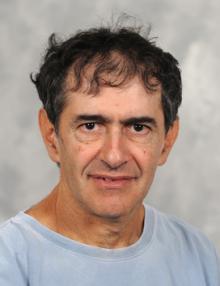 Amnon Horovitz合作论文数Department of Chemical and Structural Biology, Faculty of Chemistry, Weizmann Institute of Science1Elizabeth A. McCormack合作论文数1




