Magnetization and Mössbauer spectroscopy results on aerosol processed YBa2 (Cu1-xFex)307–δ samples are presented. Systematics of Tc(x), x(x) and Fe dopant site occupancies In/I(x) as a function of dopant concentration ‘x’ are deduced and compared to those established on analogous solid-state- reacted samples. The absence of twinning in the aerosol processed grains leads to a random replacement of Cu for Fe in chains and planes of the host structure.
Stoichiometric Ca2CuO3, having square-planar Cu-chains [C. L. Teske and H. Müller-Buschbaum, Z. Anorg. Allg. Chem. 379, 234 (1970); M. Hjorth and J. Hyldtoft, Acta Chem. Scand. 44, 516 (1990)], is expectedly antiferromagnetic due to 1D intrachain superexchange [K. Okuda, S. Noguchi, K. Konishi, H. Deguchi, and K. Takeda, J. Magn. Magn. Mater. 104–107, 817 (1992)]. Nonetheless, we report remarkable spontaneous ferromagnetism at 293 K after sintering, prominently in oxygen. This apparently introduced excess oxygen at vacant quasioctahedral sites, promoting spin-flip and ferromagnetic interchain coupling. Thermogravimetry (TGA) revealed excess oxygen, ≈0.17 O/Cu. X-ray diffraction (XRD) yielded a comparatively smaller unit cell. Ferromagnetism disappeared by oxygen depletion, mimicking reported nonmagnetism of Ca2CuO3−δ [Okuda et al. (1992)]. Elemental analysis showed insignificant magnetic impurity traces. Tc ranged between 680 K and 723 K, depending on freshness and purity. Saturation magnetization varied with processing, optimally 0.30 A · m2/kg at 1.0 T applied field. Coercivity and remanence varied with purity.
Eine tetragonale Phase SrCuO2 bewirkt möglicherweise das supraleitende Verhalten von im Sol‐Gel‐Verfahren hergestellten Proben der nominalen Zusammensetzung Bi2Sr2CuO6. Die Meßergebnisse weisen auf eine Sprungtemperatur bis 70°C hin, wobei die Supraleitung auf eine zu weniger als 0.1% in der Probe vorhandene Phase zurückzuführen ist. Acht Proben zeigten Anzeichen von Raumtemperatursupraleitung, bei vierzehn weiteren lagen die Tc‐Werte zwischen 25 und 110 K.
A tetragonal phase SrCuO 2 possibly causes the superconducting behavior of the samples with the nominal composition Bi 2 Sr 2 CuO 6 prepared in the sol‐gel process. The results of the measurements indicate a critical temperature of 70 °C, and the superconductivity is attributed to a phase present in the sample in less than 0.1%. Eight samples show evidence of room‐temperature superconductivity, and an additional fourteen samples show superconductivity between 25 and 110 K.
A ferromagnetic series of alkaline earth cuprates has been synthesized utilizing sintering temperatures lower than those normally used. Curie point determinations for these compounds have been established and range from room temperature to 700°C.
$^{57}\mathrm{Fe}$ Mossbauer spectra of ${\mathrm{YBa}}_{2}$(${\mathrm{Cu}}_{0.985}$${\mathrm{Fe}}_{0.015}$${)}_{3}$${\mathrm{O}}_{7\mathrm{\ensuremath{-}}\mathrm{\ensuremath{\delta}}}$ samples display multiple sites (n=A, B, C, and D) with the site intensity ratios ${I}_{n}$/I exhibiting profound thermal annealing effects in the temperature range 150 \ifmmode^\circ\else\textdegree\fi{}C${T}_{a}$550 \ifmmode^\circ\else\textdegree\fi{}C associated with oxygen desorption. Specifically, the ratio ${I}_{A}$/I is a function of ${T}_{a}$, and displays an activation enthalpy of site formation \ensuremath{\Delta}${H}_{A}$=104(3) meV. We ascribe it to the filling of O(1) oxygen vacancy sites in chains. The miniscule \ensuremath{\Delta}${H}_{A}$ is probably the consequence of the under-coordinated nature of the orthorhombic structure which globally promotes a superelastic (soft) lattice.
T-dependent $^{119}\mathrm{Sn}$ Mossbauer Debye-Waller factor f(T) in ${\mathrm{EuBa}}_{2}$${\mathrm{Cu}}_{2.98}$${\mathrm{Sn}}_{0.02}$${\mathrm{O}}_{7\mathrm{\ensuremath{-}}\mathrm{\ensuremath{\delta}}}$ displays evidence of a substantial softening in lattice vibrations at T\ensuremath{\le}110 K. In a previous $^{151}\mathrm{Eu}$ study, no detectable softening in f(T) was found at the rare-earth site. These results taken together show that Sn atoms as a dilute impurity replace predominantly Cu(1) sites in the Cu-O chains of the orthorhombic structure. It appears that a softening in vibrational modes localized onto the Cu-O linear chains occurs as a precursor to the onset of superconductivity. These results show that phonons do appear to play an important role in electron pairing in these high-${T}_{c}$ oxide superconductors.
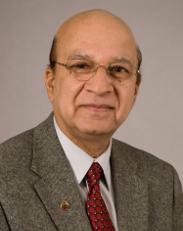 Punit Boolchand合作论文数University of Cincinnati9
 W. J. Bresser合作论文数7Chad a Hollingsworth合作论文数6
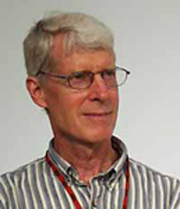 Warren Huff合作论文数Department of Geology, University of Cincinnati6Richard S. Burrows合作论文数5Ivan Zitkovsky合作论文数5
 David E Farrell合作论文数Department of Physics, Case Western Reserve University5Herbert C. Brown合作论文数4Raymond N. Enzweiler合作论文数3
 Pratim Biswas合作论文数Department of Chemical, Environmental and Materials Engineering, College of Engineering, University of Miami;Rosenstiel School of Marine, Atmospheric, and Earth Science, University of Miami3Austin Yingst合作论文数3
 Khaled Elgaid合作论文数Nanoelectronics Research Centre;University of Glasgow;Nanoelectronics Research Centre, University of Glasgow3George B. Smith合作论文数3Wilbur G. Evans合作论文数3Sv Lucas合作论文数2george h lemon合作论文数2Norman B. Coffman合作论文数2jean oostens合作论文数2Jh Wotiz合作论文数2Rm Deiters合作论文数2Louis H. Steinert合作论文数2Derong Zhou (周得荣)合作论文数2Sunil Kumar Podder合作论文数2P. H. Hor合作论文数Center for Superconductivity and Department of Physics, Texas;University of Houston;Texas Center for Superconductivity and Department of Physics, University of Houston2B. S. Chandrasekhar合作论文数2Chuck Blue合作论文数2
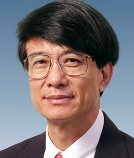 Paul C. W. Chu合作论文数Department of Physics, College of Natural Sciences and Mathematics, University of Houston;Texas Center for Superconductivity, University of Houston2Jean Oostens合作论文数2ronald meng合作论文数1Jc Haartz合作论文数1Derong Zhoul合作论文数1C. Blue合作论文数1JM STRONG合作论文数1r e heinz合作论文数1herbert c brown合作论文数1Jj Alexander合作论文数1Hc Brown合作论文数1Fe Stary合作论文数1
 Feng Shi (石峰)合作论文数School of Materials Science and Engineering, Shaanxi Normal University1P.C. Eklund合作论文数1Bernard Goodman合作论文数1Warren J. Hehre合作论文数1George H Lemon合作论文数1Robert T. Mciver合作论文数1Lloyd V. Guild合作论文数1
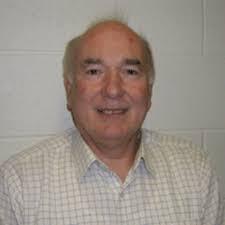 Bernard Albert Goodman合作论文数College of Physical Science and Engineering, Guangxi University;State Key Laboratory for Sub-tropical Agro-bioresource Conservation and Utilization, Guangxi University1Benjamin M. Dekoven合作论文数The Dow Chemical Co.1G. Nietfeld合作论文数1Sister Rose Mary Deiters合作论文数1




