Drought tolerance in crops often involves trade-offs between water conservation, growth and reproduction. Understanding how water-saving strategies are implemented at physiological and metabolic levels remains critical for improving crop performance under water-limited conditions. Here, we characterise a wheat TILLING mutant, WS1, that exhibits enhanced survival under drought stress. WS1 showed reduced stomatal conductance and transpiration, together with increased carbon isotope discrimination, consistent with reduced water loss. Despite these traits, WS1 displayed weak stomatal responses to exogenous abscisic acid (ABA), indicating that its water-saving behaviour is not primarily explained by canonical ABA signalling. Metabolomic analyses revealed substantial accumulation of proline and changes in nitrogen and carbon metabolism, suggesting a shift toward a survival-oriented metabolic state. Phosphoproteomic profiling further identified distinct phosphorylation patterns associated with energy-related signalling components, including proteins linked to SnRK1 pathways. These molecular features likely reflect an altered energy-sensing and regulatory state rather than direct causal drivers of the phenotype. Notably, WS1 exhibited reduced fertility, indicating a trade-off between survival and reproductive investment. Together, our results suggest that WS1 adopts a water-saving drought survival phenotype characterised by coordinated physiological and metabolic reprogramming, providing a framework for understanding survival-oriented drought responses and resource allocation strategies in wheat.
Introducing genetic resources from distantly related plants is necessary to provide novel traits to crops. However, wide hybridization between wheat and other plants is limited by the elimination of non-wheat chromosomes during the development of interspecific zygotes. In this study, we produced allopolyploid wheat-maize hybrid zygotes with various gamete combinations using an in vitro fertilization system and monitored their developmental profiles. Hybrid zygotes produced by fusing a maize egg, a wheat egg, and a wheat sperm were successfully developed into fertile plants. Genome sequencing revealed that the regenerated plants were 'cytoplasmic hybrids' ('cybrids'), possessing a 'wheat' nuclear/plastid genome and a 'wheat'+'maize' mitochondrial genome. Genomic PCR on the cybrids showed stable transmission of the maize mitochondrial genome to the F2 generation, and fluorescence in situ hybridization analysis suggested the recombination of mitochondrial DNA between wheat and maize in the cells of the cybrids. CO2 compensation point and δ13C analysis suggested that the cybrids perform C3-type photosynthesis. These results demonstrate that stable wheat cybrid lines, termed Zeawheat, can be generated by fusing heterogeneous gametes in optimal combinations. This study provides novel insights into using mitochondrial genetic resources between C3 and C4 plants.
A capacity for reliable germination under elevated temperatures is a crucial factor in maintaining the stability of bread wheat (Triticum aestivum) yields in the context of climate change. Although the environment of the parent plant during growth is a known factor affecting seed germinability, the effect of this environment on the heat tolerance of wheat seeds has not been investigated in detail. To investigate the effect of exposure to high temperatures during growth, plants were exposed to 38°C at various growth stages. In germination test, seeds exposed to heat during their development had better heat germinability than the control. On the other hand, high temperatures before the seed development stage resulted in a lower temperature germinability compared to the control. To identify critical factors that altered heat germinability, we analyzed heat shock protein expression, fatty acid composition, and metabolite profiles. High-temperature treatment during seed formation increased the expression of heat shock proteins and reduced the degree of unsaturation of fatty acids in the seeds, which may enhance the ability of seeds to survive and germinate at high temperatures. There was a significant treatment effect on the overall metabolite content of the seeds. PLS regression analysis using the germination test results revealed that taurine, thymidine, beta-alanine, sinapic acid, and deoxyguanosine contributed significantly to germination rate. These findings suggest that the combined influence of these metabolites may play a role in acquiring seed germinability under high-temperature conditions during the growth period of the parent plants. These findings suggest potential components of a molecular mechanism in bread wheat that is triggered by high temperature during seed development and results in the acquisition of heat germinability.
Global warming has led to the expansion of arid lands and more frequent droughts, which are the largest cause of global food production losses. In our previous study, we developed TaPYLox wheat overexpressing the plant hormone abscisic acid (ABA) receptor, which is important for the drought stress response in plants. TaPYLox showed resistance to drought stress and acquired water-saving traits that enable efficient grain production with less water use. In this study, we used TaPYLox to identify ABA-dependent and -independent metabolites in response to drought stress. We compared the variation of metabolites in wheat under well-watered, ABA treatment, and drought stress conditions using the ABA-sensitive TaPYLox line and control lines. The results showed that tagatose and L-serine were ABA-dependently regulated metabolites, because their stress-induced accumulation was increased by ABA treatment in TaPYLox. In contrast, L-valine, L-leucine, and DL-isoleucine, which are classified as branched chain amino acids, were not increased by ABA treatment in TaPYLox, suggesting that they are metabolites regulated in an ABA-independent manner. Interestingly, the accumulation of L-valine, L-leucine, and DL-isoleucine was suppressed in drought-tolerant TaPYLox under drought stress, suggesting that drought-tolerant wheat might be low in these amino acids. 3-dehydroshikimic acid and α-ketoglutaric acid were decreased by drought stress in an ABA-independent manner. In this study, we have succeeded in identifying metabolites that are regulated by drought stress in an ABA-dependent and -independent manner. The findings of this study should be useful for future breeding of drought-tolerant wheat.
Climate change has resulted in an increased demand for Japanese bunching onions (Allium fistulosum L., genomes FF) with drought resistance. A complete set of alien monosomic addition lines of A. fistulosum with extra chromosomes from shallot (A. cepa L. Aggregatum group, AA), represented as FF + 1A–FF + 8A, displays a variety of phenotypes that significantly differ from those of the recipient species. In this study, we investigated the impact of drought stress on abscisic acid (ABA) and its precursor, β-carotene, utilizing this complete set. In addition, we analyzed the expression levels of genes related to ABA biosynthesis, catabolism, and drought stress signal transduction in FF + 1A and FF + 6A, which show characteristic variations in ABA accumulation. A number of unigenes related to ABA were selected through a database using Allium TDB. Under drought conditions, FF + 1A exhibited significantly higher ABA and β-carotene content compared with FF. Additionally, the expression levels of all ABA-related genes in FF + 1A were higher than those in FF. These results indicate that the addition of chromosome 1A from shallot caused the high expression of ABA biosynthesis genes, leading to increased levels of ABA accumulation. Therefore, it is expected that the introduction of alien genes from the shallot will upwardly modify ABA content, which is directly related to stomatal closure, leading to drought stress tolerance in FF.
Globally, bread wheat (Triticum aestivum) is one of the most important staple foods; when exposed to drought, wheat yields decline. Although much research has been performed to generate higher yield wheat cultivars, there have been few studies on improving end-product quality under drought stress, even though wheat is processed into flour to produce so many foods, such as bread, noodles, pancakes, cakes, and cookies. Recently, wheat cultivation has been affected by severe drought caused by global climate change. In previous studies, seed shrinkage was observed in wheat exposed to continuous drought stress during seed development. In this study, we investigated how progressive drought stress affected seed development by metabolomic and transcriptomic analyses. Metabolite profiling revealed the drought-sensitive line reduced accumulation of proline and sugar compared with the water-saving, drought-tolerant transgenic line overexpressing the abscisic acid receptor TaPYL4 under drought conditions in spikelets with developing seeds. Meanwhile, the expressions of genes involved in translation, starch biosynthesis, and proline and arginine biosynthesis was downregulated in the drought-sensitive line. These findings suggest that seed shrinkage, exemplifying a deficiency in endosperm, arose from the hindered biosynthesis of crucial components including seed storage proteins, starch, amino acids, and sugars, ultimately leading to their inadequate accumulation within spikelets. Water-saving drought tolerant traits of wheat would aid in supporting seed formation under drought conditions.
Our previous study described stage-specific responses of ‘Norin 61’ bread wheat to high temperatures from seedling to tillering (GS1), tillering to flowering (GS2), flowering to full maturity stage (GS3), and seedling to full maturity stage (GS1–3). The grain development phase lengthened in GS1 plants; source tissue decreased in GS2 plants; rapid senescence occurred in GS3 plants; all these effects occurred in GS1–3 plants. The present study quantified 69 flag leaf metabolites during early grain development to reveal the effects of stage-specific high-temperature stress and identify markers that predict grain weight. Heat stresses during GS2 and GS3 showed the largest shifts in metabolite contents compared with the control, followed by GS1–3 and GS1. The GS3 plants accumulated nucleosides related to the nucleotide salvage pathway, beta-alanine, and serotonin. Accumulation of these compounds in GS1 plants was significantly lower than in the control, suggesting that the reduction related to the high-temperature priming effect observed in the phenotype (i.e., inhibition of senescence). The GS2 plants accumulated a large quantity of free amino acids, indicating residual effects of the previous high-temperature treatment and recovery from stress. However, levels in GS1–3 plants tended to be close to those in the control, indicating an acclimation response. Beta-alanine, serotonin, tryptophan, proline, and putrescine are potential molecular markers that predict grain weight due to their correlation with agronomic traits.
Bread wheat (Triticum aestivum) is less adaptable to high temperatures than other major cereals. Previous studies of the effects of high temperature on wheat focused on the reproductive stage. There are few reports on yield after high temperatures at other growth stages. Understanding growth-stage-specific responses to heat stress will contribute to the development of tolerant lines suited to high temperatures at various stages. We exposed wheat cultivar “Norin 61” to high temperature at three growth stages: seedling–tillering (GS1), tillering–flowering (GS2), and flowering–maturity (GS3). We compared each condition based on agronomical traits, seed maturity, and photosynthesis results. Heat at GS2 reduced plant height and number of grains, and heat at GS3 reduced the grain formation period and grain weight. However, heat at GS1 reduced senescence and prolonged grain formation, increasing grain weight without reducing yield. These data provide fundamental insights into the biochemical and molecular adaptations of bread wheat to high-temperature stresses and have implications for the development of wheat lines that can respond to high temperatures at various times of the year.
GWAS on a bread wheat panel with high D genome diversity identified novel alleles and QTLs associated with resilience to combined heat and drought stress under natural field conditions. As heat (H) and drought stresses occur concurrently under field conditions, studying them separately offers limited opportunities for wheat improvement. Here, a wheat diversity panel containing Aegilops tauschii introgressions was evaluated under H and combined heat–drought (HD) stresses to identify quantitative trait loci (QTLs) associated with resilience to the stresses, and to assess the practicability of harnessing Ae. tauschii diversity for breeding for combined stress resilience. Using genome-wide analysis, we identified alleles and QTLs on chromosomes 3D, 5D, and 7A controlling grain yield (GY), kernel number per spike, and thousand-kernel weight, and on 3D (521–549 Mbp) controlling GY alone. A strong marker–trait association (MTA) for GY stability on chromosome 3D (508.3 Mbp) explained 20.3% of the variation. Leaf traits—canopy temperature, vegetation index, and carbon isotope composition—were controlled by five QTLs on 2D (23–96, 511–554, and 606–614 Mbp), 3D (155–171 Mbp), and 5D (407–413 Mbp); some of them were pleiotropic for GY and yield-related traits. Further analysis revealed candidate genes, including GA20ox, regulating GY stability, and CaaX prenyl protease 2, regulating canopy temperature at the flowering stage, under H and HD stresses. As genome-wide association studies under HD in field conditions are scarce, our results provide genomic landmarks for wheat breeding to improve adaptation to H and HD conditions under climate change.
Wheat ( Tritium aestivum ) is vulnerable to future climate change because it is predominantly grown under rain-fed conditions in drought-prone areas. Thus, in-depth understanding of drought effect on wheat metabolism is essential for developing drought-tolerant wheat varieties. Here, we exposed wheat ‘Norin 61’ plants to progressive drought stress [0 (before drought), 2, 4, 6, 8, and 10 days after withholding water] during the flowering stage to investigate physiological and metabolomic responses. Transcriptional analyses of key abscisic acid-responsive genes indicated that abscisic acid signalling played a major role in the adaptation of wheat to water deficit. Carbon isotope composition had a higher value than the control while canopy temperature (CT) increased under drought stress. The CT depression was tightly correlated with soil water potential (SWP). Additionally, SWP at − 517 kPa was identified as the critical point for increasing CT and inducing reactive oxygen species. Metabolome analysis identified four potential drought-responsive biomarkers, the enhancement of nitrogen recycling through purine and pyrimidine metabolism, drought-induced senescence based on 1-aminocyclopropane-1-carboxylic acid and Asn accumulation, and an anti-senescence response through serotonin accumulation under severe drought stress. Our findings provide in-depth insight into molecular, physiological and metabolite changes involved in drought response which are useful for wheat breeding programs to develop drought-tolerant wheat varieties.
Nucleoside monophosphate kinases play crucial roles in biosynthesis and regeneration of nucleotides. These are bi-substrate enzymes that catalyze reversible transfers of a phosphoryl group between ATP and nucleoside monophosphate. These enzymes are comprised of the CORE domain, the NMP-binding domain, and the LID domain. Large conformational rearrangement of the three domains occurs during the catalytic cycle. Although many structures of CMP kinase have been determined, only limited structural information has been available on the conformational changes along the reaction pathway. We determined five crystal structures of CMP kinase of Thermus thermophilus HB8 in ligand-free form and the CMP "open", CMP "closed", ADP-CDP-Gd3+-, and CDP-bound forms at resolutions of 1.7, 2.2, 1.5, 1.6, and 1.7 Å, respectively. The ligand-free form was in an open conformation, whereas the structures of the CMP "closed", ADP-CDP-Gd3+-, and CDP-bound forms were in a closed conformation, in which the shift of the NMP-binding domain and LID domain caused closure of the substrate-binding cleft. Interestingly, the CMP "open" form was in an open conformation even with CMP bound, implying intrinsic conformational fluctuation. The structure of the ADP-CDP complex is the first structure of CMP kinase with a phosphoryl group donor and an acceptor. Upon simultaneous binding of ADP and CDP, the side chains of several residues in the LID domain moved toward the nucleotides without global open-closed conformational changes compared to those in the CMP "closed" and CDP complexes. These global and local conformational changes may be crucial for the substrate recognition and catalysis. The terminal phosphate groups of ADP and CDP had similar geometry to those of two ADP in AMP kinase, suggesting common catalytic mechanisms to other nucleoside monophosphate kinases. Our findings are expected to contribute to detailed understanding of the reaction mechanism of CMP kinase.
With the aim of providing genetic materials for breeding drought-resistant wheat varieties, the physiological and metabolic plasticity of three drought-resistant wheat multiple synthetic derivative lines (MSDLs) and their backcross parent “Norin 61” (N61) were evaluated in response to drought stress. The results indicated that the D-genome introgressions from Aegilops tauschii into the MDSLs improved their drought-adaptive traits. Specifically, MNH5 and MSD345 showed higher photosynthesis rates and triose phosphate utilization than N61 under control conditions, resulting in greater accumulation of glucose and sucrose in the shoots. However, under drought stress, MNH5 and MSD345 had higher intrinsic water use efficiency than MSD53 and N61. The total antioxidant capacity and superoxide dismutase activity increased in all three MSDLs, whereas no significant changes were found in N61 in response to drought stress. Metabolome analysis identified six common drought-induced metabolites in all of the investigated genotypes. However, four metabolites (adenine, gamma aminobutyric acid, histidine, and putrescine) each specifically accumulated in an MSDL in response to drought stress, suggesting that these metabolites are important for MSDL drought resistance. In conclusion, MNH5 and MSD345 showed better adaptive responses to drought stress than MSD53 and N61, suggesting that these two MSDLs could be explored for breeding drought-resistant wheat lines.
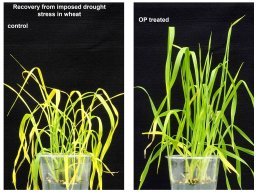
Drought causes crop losses worldwide, and its impact is expected to increase as the world warms. This has motivated the development of small-molecule tools for mitigating the effects of drought on agriculture. We show here that current leads are limited by poor bioactivity in wheat, a widely grown staple crop, and in tomato. To address this limitation, we combined virtual screening, x-ray crystallography, and structure-guided design to develop opabactin (OP), an abscisic acid (ABA) mimic with up to an approximately sevenfold increase in receptor affinity relative to ABA and up to 10-fold greater activity in vivo. Studies in Arabidopsis thaliana reveal a role of the type III receptor PYRABACTIN RESISTANCE-LIKE 2 for the antitranspirant efficacy of OP. Thus, virtual screening and structure-guided optimization yielded newly discovered agonists for manipulating crop abiotic stress tolerance and water use.
The phytohormone abscisic acid (ABA) is a key signal molecule for controlling stomatal movement and stress responses such as drought. Genetic manipulation of ABA receptors has recently been reported to improve plant water use efficiency (WUE). We therefore compared details of WUE traits between the ABA receptor quintuple mutant and wheat ABA receptor-overexpressing Arabidopsis lines. Biomass and seed productivities per liter of water were both reduced in the receptor mutant but improved in the transgenic Arabidopsis lines. This result suggests that appropriate modulation of ABA receptors can extend crop potential productivity.
Water availability is a key determinant of terrestrial plant productivity. Many climate models predict that water stress will increasingly challenge agricultural yields and exacerbate projected food deficits. To ensure food security and increase agricultural efficiency, crop water productivity must be increased. Research over past decades has established that the phytohormone abscisic acid (ABA) is a central regulator of water use and directly regulates stomatal opening and transpiration. In this study, we investigated whether the water productivity of wheat could be improved by increasing its ABA sensitivity. We show that overexpression of a wheat ABA receptor increases wheat ABA sensitivity, which significantly lowers a plant's lifetime water consumption. Physiological analyses demonstrated that this water-saving trait is a consequence of reduced transpiration and a concomitant increase in photosynthetic activity, which together boost grain production per litre of water and protect productivity during water deficit. Our findings provide a general strategy for increasing water productivity that should be applicable to other crops because of the high conservation of the ABA signalling pathway.
Post-anthesis drought stress is one of the main constraints on the production of wheat (Triticum aestivum L.). Because field screening for post-anthesis drought tolerance is difficult, effective and validated methods to simulate drought in order to identify sources of tolerance can facilitate screening of breeding materials. Chemical desiccants are widely used to simulate post-anthesis drought stress. We aimed to identify physiological traits that respond to desiccants as they do to drought. We examined the responses of ‘Norin 61’ to six treatments in a greenhouse: irrigated control, drought after anthesis, and 2% or 4% potassium chlorate (KClO3) at anthesis (A) or grain filling (GF). We measured δ13C in leaves, aboveground fresh biomass, stomatal conductance, chlorophyll content, harvest index, and grain yield. Both 2% and 4% KClO3 at both A and GF simulated the effect of drought stress. Selection of drought-tolerant genotypes can be aided by chlorophyll content and δ13C measurement of leaves when 2% or 4% KClO3 is used to simulate drought.
Abscisic acid (ABA) is an essential phytohormone that regulates plant water use and drought tolerance. However, agricultural applications of ABA have been limited because of its rapid inactivation in plants, which involves hydroxylation of ABA by ABA 8′-hydroxylase (CYP707A). We previously developed a selective inhibitor of CYP707A, (−)-Abz-E2B, by structurally modifying S-uniconazole, which functions as an inhibitor of CYP707A and as a gibberellin biosynthetic enzyme. However, its synthetic yield is too low for practical applications. Therefore, we designed novel CYP707A inhibitors, Abz-T compounds, that have simpler structures in which the 1,2,3-triazolyl ring of (−)-Abz-E2B has been replaced with a triple bond. They were successfully synthesised in shorter steps, resulting in greater yields than that of (−)-Abz-E2B. In the enzymatic assays, one of the Abz-T compounds, (−)-Abz-E3M, acted as a strong and selective inhibitor of CYP707A, similar to (−)-Abz-E2B. Analysis of the biological effects in Arabidopsis revealed that (−)-Abz-E3M enhanced ABA’s effects more than (−)-Abz-E2B in seed germination and in the expression of ABA-responsive genes. Treatment with (−)-Abz-E3M induced stomatal closure and improved drought tolerance in Arabidopsis. Furthermore, (−)-Abz-E3M also increased the ABA response in rice and maize. Thus, (−)-Abz-E3M is a more practical and effective inhibitor of CYP707A than (−)-Abz-E2B.
Stress-induced abscisic acid (ABA) is mainly catabolized by ABA 8′-hydroxylase (ABA8ox), which also strictly regulates endogenous ABA levels. Although three members of the ABA8ox gene family are conserved in rice, it is not clear which stressors induce expression of these genes. Here, we found that OsABA8ox1 was induced by cold stress within 24 h and that OsABA8ox2 and OsABA8ox3 were not. In contrast, OsABA8ox2 and OsABA8ox3 were ABA-inducible, but OsABA8ox1 was not. OsABA8ox1, OsABA8ox2 and OsABA8ox3 restored germination of a cyp707a1/a2/a3 triple mutant of Arabidopsis to rates comparable to those of the wild type, indicating that OsABA8ox1, OsABA8ox2 and OsABA8ox3 function as ABA-catabolic genes in vivo. Transgenic rice lines overexpressing OsABA8ox1 showed decreased levels of ABA and increased seedling vigor at 15 °C. These results indicate that sustained low levels of ABA lead to increased seedling vigor during cold stress. On the other hand, excessively low endogenous ABA levels caused reduced drought and cold tolerance, although some of the transgenic rice lines expressing OsABA8ox1 at moderate levels did not show these harmful effects. Adequate regulation of endogenous ABA levels is thought to be crucial for maintaining seedling vigor under cold stress and for cold and drought tolerance in rice.
 Hisashi Tsujimoto合作论文数Tottori University, Tottori University12
 Seiki Kuramitsu合作论文数Osaka University8
 Yuji Yamasaki合作论文数7
 Kinya Akashi合作论文数Fac Agr, Tottori Univ6
 Masanori Okamoto合作论文数Plant Genom Network Res Team, RIKEN6Noriko Nakagawa合作论文数5Ryoji Masui合作论文数5Sachiko Matsunaga合作论文数4
 Akeo Shinkai合作论文数RIKEN SPring 8 Ctr, Harima Inst4Mostafa Abdelrahman合作论文数3
 Michael Itam合作论文数Dept Plant Soil & Microbial Sci, Michigan State Univ3Kim June-Sik合作论文数3
 Fumitaka Abe合作论文数National Institute of Crop Science (NICS)3Jun Takeuchi合作论文数2Yusuke Toda合作论文数Graduate School of Agricultural and Life Sciences, Univ. of Tokyo2
 Shun'ichi Kuroda合作论文数2Yasir Serag Alnor Gorafi合作论文数Arid Land Res Ctr, Tottori Univ2
 David Sattelle合作论文数Division of Medicine, University College London;CeBioscience Ltd2
 Kwang Kim合作论文数2
 Makoto Ihara合作论文数School of Agriculture, Kinki University2Miki Akamatsu (赤松美紀)合作论文数Division of Environmental Science and Technology, Graduate School of Agriculture, Kyoto University;Faculty of Agriculture, Kyoto University2Yasushi Todoroki合作论文数Graduate School of Agriculture, Kyoto University2
 Mitsunori Seo (瀬尾光範)合作论文数Graduate School of Agriculture, University of the Ryukyus;Center for Sustainable Resource Science, RIKEN;Department of Biological Sciences, Graduate School of Science, Tokyo Metropolitan University;Tropical Biosphere Research Center, University of the Ryukyus2
 Takayoshi Ishii合作论文数Research Center for Charged Particle Therapy;Research Center Hospital for Charged Particle Therapy, National Institute of Radiological Sciences;Research Center Hospital for Charged Particle Therapy, National Institute of Radiological Sciences2
 Sean Cutler合作论文数Department of Botany & Plant Sciences, University of California, Riverside2Yuri Kanno合作论文数2Yuji Ashikawa合作论文数SPring-8 Center, RIKEN2Toshihide Okajima合作论文数2Hisashi Nishiwaki合作论文数2Kosuke Hanada合作论文数1
 Rihito Morita合作论文数1Seiji Murayama合作论文数1Ayano Meguro-Maoka合作论文数1tetsuya nakajima合作论文数1
 Brian F Volkman合作论文数1Kenji Hirata合作论文数1
 Zenan Xing合作论文数1Dezi Elzinga合作论文数1
 Akira Endo合作论文数1Steven Bishay合作论文数1Shota Tadano合作论文数1Jonathan D. M. Helander合作论文数1
 Offiong Ukpong Edet合作论文数Tottori University1
 Aditya S Vaidya合作论文数Univ Calif Riverside, Dept Bot & Plant Sci, Inst Integrat Genome Biol, Riverside, CA 92521 USA1Takuma Oda合作论文数1Atsuko Yamashita合作论文数Okayama Univ, Grad Sch Med Dent & Pharmaceut Sci, Kita Ku, 1-1-1 Tsushima Naka, Okayama 7008530, Japan1
 Naoyuki Kondo合作论文数Dept Mol Genet, Kansai Med Univ1
 Kenji Fukui合作论文数Corresponding author1Sattelle Benedict M合作论文数1




