The fast growth of food delivery services in China has vastly increased consumption and environmental impact of plastic-based, single-use food and beverage containers (FaBCs). A viable solution to curb plastic pollution from FaBCs is to apply circular economy (CE) principles in regulations, business models, and consumption patterns. The present paper centers on FaBCs from food deliveries in Guangzhou and uses first-hand data on FaBC waste generation to evaluate the resulting environmental impacts via a life cycle assessment (LCA). Having tested five LCA scenarios centering on CE principles, a 'combined scenario' comprising refuse, reduce, reuse, and recycling strategies was found effective in reducing emissions and water use by 25.5 %-66.4 %. Taking these quantitative findings as benchmarks for what circular policy should deliver, the paper synthesizes various CE measures proven effective within and outside of China into implementable policy scenarios. By merging producer responsibility schemes, reverse logistics, Internet-of-Things applications as well as an alternation of bans with the use of reusables, the paper outlines three pathways towards an evidence-based, viable circular policy transition for food deliveries in Guangzhou.
In recent years, researchers have shown increasing concern on the environmental impact attributed to traditional binders like cement, especially in mega-scale reclamation projects utilizing Deep Cement Mixing (DCM). The substitution of cement with alternative binders derived from construction and demolition waste as well as industrial slag waste is viewed as a potential strategy for mitigating the carbon footprint of this construction sector. In this study, the potential of using ground granulated blast furnace slag (GGBS), steel slag (SS), and waste concrete powder (WCP) to partially replace cement in construction projects involving DCM is assessed based on a case study in Hong Kong. A detailed comparison through Life Cycle Assessment (LCA) is conducted to examine the carbon footprint of alternative binders. Various scenarios that involve substituting cement to different extents with alternative binders generated from waste materials have been considered. The results reveal that the grinding process is the main contributor to the Global Warming Potential (GWP) for GGBS and SS, accounting for over 57% in each case. For WCP, the GWP is distributed across separation, sieving, and loading. Utilizing alternative waste leads to a GWP reduction in all scenarios, primarily due to lower emissions from these secondary raw materials. Overall, substituting 60% of Portland cement with GGBS, SS, or WCP in DCM construction resulted in GWP reductions of 34.7%, 34.5%, and 35.8% of greenhouse gas emissions, respectively. Various transportation scenarios are explored when moving the supply of construction materials from a local to a regional level by considering various material suppliers and the associated transportation distance. The sensitivity analysis highlighted the significant impact of transportation distance on GWP. This underscores the importance of logistics analysis in land reclamation projects and the benefits of integrating alternative binders into DCM projects.
Waste concrete powder (WCP), a byproduct of construction and demolition (C&D), currently has a low degree of recycling despite its potential for environmentally friendly applications. WCP can serve as a valuable substitute for cement, offering advantages for resource conservation and carbon sequestration. However, there are very few studies that quantitatively assess the environmental impact of incorporating WCP into the circular economy as a secondary material instead of disposing of it. The energy-intensive processing of WCP raises questions about the optimal carbonation time using available equipment. This study aims to fill this knowledge gap by employing carbon footprint and life cycle assessments (LCA) to optimize WCP recycling. Three recycling WCP scenarios are analyzed. The first scenario involved the conversion of WCP into compacts that absorb CO2 during the carbonation process. The results of the first scenario revealed that the optimal carbonation time for WCP compacts was 8 h, during which 42.7 kg CO2-e per tonne of WCP compacts was sequestered. The total global warming potential (GWP) was -4.22 kgCO2-e, indicating a carbon-negative recycling process. In the second and third scenarios, LCA was conducted to compare the use of carbonated and uncarbonated WCP as a partial replacement for cement in concrete. In these scenarios, it was found that uncarbonated WCP is a more effective solution for reducing the carbon footprint of traditional concrete mixes, achieving a significant 16% reduction of GWP when 20% of cement is replaced. Conversely, using carbonated WCP as a partial cement replacement in concrete mixtures shows limited potential for CO2 uptake. The sensitivity analysis reveals that the carbon footprint of the WCP compacts production process is strongly influenced by the electricity supplier used.
Waste paper disposed in landfills notably contributes to greenhouse gas (GHG) emissions and impedes more sustainable, circular alternatives, such as recycling. In Hong Kong, this unsustainable approach is currently dominant as 68% of waste paper products are treated in landfills in 2020. To contextualize the impact of local waste paper management and explore mitigation potentials of circular alternatives, this paper develops a quantitative assessment framework around GHG emissions development trajectories. Combining guidelines of the Intergovernmental Panel on Climate Change (IPCC), national GHG inventories, and local parameters from life cycle analysis, five GHG emissions projections were simulated along the Shared Socioeconomic Pathways (SSPs) until 2060. Most recent baselines indicate that Hong Kong's current waste paper treatment generated 638,360 tons CO2-eq in 2020, comprising 1,821,040 tons CO2-eq from landfill and 671,320 tons CO2-eq from recycling, and -1,854,000 tons CO2-eq from primary material replacement. Proceeding along a Business-as-Usual scenario under SSP5, GHG emissions will dramatically increase to a net 1,072,270 tons CO2-eq by 2060, whereas a recycling-intensive scenario will lead to a net saving of -4,323,190 tons CO2-eq. To complement the quantitative evidence on the benefits of waste paper recycling, field research was conducted to explore the feasibility of circular policy innovation from the perspective of recycling stakeholders. These empirical qualitative and quantitative findings from stakeholders' business routines and material transactions provide crucial indications for policy and institutional innovation: Essentially, for Hong Kong to improve waste paper recycling capacities and facilitate a circular economy (CE), local stakeholders require support via fiscal policy measures (financial subsidies or tax reductions) and infrastructure improvements (delivery access and material storage). In sum, this study employs a novel analytical framework combining original qualitative and quantitative evidence to provide policy innovation towards circular, GHG emission-saving waste paper management.
The COVID-19 pandemic caused and still causes unprecedented disruptions in daily lives of billions of people globally. It affects practices and routines across all household consumption domains, including clothing consumption. Drawing on Social Practice Theory, this article explores and compares changes in clothing acquisition practices during COVID-19 across nine countries: the USA, the UK, Finland, Germany, Switzerland, Iran, Czech Republic, India, and Hong Kong SAR. Data was obtained through a standardized survey containing rated and open-ended questions, which were analyzed through descriptive quantitative analysis and inductive qualitative content analysis of open-ended questions. The results of this cross-country research indicate that all forms of fashion consumption, including more sustainable practices, have decreased during the pandemic. The most visible impacts have occurred in the material arrangements associated with fashion acquisition practices (e.g., closed physical shops, shipping disruptions, cancelled events, remote work, etc.). However, changes that result from these disruptions may be shorter-lived that changes that happened as a result of changing meanings associated with fashion consumption and its more sustainable forms and new competencies and skills acquired during the pandemic that could ensure more lasting practicing of more sustainable forms of fashion consumption.
Unsustainable clothing consumption patterns, especially prevalent in the Global North, have come to the spotlight of media, policy-makers and the academic community in recent years. Recently, the COVID-19 pandemic disrupted the routine lives of citizens globally, which has impacted some consumers’ attitudes towards fashion and consumption practices. This study employs terror management theory and voluntary simplicity to explore the impact of the COVID-19 pandemic on consumers’ attitudes towards clothing consumption across six different countries, from the Middle East, Southeast Asia, Europe and North America. A structured qualitative study with closed, open-ended and multiple-choice questions was completed by a sample of consumers (N = 3748) across these countries. Among all participants of this study one-third reported that the pandemic had affected their attitude towards clothing and this study was mainly conducted to investigate the nature of those attitude changes. Qualitative analysis identified patterns of change in consumers’ attitude towards clothing (e.g., minimalism, grateful mindset, conscious mindset, decreased fashion desire, longevity and style confidence), which reveal potential for a lasting shift towards more sustainable consumption patterns. The results of this study highlight valuable managerial implications: the industry needs to respond to this shift in consumers’ attitude and move towards more sustainable business models and processes. Sufficiency-oriented business offerings, in particular, are becoming more accepted in the fashion industry. Moreover, these results are relevant for predicting future consumption patterns, especially considering that pandemics may become a more regular part of life.
Heterogeneous uptake is one of the major mechanisms governing the amounts of short-chain alkylamines and ammonia (NH3) in atmospheric particles. Molar ratios of aminium to ammonium ions detected in ambient aerosols often exceed typical gas phase ratios. The present study investigated the simultaneous uptake of dimethylamine (DMA) and NH3 into sulfuric and oxalic acid particles at gaseous DMA ∕ NH3 molar ratios of 0.1 and 0.5 at 10, 50 and 70 % relative humidity (RH). Single-gas uptake and co-uptake were conducted under identical conditions and compared. Results show that the particulate dimethyl-aminium/ammonium molar ratios (DMAH ∕ NH4) changed substantially during the uptake process, which was severely influenced by the extent of neutralisation and the particle phase state. In general, DMA uptake and NH3 uptake into concentrated H2SO4 droplets were initially similarly efficient, yielding DMAH ∕ NH4 ratios that were similar to DMA ∕ NH3 ratios. As the co-uptake continued, the DMAH ∕ NH4 gradually dropped due to a preferential uptake of NH3 into partially neutralised acidic droplets. At 50 % RH, once the sulfate droplets were neutralised, the stronger base DMA displaced some of the ammonium absorbed earlier, leading to DMAH ∕ NH4 ratios up to four times higher than the corresponding gas phase ratios. However, at 10 % RH, crystallisation of partially neutralised sulfate particles prevented further DMA uptake, while NH3 uptake continued and displaced DMAH+, forming almost pure ammonium sulfate. Displacement of DMAH+ by NH3 has also been observed in neutralised, solid oxalate particles. The results can explain why DMAH ∕ NH4 ratios in ambient liquid aerosols can be larger than DMA ∕ NH3, despite an excess of NH3 in the gas phase. An uptake of DMA to aerosols consisting of crystalline ammonium salts, however, is unlikely, even at comparable DMA and NH3 gas phase concentrations.
Alkylaminium sulfates are frequently detected in ambient aerosols, and are believed to be important in the nucleation of new particles in the atmosphere, despite the comparatively low gas phase concentrations of amines. In this study, water activities and osmotic coefficients have been measured, using a chilled mirror dew point technique, of aqueous mixtures of sulfuric acid and the following alkylaminium sulfates: methylaminium, ethylaminium, dimethylaminium, diethylaminium, and trimethylaminium sulf-ate. The samples were prepared by mixing solutions of the five corresponding amines and aqueous sulfuric acid and determining the exact aminium to sulfate molar ratios by ion chromatography. The results were correlated using an extended Zdanovskii-Stokes-Robinson equation to enable concentration/water activity rela-tionships to be calculated over the entire composition range from pure aqueous sulfuric acid to pure aqueous aminium sulfate. Water activities and osmotic coefficients for aminium:sulfate ratios of 1:1 (the bisulfate salts) and lower showed great similarity with ammonium bisulfate, but osmotic coefficients for the 2:1 ratio (the aminium sulfates) were significantly larger (and water activities lower) than for ammonium sulfate. These results differ from those obtained in Clegg etal.'s (2013) study. The relative values of the osmotic coefficients, in concentrated solutions, suggest that the numbers of methyl or ethyl groups in the aminium ion may have a stronger lowering effect on water activity than the alkyl chain length.Copyright 2015 American Association for Aerosol Research
Alkyl aminium sulfates (AASs) can affect the physicochemical properties of atmospheric aerosols such as hygroscopicity. Previous laboratory experiments have shown that the water content in AAS bulk solutions is higher than in aqueous ammonium sulfate solution in the range of 60-95% relative humidity (RH). Furthermore, amine was found to evaporate from the solution during the preparation of AASs from the parent amine and sulfuric acid solutions. Here we report the hygroscopicities of deposited particles of four AASs at different aminium-to-sulfate molar ratios (A/Ss) in the range of <3-90% RH using air-flow cells coupled with in situ micro-Raman spectroscopy. Normalized integrated areas of O-H stretching peaks in the Raman spectra were converted to water-to-solute molar ratios (WSRs) at various RH values. Evaporation of amine was also observed in most cases and the exact A/Ss of sample particles or solutions were determined by ion chromatography. Mono-methylaminium sulfate (MMAS) and mono-ethylaminium sulfate (MEAS) particles were stable at A/S = 2.0, but di-methylaminium sulfate (DMAS) and tri-methylaminium sulfate (TMAS) suffered from DMA and TMA evaporation and eventually equilibrated to the A/S of 1.5 and 1.0, respectively. At these stable compositions MMAS and MEAS exhibited phase transitions in the super-saturation region, while DMAS and TMAS showed a continuous and reversible water uptake. Besides, an approach to estimate the hygroscopicities of DMAS and TMAS particles at an initial A/S larger than that of the stable compositions was presented. In the range of 60-95% RH, the WSRs of all the studied AAS particles were consistent with a previous study based on experimental values and the extended Zdanovskii-Stokes-Robinson equation. In general, all the studied AASs were more hygroscopic than their corresponding ammonium counterparts within the studied RH range and evaporation of amine needs to be corrected in studying unstable AAS particles.
 Chak K. Chan (陳澤強)合作论文数Physical Science and Engineering Division, King Abdullah University of Science and Technology3
 Cosette M. Joyner Martinez合作论文数2
 Stephan Wallaschkowski合作论文数Leuphana University Lüneburg, Bochum University of Applied Sciences2
 Yangxi Chu合作论文数2
 Samira Iran合作论文数2
 Katia Vladimirova合作论文数University of Geneva2
 Renu Singh合作论文数Hong Kong University of Science and Technology2
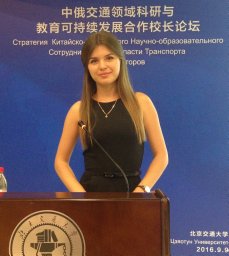 Ekaterina Kravchenko合作论文数Southern Marine Sci & Engn Guangdong Lab2
 Sonali Diddi合作论文数Design & Merchandising, Colorado State Univ2
 Helen Mccormick合作论文数Manchester Fash Inst, Manchester Metropolitan Univ2
 Benjamin Steuer合作论文数Division of Environment and Sustainability, Interdisciplinary Programs Office, The Hong Kong University of Science and Technology2
 Claudia E Henninger合作论文数Department of Materials, School of Natural Sciences, Faculty of Science and Engineering, The University of Manchester2
 Simon Clegg合作论文数School of Environmental Sciences, University of East Anglia;Air Quality Research Centre, University of California, Davis2
 Kirsi Niinimaki合作论文数2Peixiu Chen合作论文数1
 Kavitha Venkatasubramany Iyer合作论文数Symbiosis International (Deemed) University1
 Svetlana Besklubova合作论文数Dept Ind & Mfg Syst Engn, Univ Hong Kong1
 Marium Durrani合作论文数1
 Anthony Wong合作论文数School of Business and Hospitality Management, Caritas Institute of Higher Education1
 Wenjun Lu (卢雯珺)合作论文数School of Intelligent Civil and Ocean Engineering, College of Artificial Intelligence, Harbin Institute of Technology, Shenzhen1Iva Jestratijevic合作论文数1
 Kira Matus合作论文数Institute for Emerging Market Studies, The Hong Kong University of Science and Technology;Division of Environment & Sustainability, The Hong Kong University of Science and Technology;Academy of Interdisciplinary Studies, The Hong Kong University of Science and Technology1Liang Dong (董亮)合作论文数1
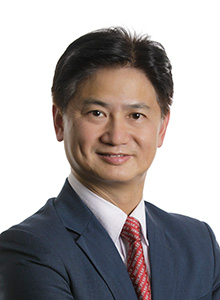 Charles W. W. Ng (吴宏伟)合作论文数Department of Civil and Environmental Engineering, School of Engineering, The Hong Kong University of Science & Technology1
 Xin Tong (童昕)合作论文数College of Urban and Environmental Sciences, Peking University1
 W.M. (Martin) de Jong合作论文数Department of Business-Society Management, Rotterdam School of Management, Erasmus University Rotterdam;Erasmus School of Law, Erasmus University Rotterdam;Institute for Gloabl Public Policy, Fudan University1




