We explore the node classification task in the context of graph domain adaptation, which uses both source and target graph structures along with source labels to enhance the generalization capabilities of Graph Neural Networks (GNNs) on target graphs. Structure domain shifts frequently occur, especially when graph data are collected at different times or from varying areas, resulting in poor performance of GNNs on target graphs. Surprisingly, we find that simply incorporating an auxiliary loss function for denoising graph edges on target graphs can be extremely effective in enhancing GNN performance on target graphs. Based on this insight, we propose our framework, GraphDeT, a framework that integrates this auxiliary edge task into GNN training for node classification under domain adaptation. Our theoretical analysis connects this auxiliary edge task to the graph generalization bound with -distance, demonstrating such auxiliary task can imposes a constraint which tightens the bound and thereby improves generalization. The experimental results demonstrate superior performance compared to the existing baselines in handling both time and regional domain graph shifts.
Given a set of financial transactions (who buys from whom, when, and for how much), as well as prior information from buyers and sellers, how can we find fraudulent transactions? If we have labels for some transactions for known types of fraud, we can build a classifier. However, we also want to find new types of fraud, still unknown to the domain experts ('Detection'). Moreover, we also want to provide evidence to experts that supports our opinion ('Justification'). In this paper, we propose FRAUDGUESS, to achieve two goals: (a) for 'Detection', it spots new types of fraud as micro-clusters in a carefully designed feature space; (b) for 'Justification', it uses visualization and heatmaps for evidence, as well as an interactive dashboard for deep dives. FRAUDGUESS is used in real life and is currently considered for deployment in an Anonymous Financial Institution (AFI). Thus, we also present the three new behaviors that FRAUDGUESS discovered in a real, million-scale financial dataset. Two of these behaviors are deemed fraudulent or suspicious by domain experts, catching hundreds of fraudulent transactions that would otherwise go un-noticed.
Given a semi-structured knowledge base (SKB), where text documents are interconnected by relations, how can we effectively retrieve relevant information to answer user questions? Retrieval-Augmented Generation (RAG) retrieves documents to assist large language models (LLMs) in question answering; while Graph RAG (GRAG) uses structured knowledge bases as its knowledge source. However, many questions require both textual and relational information from SKB - referred to as "hybrid" questions - which complicates the retrieval process and underscores the need for a hybrid retrieval method that leverages both information. In this paper, through our empirical analysis, we identify key insights that show why existing methods may struggle with hybrid question answering (HQA) over SKB. Based on these insights, we propose HybGRAG for HQA consisting of a retriever bank and a critic module, with the following advantages: (1) Agentic, it automatically refines the output by incorporating feedback from the critic module, (2) Adaptive, it solves hybrid questions requiring both textual and relational information with the retriever bank, (3) Interpretable, it justifies decision making with intuitive refinement path, and (4) Effective, it surpasses all baselines on HQA benchmarks. In experiments on the STaRK benchmark, HybGRAG achieves significant performance gains, with an average relative improvement in Hit@1 of 51
Time series anomaly detection (TSAD) finds many applications such as monitoring environmental sensors, industry KPIs, patient biomarkers, etc. A two-fold challenge for TSAD is a versatile and unsupervised model that can detect various different types of time series anomalies (spikes, discontinuities, trend shifts, etc.) without any labeled data. Modern neural networks have outstanding ability in modeling complex time series. Self-supervised models in particular tackle unsupervised TSAD by transforming the input via various augmentations to create pseudo anomalies for training. However, their performance is sensitive to the choice of augmentation, which is hard to choose in practice, while there exists no effort in the literature on data augmentation tuning for TSAD without labels. Our work aims to fill this gap. We introduce TSAP for TSA "on autoPilot", which can (self-)tune augmentation hyperparameters end-to-end. It stands on two key components: a differentiable augmentation architecture and an unsupervised validation loss to effectively assess the alignment between augmentation type and anomaly type. Case studies show TSAP's ability to effectively select the (discrete) augmentation type and associated (continuous) hyperparameters. In turn, it outperforms established baselines, including SOTA self-supervised models, on diverse TSAD tasks exhibiting different anomaly types.
Given one or more time sequences, how can we extract their governing equations? Single and co-evolving time sequences appear in numerous settings, including medicine (neuroscience - EEG signals, cardiology - EKG), epidemiology (covid/flu spreading over time), physics (astrophysics, material science), marketing (sales and competition modeling; market penetration), and numerous more. Linear differential equations will fail, since the underlying equations are often non-linear (SIR model for virus/product spread; Lotka-Volterra for product/species competition, Van der Pol for heartbeat modeling). We propose DiffFind and we use genetic algorithms to find suitable, parsimonious, differential equations. Thanks to our careful design decisions, DiffFind has the following properties - it is: (a) Effective , discovering the correct model when applied on real and synthetic nonlinear dynamical systems, (b) Explainable , gives succinct differential equations, and (c) Hands-off , requiring no manual hyperparameter specification. DiffFind outperforms traditional methods (like auto-regression), includes as special case and thus outperforms a recent baseline (‘SINDy’), and wins first or second place for all 5 real and synthetic datasets we tried, often achieving excellent, zero or near-zero RMSE of 0.005 .
Graph kernels used to be the dominant approach to feature engineering for structured data, which are superseded by modern GNNs as the former lacks learnability. Recently, a suite of Kernel Convolution Networks (KCNs) successfully revitalized graph kernels by introducing learnability, which convolves input with learnable hidden graphs using a certain graph kernel. The random walk kernel (RWK) has been used as the default kernel in many KCNs, gaining increasing attention. In this paper, we first revisit the RWK and its current usage in KCNs, revealing several shortcomings of the existing designs, and propose an improved graph kernel RWK+, by introducing color-matching random walks and deriving its efficient computation. We then propose RWK+CN, a KCN that uses RWK+ as the core kernel to learn descriptive graph features with an unsupervised objective, which can not be achieved by GNNs. Further, by unrolling RWK+, we discover its connection with a regular GCN layer, and propose a novel GNN layer RWK+Conv. In the first part of experiments, we demonstrate the descriptive learning ability of RWK+CN with the improved random walk kernel RWK+ on unsupervised pattern mining tasks; in the second part, we show the effectiveness of RWK+ for a variety of KCN architectures and supervised graph learning tasks, and demonstrate the expressiveness of RWK+Conv layer, especially on the graph-level tasks. RWK+ and RWK+Conv adapt to various real-world applications, including web applications such as bot detection in a web-scale Twitter social network, and community classification in Reddit social interaction networks.
Given a large graph with few node labels, how can we (a) identify whether there is generalized network-effects (GNE) or not, (b) estimate GNE to explain the interrelations among node classes, and (c) exploit GNE efficiently to improve the performance on downstream tasks? The knowledge of GNE is valuable for various tasks like node classification, and targeted advertising. However, identifying GNE such as homophily, heterophily or their combination is challenging in real-world graphs due to limited availability of node labels and noisy edges. We propose NetEffect, a graph mining approach to address the above issues, enjoying the following properties: (i) Principled: a statistical test to determine the presence of GNE in a graph with few node labels; (ii) General and Explainable: a closed-form solution to estimate the specific type of GNE observed; and (iii) Accurate and Scalable: the integration of GNE for accurate and fast node classification. Applied on real-world graphs, NetEffect discovers the unexpected absence of GNE in numerous graphs, which were recognized to exhibit heterophily. Further, we show that incorporating GNE is effective on node classification. On a million-scale real-world graph, NetEffect achieves over 7 times speedup (14 minutes vs. 2 hours) compared to most competitors.
Given a node-attributed graph, and a graph task (link prediction or node classification), can we tell if a graph neural network (GNN) will perform well? More specifically, do the graph structure and the node features carry enough usable information for the task? Our goals are (1) to develop a fast tool to measure how much information is in the graph structure and in the node features, and (2) to exploit the information to solve the task, if there is enough. We propose NetInfoF, a framework including NetInfoF_Probe and NetInfoF_Act, for the measurement and the exploitation of network usable information (NUI), respectively. Given a graph data, NetInfoF_Probe measures NUI without any model training, and NetInfoF_Act solves link prediction and node classification, while two modules share the same backbone. In summary, NetInfoF has following notable advantages: (a) General, handling both link prediction and node classification; (b) Principled, with theoretical guarantee and closed-form solution; (c) Effective, thanks to the proposed adjustment to node similarity; (d) Scalable, scaling linearly with the input size. In our carefully designed synthetic datasets, NetInfoF correctly identifies the ground truth of NUI and is the only method being robust to all graph scenarios. Applied on real-world datasets, NetInfoF wins in 11 out of 12 times on link prediction compared to general GNN baselines.
How can we solve semi-supervised node classification in various graphs possibly with noisy features and structures? Graph neural networks (GNNs) have succeeded in many graph mining tasks, but their generalizability to various graph scenarios is limited due to the difficulty of training, hyperparameter tuning, and the selection of a model itself. Einstein said that we should "make everything as simple as possible, but not simpler." We rephrase it into the careful simplicity principle: a carefully-designed simple model can surpass sophisticated ones in real-world graphs. Based on the principle, we propose SlimG for semi-supervised node classification, which exhibits four desirable properties: It is (a) accurate, winning or tying on 10 out of 13 real-world datasets; (b) robust, being the only one that handles all scenarios of graph data (homophily, heterophily, random structure, noisy features, etc.); (c) fast and scalable, showing up to 18 times faster training in million-scale graphs; and (d) interpretable, thanks to the linearity and sparsity. We explain the success of SlimG through a systematic study of the designs of existing GNNs, sanity checks, and comprehensive ablation studies.
Given a million-scale dataset of who-calls-whom data containing imperfect labels, how can we detect existing and new fraud patterns? We propose TGRAPP, which extracts carefully designed features and provides visualizations to assist analysts in spotting fraudsters and suspicious behavior. Our TGRAPP method has the following properties: (a) Scalable , as it is linear on the input size; and (b) Effective , as it allows natural interaction with human analysts, and is applicable in both supervised and unsupervised settings.
Can we design a GNN that is accurate and interpretable at the same time? Could it also be robust to handle the case of homophily, heterophily, or even noisy edges without network effects? We propose SlenderGNN that has all desirable properties: (a) accurate, (b) robust, and (c) interpretable. For the reasons of its success, we had to dig deeper: The result is our GNNLIN framework which highlights the fundamental differences among popular GNN models (e.g., feature combination, structural normalization, etc.) and thus reveals the reasons for the success of our SlenderGNN, as well as the reasons for occasional failures of other GNN variants. Thanks to our careful design, SlenderGNN passes all the 'sanity checks' we propose, and it achieves the highest overall accuracy on 9 real-world datasets of both homophily and heterophily graphs, when compared against 10 recent GNN models. Specifically, SlenderGNN exceeds the accuracy of linear GNNs and matches or exceeds the accuracy of nonlinear models with up to 64 times fewer parameters.
Given a million escort advertisements, how can we spot near-duplicates? Such micro-clusters of ads are usually signals of human trafficking (HT). How can we summarize them to convince law enforcement to act? Spotting micro-clusters of near-duplicate documents is useful in multiple, additional settings, including spam-bot detection in Twitter ads, plagiarism, and more. We present InfoShield, which makes the following contributions: practical, being scalable and effective on real data; parameter-free and principled, requiring no user-defined parameters; interpretable, finding a document to be the cluster representative, highlighting all the common phrases, and automatically detecting “slots” (i.e., phrases that differ in every document); and generalizable, beating or matching domain-specific methods in Twitter bot detection and HT detection, respectively, as well as being language independent. Interpretability is particularly important for the anti-HT domain, where law enforcement must visually inspect ads. Our experiments on real data show that InfoShield correctly identifies Twitter bots with an F1 score over 90% and detects HT ads with 84% precision. Moreover, it is scalable, requiring about 8 hours for 4 million documents on a stock laptop. Our incremental version, DeltaShield, allows for fast, incremental updates, with minor loss of accuracy.
Given a million-scale dataset of who-calls-whom data containing imperfect labels, how can we detect existing and new fraud patterns? We propose CallMine, with carefully designed features and visualizations. Our CallMine method has the following properties: (a) Scalable, being linear on the input size, handling about 35 million records in around one hour on a stock laptop; (b) Effective, allowing natural interaction with human analysts; (c) Flexible, being applicable in both supervised and unsupervised settings; (d) Automatic, requiring no user-defined parameters. In the real world, in a multi-million-scale dataset, CallMine was able to detect fraudsters 7,000x faster, namely in a matter of hours, while expert humans took over 10 months to detect them. CIKM-ARP Categories: Application; Analytics and machine learning; Data presentation.
Given a large, time-evolving graph of who-calls-whom-when, how can we help analysts find anomalies and fraudsters? How can we explain our decisions? We provide TgraphSpot, which carefully extracts features that are often related to fraud; and which provides informative, interactive plots that help analysts zoom down to the few strange nodes. We present the architecture and design decisions of TgraphSpot. Thanks to our careful feature-extraction algorithms, it scales linearly, taking 2.5 hours on a stock laptop, to process 29 million phone calls. More importantly, when applied on a real dataset of millions of phone calls, it discovered suspicious nodes; experts confirmed that those nodes are fraudsters that had been undetected so far.
Law enforcement and domain experts can detect human trafficking (HT) in online escort websites by analyzing suspicious clusters of connected ads. How can we explain clustering results intuitively and interactively, visualizing potential evidence for experts to analyze? We present TRAFFICVIS, the first interface for cluster-level HT detection and labeling. Developed through months of participatory design with domain experts, TRAFFICVIS provides coordinated views in conjunction with carefully chosen backend algorithms to effectively show spatio-temporal and text patterns to a wide variety of anti-HT stakeholders. We build upon state-of-the-art text clustering algorithms by incorporating shared metadata as a signal of connected and possibly suspicious activity, then visualize the results. Domain experts can use TRAFFICVIS to label clusters as HT, or other, suspicious, but non-HT activity such as spam and scam, quickly creating labeled datasets to enable further HT research. Through domain expert feedback and a usage scenario, we demonstrate TRAFFICVIS's efficacy. The feedback was overwhelmingly positive, with repeated high praises for the usability and explainability of our tool, the latter being vital for indicting possible criminals.
Human trafficking analysts investigate groups of related online escort advertisements (called micro-clusters) to detect suspicious activities and identify various modus operandi. This task is complex as it requires finding patterns and linked meta-data across micro-clusters such as the geographical spread of ads, cluster sizes, etc. Additionally, drawing insights from the data is challenging without visualizing these micro-clusters. To address this, in close-collaboration with domain experts, we built VisPaD, a novel interactive way for characterizing and visualizing micro-clusters and their associated meta-data, all in one place. VisPaD helps discover underlying patterns in the data by projecting micro-clusters in a lower dimensional space. It also allows the user to select micro-clusters involved in suspicious patterns and interactively examine them leading to faster detection and identification of trends in the data. A demo of VisPaD is also released1.
Law enforcement can detect human trafficking (HT) in online escort websites by analyzing suspicious clusters of connected ads. Given such clusters, how can we interactively visualize potential evidence for law enforcement and domain experts? We present TRAFFICVIS, which, to our knowledge, is the first interface for cluster-level HT detection and labeling. It builds on state-of-the-art HT clustering algorithms by incorporating metadata as a signal of organized and potentially suspicious activity. Also, domain experts can label clusters as HT, spam, and more, efficiently creating labeled datasets to enable further HT research. TRAFFICVIS has been built in close collaboration with domain experts, who estimate that TRAFFICVIS provides a median 36x speedup over manual labeling.
In a cloud of m-dimensional data points, how would we spot, as well as rank, both single-point- as well as group-anomalies? We are the first to generalize anomaly detection in two dimensions: The first dimension is that we handle both point-anomalies, as well as group-anomalies, under a unified view - we shall refer to them as generalized anomalies. The second dimension is that Gen2Out not only detects, but also ranks, anomalies in suspiciousness order. Detection, and ranking, of anomalies has numerous applications: For example, in EEG recordings of an epileptic patient, an anomaly may indicate a seizure; in computer network traffic data, it may signify a power failure, or a DoS/DDoS attack.We start by setting some reasonable axioms; surprisingly, none of the earlier methods pass all the axioms. Our main contribution is the Gen2Out algorithm, that has the following desirable properties: (a) Principled and Sound anomaly scoring that obeys the axioms for detectors, (b) Doubly-general in that it detects, as well as ranks generalized anomaly– both point- and group-anomalies, (c) Scalable, it is fast and scalable, linear on input size. (d) Effective, experiments on real-world epileptic recordings (200GB) demonstrate effectiveness of Gen2Out as confirmed by clinicians. Experiments on 27 real-world benchmark datasets show that Gen2Out detects ground truth groups, matches or outperforms point-anomaly baseline algorithms on accuracy, with no competition for group-anomalies and requires about 2 minutes for 1 million data points on a stock machine.
Given a million escort advertisements, how can we spot near-duplicates? Such micro-clusters of ads are usually signals of human trafficking. How can we summarize them, visually, to convince law enforcement to act? Can we build a general tool that works for different languages? Spotting micro-clusters of near-duplicate documents is useful in multiple, additional settings, including spam-bot detection in Twitter ads, plagiarism, and more.We present INFOSHIELD, which makes the following contributions: (a) Practical, being scalable and effective on real data, (b) Parameter-free and Principled, requiring no user-defined parameters, (c) Interpretable, finding a document to be the cluster representative, highlighting all the common phrases, and automatically detecting "slots", i.e. phrases that differ in every document; and (d) Generalizable, beating or matching domain-specific methods in Twitter bot detection and human trafficking detection respectively, as well as being language-independent finding clusters in Spanish, Italian, and Japanese. Interpretability is particularly important for the anti human-trafficking domain, where law enforcement must visually inspect ads.Our experiments on real data show that INFOSHIELD correctly identifies Twitter bots with an F1 score over 90% and detects human-trafficking ads with 84% precision. Moreover, it is scalable, requiring about 8 hours for 4 million documents on a stock laptop.
 Christos Faloutsos合作论文数Computer Science Department, Carnegie Mellon University;Amazon19
 Namyong Park合作论文数Meta AI9
 Catalina Vajiac合作论文数IBM;University of Notre Dame;Carnegie Mellon University7
 Reihaneh Rabbany合作论文数School of Computer Science, McGill University6
 Shubhranshu Shekhar合作论文数Carnegie Mellon University5Andreas Olligschlaeger合作论文数5
 Polo Chau合作论文数School of Computational Science and Engineering, College of Computing, Georgia Institute of Technology5
 Jaemin Yoo合作论文数School of Electrical Engineering, Korea Advanced Institute of Science and Technology4
 Yifei Li合作论文数Morgan Stanley4
 Vincent S. Tseng (Vincent Shin-Mu Tseng) (曾新穆)合作论文数Department of Computer Science, National Yang Ming Chiao Tung University;Institute of Data Science and Engineering, College of Computer Science, National Yang Ming Chiao Tung University4
 Pratheeksha Nair合作论文数McGill University4
 Leman Akoglu合作论文数Computer Science Department, School of Computer Science, Carnegie Mellon University;Machine Learning Department, School of Computer Science, Carnegie Mellon University;Heinz College of Information Systems and Public Policy, Carnegie Mellon University4Pedro Fidalgo合作论文数3Saranya Vijayakumar合作论文数3
 Mirela T. Cazzolato合作论文数Univ Sao Paulo, Inst Math & Comp Sci, BR-13566590 Sao Carlos, SP, Brazil3
 Agma Juci Machado Traina合作论文数University of Sao Paulo at Sao Carlos - USP3Bruno Lages合作论文数2Soji Adeshina合作论文数2
 Haiyang Yu合作论文数Department of Computer Science and Engineering, Texas A&M University2
 Yu Huang合作论文数2Aayushi Kulshrestha合作论文数Mila2Cara Jones合作论文数Marinus Analyt LLC, Pittsburgh, PA USA2
 Sacha Levy合作论文数School of Computer Science, McGill University2
 Vassilis N Ioannidis合作论文数Amazon Web Services2
 Xinyi Zheng (郑欣怡)合作论文数University of Michigan2Xiang Song合作论文数Shanghai AI Lab, Amazon Web Services2
 Qi Zhu合作论文数Think Forward Lab, Amazon Web Services2Josh Jia-Ching Ying合作论文数1Ching-Jui Hsiao合作论文数1
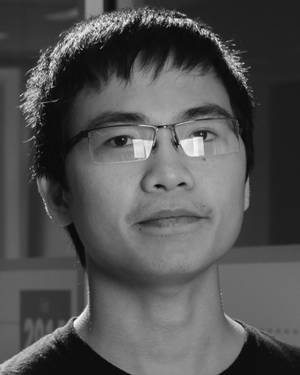 Hung Nguyen合作论文数1Timothy N Hutson合作论文数1Aluna Wang合作论文数1Boje Deforce合作论文数1
 Jian Zhang合作论文数The Chinese University of Hong Kong, Hong Kong, Hong Kong1
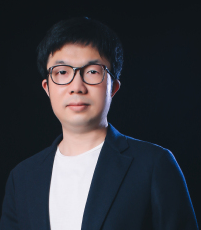 Lihui Huang (黄立辉)合作论文数School of Water and Environment, Chang'an University1
 Yue Zhao (赵越)合作论文数Thomas Lord Department of Computer Science, Viterbi School of Engineering, University of Southern California1
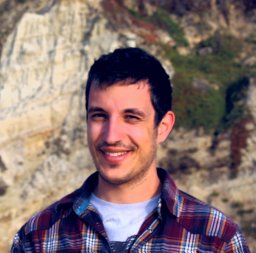 Dimitris Berberidis合作论文数Department of Electrical and Computer Engineering, University of Minnesota1
 Lingxiao Zhao合作论文数Zoom1
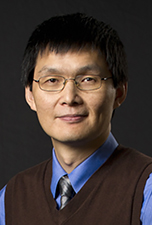 Pierre Jinghong Liang (梁景宏)合作论文数Shanghai Jiaotong University Shanghai Institute of Advanced Finance/Accounting Faculty, Tepper School of Business, Carnegie Mellon University1
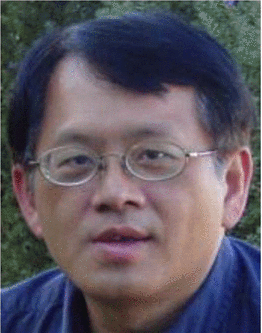 Chien Chen合作论文数Department of Computer Science, National Chiao Tung University1
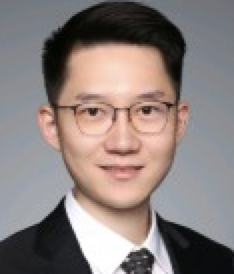 Zhen Han合作论文数Amazon1
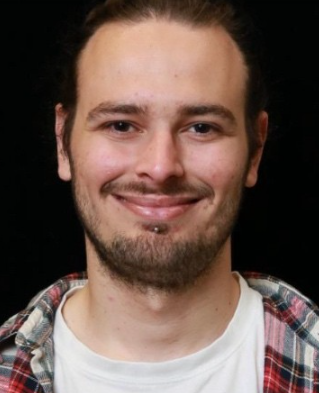 Costas Mavromatis合作论文数Amazon Web Services1
 Da Zheng合作论文数Amazon Web Services1
 Bart Baesens合作论文数Department of Decision Sciences and Information Management, KU Leuven;BlueCourses;University of Southampton1
 Ling Tim Wong合作论文数Department of Building Environment and Energy Engineering, Faculty of Construction and Environment, The Hong Kong Polytechnic University1
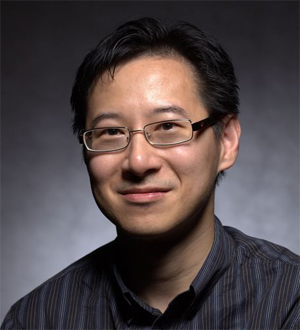 Mui Kwok Wai (梅國威)合作论文数Department of Building Services Engineering, Hong Kong Polytechnic University1
 Estefanía Serral合作论文数Christian Doppler Laboratory, Vienna University of Technology1
 Huzefa Rangwala合作论文数Department of Computer Science, George Mason University;Department of Bioengineering, College of Engineering and Computing, George Mason University;Amazon1Rebecca Mackenzie合作论文数1




