利用FGH95合金粉末对GH4169损伤样件进行了异质材料激光增材修复.通过金相显微镜、扫描电镜、能谱仪、显微硬度计分别对修复区的微观组织、成分分布、显微硬度进行了测定分析.结果 表明,修复区为典型的快速凝固组织.修复区与基体的结合界面处为一薄层平面晶组织,其上为垂直界面生长的胞状晶组织,修复区内部为生长取向明显的树枝晶结构,顶部为无明显生长取向的细小枝晶和胞状晶.修复区与基体材料形成了紧密的冶金结合,结合界面弥散分布富含Nb元素的γ'金属间化合物颗粒.通过细晶强化、固溶强化和弥散强化作用,修复区的显微硬度高于基体材料的.
At present, problems such as unsatisfactory strength, hardness, and poor wear resistance seriously restrict the development of pure titanium in orthopedic implants. In this study, ZrO 2 /Ti composite material with ZrO 2 contents of 0 wt%, 1 wt%, 3 wt%, and 5 wt% were successfully prepared by selective laser melting technology. The mechanical properties and biocompatibility of the forming samples were tested. The experimental results showed that the mechanical properties of ZrO 2 /Ti composite material were significantly improved with ZrO 2 added. Compared with other contents of ZrO 2 , composite material with 5 wt% ZrO 2 achieved the greatest enhancement of mechanical properties. Its compressive strength and average microhardness were 1424 MPa and 464 HV, respectively, which were about twice of that for the pure titanium samples. Corrosion resistance was also improved. In addition, the friction coefficient of 5 wt% content ZrO 2 /Ti composite material was 0.426, which was much lower than the pure titanium sample (0.604). Besides, the cell test proved that the samples had good biocompatibility and no cytotoxicity, which indicated that the addition of zirconia had no damage effect on the growth of osteoblasts.
Overhanging structure is common seen in selective laser melting for it is used to fabricate complex structure. The distortion of overhanging structure is hard to be avoid. The physical cause of distortion has been relatively unknown. In this paper, a physical model was established for illustrating the cause of distortion of overhanging structure via selective laser melting, based on a proposed theory of constraining force induced distortion. The distortion of overhanging structure with different angles, as well as with different scanning patterns, were studied based on experimental results. It can be concluded that the different scanning paths can lead to different constraining force directions, thus causing different distortion. Besides, suitable structure design is beneficial for decreasing distortion of overhanging structure.
Microwave dielectric ceramics are employed in filters as electromagnetic wave propagation media. Based on additive manufacturing (AM) techniques, microwave dielectric ceramic filters with complex and precise structures can be fabricated to satisfy filtering requirements. Digital light processing (DLP) is a promising AM technique that is capable of producing filters with high accuracy and efficiency. In this paper, monolithic filters made from Al2O3 and TiO2, with a molar ratio of 9:1 (0.9 Al2O3-0.1 TiO2), were fabricated by DLP. The difference in the dielectric properties between the as-sintered and post-annealed samples at different temperatures was studied. The experimental results showed that when sintered at 1550 °C for 2 h and post annealed at 1000 °C for 5 h, 0.9 Al2O3-0.1 TiO2 exhibited excellent dielectric properties: εr = 12.4, Q × f = 111,000 GHz, τf = +1.2 ppm/°C. After comparing the measured results with the simulated ones in the passband from 6.5 to 9 GHz, it was concluded that the insertion loss (IL) and return loss (RL) of the filter meet the design requirements.
Distortion is a common but unrevealed problem in metal additive manufacturing, due to the rapid melting in metallurgy and the intricate thermal-mechanical processes involved. We explain the distortion mechanism and major influencing factors by assumption of constraining force, which is assumed between the added layer and substrate. The constraining force was set to act on the substrate in a static structural finite element analysis (FEA) model. The results were compared with those of a thermal-mechanical FEA model and experiments. The constraining force and the associated static structural FEA showed trends in distortion and stress distribution similar to those shown by thermal-mechanical FEA and experiments. It can be concluded that the constraining force acting on the substrate is a major contributory factor towards the distortion mechanism. The constraining force seems to be primarily related to the material properties, temperature, and cross-sectional area of the added layer.
为了提高同轴送粉激光熔化沉积技术AlSi10 Mg铝合金的成形质量,文中通过单道扫描试验、块体成形试验和拉伸性能测试研究不同工艺参数下试样致密度、组织和性能变化趋势及原因,并进行优化.结果表明:试样成形质量受能量密度和扫描间距影响;拉伸性能可通过减少组织缺陷、增强固溶强化效果两种方式提高.工艺优化后,单道表面光滑,无球化现象,块体试样致密度良好,无大尺寸孔隙和裂纹,致密度提高至99.2%;试样显微组织为具有定向快速凝固特征的Al-Si共晶形貌,存在胞晶、柱状树枝晶和发散树枝晶3种组织,随着冷却速率的增大,Si相在Al基体中的溶解度增加至7.6%,固溶强化效果增强.因此,通过工艺参数优化可得到性能良好的激光熔化沉积AlSi10 Mg试样,拉伸强度可达292 MPa,较铸件提高了33%.
In order to study the influence of heat accumulation of the substrate on morphology of single tracks based on laser melting deposition,the experiments with laser melting and depositing AlSi10Mg powder on 6061 aluminum alloy substrate were carried out.The ratio of TRand R was defined as heat accumulation factor,XR,to represent the variation of heat accumulation of substrate qualitatively,and TR was the temperature located in the trailing edge of melting pool with the distance R from the center of laser spot,detected by utilizing the infrared thermometer.The results showed that the XR increased gradually and became stable eventually with the advancement of deposition progress,indicating heat accumulation of substrate increased and reached dynamic equilibrium in heat conduction between substrate and environment.With the increasing of XR,the cross-section shape of deposited layer had flat trend,the width and depth of deposited layer increased gradually,the height of deposited layer showed no significant changes conversely.Moreover,with the increasing of XR,the contact angle increased and dilution ratio decreased,and contact angle and dilution ratio had linear correlation with XRin certain parameter range.
Laser repair of GH4169 alloy which is commonly used in aero engines by usage of the nickel-based superalloy FGH95 powder is tested.The high-temperature tensile properties of the repaired sample with different process parameters are investigated and the fracture mechanism is also analyzed.The results show that,with appropriate process parameters,the high-temperature tensile strength of the repaired samples can be recovered up to more than 85% of that of the intact samples.When the laser linear energy density is 100 J/mm2,the maximum high-temperature tensile strength is 708 MPa,which is 90.4% of that of the intact sample and the maximum yield strength is 538 MPa,which exceeds 4.3% of that of the intact sample.The fractions of the repaired samples occur at the substrate heat-affected zone,where the segregation of elements is induced by the alternating heat action of laser scanning.This segregation is the main reason for the degradation of the high-temperature tensile property of the repaired samples.
为了提高激光熔覆修复性能的稳定性,针对GH4169镍基高温合金,从控制稀释率的角度进行了单因素工艺试验.试验结果表明:在一定的参数范围内,稀释率随激光功率的增大而增大,随送粉速率的增大而减小,扫描速度对稀释率的影响不大.为了简化稀释率的研究过程,将激光功率与送粉速率的比值定义为粉末吸热密度,即修复过程中单位质量粉末吸收的激光能量,进一步确立了粉末吸热密度与稀释率的正相关性.运用回归的思想,通过SPSS软件对试验结果进行数据分析,建立了粉末吸热密度与稀释率的关系模型并验证了其准确性,为镍基高温合金激光熔覆修复性能的稳定性研究提供了理论参考与试验支持.
基于激光修复技术,采用镍基高温合金FGH95粉末对航空发动机常用材料GH4169合金进行不同激光线能量密度q下激光修复对比试验,对修复试样进行弯曲性能测试与金相分析。研究激光线能量密度对修复试样弯曲性能的影响,探讨激光修复后试样弯曲性能变化的微观机理。结果表明:修复试样弯曲强度与无损试样接近,基本达到无损试样的弯曲性能。当q=120.0J/mm2时,修复试样弯曲强度最大,为827.16 MPa,高于无损试样0.5%。随着激光线能量密度的增加,修复试样弯曲强度先增加后减小。在较高激光线能量密度下(154.3J/mm2),因修复区组织枝晶粗化,导致修复试样弯曲性能下降。
选取激光修复中影响温度的关键因素,使用ANSYS参数化编程语言APDL对镍基高温合金GH4169激光修复过程进行数值模拟.分析了熔覆层和基体结合区温度场分布特性及凝固特性,通过研究激光功率、扫描速度、搭接率、送粉率对基体上熔池的形貌尺寸及熔池内熔体的凝固过程的影响,进行工艺优化,发现熔池深宽比为1:5时对应较好的工艺参数,搭接率为40%时获得良好的熔池内微观组织.并使用优化了的工艺参数对GH4169基体进行激光修复实验,金相分析熔池形貌、熔池内微观组织良好,为实际激光修复提供了一组可行的工艺参数.
A pulsed current is introduced into the traditional coaxial laser cladding process to decrease the porosity of the cladding layer.The magneto contraction force caused by pulsed current exerted on the molten pool squeezes the gas out and compensates the shrinkage during molten pool solidification.As a result the porosity of the cladding layer is decreased to an extremely low degree.Simultaneously, the grain of the cladding layer is finer with the added supercooling degree with pulsed current.The microhardness of an equiaxed zone in the cross section of a cladding layer also increases.
Through sintering Ni-based F105 powders with direct laser metal sintering under different scanning mode,the dimensional accuracy,surface quality,microstructure and mechanical property of the specimens were specifically discussed,and the programe of scanning paths was put forward.
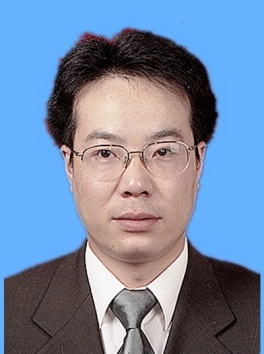 Jianfeng Zhao (赵剑峰)合作论文数College of Mechanical & Electrical Engineering, Nanjing University of Aeronautics and Astronautics9
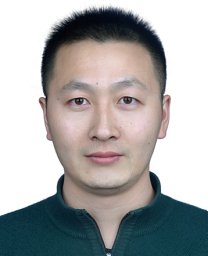 Deqiao Xie (谢德巧)合作论文数8
 Lida Shen (沈理达)合作论文数College of Mechanical & Electrical Engineering, Nanjing University of Aeronatics and Astronautics7
 Huixin Liang合作论文数5
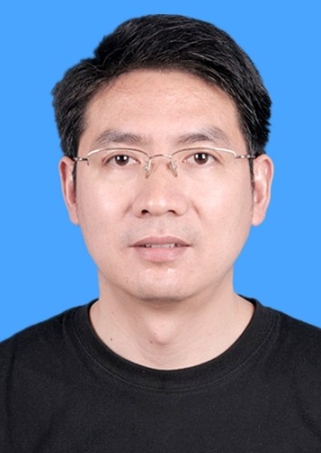 Zongjun Tian (田宗军)合作论文数College of Mechanical & Electrical Engineering, Nanjing University of Aeronautics and Astronautics;School of Mechanical Engineering, Jiangsu Ocean University5
 M. Naveed Ahsan合作论文数3
 Yongai Qi (戚永爱)合作论文数2Fei Lv合作论文数2
 Kai Wang (王凯)合作论文数College of Automation Engineering, Nanjing University of Aeronautics and Astronautics2
 Wang Chang Jiang合作论文数School of Engineering and Informatics, University of Sussex2Hu Pan (潘浒)合作论文数2Yunlei Liu (刘云雷)合作论文数2Li Yue (李悦)合作论文数1YE Yun (叶昀)合作论文数1
 Chen Jiao合作论文数1Yue Li合作论文数1Yize Li合作论文数1Cheng CHENG (成诚)合作论文数1JinJun Fan (凡进军)合作论文数1YanYan Liu (刘艳艳)合作论文数1
 Mingbo Qiu (邱明波)合作论文数Department of Mechanical Manufacturing and Automation, College of Mechanical & Electrical Engineering, Nanjing University of Aeronautics and Astronautics1
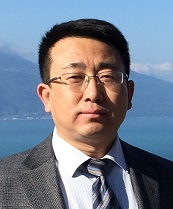 Yingdong Song (宋迎东)合作论文数School of Energy and Power, Nanjing University of Aeronautics and Astronautics1




