Floatation-REST (Reduced Environmental Stimulation Therapy) systematically alters the balance of sensory signals reaching the brain by combining neutral buoyancy, thermal and proprioceptive neutrality, attenuation of exteroceptive stimulation, and enhancement of cardiorespiratory signaling. Here we examined whether this non-pharmacological sensory perturbation induces altered states of consciousness and whether specific experiential dimensions are statistically related to changes in affect. In a secondary analysis of a randomized controlled feasibility trial, 75 treatment-seeking adults with anxiety and depression were assigned to six sessions of Floatation-REST with prescribed scheduling, Floatation-REST with preferred scheduling and duration, or a zero-gravity chair comparison condition. Altered states of consciousness were assessed using the 5-Dimensional Altered States of Consciousness Rating Scale, alongside measures of interoceptive awareness and affect. Compared to the chair condition, Floatation-REST was associated with increased interoceptive awareness of cardiorespiratory sensations and an altered state of consciousness characterized by Oceanic Boundlessness, Disembodiment, and Experience of Unity-a pattern we refer to as "aquahenosis". Effects were strongest among participants who selected longer and more flexible float sessions. Experiential profiles selectively overlapped with those reported for psilocybin and ketamine along boundary-dissolution dimensions. These findings identify Floatation-REST as a tractable, non-pharmacological method for inducing specific altered states of consciousness and highlight Oceanic Boundlessness as an important mediator of the float-induced changes in positive affect.
Floatation-REST (Reduced Environmental Stimulation Therapy) systematically alters sensory and bodily input by combining neutral buoyancy, thermal and proprioceptive neutrality, attenuation of exteroceptive stimulation, and enhancement of cardiorespiratory signaling to the brain. Here we examined whether this non-pharmacological sensory perturbation induces altered states of consciousness and whether specific experiential dimensions are statistically related to changes in affect. In a secondary analysis of a randomized controlled feasibility trial, 75 treatment-seeking adults with anxiety and depression were assigned to six sessions of floatation-REST with prescribed scheduling, floatation-REST with preferred scheduling and duration, or a zero-gravity chair comparison condition. Altered states of consciousness were assessed using the 5-Dimensional Altered States of Consciousness questionnaire, alongside measures of interoceptive awareness and affect. Compared to the chair condition, Floatation-REST was associated with increased interoceptive awareness of cardiorespiratory sensations and an altered state of consciousness characterized by oceanic boundlessness, disembodiment, unity, and spiritual-type experiences—a pattern we refer to as “aquahenosis.” Effects were strongest among participants who selected longer and more flexible float sessions. Experiential profiles selectively overlapped with those reported for psilocybin and ketamine along boundary-dissolution dimensions. These findings identify Floatation-REST as a tractable, non-pharmacological method for inducing specific altered states of consciousness and highlight positively valenced boundary dissolution as a modality-invariant experiential dimension linking sensory context to affective change.
Neuroimaging studies rarely test whether the variance structure is equivalent across population subgroups. Here, in 4,736 participants from the Adolescent Brain Cognitive Development (ABCD) cohort, we examine racialized heteroscedasticity (i.e., differences in variance across racialized groups) in neuroimaging and behavioral data and test how these differences in variance propagate into predictive modeling. Across neuroimaging modalities, behaviors, and predictive frameworks, variance differences exhibited consistent patterns, indicating that variance structure is a stable property across domains within the dataset. Simulation analyses demonstrated that such differences directly induce subgroup disparities in prediction error and reliability, even in the absence of mean differences. Across neuroimaging modalities, multiple measures demonstrated greater variance in Black participants, particularly in functional imaging modalities. Similar variance patterns were observed in behavioral measures, and predictive models exhibited greater residual dispersion and prediction variance in Black participants even when overall performance metrics were comparable. These findings position variance structure, rather than central tendency, as a critical determinant of model performance, generalizability, and reliability across diverse populations.
Adverse childhood experiences (ACEs) are one of the most well-recognized constructs in the adversity literature and have been linked to poor developmental and health outcomes. Understanding the impact of ACEs on development is a major public health issue given the high levels of ACE exposure among US youth. The Adolescent Brain and Cognitive Development (ABCD) Study holds significant potential to elucidate developmental trajectories following exposure to ACEs within a large and geographically diverse sample. To understand how researchers have previously defined and measured ACEs within this sample, study findings and current gaps, the present systematic review covers 36 studies focused on the impact of ACEs across a range of domains within the ABCD Study. Findings suggest the need to standardize ACE measurement when using this sample as ACEs have been defined and measured heterogeneously. However, studies using the ABCD data consistently emphasize the negative effects of ACE exposure within adolescent populations, including outcomes related to physical and mental health (e.g., worse diet, overall mental health symptoms), neural and cognitive development (e.g., lower hippocampal volume, worse cognitive functioning), and family, social, and neighborhood functioning (e.g., greater peer victimization, school disengagement). The majority of reviewed studies utilize the Baseline appointment and focus on early adolescence. Findings from the present review also highlight that researchers should expand the range of developmental outcomes studied to include family and school factors and should prioritize the inclusion of protective childhood experiences, particularly using longitudinal designs and later study timepoints, in future studies using ABCD Study data.
Policy Points Since 2004, beneficiaries in government-administered traditional Medicare decreased by about 3 million (8%), whereas enrollment in Medicare Advantage (MA) plans run by private insurance companies increased by approximately 30 million (500%). MA's growth has exceeded the adequate evolution and refinement of the program's regulatory apparatus. MA now annually costs at least 20% (around $84 billion) more than what Medicare would have spent if all MA enrollees were in traditional Medicare (TM). This differential in payments has advantaged MA relative to TM and transformed the Medicare program in part by corporatizing it for tens of millions of beneficiaries. Most MA revenue now flows to large, increasingly vertically integrated, multinational, for-profit companies that are reshaping the US health care landscape for all patients, providers, and payers. Overpayments have strengthened the political position of the largest MA plan providers such that the program is at risk of interest group capture because of their powerful lobbying and political influence. Reforming MA should include the following: (a) ongoing improvements to the program's risk adjustment system and benchmark policy for rate setting, (b) replacing the quality bonus program with a value incentive program that is budget-neutral, and (c) standardizing MA plans into a small number of basic plan categories and having private health companies make competitive bids in each of them to compete on price instead of on benefit offerings. Savings from any MA payment reforms could shore up Medicare's Hospital Trust Fund or improve TM for a "Medicare 2.0" that competes on a more level playing field with MA.
Humans can recognize their whole-body movements even when displayed as dynamic dot patterns. The sparse depiction of whole-body movements, coupled with a lack of visual experience watching ourselves in the world, has long implicated nonvisual mechanisms to self-action recognition. Using general linear modeling and multivariate analyses on human brain imaging data from male and female participants, we aimed to identify the neural systems for this ability. First, we found that cortical areas linked to motor processes, including frontoparietal and primary somatomotor cortices, exhibit greater engagement and functional connectivity when recognizing self-generated versus other-generated actions. Next, we show that these regions encode self-identity based on motor familiarity, even after regressing out idiosyncratic visual cues using multiple regression representational similarity analysis. Last, we found the reverse pattern for unfamiliar individuals: encoding localized to occipitotemporal visual regions. These findings suggest that self-awareness from actions emerges from the interplay of motor and visual processes.
 Martin M. Monti合作论文数Department of Psychology, College of Life Sciences, University of California, Los Angeles12
 Michele Diaz合作论文数Duke-UNC Brain Imaging and Analysis Center, Duke University Medical Center11
 David Joseph Madden合作论文数Department of Psychiatry & Behavioral Sciences, Duke University;Department of Behavioral Medicine & Neurosciences, Duke University10
 Elzbieta Wiedbusch合作论文数8
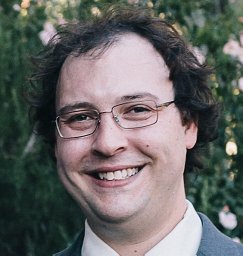 Lutkenhoff Evan S合作论文数Department of Psychology, University of California, Los Angeles7Vespa Paul M合作论文数7John Dell'Italia合作论文数6
 Norman M Spivak合作论文数UCLA Caltech Med Scientist Training Program6
 Sherstennikova Alexandra合作论文数5Sanjay Kishore合作论文数5
 John Coetzee合作论文数US Dept Vet Affairs5
 Cintia Gisele de Andrade Real合作论文数5
 Joel Frohlich合作论文数1UCLA Center for Autism Research and Treatment (CART),, University of California, Los Angeles5
 Julia Sophia Crone合作论文数Paracelsus Medical University5
 Caroline Schnakers合作论文数Cyclotron Research Center, University of Liège5Deborah M. Burke合作论文数Pomona College5
 Hugh P Garavan合作论文数Department of Psychological Science, College of Arts and Sciences, The University of Vermont;Vermont Center on Behavior and Health, The Robert Larner, M.D. College of Medicine, The University of Vermont4
 Joshua Cain合作论文数University of California4Manuel Buitrago Blanco合作论文数3
 Jie Zhuang合作论文数3
 Wesley Thompson合作论文数Division of Biostatistics & Bioinformatics, Department of Family Medicine and Public Health, School of Medicine, University of California, San Diego3
 Guy Glenn Potter合作论文数Division of Adult Psychiatry and Psychology, Department of Psychiatry and Behavioral Sciences, Duke University School of Medicine;Brain Imaging and Analysis Center, Duke University3
 Marco Iacoboni合作论文数Department of Psychiatry and Biobehavioral Sciences, NPI-Semel Institute for Neuroscience and Human Behavior
Brain Research Institute, David Geffen School of Medicine, University of California Los Angeles;Transcranial Magnetic Stimulation Lab, Ahmanson-Lovelace Brain Mapping Center, University of California Los Angeles3
Marco Iacoboni合作论文数Department of Psychiatry and Biobehavioral Sciences, NPI-Semel Institute for Neuroscience and Human Behavior
Brain Research Institute, David Geffen School of Medicine, University of California Los Angeles;Transcranial Magnetic Stimulation Lab, Ahmanson-Lovelace Brain Mapping Center, University of California Los Angeles3 Rahul K Nayak合作论文数Clinical Center, National Institutes of Health3Allgaier Nicholas A合作论文数Vermont Complex Systems Center, The University of Vermont3
 Joerg F. Hipp合作论文数Department of Neurophysiology and Pathophysiology, University Medical Center Hamburg-Eppendorf;Centre for Integrative Neuroscience, University of Tübingen;University Medical Center Hamburg-Eppendorf, University of Tübingen3Nan-Kuei Chen合作论文数Brigham & Women’s Hospital3
 Ying-Hui Chou合作论文数Sargent College, Boston University3Emily L. Parks合作论文数2Sally B Cocjin合作论文数2Gary Jensen合作论文数2Vikesh Shrestha合作论文数2Lauren E Packard合作论文数2David Patterson合作论文数2
 Maria A Boylan合作论文数Sch Behav & Brain Sci, Univ Texas Dallas2
 Catherine W Tallman合作论文数Brain Imaging and Analysis Center, Duke University Medical Center2
 Zachary A Monge合作论文数Duke University2James Divine合作论文数2David A Hoagey合作论文数Ctr Vital Longev, Univ Texas Dallas2
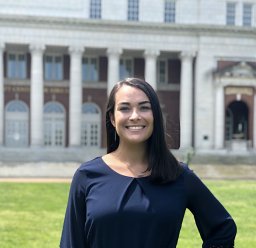 Rachel E Siciliano合作论文数Department of Psychology & Human Development, Vanderbilt University2
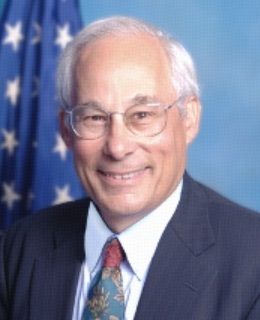 Don Berwick合作论文数Department of Health Care Policy, Harvard Medical School;Institute for Healthcare Improvement2
 Stacie B. Dusetzina合作论文数Department of Health Policy, Vanderbilt University Medical Center2
 Andrea Goldstein-Piekarski合作论文数Department of Psychiatry and Behavioral Sciences, School of Medicine, Stanford University2Emily R. Rosario合作论文数2
 Lynne Bird合作论文数University of California, San Diego;Rady Children's Health2Abdul El-Sayed合作论文数1
 N. M. Gebru合作论文数Dept Hlth Educ & Behav, Univ Florida1
 Shakthi Visagan合作论文数Department of Neurology, University of California Los Angeles1
 Enya B. Vroom合作论文数Dept Epidemiol, Univ Florida1




