Jim Gray spent a decade as a student and researcher at Berkeley. In action, he is remembered for his breadth, his depth, and his generosity.
In [ii], a model of protection systems was introduced. Much of that paper is devoted to an explanation of the model. There are examples of the use of the model in capturing aspects of real systems. A formulation of the safety question is presented and it is shown that the question of whether a given general protection system is safe or not is undecidable. That paper has provoked a number of questions as to why certain features were or were not included in the model. The present paper attempts to answer these questions as well as giving some new results.
This paper describes Duma: a Data-based User interface management system for Multimedia Application, which is embedded in a multimedia document editor framework (MMDEF). MMDEF is the core of a multimedia document editor, which can adapt to externally defined media types and operations, and enables the user to work on documents composed of multimedia objects, including objects of newly defined types, through a coherent user interface. Duma introduces an extensible data model called interactor that abstracts the user interaction between application semantics and user interface components. Also, Duma's data-based UIMS architecture embodies an interactive UI design environment in which interfaces to the interactor model are given.
We present key issues that hypermedia authoring systems must address to be successful. Rapid growth in consumer interest and computer capabilities have increased the expectations from hypermedia software. Meanwhile, hypermedia authors are scrambling to make the best use of new media, new authoring metaphors, new interaction techniques, and new delivery concepts. Only extensible systems designed to accommodate hypermedia scripting issues will survive. Towards this end, we discuss a number of technical concerns important to hypermedia authoring. We compare and contrast a number of currently available authoring systems. This analysis will help in the design of future systems.
The software development process generates a wide variety of artifacts. Supporting the management and editing of these artifacts in a single, tightly-integrated development environment is a widely shared goal. To support a software object means not only managing its evolution, representation and storage, but also its display and user interaction. To integrate support for the representation, display, and editing of all the objects in the development process, we regard objects as documents -...
Determining the relative execution frequency of program regions is essential for many important optimization techniques, including register allocation, function inlining, and instruction scheduling. Estimates derived from profiling with sample inputs are generally regarded as the most accurate source of this information; static (compile-time) estimates are considered to be distinctly inferior. If static estimates were shown to be competitive, however, their convenience would outweigh minor gains from profiling, and they would provide a sound basis for optimization when profiling is impossible. We use quantitative metrics to compare estimates from static analysis to those derived from profiles. For C programs, simple techniques for predicting branches and loop counts suffice to estimate intraprocedural frequency patterns with high accuracy. To determine inter-procedural estimates successfully, we combine function-level information with a Markov model of control flow over the call graph to produce arc and basic block frequency estimates for the entire program. For a suite of 14 programs, including the C programs from the SPEC92 benchmark suite, we demonstrate that static estimates are competitive with those derived from profiles. Using simple heuristics, we can determine the most frequently executed blocks in each function with 81% accuracy. With the Markov model, we identify 80% of the frequently called functions. Combining the two techniques, we identify 76% of the most frequently executed call sites.
This paper describes Duma: a Data-based User interface management system for Multimedia Application, which is embedded in a multimedia document editor framework (MMDEF). MMDEF is the core of a multimedia document editor, which can adapt to externally defined media types and operations. and enables the user to work on documents composed of multimedia objects, including objects of newly defined types. through a coherent user interface. Duma introduces an extensible data model called internector that abstracts the user interaction between application semantics and user interface components. Also, Duma''s data -based UIMS architecture embodies an interactive UI design environment in which interfaces to the interactor model are given.
Over fifty years ago, Vannevar Bush hypothesized about what are now called hypertext and hypermedia systems. He and later visionaries discussed a number of applications which could revolutionize the way organizations and individuals access information in its various embodiments. In spite of the great attention currently being paid to this area, there are few, if any systems which fulfill the vision. In this report, we try to isolate the essential character, the sine qua non, of hypermedia systems. Our methodology is to offer twelve criteria or rules about hypermedia systems. It is our thesis that any robust, or industrial strength, system must meet these criteria if we are to realize the full potential of hypermedia. Some of the criteria serve as a challenge to the technical community. Others are of a social and political nature. Companies need to cooperate in deriving standards to enable the exchange of hypermedia information or to agree on APIs to achieve interoperability. These issues involve networking, computer hardware and software, as well as formats for certain consumer electronics products such as analog and/or digital IDTV.
Software development environments can increase user productivity by presenting information in more useful ways. This paper describes Proteus, the presentation system of Ensemble, a software development environment that supports a wide variety of language and document capabilities. Proteus provides a set of services which allow the appearance of software development documents, such as programs or design specifications, to be determined by formal specifications of style. Proteus is based on a generic model of presentation services and is intended for use with a wide variety of media.
In this chapter, we consider the problem of proving certain that sets do not belong to given subfamilies of the context free languages. Our attention is focused mostly on subfamilies of the deterministic context free languages. We lay out in detail, a collection of techniques for proving theorems of this type.
Numbering document components such as sections, subsections, figures and equations gives each component a unique identifier and helps the user locate the component when it is cross-referenced. This report discusses ways in which such numbering can be described and proposes a simple paradigm for declarative specification of how components should be numbered. The class of algorithms for incremental update of component numbers is studied and the "best" such algorithm is developed in detail.
This report describes dbps, a PostScript debugger which runs under the X]] Window System, dbps provides the user with features which allow the user to do more than display the output of their programs at their work- station. dbps enables the user to observe the state of the interpreter as the program is executing, suspend the execution of the program, and interact with the interpreter before, during and after the execution of the program. The design and implementation of dbps are discussed in this paper. The motivation for dbps is provided by an overview of the PostScript language and how the interpreter handles errors along with a survey of current PostScript previewers.
INCTEX is an incremental document processing system for TEX documents. The system is editor independent and has been used in a variety of applications such as VORTEX. The formatter state is periodically compressed and checkpointed to allow incremental processing. Pages are selectively reformatted by analyzing the input and doing state comparison to decide when to halt.
Index preparation is a tedious and time‐consuming task. This paper indicates how the indexing process can be automated in a way that is largely independent of a specific typesetting system and independent of the format being used. Fundamental issues related to this process are identified and analysed. Specifically, we develop a framework for placing index commands in the document. In addition, the design of a general‐purpose index processor that transforms a raw index into an alphabetized version is described. The resulting system has proved very useful and effective in producing indexes for several books, technical reports and manuals. A comparison of our system with indexing facilities available from a variety of other document preparation environments is given.
Bibliography processing systems are important to the production of scholarly and technical documents. While the existing systems are a significant aid to authors, their designs are not sufficient to handle the demands that have arisen with their continued use. These demands include larger bibliographic databases, sharing of databases among multiple authors, integration with document editors, and the desire for new features. This paper examines these issues as they are reflected in three enhancements to the bibliography processing facilities of the GNU Emacs BIBTEX-Mode and TEX-Mode integrated editing environment. The added features were a reference annotation facility, forms-based queries for automatic citation, and an enhanced reference inspection facility supporting WYSIWIG display of references. The design and implementation of the three features are discussed in detail. Their relationship to other bibliography processing tools is discussed.
Two approaches to electronic publishing are examined: the conventional batch-oriented programming language approach, and the more elaborate direct-manipulation paradigm. The authors indicate which aspects of document preparation are more conveniently handled under which model and point out several instances of a hybrid approach that takes advantage of multiple representations. The design of a fairly sophisticated document development environment is discussed as an example of a multiple-representation system.<>
 Susan L. Graham合作论文数Computer Science Division, Department of Electrical Engineering and Computer Sciences, University of California, Berkeley8
 Matthew M. Geller合作论文数7
 Ivan M. Havel合作论文数Center for Theoretical Study, Charles University;Faculty of Mathematics, Charles University6Seymour Ginsburg合作论文数University of Southern California5
 Walter L. Ruzzo合作论文数Paul G. Allen School of Computer Science & Engineering, University of Washington;Fred Hutchinson Cancer Research Center4
 Ethan Munson合作论文数College of Engineering & Applied Science, University of Wisconsin-Milwaukee4Sheila A. Greibach合作论文数University of California3A Yehudai合作论文数2Pehong Chen合作论文数2
 Richard DeMillo合作论文数College of Computing, Georgia Institute of Technology2
 Jeffrey D. Ullman合作论文数Department of Computer Science, Stanford University;Gradiance Corp2James N. Gray合作论文数2
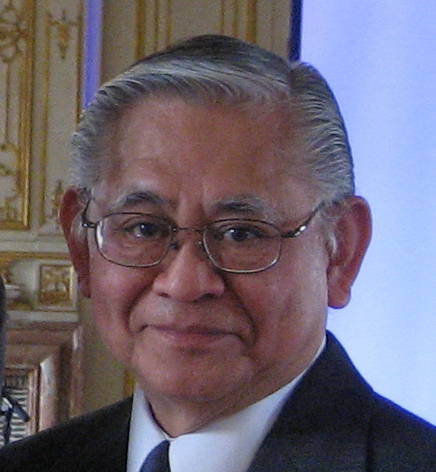 Oscar H. Ibarra合作论文数Department of Computer Science, University of California, Santa Barbara2Brian M. Dennis合作论文数2
 Peter J. Denning合作论文数Cebrowski Institute, Naval Postgraduate School;Computer Science Department, Naval Postgraduate School2Takashi Ohtsu合作论文数2Sl Graham合作论文数1Fred Meyer合作论文数1robert m graham合作论文数1Robert M. Graham合作论文数1RJ LIPTON合作论文数1pinhong chen合作论文数1William I. Grosky合作论文数1mario schkolnick合作论文数1
 David P. Dobkin合作论文数Department of Computer Science, Princeton University1
 Anastasios Melis合作论文数Department of Plant and Microbial Biology, University of California, Berkeley1
 Ravi Sethi合作论文数Bell Laboratories, Murray Hill, New Jersey1
 Edward A Feigenbaum (爱德华·费根鲍姆)合作论文数Stanford University1
 Dorothy E. Denning合作论文数Department of Defense Analysis, Naval Postgraduate School1
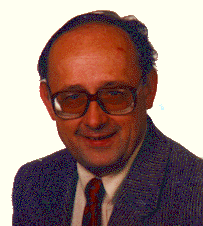 Gio Wiederhold合作论文数Department of Medicine, Stanford University;Symmetric Security Technologies;Department of Electrical Engineering, Stanford University;Department of Computer Science, Stanford University1
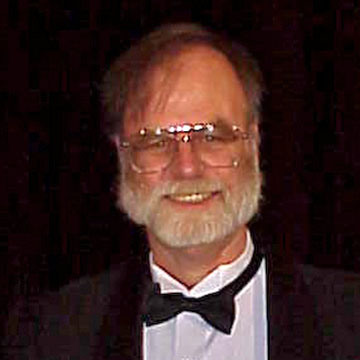 James Nicholas Gray (Jim Gray) (詹姆斯·尼古拉·格雷)合作论文数Microsoft1Jeff A. Nemson合作论文数1Vance Maverick合作论文数Computer Science Division, University of California, Berkeley
Susan L. Graham Computer Science Division, University of California, Berkeley
Michael A. Harrison Computer Science Division, University of California, Berkeley
Sponsor SIGPLAN: ACM Special Interest Group on Programming Languages1
James Nicholas Gray (Jim Gray) (詹姆斯·尼古拉·格雷)合作论文数Microsoft1Jeff A. Nemson合作论文数1Vance Maverick合作论文数Computer Science Division, University of California, Berkeley
Susan L. Graham Computer Science Division, University of California, Berkeley
Michael A. Harrison Computer Science Division, University of California, Berkeley
Sponsor SIGPLAN: ACM Special Interest Group on Programming Languages1 Daniel D. Mccracken合作论文数Department of Computer Sciences, City College of New York1
 John C. Reynolds合作论文数Department of Computer Science, School of Computer Science, Carnegie Mellon University1Kathleen A. Wagner合作论文数1Robert G. High合作论文数1Aaron Finerman合作论文数Department of Computer Science and Engineering, Florida Atlantic University1
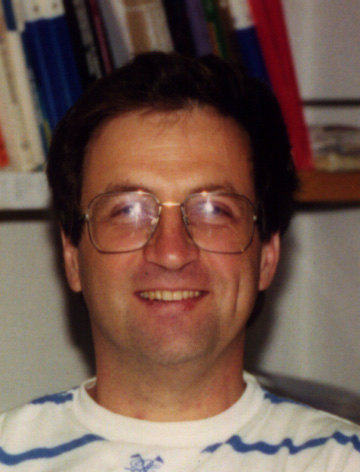 Amiram Yehudai合作论文数Tel Aviv University;Computer Science Department1Tim A. Wagner合作论文数1William Maddox合作论文数1George Davida合作论文数College of Engineering & Applied Science, University of Wisconsin-Milwaukee1




